Open Gradient from the a16z accelerator
a16z accelerator project, with a16z and Coinbase investments, Binance wallet just on TGE campaign, OpenGradient, what is it
Original title: Open Gradient, what is it
Original by KarenZ, Foresight News
As more decisions are handed over to models, we begin to face a lower level of challenge:How did this happen? Can it be verified? Has the calculation been tampered with? Is data privacy pervaded
If the answer is no, it's just a black box belief. OpenGradient wants to solve this, that's it。
This project, which is based on a16z Cripto entrepreneurship accelerator and which receives financing from a16z, is a project that has been set up for the first timeTHE ATTEMPT IS NOT A NEW AI PRODUCT, BUT A LAYER OF INFRASTRUCTURE - MAKING THE AI CALCULATIONS VERIFIABLE, AUDITABLE, SOLVENTABLE。
What's the background
OpenGradient is from a16z Cripto Accelerator (CSX) in autumn 2024. The label itself speaks for itself — CSX prefers projects that have the potential to become a “bottom-up network”。
Soon after a month, it completed its first round of financing of approximately $8.5 million, with investments from a16z crypto, Coinbase Ventures, Foresight Ventures, SV Angel, Coinbase Ventures, SALT Fund, Symbolic Capital, and Angel Investor Balaji Srinivasan (former Chief Technical Officer of Coinbase), NEAR founder Illia Polosukhin, and Polygon founder Sandeep Nailwal。
This month, in April 2026, OpenGradient announced that a total of $9.5 million had been raised。
This is also a "engineering-oriented" configuration from a team perspective. According to information received from the United Kingdom, OpenGradient ' s main office is located in New York and was established in 2024 with a team size of 11 to 50. OpenGradit Network lists 11 key team members。
• CEO and co-founder Matthew Wang: former research engineer of Two Sigma, also worked in NASA, Meta, Google。
• CTO and co-founder Adam Baloh: former technical director of the large data analysis and AI software company Palantir AI platform (AIP), with Google and Amazon background。
• Block chain engineer Khalifa Toumi: former Zenrock (formerly Qredo) block chain engineer and team leader of the DeFi infrastructure platform, involved in the use of Tendermint Consensus algorithms and Cosmos SDK to design and implement the Qredo protocol。
OpenGradient What? A "validable AI Network"
OpenGradient gives its location "The Network for Open Intelligence". The core of the system is HACA。
THE SOLUTION IS TO PLACE AI REASONING UNDER THE CHAIN, WITH DEDICATED REASONING NODES PERFORMING MODEL CALCULATIONS AND PRODUCING VERIFIABLE CERTIFICATES (E.G. TEE OR ZERO KNOWLEDGE CERTIFICATES); THE CHAIN NODES ARE ONLY RESPONSIBLE FOR CERTIFYING CERTIFICATES AND NOT REPEATING MODELS, THUS SIGNIFICANTLY REDUCING COSTS。
The benefits of doing so are straightforward: to preserve performance and to move trust back into the chain。
The entire network operates in a role:
• The whole node is responsible for consensus and validation
• The reasoning nodes provide a mathematical implementation model (local or call external)
• Data nodes are responsible for obtaining credible external data
Valrus is used to carry models, input outputs and support data, and to ensure data availability and consistency through chain references。
IN ADDITION, HACA HAS A KEY DESIGN — ALTRUISM: USERS OBTAIN REASONING FIRST, VALIDATION AND SETTLEMENT ARE DONE LATER。
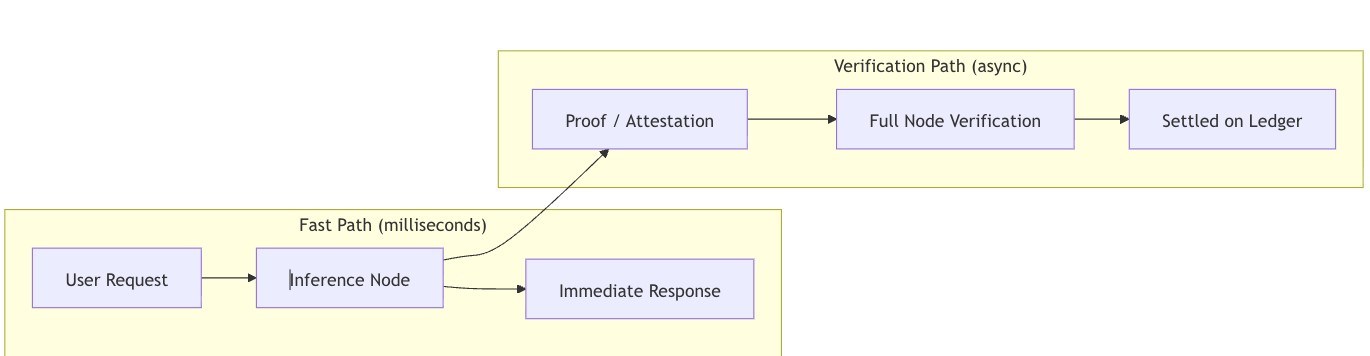
What the hell is that chain doing? As a validation and settlement layer for AI reasoning and applications, OpenGradient's block chain, using the CometBFT consensus, is compatible with Cosmos SDK and EVM, specifically responsible for node registration, authentication certification, payment processing (the payment of x 402 LLM reasoning scenes was completed on Base) and bookkeeping management。
HOW DO YOU "PROVE THAT AI IS NOT LYING"OpenGradient gave a Trust Level menu:
• TEE: OPERATION IN SECURITY HARDWARE TO PROVE THAT THE CODE AND ENVIRONMENT HAVE NOT BEEN ALTERED。
• ZKML: ZERO KNOWLEDGE PROOF MODEL IS IMPLEMENTED CORRECTLY AND SUITABLE FOR HIGH-RISK, HIGH-IMPACT SCENARIOS
• Vanilla: signature certification only, suitable for low-risk scenarios。
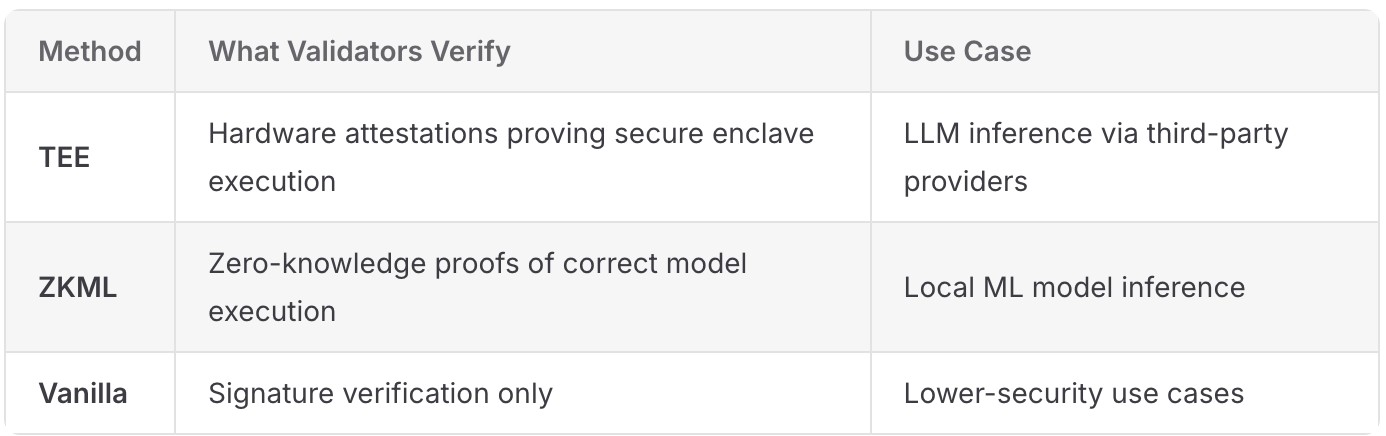
Different scenarios allow for different cost- and security-level options. Either method of certification is chosen and will ultimately need to be confirmed by a consensus of the network - When more than two thirds of the certifiers reach agreement, the certification is formally included in the chain。
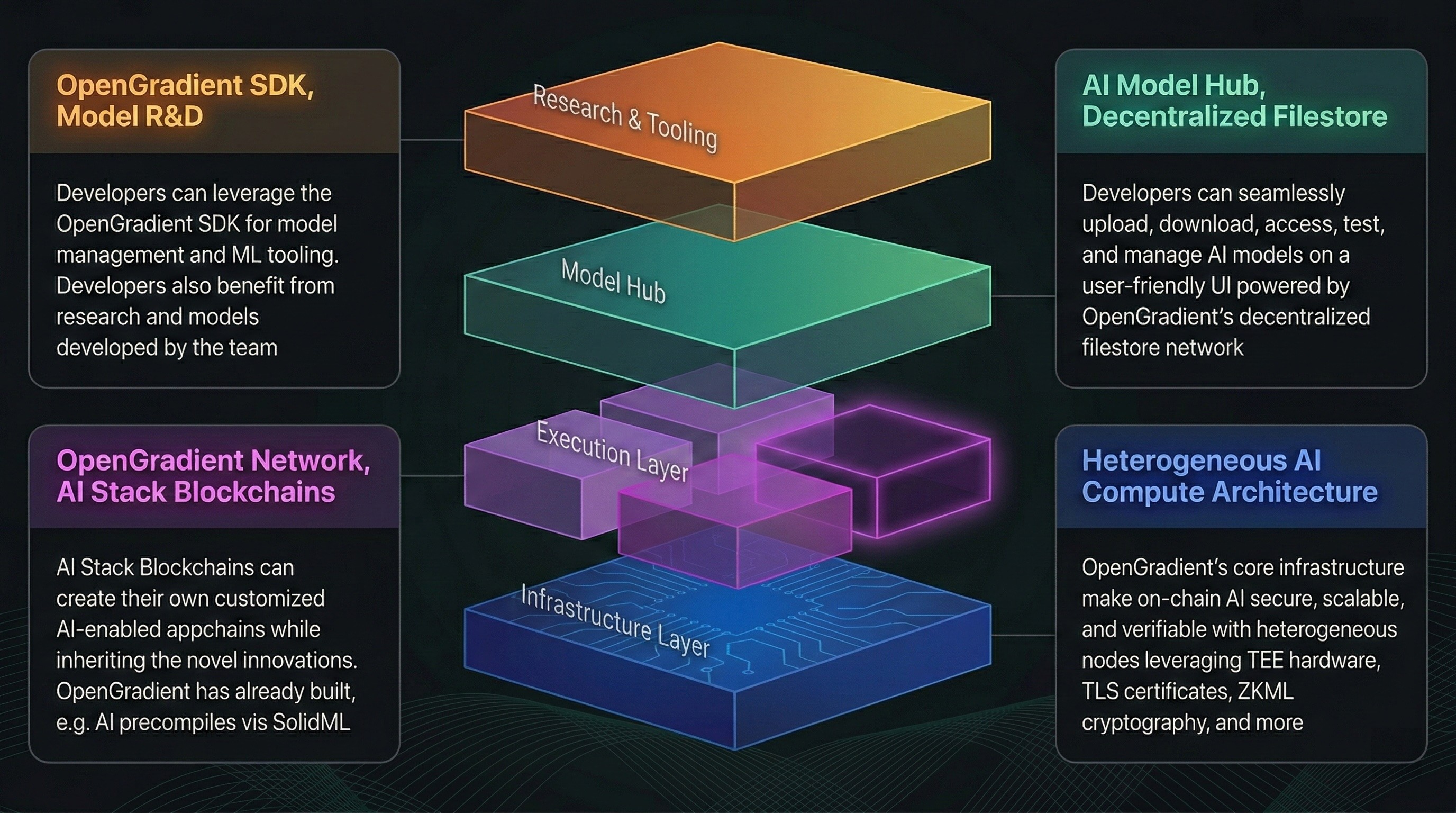
OpenGradient has also built a range of products and services for developers and users around this core capacity, with the aim of building a full-fledged AI ecosystem。
I don't knowModel Hub (Model Centre): A decentralized model repository where developers can publish, discover and use open source models. Model Hub also uses Wallus to centralize storage networks to ensure the permanent availability and resistance of model data。
• 402 gateway:PAYABLE CALLING AI。
• MemSync (AI long-term memory):In response to the core needs of AI Agent, MemSync provides a permanent AI memory layer that automatically extracts meaningful memories from conversations, documents, websites, Twitter personal data and other sources, organizes them intelligently and searches through semantic searches。
• Twin.fun (digital twin market):AI SPLITS MARKETS, TRADES, UNLOCKS TOOLS, ETC。
How's token economics
IF THE ANSWER TO THE WEB STRUCTURE IS "HOW TECHNOLOGY WORKS," THE OPG TOKEN IS "HOW THE ECONOMY WORKS."。
OpenGradient will perform TGE on April 23rd on the Virtuals and will also be online in Coinbase. In addition, the Binance wallet will go to the 46th issue of the TGE project Open Gradient (OPG)。
OPG IS NOT DESIGNED TO BE MERELY AN INCENTIVE, BUT RATHER TO BIND NETWORK BEHAVIOUR, INCLUDING REASONING PAYMENTS, MODEL REALIZATION, PLEDGE, APPLICATION ACCESS。
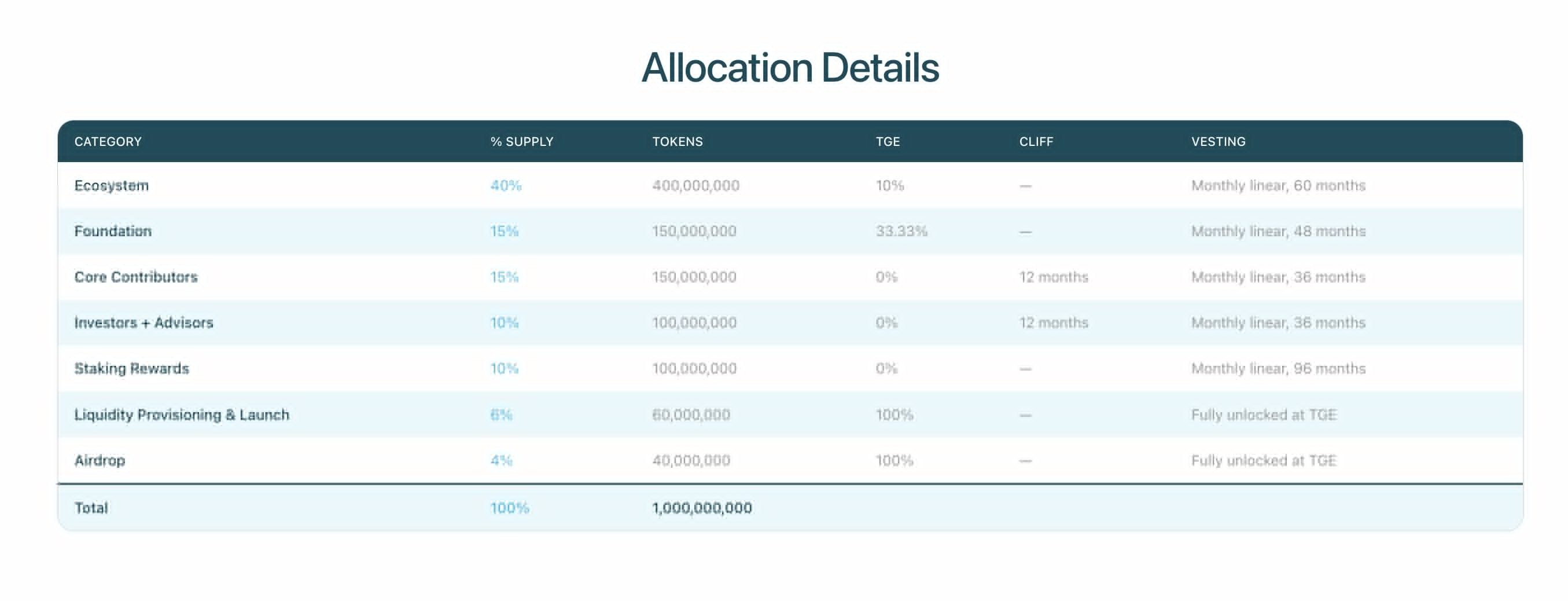
THE TOTAL SUPPLY OF OPG IS FIXED AT 1 BILLION OF WHICH:
:: Ecosystems dominate (40 per cent)。
• FOUNDATIONS (15 PER CENT): TGE UNLOCKED 33.33 PER CENT WHILE THE REMAINING RELEASE PERIOD WAS 48 MONTHS。
• Core contributors (15 per cent): Team share, with 12 months of strict locking for regular periods and 3 years of linear unlocking。
Investors and consultants (10 per cent): The conditions for unlocking are the same as those for the team。
• Pledge incentives (10 per cent): support for cybersecurity。
• Liquidity and airdrop (10 per cent): includes a 4 per cent air drop share。
Summary
The core logic of OpenGradient is not complicated: if AI begins to participate in transactions, decision-making, financial flows, trust must be proven。
Of course, the question of reality is there: do most of the scenes really need to be "validation AI"? Will users be willing to pay more for "verifiable"? There are no standard answers to these questions. OpenGradient is not doing anything to optimize AI, but rewriting how "AI is trusted."。
Original Link
