
The Mad King Trump, the mad war and the mad market.
The president of the Mad King, who was asked by his staff to leave the war room, fought an hour-long, incomprehensible war, creating a market out of control that the mainstream media could not understand。
Original by: Dragon Sword
Original source:See you on Wall Street
April 23, the war between Iraq and the United States entered the eighth week。
Just a few days ago, there was a turn of events: the Israeli-Palestinian ceasefire was set, Iran announced the reopening of the Strait of Hormuz, and the negotiations in Islamabad seemed imminent. Subsequently, however, Trump announced that the United States maritime blockade would not be lifted and ordered the boarding and inspection of vessels bound for Iran — Iran — immediately announced its re-closure of the Strait and its strong refusal to negotiate the second round。
This volatility is not the first time。
From the beginning of the war until now, this conflict can be described in the same word: madness. The president of the Mad King, who had been asked by his staff to leave the War Room, fought an hour-long incomprehensible war, creating a market out of control that the mainstream media could not understand。
And the latest revelations, let us really see where this "crazy and uncontrollable" comes from and where it leads。
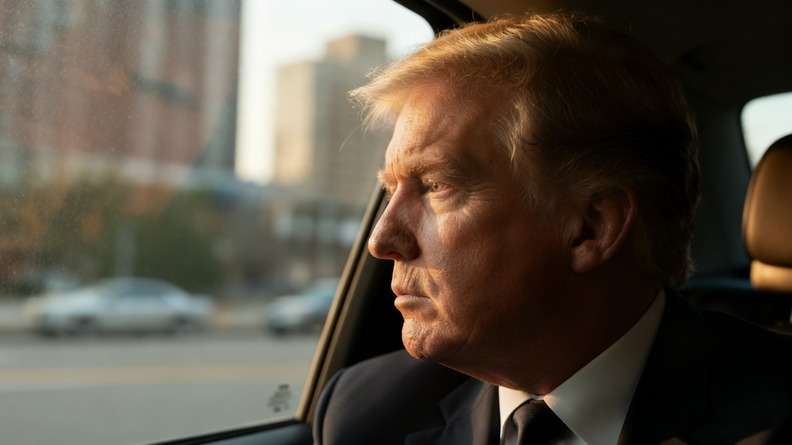
"The Mad King" Trump: The president behind the door
On 22 April, the latest revelations from the United States local media revealed that the events of the Easter weekend had revealed the way the war was managed。
AT THAT TIME, A UNITED STATES MILITARY F-15 WAS SHOT DOWN IN IRANIAN AIRSPACE AND THE WHEREABOUTS OF THE TWO PILOTS WERE UNKNOWN. WHEN THE NEWS REACHED THE WHITE HOUSE, TRUMP SHOUTED AT HIS STAFF FOR HOURS。
"The Europeans didn't give any help," he repeated. The average price of oil in the United States has risen to $4.09 per gallon, and the 1979 hostage crisis in Iran has been in his mind。
"You see Carter, the 39th President of the United States, the helicopter, the hostage, which let him lose the election," Trump complained, "What a mess."
He asked the army to go and rescue them immediately. But the staff decided that his hastyness could not help at such a time. As a result, they blocked the President from the decision-making room and went out to inform him of progress only at key points。
Vice President Vance has access to the video from Camp David, White House Chief of Staff Susie Wildes has moved in from his home in Florida, and the entire team has been following the rescue progress almost in minutes — the plane has fallen into the sand, the Iranian army has been shot west and the President has had to wait outside for a telephone call。
A pilot was found soon. The second pilot was not rescued until late Saturday night. Trump went to bed after 2:00 in the morning。
Six hours later, he posted the social media post that shocked the world in the morning of Easter: "Open the Foxin Strait, you crazy bastards, or you'll live in hell." At the end of the post, he attached an Islamic prayer。
This post is not from any national security plan. According to senior White House officials, this is the improvisation of Trump. He said that he wanted to make himself "as unstable and as humiliating as possible" because he thought it was an Iranian "understandable language"。
After the announcement, he asked his staff, "What about the echo?"
From the crasher who was swallowed up by fear to playing the crazy strategist - Trump finished the switch in 12 hours. The question is, which one is he? Or is it both
In his latest interview, John Mearsheimer, an international relations scholar, used the word " mad king " 。
"Crazy War": Underworld trust destroyed
Under the leadership of this extreme emotionalization, the United States diplomatic manoeuvres have witnessed a serious distortion of common sense, which has directly led to the breakdown of today ' s peace talks。
Iran has repeatedly stressed that it was the United States that once and for all threatened and capricious, leading them to reject the second round of negotiations。
Mirsheimer, in his repertoire, pointed out with blood and blood that last Friday, an extremely valuable window of ceasefire actually appeared: When Iran had responded in good faith to the initial opening of the Strait, the United States should have pushed forward the Islamabad negotiations。
At this moment, however, the Trump administration itself broke the consensus: not only did he publicly declare his refusal to lift the maritime blockade on Iran, but even ordered United States troops to stop, open fire and board and search Iranian vessels。
"The result is that the Iranians made a 180-degree turn and re-closed the Strait."
This strategy, which was unstrategic and "repeated" at a critical time, overstretched Washington's strategic credibility. In the eyes of Iran’s hardliners, the United States has become a “crazy” with no contractual spirit, and any negotiation has lost its meaning。
The total collapse of trust directly pushed the peace talks towards death。
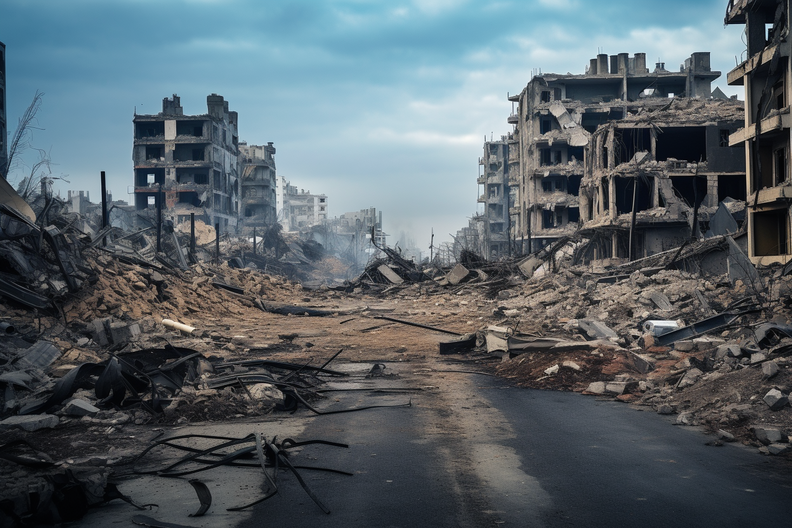
"Crazy strategy": how Israel sells war and "control" Trump
The source of this loss of control lies in Washington’s rare attempt to “outsource” the major powers’ strategy to outside powers。
John Millsheimer, an international relations scholar, stated that, with the exception of a few, such as Defense Secretary Pete Hegset, most United States military and intelligence elites had strong doubts about, and even opposed, the war. They clearly prejudged the very high risks, including the Iranian resistance to block the Strait。
trump, however, totally ignored the warnings of his own national experts. "it was the israelis who sold him a bill of goods."
In the White House War Room, Israel's Mossad chief David Barnea and Prime Minister Benjamin Netanyahu paint a vision for Trump:
The heavy force of the United States forces will bring a quick and decisive victory without fear of Iran ' s closure of the Strait of Hormuz. Trump, obsessed with Venezuela's experience of “breathless change of regime for hours”, did not hesitate to pay。
Every morning after the war, Trump saw images of explosions in Iran and clips of "winner videos". The staff described how he was “shocked” by the size of the military force and even praised the performance of the United States army。
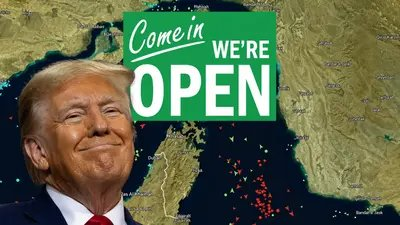
But the "unremarkable" on the battlefield did not translate into a political victory. When the war really enters deep waters, the strategic spiral begins to appear。
On the one hand, in the face of a strait blockade that stifles the supply of 20 per cent of the world's crude oil, Trump rejected the military's offer to send ground troops to seize Halk Island (which carries 90 per cent of Iran's oil exports) because of his extreme fear of unacceptable United States military casualties
On the other hand, Israel, even crossing the United States, directly attacked Iran ' s largest South Pars gas field, forcing Trump to leave the relationship in social media. This situation, which is strategically hostage to human, tactical and raccophagus, is doomed to a total breakdown in the war process。
"Crazy Hormuz: A problem no one planned."
When top-level decision-makers are unpredictable and driven by external forces, bottom-level implementation inevitably falls into disarray. The Strait of Hormuz is the best example。
Prior to the outbreak of the war, Trump told the team that the Iranian Government was likely to yield to the Strait and that, if not, the United States military could respond. Some White House consultants were surprised when tanker traffic quickly stalled after the bombing began。
Trump later expressed surprise at the late arrival: "A man with a drone can turn it off."
This is the most ironic picture of the whole story: the man who started the war didn't think about what would happen after the war。
In the face of this high-level lack of planning for the core throat, Bianco Research, founder of Jim Bianco, stated more clearly at the Hedgeye Investment Summit on April 23:
"My frustration is that they have no plans for the Straits of Hormuz, or they have plans but they don't work. What the market really cares about now is the flow of oil. The market can be patient on the issue of nuclear weapons, but not on the flow of oil
In this spiraling political game, Brent's crude oil has gone through $102 and completely reversed last week's fall and continues to rise。
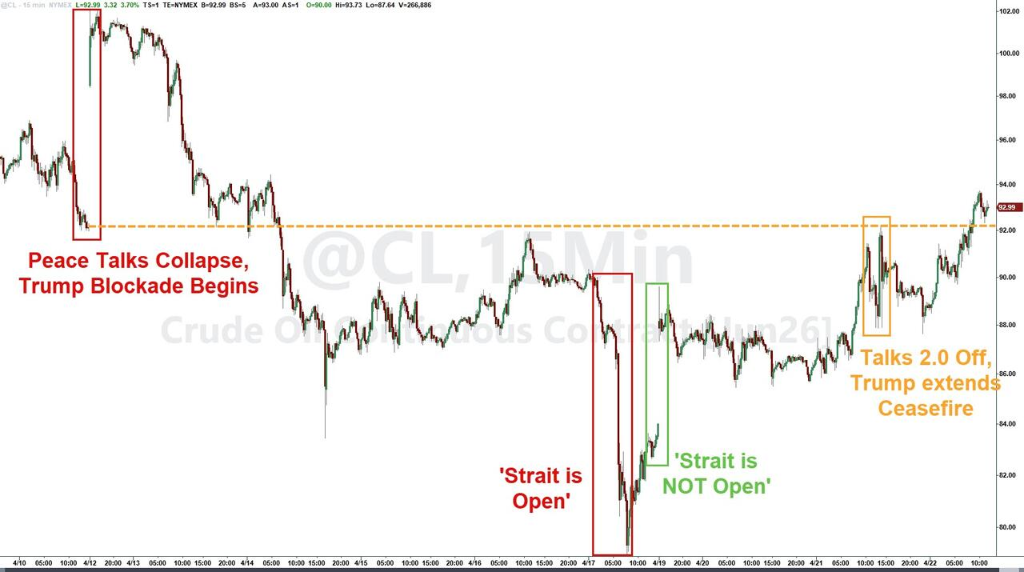
"Crazy Market": "The crude oil pricing mechanism has collapsed."
When political decisions lose anchors, financial markets lose anchors。
the first collapse was the pricing mechanism for the bottom bulk commodities. jim bianco revealed an extremely dangerous signal that the pricing function of the global crude oil market had collapsed。
IN NORMAL YEARS, THE PRICE DIFFERENTIALS BETWEEN WESTERN CANADA, WHETHER SELECTED, BRENT, WTI OR INSTANT OMANI CRUDE OIL, USUALLY REMAIN AT A VERY NARROW RANGE OF US$ 1 TO 2, A SIGN OF GLOBAL ENERGY SUPPLY CHAIN HEALTH. BUT TODAY, WITH A TWO-WAY BLOCKADE AND A "NO TIMETABLE" WAR, THE PRICE DIFFERENTIALS FOR THESE SPOT OILS HAVE INCREASED TO A STAGGERING $60
"If you look too far, you can find a 70-dollar offer; if you look too much, there's a 130-dollar real price on the market."
Bianco warns that this extreme fragmentation is proof that the physical network of the crude oil market has been cut off by geopolitics. Brent's oil breakthrough of $102 is just a sign, and what's really fatal is that the bottom pricing anchor is gone。
In other words, no one knows how much oil is worth. It is not market volatility, it is market failure。
However, in the face of the abyss of the real economy, the financial markets of the United States have been characterized by a kind of "end-of-the-day carnival" madness。
the united states stock market is still on the rise. the funds are used to carry out high-frequency transactions based on the emotional tweets of trump, as is the case with the pursuit of "meme stock". as long as the white house releases a little profit, the market buys no brain。
Trump himself spends a lot of time bragging to the Golden Master about his merit in the Medal of Honour and studying the drawings of the White House dance hall。
BUT THE ILLUSORY K-LINE CAN'T HIDE THE BLOOD FROM THE BOTTOM. THE UNIVERSITY OF MICHIGAN'S CONSUMER CONFIDENCE INDEX GAVE THE CRUELEST VERDICT – AN AUTHORITATIVE 74-YEAR-OLD FIGURE THAT FELL TO 47 POINTS IN MARCH。
America's public despair of the current economy has gone far beyond the 2008 subprime crisis, the 911 terrorist attacks and the period of great inflation in the 1970s。
THIS IS AN EXTREMELY TORN AND COMPLETELY OUT OF CONTROL MACRO-IMAGE OF THE K: THE STOCK MARKET IS RAISING A GLASS FOR THE WHITE HOUSE-RUN NEWS, AND THE PRICE OF UP TO $4.09 WORTH OF GASOLINE HAS HIT THE BOTTOM LINE FOR ORDINARY PEOPLE。
Is Trump in the Axe Market
This is the most sensitive and difficult issue for market participants to discuss publicly。
Keith McCullough spoke directly to many people at the summit: "Trump seems increasingly used to manipulating market movements in the direction he wants, because people are still too focused on single factors."
He further noted that the current correlation between the United States dollar, oil prices, gold and bitcoin was close to 95 per cent. "It's not complicated," he said, "If you knew in advance the direction of oil prices and dollars, you would know the direction of almost all assets."
More striking is the detail he has mentioned: the Iranian side has begun publishing Lego's face bag, mocking the empty oil people make every time Trump announces that the Channel is about to open。
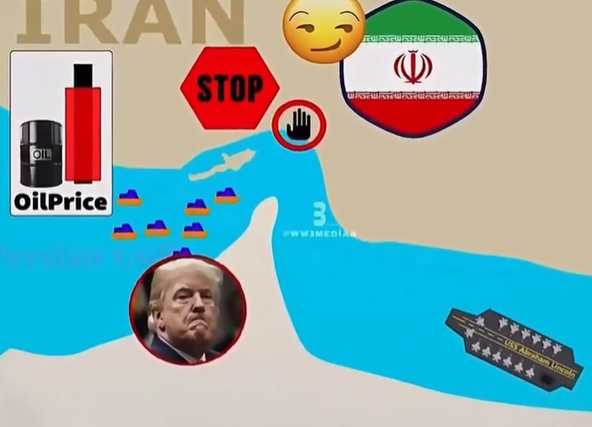
"This is an open secret," McCarlo said, "and nobody seems to care, because everyone wants the same thing -- the market is rising, the Trump is pulling, okay, go on."
The real risk of this game
In his interview, Millsheimer said something worth chewing:
"The Trump government should want an agreement. There are two reasons for this: first, they have no way of winning on the road to escalation; and second, they risk pushing the global economy down the cliff. So they should want a deal."
"But Trump sometimes acts like he wants a deal, and sometimes he acts like he doesn't."
This is the most dangerous place in the current situation — not by the deliberate destruction of any party, but by a systemic, decision-making disorder-driven out of control。
Trump is afraid to send real ground troops to take Halk Island, and continues to send the toughest threats on social media, even sending contradictory signals when his staff tries to control the situation。
Both sides are waiting for each other to blink. The problem is that no one can really calculate the Nash balance of this game when the decision makers of one of them are themselves in some unpredictable state。
And once the "out of control" gear starts to turn, it's hard to stop in the short term。
