
6MV FOUNDER: IN 2026, THE "MARKED POINT" OF ENCODED INVESTMENT ARRIVED
Collapse & Compiled: Ada, Deepwater TechFlow
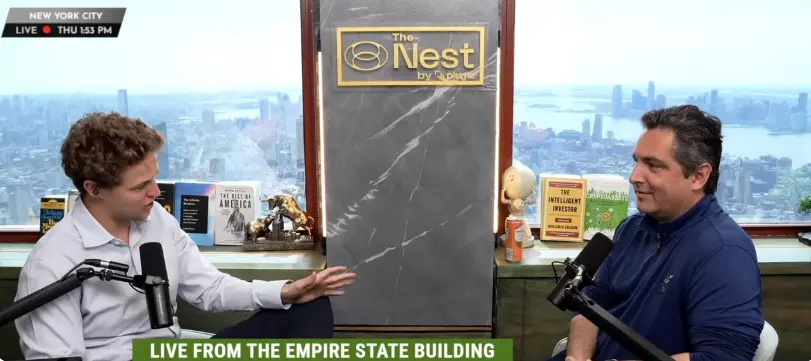
Guest: Mike Dudas, 6th Man Ventures (6MV), Founder and Managing Partner, The Block, former Venmo/Braintree/PayPal
Moderator: Robbie Klages
The Rollup
Original title: Why 2026 Will Be An Iconic Year to Invest in Digital Assemblys
Date of broadcast: 24 April 2026

Edit Guidance
In the annual interview on encrypted VC summaries, the Rollup invited Mike Dudas, founder of 6th Man Ventures. In his view, the encryption market is in a period of "fast improvement in basics, but negative events continue to explode". At the same time, he made a clear judgement about the stable currency pattern: the Circle is essentially a “government dollar”, and the refusal to freeze funds in the Bybit hacker case is on the wrong side of history; and Tether has changed and is far ahead of Circle in key decision-making. Paxos, Bridge and others will be the next largest financial technology firms. In addition, he revealed that Pump.fun ' s annualized income was close to $400 million, arguing that its tokens were severely underestimated。
Expensive Notes
ENCRYPT VC MARKET STATUS
- "I deployed funds in 2026, so I'll tell you this is the best year ever."
- "The market now has no shortage of capital, no shortage of founders, no shortage of ideas, no shortage of users, but every week it is destroyed by surprise. Come here, like the next hacker attack, the next bad news from custody, the next person arrested."
- "we see an unprecedented influx of good people into mediocre or consensual creativity. the reason why they did not deploy the funds was because they repeatedly received the same pitch.”
Pump.fun and chain consumption
- "Pump.fun, in the current market environment, still earns an average of more than $1 million per day and close to $400 million per year. You can't say the market is at the top."
- "The encryption market does not reward fundamentals. It is not that people do not care about fundamentals, but that we do not know what fundamentals matter. The token is so new that it means a million different things."
- "everyone says meme is finished. but the marginal family that cares about meme is not present. those people will come back
Circle vs
- “Circle’s strategy is clear: as close as possible to the central bank’s digital currency. They basically said: "The Government, we stand entirely with you, and your rail is our rail."
- "If North Korea is stealing hundreds of millions of dollars and you are capable of stopping it, you should. Circe stood on the wrong side of history and they would pay for it
- "In terms of critical decision-making, the difference between Tether and Circle is not a professional and amateur team, but a NFL professional team versus a high school football team."
The dilemma of new, applied and universal chains
- "Mega ETH looks more like an application chain to me, and it's going to be a super application. I'm not sure you can give Monad the same valuation as Solana, depending on the income from the application above."
- "Solana didn't clearly say why I had to settle with a universal public chain. Is it an anti-censorship, speed up, or a drop? To be honest, I am more uncertain than I was a year ago."
Stable currency is service
- "Every company with a user and a capital should put it in a stable currency supported by the national debt. They haven't done it yet, but they do. They're not going to get their own license plates to issue dollars. So this is a huge market for a few stabilizers or service providers.”
AI, IPO AND LIQUIDITY CYCLE
- "Now nobody cares about encryption company IPO. Honestly, they're staring at SpaceX, at Anthropic, at OpenAI. AI took all the oxygen."
- "Trump meme is top, two years later in 2027, which coincides with the IPO listings and the four-year cycle. At that time window, a group of people holding low-cost shares in encryption companies, many of whom have a natural interest in encryption, would become mobile.”
ENCRYPT VC STATUS AND FINANCIAL FLOWS
Robbie:This is our annual encrypted VC status summary. Last year we did in Soho, when the market was completely different. We've invited Tom Dunleavy from Variant Capital, whose broad framework is that VC funds are decreasing, the number of financing is decreasing, quality teams are getting smaller and the world is different. But what I thought at the time was, if you had the money and could identify the good founders, there would be less competition, and many new founders would enter the field, and the background might be better than the previous. We finally agreed that 2025-2026 might be one of the best returns. Do you agree? What do you think of the overall situation of the founders
Mike Dudas:
I'M AN INVESTMENT, I DEPLOYED FUNDS IN 2026, SO OF COURSE I'LL TELL YOU THIS IS THE BEST YEAR IN HISTORY. BUT LPS ARE PAYING ATTENTION。
FIRST, THERE'S ENOUGH MONEY TO ENCRYPT THE VC MARKET. SEVERAL LARGE FUNDS HAVE ALREADY BEEN RAISED AND THE ANNOUNCEMENT HAS BEEN MADE. A NUMBER OF EARLY FUNDS HAVE BEEN RAISED BUT NOT PUBLICLY ANNOUNCED. SIGNIFICANT FUNDS ARE AWAITING DEPLOYMENT, AND FUNDING IS NOT AN ISSUE。
Number two, is there a good founder? The answer is yes. Is there a good idea? Of course, you can see a number of groundbreaking agreements, many of which were created years ago, even during the bear market cycle. So creative, creative, financially funded, is not the time to be pessimistic about encryption。
But what's the problem? A variety of explosions continue, hacker attacks, the founders are being arrested on various charges, matters related to the Trump family seem increasingly suspicious, and the regulatory environment in Washington: we would have expected the bill to be passed or near passed, and not。
So the situation is: while the macro level of encryption is constantly happening, the basics are improving dramatically. There is no shortage of capital, no shortage of founders, no lack of creativity, no shortage of usage, but things happen unexpectedly every week。
Robbie:Did you get less competition when you made the deal
Mike Dudas:
Yeah. Consensus deals are hotter than ever, prices are pushed high, and I would say irrationally high. There will always be a last buyer, of course, and five years later, some of these bids may seem incredible。
The difficulty, however, is that, although there are good founders, they are now not confident to take great risks. The outside world and the inside of encryption are changing too fast. The empirical data that we see when we do the talent assessment are that good people are rushing to less good ideas at an unprecedented rate or to consensus。
That's why you saw VC deployment slowing down. The wind throwers have a higher perspective, see a lot of things, but they get the same pitch over and over again, and it's hard to tell who's really good. There is no such crazy, bright founder, nor is there any marginal innovation that inspires people to take risks. The classic example is that there are no marginal bulk buyers, and there is no explosive consumer-grade application to motivate people。
So, ostensibly, the market lacks inspiration. But what about the bottom? The steady growth in currency circulation and the alarming use of the global chain are not the focus of media coverage. Wind investment funds are flowing to these companies, not to headline projects, but to a large number of start-ups built on the public chain。
Robbie:Indeed, the flow of funds is clearly shifting. Companies at the intersection of chain finance and traditional finance are attracting large amounts of capital. The number of monetized companies, stable currency companies, chain credit, and new digital banks has grown explosively. Where do you think the concrete investment opportunities lie at the border between the two worlds? Is it clear that the profit space can be compressed? Or shorter settlement time
Mike Dudas:
WE'RE CONCERNED ABOUT WHAT'S NEW AND REALLY INVENTIVE ACROSS THE SPECTRUM. IT'S 6MV DNA, WE PREFER THE ORIGINALS ON THE CHAIN。
Venmo just came out and everyone thought it was an alien product. Polymarket, when entering the Asian market, was like an alien product, and it took six years to become today's mainstream consensus. So what we're looking for is what you're talking about in the market, the extraterrestrial ideas, because we believe that in a few years they'll be the mainstream。
The challenge is that many times access to these markets remains regulatory arbitrage. In Hyperliquid, for example, on-line oil, it may become the most mobile market, because anyone around the world can be involved in transactions and do not worry about the regulation of CFTC。
At the VC investment stage, it's a mess because Clarity Act is pending. Many emerging entrepreneurs are hesitant, how exactly are we going to proceed? In the past few cycles, companies that have gone too far along the line of compliance have often been punished by competitors。
For example, there are a number of companies that are now acting as private equity tokens, such as those that monetize the shares of Anthropic. Some structures are standard, some are direct yolo, and the yolo group is growing faster. I am not sure or convinced that this model is sustainable。
SO THIS PERIOD OF INTEGRATION IS REALLY CONFUSING. WE STILL TEND TO LOOK FOR "EXTERNAL IDEAS," BUT WHEN YOU TALK ABOUT TRADITIONAL ASSET CLASSES, SUCH AS STOCKS, STRUCTURED PRIVATE CREDIT, WHICH REQUIRE BIG BRAND ENDORSEMENTS, OUR "EXTERNAL MODELS" ARE LESS APPROPRIATE. FRANKLY, AT THE EARLIEST, WE DIDN'T SEE MUCH MONEY COMING INTO RWA DISTRIBUTION AND TOKENIZATION。
Pumpfun and Hyperliquid are misunderstood values
Robbie:You've always had a strong chain of consumer-directed investments, and you've made a lot of deals in this category, and Pump.fun is the most famous of them. I saw you tweeting that they were madly absorbing pressure but the market was not responding. There is an argument in the market that contradicts this investment logic, and there is now a large consensus that the currency launch market will not grow the same as the sustainable contract market, so Pump.fun’s buy-back or economic model should not be valued as Hyperliquid, because the permanent contract may be a huge product, and the chain launch market may have already been overrated. Why is it wrong
Mike Dudas:
I don't even want to debate it. It's wrong. You can't see it now because we're in the cruel bear city. In this environment, coins are still being issued, and Pump.fun earns an average of over $1 million per day and nearly $400 million per year。
More interestingly, then, why is the currency price not reflecting this income record, which has been running for two years, and for nearly one year
I THINK IT IS PARTLY BECAUSE OF THE TEAM'S COMMUNICATION STRATEGY, WHICH DOES NOT DO TRADITIONAL INVESTOR RELATIONSHIPS OR EXPLAIN TO THE MARKET HOW POWERFUL AND DEFENSIVE THEIR BUSINESS IS. I UNDERSTAND THEIR TEAM, BUT I DON'T LIKE THEIR ATTITUDE. AND I UNDERSTAND WHY THEY DON'T DO IR, BECAUSE ENCRYPTION MARKETS DON'T REWARD FUNDAMENTALS。
At a deeper level, it is not because people do not care about fundamentals, but because we do not know what fundamentals matter. As an asset class, equities have a system of valuation for decades. Bonds have a clear and predictable framework. And the token? It's very new, there's no standard, it means something completely different to different people。
So basic investors look at Pump.fun's tokens, even Hyperliquid's tokens, and they have no idea how to value them. And the result is that these things are traded at a significant discount, which makes sense in Bear City, but if Pump.fun continues to deliver, it will be reflected in the other direction。
As for the sustainability of Pump.fun's business, I think it's actually more defensive than many companies. You see Hyperliquid, the best companies in the world are trying to compete with it, and the renewal of contracts is already an opportunity for great consensus. Everyone agreed that the renewal of contracts was an excellent way of expressing an asset's point of view, and predicted that markets would eventually integrate in that direction. But because everyone agrees, competition will be extremely intense. It is difficult to say whether profits end up at the executive or the municipal level。
Pump.fun is different. Everybody says meme is over, totally over. Everything in the chain is now invisible. And it is true that they did not publicly launch much new stuff in the past year. But I think the reason is, the marginal user who cares about their products is not in the encryption market right now, but they'll come back。
Views on hot projects
Robbie:So you're still firmly convinced that consumption on the chain will continue to grow. MegaETH just announced the 30th of April, with a lot of interesting games about it. There is now an interesting division: on the one hand, MegaETH, Pump.fun, a product that still optimizes the chain for the diaspora, and on the other hand, the entry of monetized assets, RWA, large institutions, which they think is the future of the industry. Only a small number of chains and agreements are still serving the more fragmented chain users. What do you think of this division
Mike Dudas:
MegaETH specifically, I kind of like them. But it's not an investment logic I can understand in general, and it's not a good way to do it objectively。
I guess MegaETH will eventually become a super-appliance, branded MegaETH, where people use all kinds of things to create a wheel effect. It's kind of like Hyperliquid. Hyperliquid is the brand itself, the app, the bottom-up chain of trading activity. But this is not the same common chain as Solana, Etheum。
Turning to the new L1, there may be some kind of L1 that makes crazy innovations, such as quantum calculations, or like Bittensor, but we probably won't anticipate it, but it's obvious afterwards。
And MegaETH, like this, I'm probably going to value it on the application level, not on infrastructure. I don't know what's on it, but I like this team, and the community looks active。
The same applies to Monad (an EVM-compatible L1, top-level investment such as Paradigm). I made an angel investment, and I liked their team, and I believed they had made great technologies. But I'm not sure Monad can price it on Solana's valuation。
Robbie:Is this a matter of time? Or because Solana was different
Mike Dudas:
Monad's pitch and Etheleum and Solana are too much alike, fast, cheap, and open-door chains. Bittensor is completely different. So I don't think time is the main factor, but the difference in positioning。
We voted for Plasma, and I think it's going to be a super-application centred on the stable currency, with a supporting chain around it. This pattern has value, but it's not the same thing as Solana, Etheum, it's different than bitcoin。
Robbie:Speaking of Plasma, we invested in the fund. Tempo (another stable currency payment company) recently worked with DoorDash (one of the largest outlet platforms in the United States) to make Agent payments. A year ago, the stabilization of the money chain was the most popular investment direction, and the heat is now declining, but it and the traditional L1 are really different in nature. What is your investment logic for Plasma
Mike Dudas:
Plasma, Arc, Tempo, don't think of them as block chains. They're financial technology companies. The future will be like PayPal, Venmo or Stripe, which is about which payment and settlement networks businesses, consumers and other stakeholders choose to use。
Tempo is a business, so don't think about it in the framework of the Zone Chain. They're Sequoia, Paradigm, DoorDash, working with them, the team was excellent. It's not important in the short term, it's important to get people to trade dollars through your settlement network. Plasma is the same logic。
Robbie:So you see this type of company as a service company that earns costs and income by stabilizing the volume of transactions paid in currency。
Mike Dudas:
Basically. But the future will be very different. Me and the partners Carl (who worked in Paxos and Google Wallet) and Aaron (in-depth study of AI and Agent payments) discussed how people would deal, how they would pay, which would be completely different months later and six months ago. But I really don't know what it's going to be. It's not modesty。
I can make a safe judgment: AI Agent can't make a deal on the payment system programmed 60 years ago. The way we buy things and express financial preferences changes fundamentally. That's where Tempo's being held, and that's why we voted for Plasma。
For the universal chain, I think they are at a dangerous moment. By the way, we never mentioned Base (Coinbase) the Ether L2. I think Coinbase is struggling, a little lost, and I don't know what they're doing。
Solana also failed to make it clear: why do I have to settle with a universal public chain? Resist censorship, speed up or drop? Why are these important to businesses or individuals in Argentina or India? To be honest, I'm more uncertain than I was a year ago。
It is a period of extreme mobility and chaos, and the market gives me an incoherence. You can do an interesting exercise: count Visa and how many different L1s and L2s over the past 24 months, and how many chains did MasterCard work with. It's a full-blown state。
Competition patterns for Circle vs. Tether
Robbie:Indeed, I've been in this industry almost as long as you, and this level of cooperation was announced quarterly or once a year until 2020。
With regard to recent security incidents, the first was the attack on Drift, the Decentralised and Enduring Contract on Solana, followed by the cross-chain attack on Aave and Kelp DAO. Two stable coin issuers, Circle and Tether, took a completely different position. Circe did not freeze the funds from the Solana bridge to the Ether factory and then mixed them through Tornado Cash. Arbitrum had frozen 30,000 ETH a few days ago, while Tether had frozen a US$ 344 million US$ USDT related to a criminal organization suspected of being involved in human trafficking, which could also be associated with Lazarus Group (a hacker organization supported by the Korean Government)。
The performance of these two companies and the public expectations were completely reversed. Circe is a listed company, highly compliant, and Tether has been considered to be in the grey zone. However, the fact that Circe did not freeze funds was widely criticized and Tether was approved instead. What do you think of the stable currency pattern? If it stabilizes the supply of $1 trillion, is it Tether, 70-80%, or more evenly
Mike Dudas:The Circle strategy is clear: as close as possible to the central bank digital currency (CBDC). They basically said, "The Government, we stand entirely with you. We lobby, follow all the procedures of compliance. If the summons is confiscated, we will not freeze the funds. Your rules are our rules. I'm a little exaggerating, but it's basically the story that Circle tells through their actions and silence. This is fully consistent with their usual tone. They were never DeFi。
Circe will have it in place. It can do government dollars. The government dollar on the block chain is better than my experience in bank accounts. Circe won the market, but I think it's a lot smaller than the whole future market。
The reason is that the boldest people in the world, the ones who are creating the future, the entrepreneurs who want to serve them, will not trust Circle. They'll think Circle's tied up by the government. And the best people in the world, those who build the largest businesses and those who earn the most, believe in their own judgement. Circe and that spirit don't fit. Circle, a naked person in a suit, prefers to let the judge tell him what to do, to relieve him of all responsibilities and not to make a key decision to protect his client from hundreds of millions of dollars。
Ted used to have a problem with us, and I have to be clear. But today's Tether is completely different from the one I had a serious opinion about 78 years ago. At that time, Tether had a clear gap in balance sheets and lacked transparency. They later changed the organization. But what I respect is that they are willing to make difficult decisions。
These companies need to make difficult decisions. To be honest, nobody looked at Tether and USDT and said, "This is a decentrized asset." Once you decide to use them, it should be expected that I may be censored and my transactions may be interfered with. Based on this premise, in the past month, in a black-and-white case, Tether has been a long way away from Circle. If the Democratic People ' s Republic of Korea is stealing hundreds of millions of dollars and you are capable of stopping it, you should. Circe stood on the wrong side of history and they would pay for it。
Robbie:Is there any other room for stabilizers
Mike Dudas:
No doubt there is。
First, we have not yet had any real success in scalable currencies other than the dollar. I think it's gonna happen。
SECOND, YOU'LL START SEEING TOKENS THAT GENERATE GAINS IN A STABLE WAY, LIKE USDAI. I AM ABSOLUTELY CONVINCED THAT THERE WILL BE ALTERNATIVES TO FRENCH CURRENCY. SOMETHING THAT TURNED ME ON IN COMPARISON WITH TT MONEY WILL NOW RE-EMERGE IN THE FORM OF DOLLAR-DENOMINATED REAL-WORLD ASSETS. AND, OF COURSE, A LOT OF IT WILL BE TIED TO ARITHMETIC IN A COMPLETELY DIFFERENT WAY THAN IN THE PAST, SUCH AS GPU FINANCING。
Robbie:The stability currency, the service track, was extremely hot 18 months ago, but the profit space now appears to be shrinking and the initial capital requirements have risen dramatically. What do you think about the way these companies go
Mike Dudas:
Like the block chain market, it will explode and then integrate. The dollar stabilizes the pattern of the roughly 70-20-10 dollar。
THE MARKET ISN'T CLEAR. SHOULD WE TAKE OCC PLATES? THE NEW YORK FINANCIAL SERVICES AUTHORITY LICENSE? EACH PLATFORM HAS A USER-FUNDED COMPANY THAT SHOULD PUT THE MONEY IN A STABLE CURRENCY SUPPORTED BY THE NATIONAL DEBT. BUT THEY HAVEN'T DONE IT YET. THEY'RE IN TROUBLE. THEY'RE STILL HESITANT。
When they move, they don't get their own license plates. So for Bridge, Paxos, and Zero Hash, the stabilizers, the service providers, it's a huge market. The banks don't do this, it's not their core business. There is also a very large and unexploited currency market in the international market。
Robbie:Does Paxos know IPO
Mike Dudas:
Good question. I think Paxos is a very valuable company, and I've been their consultant and sold The Block and stayed there for a while. It's a good business. Each cycle attracts the best partners, beginning with Binance, then PayPal, and now is a credit card, with more undisclosed lines in the back. I don't know if Chad (Paxos founder and CEO) wants to be listed as CEO。
AI GIANT IPO IMPLICATIONS FOR ENCRYPTION
Robbie:Kraken has submitted an IPO application. We saw a wave of IPO heat as we approached the top of the cycle last year. What do you think of the significance of an encryption company listing for the industry? Now there's an ETF, there's a variety of products. Why more listed companies
Mike Dudas:
In a market where people are concerned, it's gonna be great. Coinbase, Circle, Kraken, they say, "What else to throw, Alpha is on the chain."。
But it's not just about encryption. SaaS, consumer technology. AI is sucking all the oxygen out of the room. Nobody cares about encrypting IPO. They're staring at SpaceX, Anthropic, OpenAI。
HOWEVER, ENCRYPTION MAY BE BENEFICIAL: WHEN THESE COMPANIES ARE LISTED, MANY LOW-COST SHAREHOLDERS GAIN MOBILITY, AND THESE PEOPLE AND THE ENCRYPTION COMMUNITY ARE HIGHLY OVERLAPPING. THERE ARE MANY OVERLAPS BETWEEN EARLY ENCRYPTION AND EARLY AI, AND OF COURSE SOME OF THEM ARE IN PRISON NOW, NOT JUST SBF。
THESE COMPANIES ARE LISTED NEXT YEAR. I CAN'T TELL YOU WHETHER THE STOCK PRICE WILL RISE OR FALL. THE GEOPOLITICAL VARIABLES ARE TOO GREAT. BUT THE POINT IS THAT THE MARKET VALUE OF ENCRYPTION COMPANIES IS MUCH SMALLER THAN THOSE OF AI GIANTS, AND THE AMOUNT OF MONEY NEEDED TO PURGE ASSETS IN THE CHAIN IS MUCH SMALLER。
Robbie:What do you think of the timeline
Mike Dudas:
The last cycle ended earlier than I expected, and I thought it would last until 2026, and it didn't. Trump is elected at about the top, Trump meme after that. Two years later is 2027, corresponding to the time window of the IPO listing and four-year cycle。
I think this is a rather constructive period. It is alarming that the price has not fallen so much with so much negative news. Honestly, I'm surprised about that。
Interestingly, the industry is saving itself in ways that some consider unhealthy. Tether supports Drift ' s recovery process, Arbitrum ' s assets freeze. We can discuss the right or wrongs of those practices, but they are mechanisms of stability. Most of the problems of the cycle occurred in the chain, but the central entities that had ruined everything in the previous cycle were ecological in the chain of stabilization. The integration you're talking about actually works in a way。
IS THE VALUE ULTIMATELY ATTRIBUTED TO THE CENTRAL ENTITY OR THE CHAIN ENTITY? IN ANY EVENT, I THINK THAT, AFTERWARD, ONE WOULD SAY THAT THIS PERIOD IS THE MOST EXTENSIVE PERIOD IN THE HISTORY OF THE INDUSTRY. THE BILL PASSED, AND AI IPO'S HOT. ENCRYPTION IS LEFT ON ONE SIDE WHILE EVERYONE'S CHASING THE AI GIANT IPO, BUT AT THE LATEST, AS SOON AS Q4, AI GIANT IS ON THE MARKET, THE ENCRYPTION MAY BE AT A LOWER POINT。
There was a time when encryption was completely ignored, and I accepted this. And the logic of the cow market is that a lot of people interested in encryption get mobile. Another longer-term logic of the cattle market is that the emergence of AI Agent and new ways of dealing means that the market for encryption is much larger than today. The answer is probably yes。
About Vault
Robbie:Last question. I talked to Carl about your work on Vault. The most recent attack by Aave (the largest decentrized lending agreement) took place in its asset pool lending model, which involved the defect of the Aave model, the Layer Zero security model, the Kelp DAO set-up. This pool lending model affects all types of users. Vault is very friendly to institutions because they want risks to be managed, parameters to be controlled, to express credit on the chain, to launch new types of credit or RWA products. Morpho (a decentrized lending optimization agreement) has become a de facto Vault layer. What exactly are you working on
Mike Dudas:
The central problem of Vault is that it is difficult for ordinary people and even institutions to understand what the chain is about, what the risks are, how the assets are assessed and how to balance them over time. Over the past 18 to 24 months, the Vault concept was hot, but it was far from professional。
Morpho's way of actually letting go. I wouldn't say Morpho is solving the problem, more precisely transferring responsibility。
Our portfolio company Upshift just announced working with Securitize (a leading compliance monetization platform) to analyse each Vault on the platform for NAV (net asset value) so that institutional investors can have confidence that not only Upshift's own valuation, but also professional valuations made by independent third parties。
This is not a reactive response to the recent attacks. Everyone knows that to attract more dollars into the chain, Vault is a mechanism: choosing different asset combinations and starting to structure the product. However, in the past month and a half, a warning bell had been struck for all, and the risk management evaluation of asset screening had to be upgraded。
In the case of Aave, the ratio of exchange between rETH (Rocket Pool's mobile nature as a pledge of ETH) and ETH is totally unacceptable in relation to its underlying asset. This is not the stage of a dump, it is a chain of bad decisions。
What I see now is that the pace of innovation in new assets is slowing down significantly. You'll still see large-scale growth, but you'll never see a $300 Vault with a weak asset, little collateral, no behavior behind it。
I think Vault is very good at this structure, but very bad at past behavior。
