
Forecasting markets doesn't predict the truth. They reward the right people

Original title: Truth Comes Later
Original by Thejaswini M A, Token Dispatch
Original: Bitpush News
Every time we predict that the market is in dispute, we turn around a problem, but never really confront it:
Is predicting markets really about the truth
It is not accurate, it is not practical, and it is not whether they are better than opinion polls, journalists or social media. It's..The truth itself。
The market is projected to price events that have not yet occurred. Rather than reporting on the facts, they are allocating the probability for a future that remains open, uncertain and unknown. We began to treat these probabilities as some form of truth。
For most of the past year, markets are projected to be immersed in their victory parades。
They defeated polls, cable news and experts with doctoral degrees and PPT. In the United States election cycle of 2024, platforms such as Polymarket reflected reality almost faster than all mainstream forecasting tools. This success has gradually hardened into a narrative: predicting markets is not only accurate, but also better — a more pure way of bringing together the truth and a signal of more true faith。
And then January。
An entirely new account on Polymarket has been set at approximately $30,000 in bets that Venezuelan President Nicolas Maduro will be removed by the end of the month. At that time, the market considered the result to be extremely low — a single-digit probability. It looks like a bad deal。
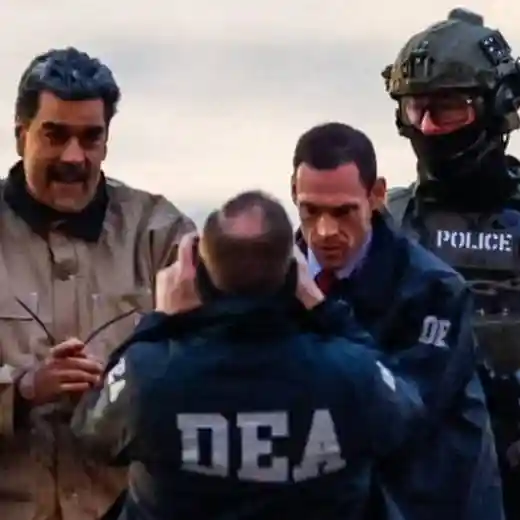
A few hours later, United States forces arrested Maduro and took him to New York facing criminal charges. The account was flattened and earned over $400,000。
The market is right。
And that's the problem。
People often tell a comforting story for predicting markets:
Market convergence information. Those with different views supported their beliefs with money. Prices change as evidence accumulates. The crowd is coming closer to the truth。
The story presupposes an important premise: the information to enter the market is open, loud and probabilistic — such as tight opinion polls, candidate failures, storm shifts, and company performance below expectations。
But the Maduro deal is not. It's more like precision timing than reasoning。
Now, predicting markets is no longer a smart predictor, but it's starting to look like something else: a place where proximity is better than insight, a channel is better than interpretation。
If the market is accurate because people have information that the rest of the world does not know and cannot know, it is not discovering the truth, but monetizing asymmetric information。
The importance of this distinction goes beyond the degree to which industry is willing to recognize it。
Accuracy may be a warning. Proponents of the market often repeat the same sentence when faced with criticism: if there is an internal trade, the market reacts earlier, thereby helping others. Internal transactions accelerate the emergence of truth。
This argument sounds clear in theory, but in practice its logic breaks itself。
If a market is accurate because it contains leaked military operations, classified information or internal government schedules, it is no longer an information market at any level of public interest. It's turned into a dark place for secret trading. There is a fundamental difference between reward for better analysis and reward for proximity to power. Those markets that blur the line will eventually draw regulatory attention — not because they are inaccurate, but because they are too precise in the wrong way。
An internally identified wallet on Voron23 @0xVoron Polymarket。
"They made more than $1 million a day in the Maduro incident. I've seen this pattern so many times, there's no doubt that insiders always win. Polymarket just makes it easier, faster, more visible. The wallet 0x31a5 transforms $34,000 into $410,000 within 3 hours. I don't know
The Maduro incident is disturbing not only because of the scale of the returns but also because of the context in which these markets erupt。
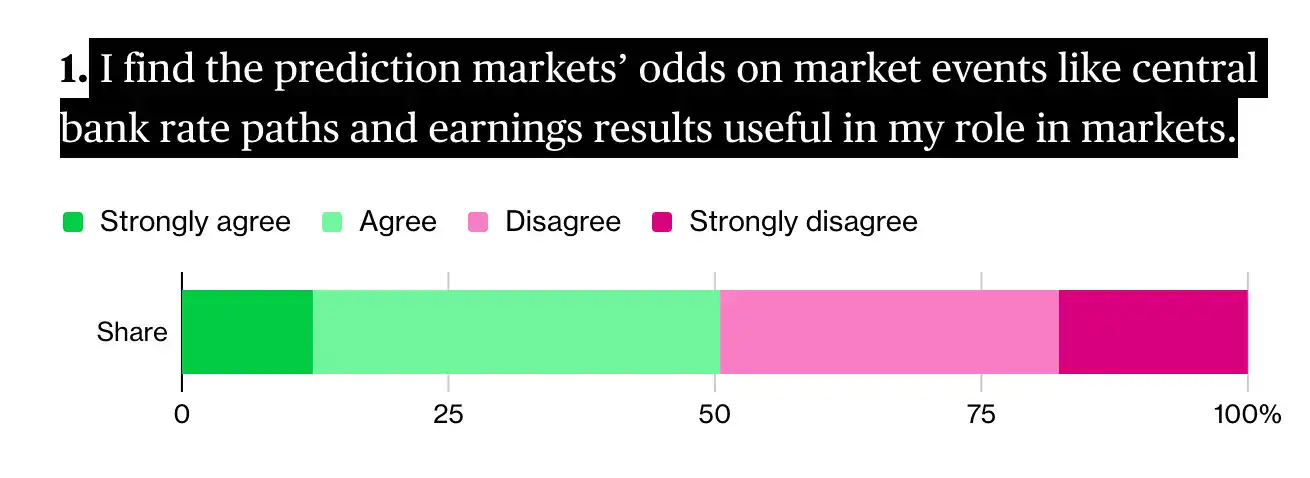
The projection of the market has evolved from a novelty on the margins to an independent financing ecosystem that Wall Street takes seriously. According to the Bloomberg market survey last December, traditional traders and financial institutions saw the forecast market as a viable financial product, although they also acknowledged that these platforms exposed the blurring between gambling and investment。
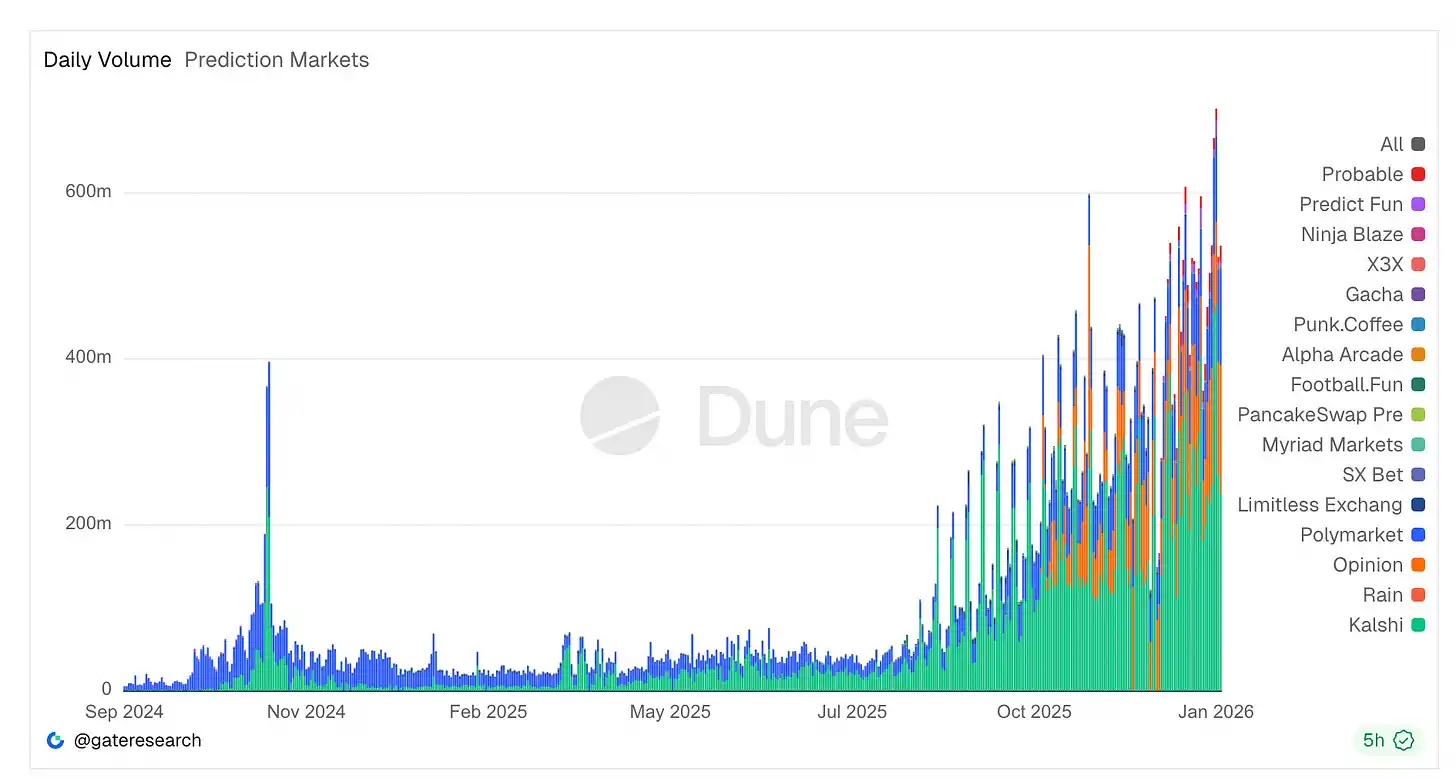
Trade surged. Platforms such as Kalshi and Polymarket now account for billions of dollars in nominal terms — Kalshi alone handled nearly $24 billion in 2025, and daily trading records are constantly being updated as political and sports contracts attract liquidity on an unprecedented scale。
Despite the review, daily trading activity in the forecast market is at an all-time high of about $700 million. Regulated platforms, such as Kalshi, dominate transactions, while encrypted original platforms remain culturally central. New terminals, polymers and analytical tools are available weekly。
This growth has also attracted interest in heavy-weight financial capital. The New York Stock Exchange owner has committed up to $2 billion in strategic transactions to Polymark, valued at about $9 billion, marking Wall Street ' s belief that these markets can compete with traditional trading venues。
However, this boom is colliding with regulatory and ethical ambiguity. Polymarket only recently regained conditional U.S. approval after early interdiction and payment of $1.4 million in CFTC fines for unregistered operations. At the same time, legislators, such as Congressman Ritchie Torres, have introduced specific bills aimed at prohibiting intra-government actors from trading after Maduro's return, on the grounds that the points of those bets appear to be more of an opportunity for early trading than an informed speculation。
However, despite legal, political and reputational pressures, market participation has not declined. In fact, the market is projected to expand from sports fairs to more areas such as corporate profitability indicators, and traditional gambling companies and hedge fund departments are now arranging for arbitrage and pricing inefficiencies among experts。
Taken together, these developments suggest that markets are projected to be no longer marginalized. They are deepening their links to the financial infrastructure, attracting professional capital and triggering the enactment of new laws, while their core operating mechanisms remain essentially a stake in the uncertain future。
Ignored warning: the Zelensky suit incident
If the Maduro incident exposed internal problems, the Zelensky suit market revealed deeper problems。
In mid-2025, Polymarket opened a market in which he was betting that Ukrainian President Vladimir Zelensky would wear a suit by July. It attracts huge trade volumes — hundreds of millions of dollars. It looks like a joke market, but it turns into a governance crisis。
Zelensky was wearing a black coat and trousers designed by a well-known male designer. The media called it a suit and fashion experts called it a suit. Anyone with eyes can see what happened。
But the prophecies voted:Not a suit。
Why
The reason for this is that a small number of large currency holders have, in the opposite direction, invested large sums of money, while they have sufficient voting power to promote a resolution in their favour. The cost of buying a prophecy machine is even lower than the compensation they may receive。
This is not a failure of decentrization, but of incentive design. The system operates in full accordance with pre-established rules — the human-led predictor machine, whose honesty depends entirely on the “cost of lying”. In this case, lying is obviously more cost-effective。
These events can easily be seen as extreme cases, development pains or temporary failures on the road to a more perfect prediction system. But I think this interpretation is wrong. These are not incidental but are the corollary of a combination of three elements:Financial incentives, vague rule-making and undeveloped governance mechanisms。
The markets don't see the truth. They just make oneSettlement programme。
It is not what most people believe, but what the system ultimately determines to be an effective outcome. It's often a semantic processPower and money gamesThe intersection. When huge interests are at stake, the junction will quickly be filled with forces。
Once that had been understood, such disputes no longer appeared unexpected。
Regulation isn't empty
The legislative response to the Maduro deal is predictable. A bill that is being advanced in Congress will prohibit federal officials and staff from trading in the political forecast market when they have significant confidential information. This is not radical, it is the basic rule。
The stock market figured that out decades ago. Government officials should not take advantage of the privilege of access to State authority — a view that is not contested. It is only now that the forecast market finds out because they insist on pretending to be something else。
I think we're overcomplicated。
The market is predicted as a place for people to invest in results that have not yet occurred. If the incident moves in their direction, they make money; if not, they lose money. The rest of our description is a follow-up。
It does not become something else simply because the interface is simpler or because the odds are expressed in probability. Nor does it become more serious because it operates on a block chain, or because economists find data interesting。
What matters is motivation. You are not paid because you have insight, but because you have correctly predicted what will happen。
I do not think it is necessary that we insist on making such activities more noble. Call it a prediction or information discovery that does not change the risk you take or the reason you take it。
To some extent, we seem reluctant to admit:People actually want to bet on the future。
Yeah, they do. It's nothing。
But we should stop pretending it's something else。
The forecast of market growth is inherently driven by the demand for “statements” — whether elections, wars, cultural events, or reality itself. This demand is real and persistent。
It is used by institutions to hedge uncertainty, by the diaspora to practice beliefs or entertainment, and by the media as a windmark. There is no need to wear any cover for this activity。
In fact, it's this disguise that creates friction。
When the platform labels itself as a “truth machine” and occupies a moral high ground, every dispute looks like a crisis of life or death. When the market is settled in a disturbing way, the event rises to a philosophical dilemma rather than its essence — a dispute over settlement in a high-risk bet product。
It's the wrong place to expectIt stems from the inaccuracy of narrative itself。
I'm not against predicting markets。
They are one of the relatively honest ways in which humans express their faith in uncertainty, and they tend to emerge a disturbing signal faster than opinion polls. They will continue to grow。
But if we glorify it as a more noble presence, we are not responsible for ourselves. They are not recognition engines, but financial instruments linked to future events. This distinction is precisely what makes them healthier — clearer regulation, clearer ethics and more rational design, all of which will follow。
Once you admit that you're running a bet product, you won't be surprised at the betting。
