
Does the Fed still have interest rates? This data is crucial tonight
The Citi flag considers the geo-disturbation to be brief and the direction of the reduction remains unchanged. For its part, the Deutsche Bank warns that the policy is neutral or that interest rates are not reduced indefinitely。

Original title: "Is the Fed going to lower interest rates?" This is the key tonight
Published by Dong Jing
The market’s expectations of the Fed’s interest rate decline are swaying in the midst of geopolitical conflict and a rebound in inflation。At the heart of the current market game is whether high energy prices will trigger sustained inflation or reverse consumer demand and push the Fed to lower interest rates
On 21 April, according to wind trackers, Citi ' s latest report gave clear reasons for the excess interest rate, arguing that the interruption in the supply of crude oil was only a brief disturbance, and that the path to the interest rate reduction had been slow but in a clear direction, while Deutsche Bank had poured cold water warning that the Fed ' s policy was in a neutral position and expected to maintain the current interest rate indefinitely。
The forthcoming publication of retail sales data in March will be a key test to break the deadlock at a time when the views of the two major players intersect. This data will not only reveal the real destructive effect of high oil prices on core consumption, but will directly determine the policy path of the Fed in the near future。
Citi flag: geo-disturbation is short and the interest rate remains unchanged
Although markets continue to be affected by geopolitical developments, Citi firmly believes that the path to lower interest rates and more dove Fed policies remains。
The core logic of this judgment is thatThe impact of the situation in the Strait of Hormuz on oil supply is increasingly likely to be short-lived rather than a continuing source of inflation。On April 18, there were reports that the Strait of Hormuz would be reopened and that, despite subsequent challenges, the rate of return on national debt and oil prices had fallen from a high on Thursday and remained low - This is in itself a price that the market is setting for a "shock short" scenario。
The report notes that the Citi’s logical chain is clear:The short-lived oil price shocks of the geo-conflict do not continue to spread inflationary pressures, and the Fed is well placed to re-enter the interest-rate track。
In addition, a series of bottom-up economic data tracked by Citibank indicates that the macro-financial environment is undergoing subtle changes:
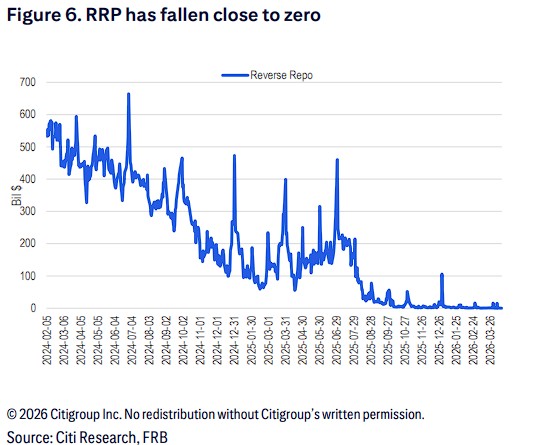
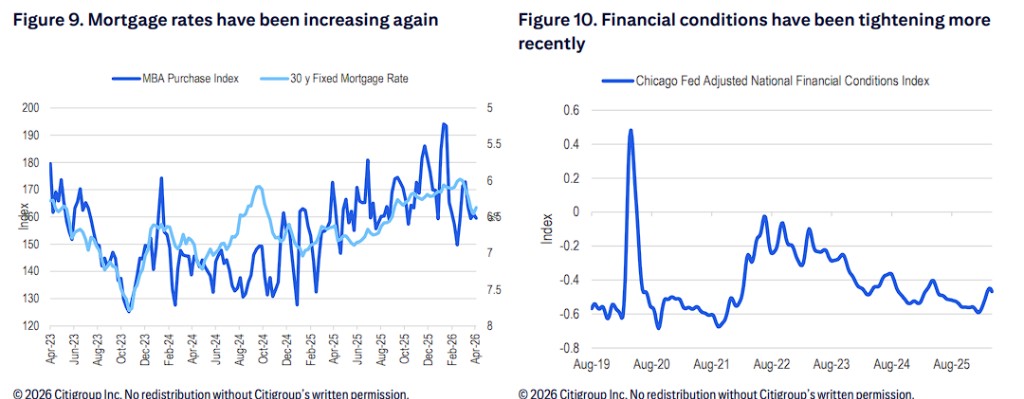
Liquidity and financial conditions:THE FED’S REVERSE BUY-BACK (RRP) SIZE HAS FALLEN SIGNIFICANTLY TO NEAR-ZERO LEVELS; AT THE SAME TIME, FINANCIAL CONDITIONS HAVE BEEN TIGHTENING RECENTLY, AND INTEREST RATES ON MORTGAGES HAVE AGAIN INCREASED。
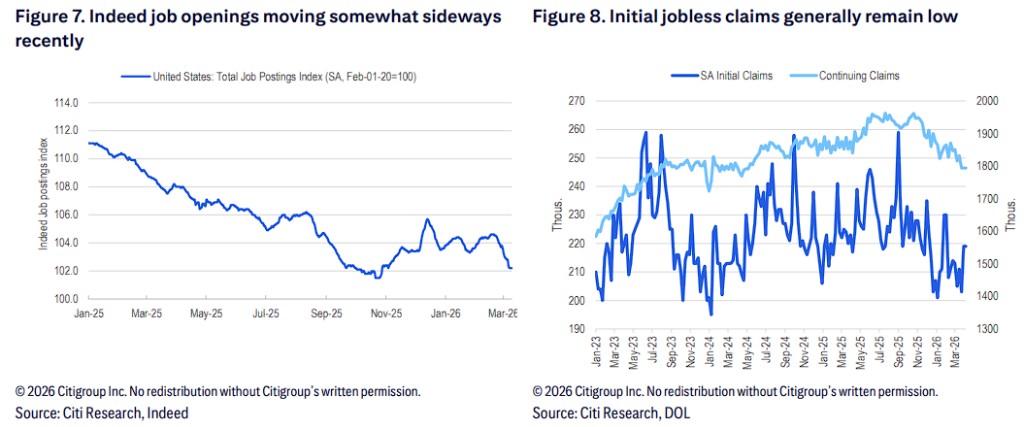
Labour market:Indeed job opening data have recently shown a pattern of cross-checking, although the overall number of applicants for unemployment benefits for the first time remains low。
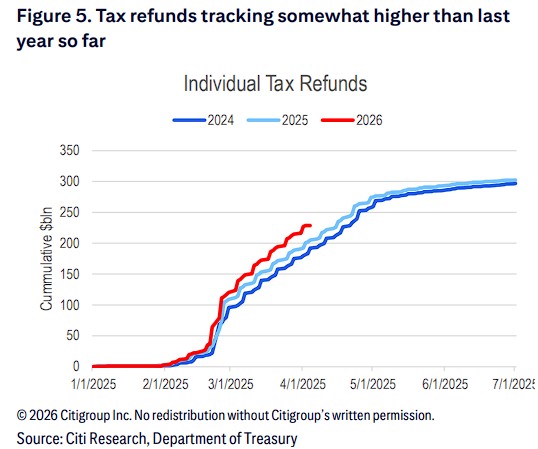
Financial:To date, individual tax returns (cumulative in billions of United States dollars) this year as a whole are slightly higher than last year ' s equivalent。
Tonight's test: What's the key to Control Group retail sales data in March
At a time when interest rates are expected to swing, the forthcoming March retail sales data will provide investors with first-hand clues as to the extent to which high gasoline prices reduce consumer spending in other commodity categories。
Citi stresses the need for investors to "strike away" when interpreting the data. Owing to the increase in the price of petrol, nominal retail sales in March will inevitably surge. However, what really determines the Fed’s policy is its sales data。
The report notes that the exclusion of petrol stations and certain specific categories of sales from the data is a more realistic and accurate reflection of whether high oil prices have led to weaker consumer spending in other areas. If the Control Group’s data were unexpectedly weak, it would be a powerful proof that high inflation is reversing demand, thereby providing the Fed with critical data support for its interest-rate logic。
Deutsche Gin's cold water: policies are neutral, the Fed or indefinitely
In contrast to Citi’s optimistic expectations, Deutsche Bank made a very cautious judgement about the prospect of a reduction in interest rates. In its study, the Deutsche Bank made it clear that the Fed was expected to maintain current interest rates indefinitely, as current policies were already neutral。
The Deutsche Bank's pessimism expectations are based on the following core points:
De-inflation stagnation:Broad inflation indicators indicate that progress in fighting inflation in the United States has stalled。
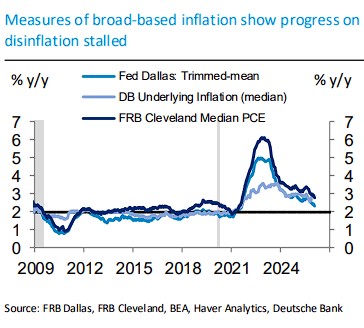
Officials turn their positions:The tracking of Federal Reserve officials by the Deutsche Bank shows that officials such as Waller and Milan have adopted a more hawk tone, while most continue to consider the current policy position “well appropriate”. Specifically:
• Waller: Attitudes tend to hawk. He noted that prolonged conflict in the Middle East would cut off the interest-rate path and that a series of shocks (tariff overloads of oil prices) could trigger a more sustained rise in inflation, while stressing that core inflation after removing the effects of tariffs was close to 2 per cent and that the labour market was vulnerable
• Milan: is the voice of the biggest doves of the day, supporting three or four interest-rate cuts this year, arguing that the war has not changed the inflation outlook 12 to 18 months later and that oil price shocks are temporary
• Williams: the policy is considered to be “just where it is needed”, bringing the inflation forecast for 2026 upwards to about 2.75 per cent and the growth forecast for 2026 downwards to 2 to 2.5 per cent
• Hammack: make it clear that interest rates will remain unchanged for a long time
• Goolsbee: warns that if oil prices remain constant at $90 per barrel, they may spread to other prices; there is little possibility of further interest rate reductions in 2026, which may have to wait until 2027
• Daly: It is not surprising that market pricing is shifting to zero interest rate if oil price shocks continue until the end of the year。
The Fed’s March minutes similarly show that the vast majority of officials believe that the return of inflation to the 2% target will be delayed; some even discussed the need to include the words “two-way risk” in their statements, implying that the possibility of an increase is not entirely excluded。
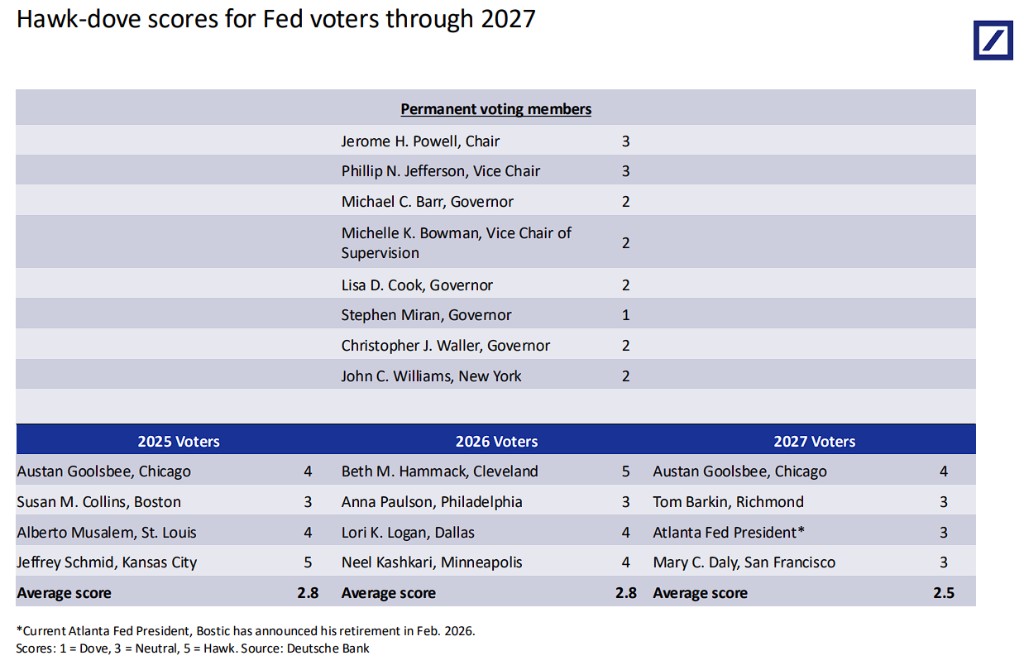
The German Federal Reserve officials' score of eagle pigeons shows that in 2026 the voting committee scored an average of 2.8 points (one of the most doves, five of the eagles) and that the overall bias was slightly neutral, but the voice of the doves was clearly in the minority。
Market pricing reversed:In the face of persistent inflationary pressures and strong economic resilience, market expectations have changed dramatically. According to Deutsche Bank, the current market pricing is expected to be zero interest rate reduction for the whole of 2026, not until summer 2027。
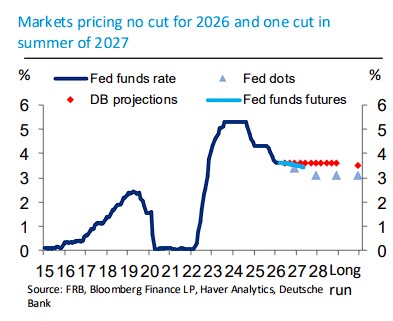
Germany expects that, in the baseline scenario, federal fund interest rates will remain at 3.63 per cent for the entire period from 2026 to 2028, without any reduction throughout the year。
Original Link
