
It's already rolling up
Each shift in the platform paradigm will trigger a new set of new payments systems that cannot be served Business

Man, Kaori
Edit |Sleepy.txt
Enter "create a card" in Claude. You'll get a Visa card in a few seconds. But this card is not for you, it's for AI。
Yesterday, there was a crazy discussion on X about a presentation of a product that generated virtual cards for large models. Ordinary people apply for a virtual card to be used for network transactions, but for AI to apply for a virtual credit card, but after Agent's fire, they pay for another life on the track。
If you focus on this area, you'll find similar excitement comes every few months. September 2025 was the X402 agreement that Coinbase and Cloudflare joined together to turn the 402 status code of HTTP into the original payment channel for Agent. In October 2025, Visa and Mastercard simultaneously issued the Agent payment agreement. Now it's a virtual card。
Agent's payment for this track is still highly dispersed, and each of them solves part of the problem, but no one has yet been able to provide a complete solution. This article attempts to answer several questions:Agent, what is a virtual card? What difference does it make to x 402? What can virtual cards solve, and what can they solve? And what's the chance of this track
Supported by Kite AI
Kite is the first Layer 1 block chain to be paid for by an AI smart body, a bottom-line infrastructure that enables an autonomous AI smart body to operate in an environment with a verifiable identity, programmable governance, and primary stable currency settlement。
Kite was created by senior AI and data infrastructure experts from Databricks, Uber and UC Berkeley and has completed $35 million in financing, including PayPal, General Catalest, Coinbase Ventures, 8VC and several top investment foundations。
What's Agent's virtual credit card
You certainly don't want to give your credit card directly to an Agent, like many people don't install OpenClaw on their main computer。
The reason is simple, the risk exposure cannot be controlled. Ordinary credit cards do not have a single consumption ceiling, do not have business restrictions and cannot be abandoned immediately. Once Agent is wrong or attacked, your entire account is exposed to risk。
Agent's virtual card is not a regular credit card for AI. It is a programmable, restricted payment voucher. Each card can be capped and transactions are automatically rejected if Agent's consumption exceeds the prescribed amount. You can also suspend or close any card at any time without affecting your bottom bank account。
In general, the core value of virtual cards is controllability。
In the case of the virtual card project AgentCard, which attracted attention yesterday, it operates through a model context protocol (MCP) server. The process is like this: you first charge the virtual card provider, Agent calls MCP tools such as "create card (amount = $50)" and the provider's API immediately issues a one-time advance Visa card, which is precisely locked at $50。
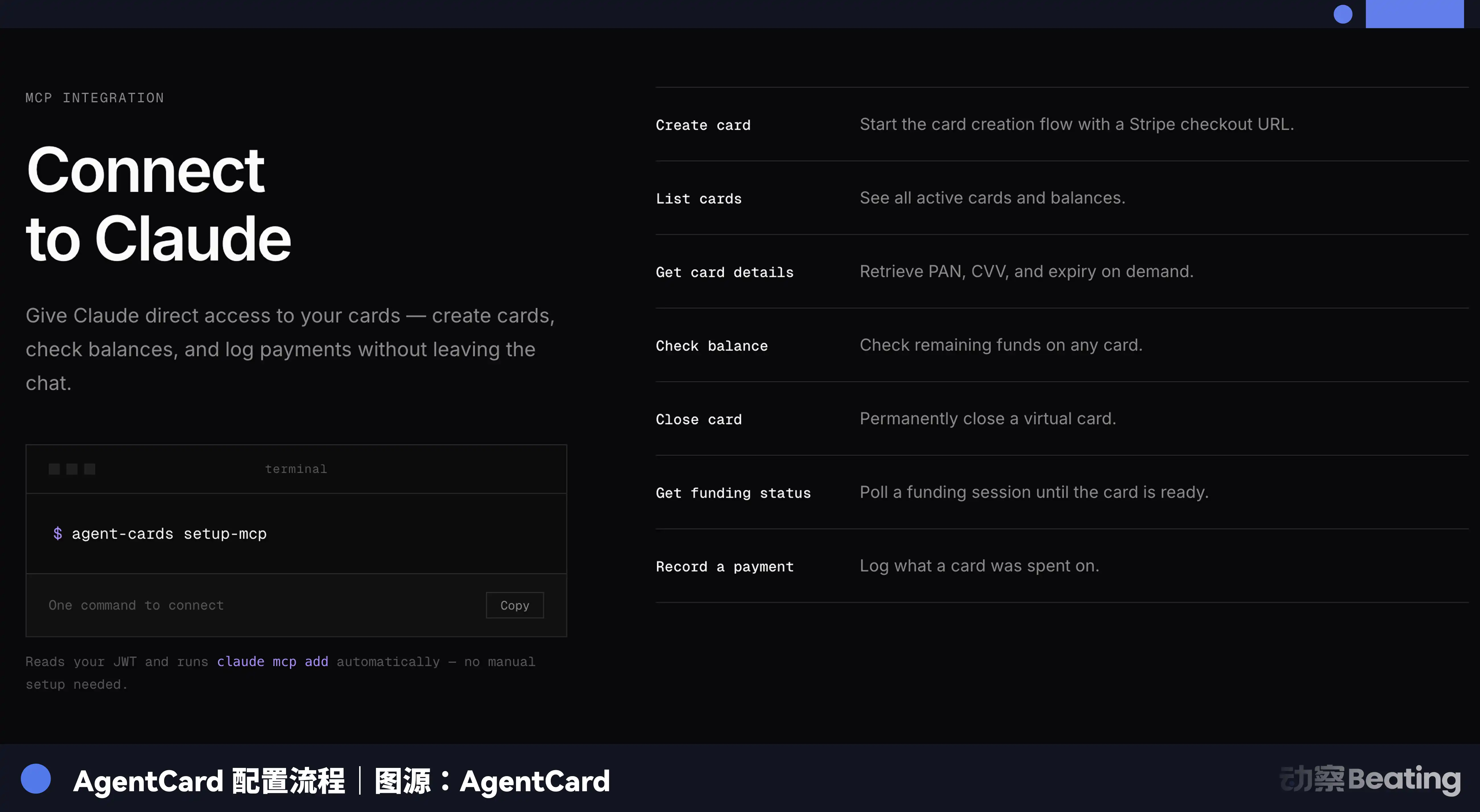
There are several layers of back end, MCP server processing and financial technology company accreditation and API call, and Agent can't see your real source of funding. The cards are issued by the issuing bank on the Visa network and the funds are deducted from your pre-connected bank account or credit card. Agent gets a temporary card number, which is used to close a web page or API payments and is automatically disabled after use。
The settings take approximately 5 minutes to complete with the CLI or configuration file. The whole process was highly isolated, and your real card information was never revealed to Agent。
What's the virtual card trying to solve
Most of the time it's a human shopping process。
You use ChatGPT to study a headset, and then you put it down, and this is the first floor. Or you get ChatGPT to find headphones and click on the purchase, you confirm the payment, this is the second floor. Or you set a condition that Agent buys automatically when the price breaks a number, which is the third floor。
In all three cases, Agent used your payment vouchers, and the big card organizations and AI labs are already building bottom protocols for these scenes。
The really interesting scene begins on the fourth floor。
Your Agent needs to call another big model of API, for example, to switch from Anthropic to a cheaper reasoning model, to buy an expensive data set to do research and hire another Agent to handle a sub-mission。
In these scenes, Agent wasn't brushing your cards, he needed his own payment certificate。
The current practice is for developers to buy these things for Agent and then give it access。It's not an agent. It's a substitute。
In order to completely free humanity (but not to be completely trusted), a limited Agent payment is needed, and the programmable characteristics of the virtual card correspond to this demand。
Why is this question only now? Because the three conditions are now ripe。
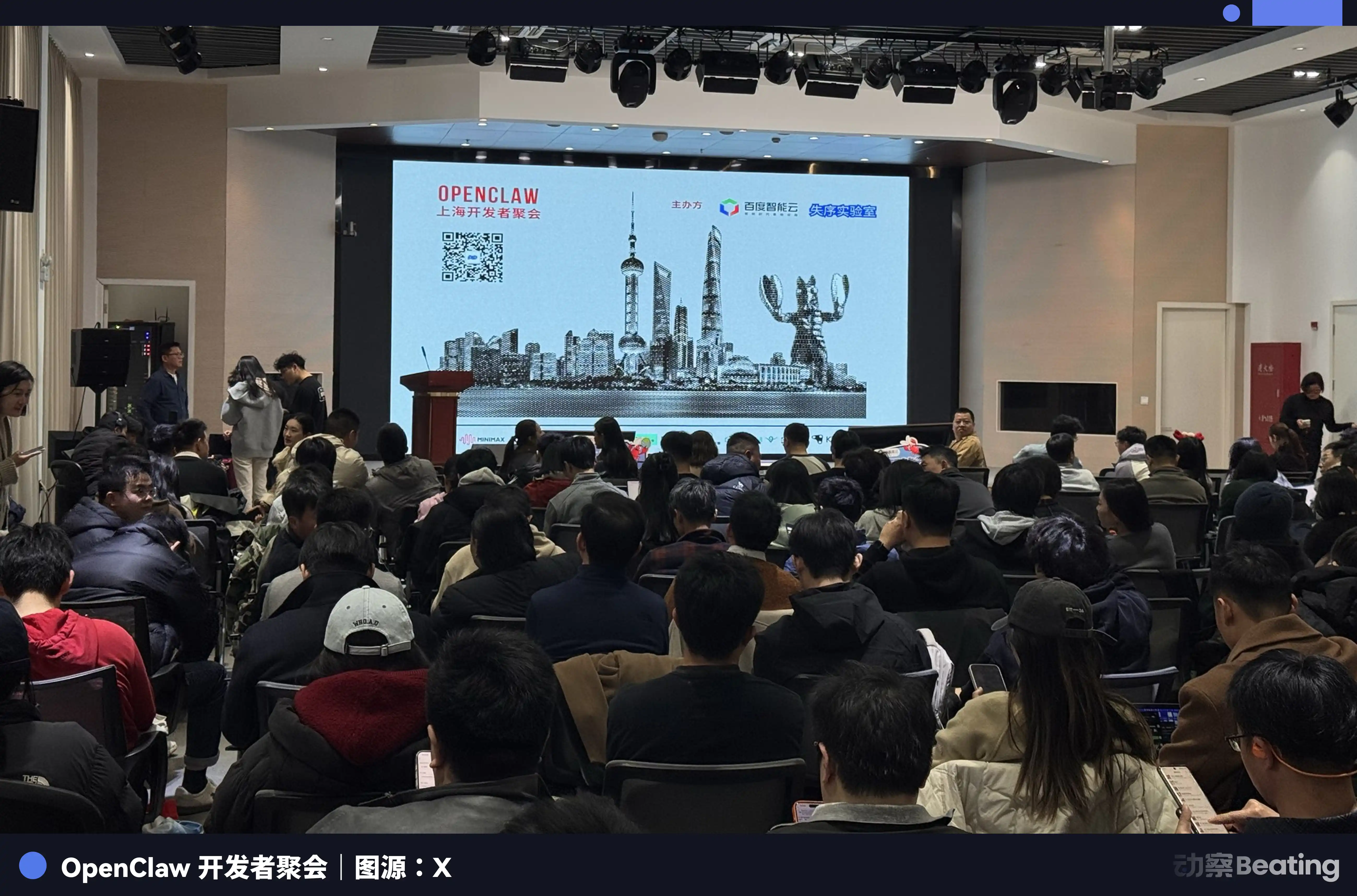
The first condition is the demand side. This can be seen in large cities around the world, such as flaming lobster installation activities。
The second condition is supply side. Stripe Issuing has been able to create and manage virtual cards, technology and protocol through API。
The third condition is the end of the card. Visa and Mastercard simultaneously issued Agent payment agreements, Cloudflare participated in technical standard-setting, and Fiserv became the first major payment processors to support these agreements, and platformization has been completed。
From the grass-roots entrepreneurs to the Cartoons, everyone saw the same thing at the same time:Agent needs his own financial infrastructure。
Structural limitations of virtual cards
The virtual card solves today's problems, but it inherits an old problem in the banking card network: slow settlement。
Most people outside the payment industry do not realize that when you brush your cards at the store, the merchant does not get the money immediately. After a day, a few days, cross-border payments may take 30 days to get the money. Visa does not move the money itself, banks move, and bank settlements are slow and expensive。
For Agent, the problem was magnified. If your Agent was buying Token from Anthropic in large quantities, and the business took off suddenly, you might have run out of money before the income came in。
The virtual card has a second limitation: cross-border costs. Cross-border payments for traditional bank cards involve currency exchange, intermediate fees and compliance reviews. For Agent, who needs to call API and service globally, these friction costs will accumulate rapidly。
The third limitation is insufficient programmability. And when you get older, you get bigger, you get bigger, you get bigger. If you use a virtual card, the main Agent has to apply for each child, or a new card for a few dollars each。
when these limitations are understood, it becomes clear why the x402 agreement raised concerns a few months ago。
the essence of x402 is to bypass the network of bank cards and pay directly on the HTTP layer with a stable currency. As an example, assuming your Agent needs to call a paid API to get real-time data. With a virtual card, you have to create a card, register a server's account, tie a card, subscribe to a monthly package, get an API key and then configure it to Agent。
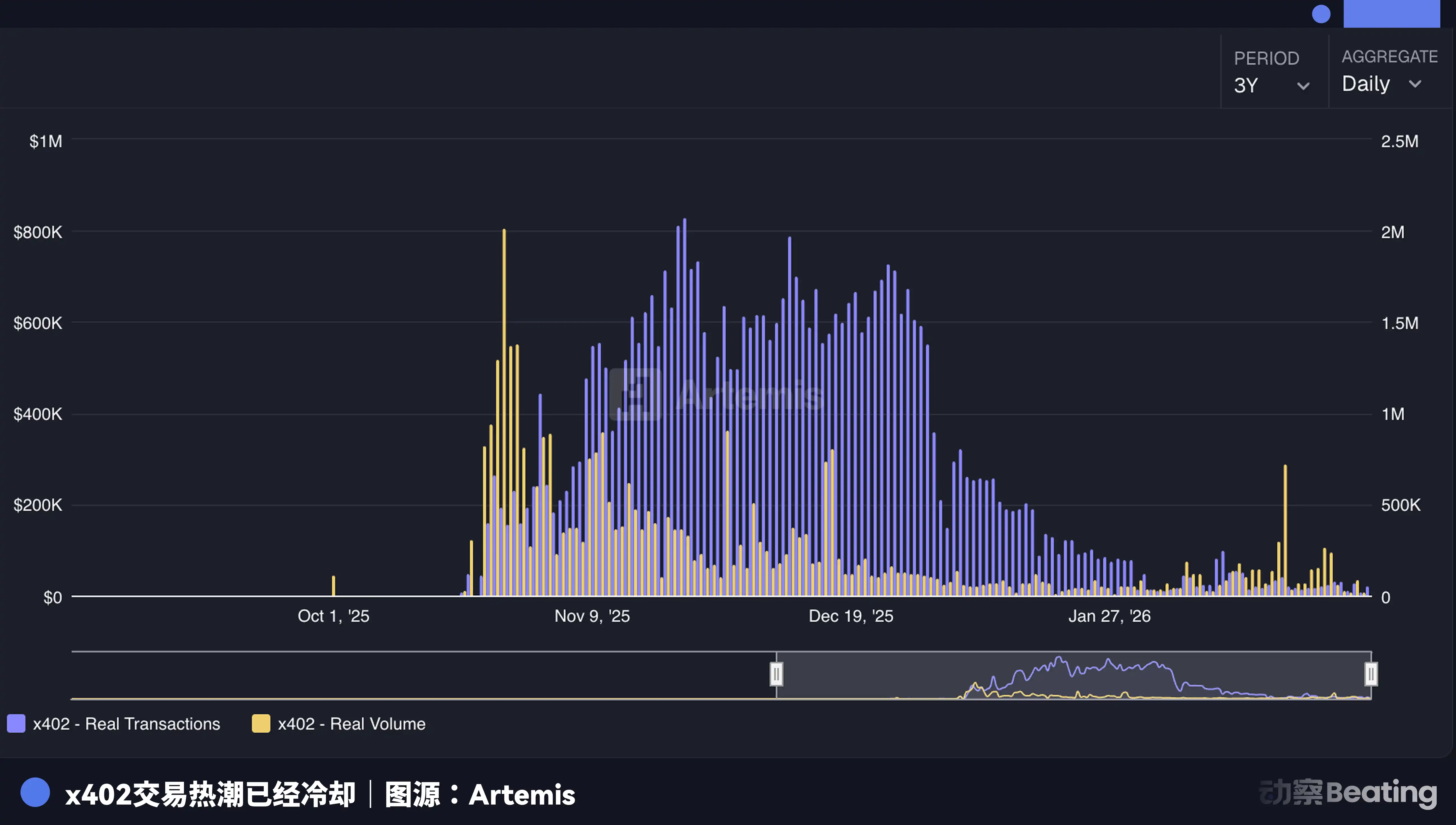
Send HTTP requests directly with x402, Agent, the server returns 402 status code and price, Agent automatically signs a USDC transfer, the server confirms receipt and returns data. No registration is required, no subscription is required, and fees are paid on the basis of usage。
The two are not a substitute for each other. Virtual cards are suitable for Agent to receive Visa's commercial consumption, Internet purchases, subscriptions to SaaS, and payment for cloud service bills. x402 Fits direct payments between Agent, calls API, purchases data, hires other Agents to perform sub-tasks。
At present, most businesses accept only Visa/Mastercard, so the virtual card is today's option. But for this type of scenario where Agent calls for collaboration between API and Agent, x 402 this kind of primary payment agreement is more appropriate。
There is also an intermediate solution to accelerate the back end of the bank card with a stable currency. The front end is also a swipe card and the back end is turned into a chain to be paid on time. Some say that money stabilization goes to the network of intermediary bank cards, in the wrong direction. Stabilized currencies do not have the capacity to counter fraud at the level of mortgage-free credit, non-payment rights and Visa, and are used to speed up bank cards, not to replace them。
The three tiers are progressive relationships, virtual card resolution compatibility, stabilization of currency settlement speed, and original wallet resolution programming。What floor you're on today depends on what kind of counterparties you're dealing with。
Three parallel entrepreneurship tracks
Pay start-up for Agent will eventually lead to an unexpected place: machine organization。
THINK ABOUT HOW TODAY'S BUSINESS MANAGES STAFF CONSUMPTION. COMPANY CARDS, REIMBURSEMENT RULES, BUDGET CENTRES, APPROVAL PROCESSES, AUDIT TRAILS. IT IS AN INFRASTRUCTURE FOR CORPORATE GOVERNANCE. NOW, THE BUSINESS NEEDS THE SAME THING FOR THE AI AGENT。
This means that at least three entrepreneurial tracks are being opened simultaneously。
The first is the Agent priority card platform. There are currently multiple platforms on the ground, but most are still in the most surface virtual card distribution。
The true moat lies in wind-control models, costing logic and developer experience. For example, the check-in process does not have to fill out a form, using the API registration, wind control model based on the Agent behaviour model rather than human credit history, billing logic based on token consumption rather than monthly billing。
The second is KYA infrastructure. KYA means Know Your Agent, which corresponds to KYC in traditional finance. When Agent became a businessman and a buyer, knowing your clients became an Agent. Who developed it? On what model? What are historical transactions and patterns of behaviour? This is a whole new layer of trust。
A start-up company called Skyfire is already doing this by launching the KYAPAY agreement, which allows business owners to verify the identity and authorization status of Agent. In December 2025, Skyfire worked with Visa to complete an end-to-end Agent shopping demonstration: Agent researched its own products, compared prices, completed purchases, and was identified by the KYA protocol and paid for by Visa Trusted Agent Protocol。
But in 2026, Skyfire officially stopped and made no progress with the latest products or agreements. It can be said that there is currently no uniform standard for the entire industry, which is a mountain to be looted。
The third is the liquidation and auditing network for transactions between Agents。
Agent manages dozens of them, each with a wallet and a trade record. Who's gonna reconcile them? Who's gonna audit it? This is the opportunity of the "four major accounting firms" of the Agent economy。
History always rhymes. Around 2000, eBay created a market for ordinary people to buy and sell. Those individual sellers can't get the merchant's account, PayPal gets the money. By the end of the year, PayPal processed 40 per cent of the eBay auction payments. Around 2010, independent developers wanted to collect money online, and PayPal and Cybersource could do it, but the process was long and painful, and Stripe solved the problem using seven lines of code。
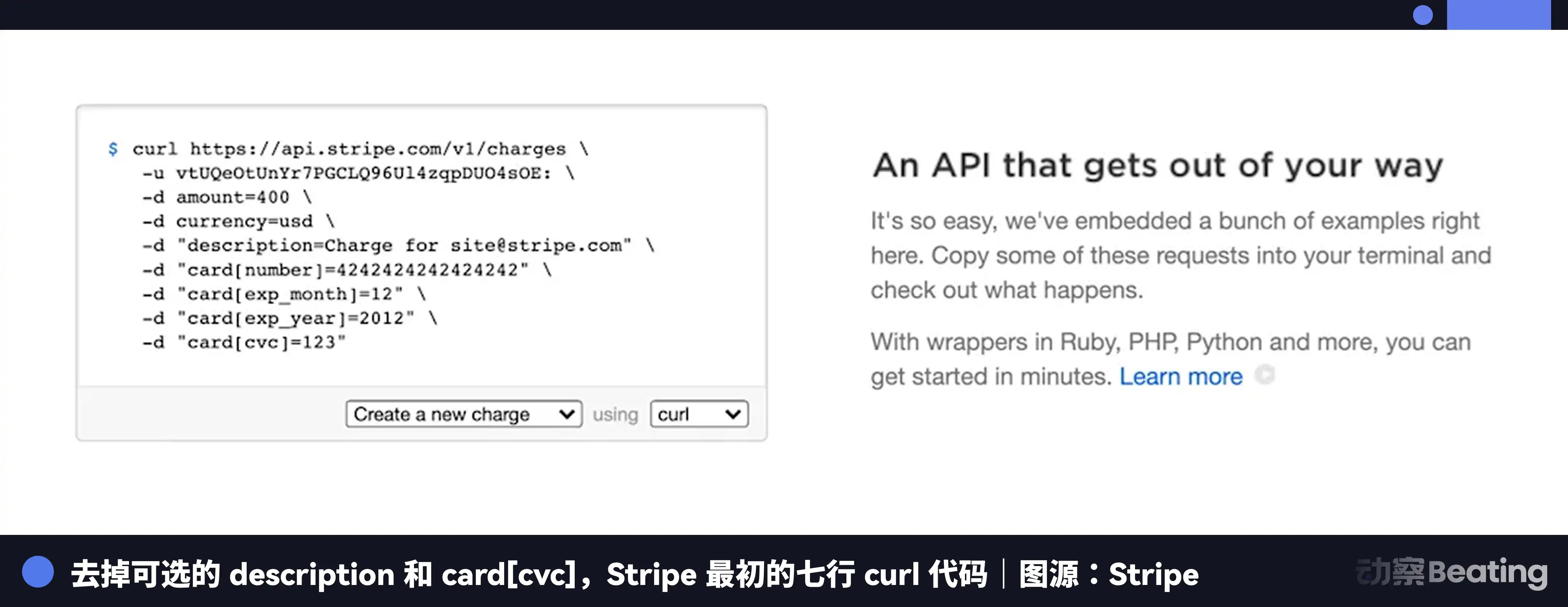
The law is consistentEach shift in the platform paradigm has given rise to new businesses that cannot be served by existing payment systems。Winners serve businesses that traditional giants do not consider worth risk auditing。
Who's the new dealer today
In 2025, GitHub added about 36 million developers. One quarter of the corporate code bank in the YC 2025 winter training camp is generated by AI more than 95%. On Bolt.new, 67% of the 5 million users are not professional developers。
Millions of ordinary people who could not write production-level codes two years ago are now publishing software。
Go back to the first tweet. It looks like a product function, but it's the starting point of a paradigm shift。
From the grass-roots entrepreneurs to the giants of Cartoon, everyone realized that Agent needed his own financial infrastructure. But virtual cards, stabilization coins, wallets are scaffolds。
Real change is deeper. When the natural language becomes the primary interface of the transaction, payment ceases to be an independent industry and becomes embedded in the foundational capacity of each dialogue。
Back then, eBay's personal sellers didn't care about ACH or the technical differences of the credit card network. All they need is a register to collect something, and PayPal gave it to them. Today, the tens of millions of Vibe Coder and their Agent don't care whether the bank card is the bottom line of the stable currency. All they have to say is one word and the money is in place。
Whoever makes it first is the next PayPal。
