
Deep into the tiger's den: a field investigation report from the Strait of Hormuz
The reality is far more complex than you can imagine, and the Strait of Hormuz is not simply open or closed. 。
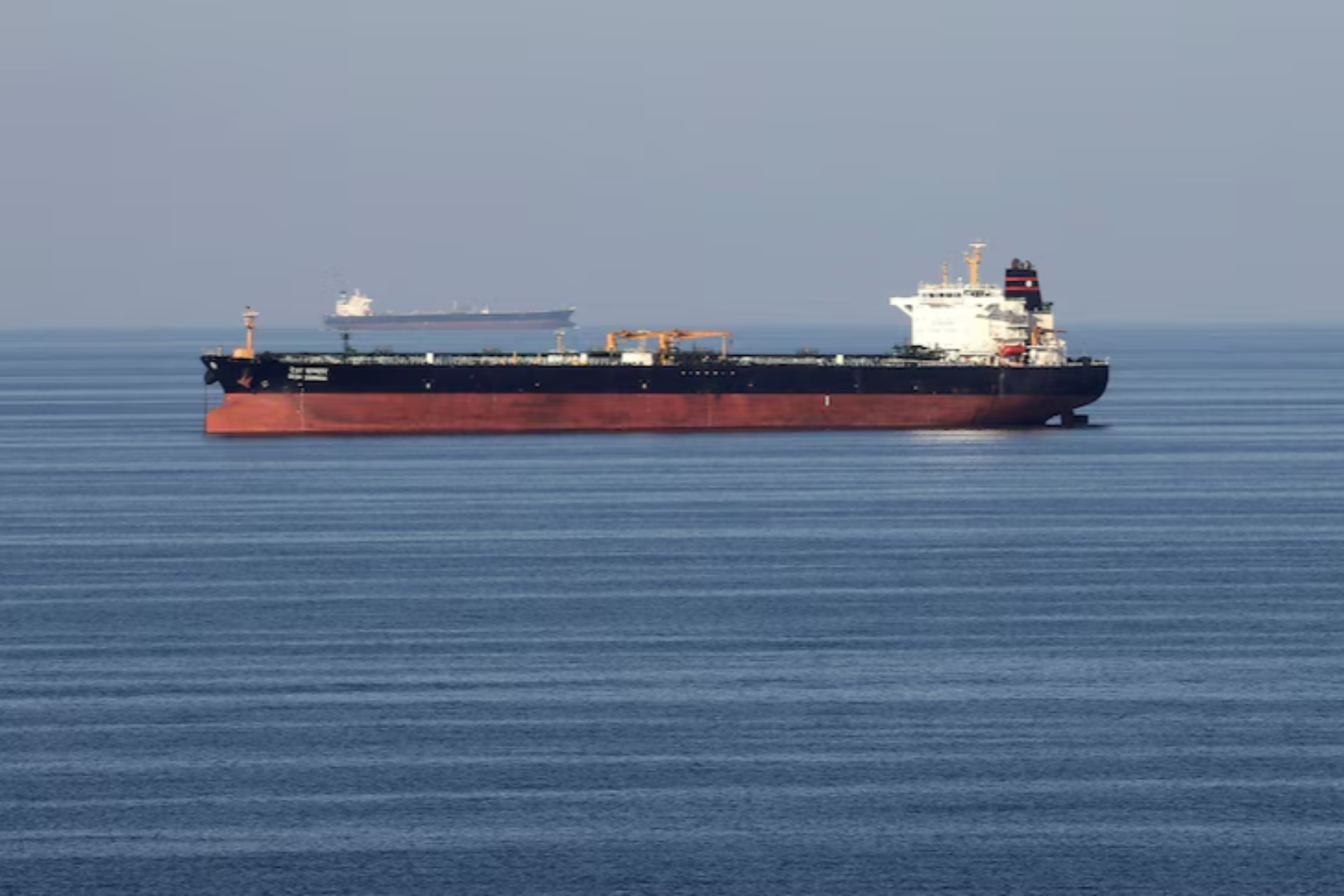
Original title: Strait of Hormuz: A Citrini Field Trip
Source: Citrini Research
ORIGINAL LANGUAGE: 2030 FY
MOTION NOTE: AT THE END OF FEBRUARY THIS YEAR, A 700-WORD "END-OF-LIFE REPORT" IGNITED THE MARKET'S COLLECTIVE ANXIETY ABOUT AI: ITS READING ON X EXCEEDED 20 MILLION, CAUSING WALL STREET'S ATTENTION. THE NEXT DAY, THE ROAD POINTED TO A DROP OF 800 POINTS AND A SERIOUS SETBACK FOR SOFTWARE AND PRIVATE LOANS。
And just yesterday, the agency that published the report, Citrini Research, once again launched a heavy article, Strait of Hormuz: A Citrini Field Trip。
This report was finally received by the Agency, which sent a four-language analyst to visit the Strait of Hormuz in situ. The reality is far more complicated than you can imagine: the Strait of Hormuz is not simply open or closed. The reality is that hot fight goes hand in hand with commercial diplomacy: the United States is conducting military operations while its allies (e.g. France, Japan, Greece) are actively negotiating shipping rights with Iran. This is a typical symptom of a multipolar world。
The discussions surrounding this report are also developing rapidly. Its narrative style is different from the traditional analysis, and more like a risk-taking novel: some appreciate its commitment to the "truth" and others question its overture. In any case, the report itself still deserves a first reading. Here is the translation:
The current situation in the Straits of Hormuz is a mystery。
To that end, Citrini sent the top field analysts of his standard capabilities — which we call "Analyst 3" to avoid emotional attachments — to carry out research missions in the Strait of Hormuz。
3 The analyst is fluent in four languages, including Arabic, and carries a box of equipment loaded with a Piquen safety box, a box of Cuban cigars, $15,000 in cash and a roll of Zinnigutin bags to carry out the journey we had made at our office in Manhattan a week ago。
We thought that the trip would ultimately lead to such a vague conclusion as “opening or closing the strait” and that it would have been futile and fruitless。
But in fact, we have a more detailed and profound understanding of the current situation and of the process of transition to multipolarity in the world。
If David Foster Wallace were alive, he would be in a bar on the coast of Oman in a small town on the coast of Amman to return the report — a unique silence in a hotel with 100 guest rooms on napkins, with only three guests; a tarship that drifted slowly towards the Strait of Hormuz, but never actually got in。
This is our creative inspiration, if Wallace is equally concerned about how to tap the excess returns on investment。
This is a story of the world's most critical place — the 54-mile-long shipping lane between Iran and Oman, where the global economy is operating and stagnating。
The Strait holds many opportunities for excess returns on investment, including the new rules of passage that are being developed in real time by the Iranian Revolutionary Guards: it is up to them to decide which ships are accessible and which are prohibited。
3 In spite of the resistance of the Omani border agents, the silent warnings and the harsh warnings of two Coast Guard officers armed with assault rifles, the analysts were determined to travel to the core of this Earth ' s most important waterway。
In the middle of the war, he boarded a speedboat without GPS, and the captain was a stranger who had been at the port entrance three hours earlier, taking out a stack of cash to meet。
All of this is needed for investment research。
Here is the full story of the study。
Deep into the Strait of Hormuz
Before entering Oman, local officials requested the signature of a document by Analyst No. 3。
This pre-printed oath, which was handed out on the tea table at the desert checkpoint, was to undertake not to carry out any form of photography, press or information gathering in the Sultanate of Oman。
He signed his name。
Subsequently, the officer opened the analyst ' s Picken safe for inspection, leaving behind clouds, microphones and video sunglasses。
Research mission, officially launched。
Upon arrival in Oman, the analyst No. 3 boarded the old, non-GPS-free speedboat at his mouth, despite instructions from Omani officials to return and sailed on the high seas to an area just 18 miles from the Iranian coast。
At that point, the witness drone circled over his head, and the Iranian Revolutionary Guard patrol boat cruised at a distance along a fixed route。
He jumped into the Strait of Hormuz, carrying a Cuban cigar in his mouth and swimming in the sea。
Shortly thereafter, he was stopped by the Coast Guard and detained, and his mobile phone was confiscated。
Eventually, he managed to get back on his way, sharing all the findings of this trip with us during an eight-hour briefing。
The following are first-hand accounts of the field trip of Analyst 3 in the Strait of Hormuz, described in terms of the first person。
In order to protect the security of anonymous sources of information, changes have been made to the names, locations and details of certain key figures。
The quotations are based on the analyst ' s memory and are translated from the original Arabic language。
This is the best we can do in terms of the accuracy of our information — because the analyst's mobile phone, together with all the notes and photographs stored therein, is thousands of miles away at this point, presumably being verified individually by the Omani authorities。
I. CONCLUSION OF RESEARCH
"What if I go straight to the Strait of Hormuz?"
It was a joke at first -- like lying at 2:00 in the morning. And it is not easy for them to enter the Hall of Affliction on the couch, as it should have been for those who vowed before their sleep to carry out their plans, and awakened for their real responsibility。
But it wasn't 2:00 in the morning, and we weren't in the bedroom。
We are sitting in the office of the Sitrini Research Company in midtown Manhattan, looking at the screen of the mobile phone, and the worst geopolitical crisis of the past decade continues to ferment。
The most mobile markets in the world, like monetized currencies, fluctuated sharply between the tweets of Trump and the Associated Press headlines, with no rules。
It is clear that no one — indeed, all of them, analysts, journalists, retired generals who spoke loudly on cable news, not to mention us — really knows what is going on。
All rely on the same old satellite images, anonymous Pentagon information sources and the same ship identification system shipping data。
I later found that about half of the traffic actually passing through the straits was missing from these data every day。
At the end of the day, isn't it our duty to make the chaotic investment climate clear
I am eager to do this, and I have a human connection (at least part of it) to that end, which will also be a very interesting experience。
The decision to travel to the Strait of Hormuz was therefore finalized。
In the West Trini apartment in New York, we've got a millet phone (a 150-fold charade camera, a souvenir of our visit to a robot factory in China), a global maritime distress and safety system beacon, $15,000 cash, a cloud pedal and a microphone device, all loaded into the Pyramid safe。
We sat down and worked on the process, focusing on those questions that we wanted the most。
Planning for the investigation of the Strait of Hormuz
Day 0: Dubai-Dubai International Financial Centre
Meetings with ship brokers, bulk commodity traders and tanker analysts
Establishment of a basic information base to combo open market data
Communicate with informed persons to assess the expected direction of military operations and shipping markets。
Day 1: Fuchaila
Early in the morning, to observe hundreds of idle tankers and billions of dollars in cargo
Visit the perimeter of the oil storage depot in the Fujairah oil industrial zone to confirm the type of oil storage that was damaged, full of storage and stock shortages
Visited Ship Agency Street and the Redison Hotel bar to gather first-line information。
Day 2: Halfikanddibar Hasab
(b) A northerly route along the eastern coast of the United Arab Emirates to inspect the container port of Halficán, where the trans-shipment cargo is carried
In Diba, it entered Musandem governorate and arrived in the Gulf region at the border between the United Arab Emirates, Oman and Iran
In the evening, it arrived in Hashab and observed the movement of dhows heading towards the Iranian coast at the port。
Day 3: Musandem Sea
- 24 hours a day on a speedboat, passing through Khorsham Gorge and Telegraph Island, to Qumzar, only about 15 kilometres from the Iranian coastline
(c) Field visits to the traffic zone of the channel, in consultation with local fishermen
The number of ships is manually measured and compared with real-time ship identification system data at the cellular end。
Day 4: Halnagid Zhubhuharras Haimar Dubai
(b) Travel by four-cars to Haulnaguid, the only road viewing site that can overlooking the Persian Gulf shipping lanes, observe the passage of the Strait and the movement of ships, gather intelligence from locals and cross-check in real time with vortex shipping data
Exchanges with fishermen with local channels of communication across the Straits in Bouha
(b) To visit the dhow shipyard, the Gulf Stream Trade Area and the physical infrastructure of Iran ' s informal trade through Ra ' s Haema
Return to Dubai。
My itinerary was planned to arrive in Dubai first, to communicate with knowledgeable individuals and contacts at the Sitriny Research Company; then to Fujairah, to gather material and information at the oil terminal; then to cross the border into Musandem governorate in northern Oman, to reach Hashab and to make a field trip to the sea。
I started calling all the major tourist companies, trying to book boats for Qumzar. This Omani village can reach only by sea and is the closest human settlement to the Iranian coast。
Now, this was an operational security error, amounting to an early exposure of the journey, but I could not think of other ways to obtain the boat。
From a security point of view, however, fortunately, the identity information I provided to the tourism company was all made up。
Every time I call, I try different identities: adventure tourists, oil dealers who want to take an inventory of past ships, real estate investors。
"Brother, you said I was the first real estate investor you met to come here? Now is the perfect time to buy! The price of land is so low that when people are afraid, it's when we enter!"
But no matter what I say, there is only one answer: "No."
Only one company, a dolphin tourist, gave me permission。
It proved that the Iranian Islamic Revolutionary Guard Corps could intercept oil tankers but could not deter dolphins。
I finally found transportation to the Strait of Hormuz。
We have combed the list of all contacts and tailored targeted questions for contacts of different identities, covering a variety of groups such as ship agents, sea brokers, ship refuelling companies, government officials, military officers, local businessmen and intermediaries。
We hope to gather as much first-hand information as possible from those who have first-hand experience in dealing with matters related to the Strait, after which I will travel to the Omani border to see for myself the true state of the Strait。
When I arrived in Dubai, I headed straight for Fujairah。
Although this route is accessible to everyone, there are still many gains。
I saw the damage caused to the reservoir by the previous attack to a much lower degree than I expected — a local worker told me that the damage in Ruves was much worse。
I spoke to a couple of employees who, three weeks ago, had been killed in a drone attack and were still on duty。
I ALSO HAD AN IMPROVISED EXCHANGE WITH THE STAFF OF THE GPS CHEMICAL COMPANY AND THE CHEMICAL OIL COMPANY, WHO CONFIRMED THAT THE PORT CURRENTLY OPERATED AT ABOUT 30 PER CENT OF PRE-CONFLICT LEVELS, BUT HAD RESUMED BASIC OPERATIONS。
I didn't intend to work hard to get inside the pier, so I drove back, just in time for every time I came to Dubai to join the poker game。
Since I left New York, I haven't closed my eyes, and I want to win at the poker game。
ii. Poker game
Every time I come to Dubai, I'm going to take part in this regular poker game, and all these people on the card table are reliable people I can call when I'm in trouble in the Gulf。
All of us on the cardboard table agree that the duration of this war will go well beyond the imagination of the outside world。
One of them predicted that the next major escalation would be an attack on the Iranian island of Gashm。
Four days later, the prediction came true。
They warned me to leave the area before the 6th because "the big event is coming."。
The United States military build-up in the area is much faster than reported in the media, and the number of drone strikes in Iran is much higher than anticipated in the United States。
And We asked them about the target, and the answer was: 'Americans, brothers, the target is the American and American infrastructure.'
Now that's a stupid question。
And We cast out a message from the table: "I will go to Musamdam to the front of the Strait of Hormuz."
Everyone laughed at it at first, and then they realized that it was the first time on the table, and I was not kidding。
"What are you talking about, brother?"
One of them wanted to go with me, but said he would never allow it。
I asked them if they could ask for help in the event of an accident, but they expressed uncertainty as to whether that would work。
Then one of them smiled and told a story that he thought was quite similar to the current scene。
“A few years ago, an Emirate fisherman accidentally entered Iranian waters and was captured by the Iranian Revolutionary Guard
They later returned him to the United Arab Emirates。
He went on to say, "Stocked in a barrel and cut into $72."
After hearing this, the scene fell into silence。
And a moment later, another man made a practical suggestion: "I just bought a pair of Miracles, do you want them?"
I'm happy to accept that I put these glasses in the Patrick's safe。
When the poker station ended around 6 a.m., I immediately drove to the Omani border, with a mixed brain, and only the excitement of reaching the Strait of Hormuz sustained me。
III. BORDER STATES
In many respects, Dubai remains the familiar Dubai-Sipriani restaurant, but not as hot as it was before the crisis, and Berini cocktails and protein cream desserts are still everywhere。
However, as the driving took its course towards the Omani border, the city's shining image fell on one level: in the former deserted zone, the presence of American soldiers; in the original road, the traffic became empty; and finally arrived at a rocky desert border crossing outside the wilderness, which appeared to have been constructed to deal with livestock, which was then adapted for human circulation。
I made a mistake by taking a picture at the border — in the face of a great lack of consciousness, I lifted my handle like a tourist in the scenery and forgot that it was a closed border zone under military control。
The guards were staring at me, looking at me, as if I was a threat or a simple idiot。
Did you just take pictures
The border checks on the United Arab Emirates side were smooth and could be driven away with the stamp; on the Oman side, however, the situation was different。
I was taken to a place that can only be described as "the worst desert station on Earth": Four Pakistanis were drinking their tea barefoot, running around the windows, stalling in efficiency, looking at those who had worked here for decades and only retired safely。
And I'm wearing a flat hat, and I'm wearing a U.S. dress-branding sweatpants, and I'm out of line。
All those in front of me passed the check and left after the stamp。
I passed my Western passport, and two guards looked at it and looked at each other, and that silent exchange was not a good thing for those under scrutiny。
One of them said, "Wait a minute."
Ten minutes later, a man who was different from the rest of the staff at the border posts walked down the stairs: He was wearing his traditional Omani hat, wearing a neat robe, with expensive perfume and fluent English, clearly at a much higher level than those responsible for stamping。
"Nice to meet you."
He brought me into a room with tea, and he began to ask me the question, as if he already had most of the answers, just to look at me and make up his unknown part。
He asked me about my parents' names, their origins, and my work, and then said with a still gentle tone: "Beware, here is forbidden photography, news and information."
He also asked about my political position, my views on the war and my attitude towards Israel。
I lied about being a tourist and being friendly to everyone。
He asked about my religion。
"Are you Shia or Sunni? What kind of Muslim?"
"A Muslim who was disqualified, I drank three drinks two hours ago."
He asked me to sign that oath — a document formally prohibiting reporting, photography and information gathering — which would bear all the legal consequences。
The fact that he was staring at me and reading the full text of the document only made him more suspicious of me, because at the desert border posts, when people were faced with such legal documents, the normal way to do so was to sign directly, and the fact that I read it carefully clearly shows that I am a person who will think about what he has signed。
He then indicated that he wanted to check my luggage and asked whether he had any recording equipment。
I can still cover up the clouds, and Ray's glasses can lie that they're just ordinary sunglasses, but the professional microphone suit with a wind-shield suit, once it's discovered, will die in the middle of the study。
He opened the Pelican safe, the cigar was on the top floor, and I handed him one, and he took it and noded, which I understood as his sincere thanks。
He then turned over a pair of sweatpants and closed the box。
Empty City
Forty minutes after crossing the border, the beautiful light on the coast of Oman was visible: the sea was clear as crystals, mountains and mountains, and it was inserted into the sea。
My first meeting in Oman gave me a deeper sense of a counterintuitive but recurring view: hot fight and commercial diplomacy can go hand in hand。
Prior to this study, I had always looked at the situation in the Straits with a dualist, non-black or white mind: either open or closed; the conflict escalated or eased。
But that is not the case。
I managed to meet with an Omani official whose personality, like Master Yoda in Star Wars, lived throughout his life at the mouth of the Strait of Hormuz。
He recalled the Iran-Iraq war, the Gulf war and the regional crisis of the 1970s。
“You will see this.” He told me, “The conflict on the ground in Iran is still going on, and the traffic in the Straits is going to rise dramatically.”
"This sounds contradictory. I replied that he agreed。
"Yes, we have just adapted to the situation. This may seem to you contrary to instincts, but this is the way the region survives.”
His explanation was simple: conflicts on the ground might persist and might stop, but others were trying to live their lives well。
He compared it to two of your friends who were fighting, while others were still living and going to the bar。
This is the real situation around the Strait of Hormuz。
After the meeting, I arrived at the hotel。
This is a popular tourist destination, but it's like a hotel in the Flash。
There are only one or two tenants in 100 rooms, and the entire hotel operates at a loss, only to maintain the illusion that the tourism industry is still functioning。
When I called the dolphins again, they cancelled their appointments。
To be sure, in the current security environment, this is a rational choice; but for me, it has certainly put research in jeopardy。
I have wandered the town for hours and have been repeatedly denied access to all, including hotel staff, family members of fishermen and anyone who might know the boat。
I have 12,000 dollars in cash in my pocket, but I can't find a boat to the Strait。
I am the only western conundrum in the entire province of Musandem, wearing American clothes, cash in my pocket, wired headphones and telephone communication with West Trini Research。
A passing vehicle will slow me down, and the children will point at me, as if the whole town were responding to a confusing alien visit, and I, by no means, fit in。
Eventually, I arrived by a small canal next to the heavily guarded main port, with speedboats on both sides of the canal。
There, I met a group of Iranian smugglers who told me that their own business was to deliver to Iran every day prohibited goods such as electronics, cigarettes and alcohol。
I asked them if they would be arrested, and they said that they met occasionally, and one of their friends died the previous week。
These smugglers support the Iranian Islamic Revolutionary Guard Corps and speak out against their claims: They wanted the Strait of Hormuz to remain open and controlled by Iran, and what they wanted was business and money。
When I asked if the conflict had slowed down their transportation, they laughed。
They travel through straits on a daily basis and illegal traffic has never decreased — a market signal in itself, to think about it。
Like the tanker that sailed from Kharg Island, if a ship was allied to the Iranian Revolutionary Guard, there would be no concern to go to sea。
This phenomenon demonstrates Iran ' s ability to accurately screen targets。
There was only one Omani among the smugglers, and I went forward to communicate with him in Arabic, his name being Hamid。
After I pulled out a stack of cash, he indicated that a speedboat would be prepared for me the following morning。
V. "Fuck the cops."
At about 9:00 p.m., I fell asleep and was woken up by the worst phone ringing I've ever heard in my life — a low, monotonous sound as if the heart chart had stopped。
The receptionist informed me that two CID staff members were downstairs and wanted to speak to me。
In the Gulf region, the Criminal Investigation Department is much more cynical than the United States Central Intelligence Agency。
I locked the apple phone in the room safe and grabbed the backup。
They've apparently seen the tweets from the Sitriney Research Company about Analyst 3, thanks, James。
I went downstairs in my pajamas and hotel slippers。
As an English-speaking user who speaks Arabic, I am well aware of a code of operational security: if the situation becomes difficult, speak only English, because Arabic opens doors that do not want to open — it may be identified as a spy, a sympathizer, or other identity that, once labelled, is difficult to escape。
So I came down to speak only English: "Hello, I speak only English."
And the man was at the front desk of the hotel where I spoke in Arabic all day, and turned to the staff of the Criminal Investigation Department and said, “This man speaks very fluently in Arabic.”
They asked me to go with them. I asked if I could change my nightgown first, but I was told, "Get in the car."
It's dark out there, and it's in the Honda attic。
Two agents in the front row and a tall man in the back, who is about to become my neighbour。
We travelled for 20 minutes in Hashab, a town embedded between mountains, without a street light, dark enough to make it impossible to see the road, with three people in the car, without a word。
The only sound was that they spoke to their superiors: "Did they receive him?" "How far is it?"
And I broke my silence and asked if there had been any problem, and those in the front row turned to the agent who took me to the car, and said: Answer him
The agent said, "No problem."
The car is dead again。
Upon arrival at the police station, they informed their superiors that they had detained him
They carried out a full search of me, repeatedly entering and leaving the room, leaving me alone in anxiety。
"We can't believe you're here to travel."
They insinuated that I worked for other Governments and also tested me with an Iraqi passport that I did not have, recorded my written statement and asked who I met in Dubai。
When I gave the name of a known person, the atmosphere in the room changed delicately, and it was clear that the name was of particular significance to them。
I asked them to call this man to confirm that I did not pose a threat。
Then I was kept alone for hours in a waterless room, during which time I had ample time to reflect on the series of decisions that brought myself into this situation。
And when they left the station, they made it clear that I was only a fool, not a spy, but warned me with a deadly warning: "We know that your plan to go out of the sea was cancelled, and you will not go."
They returned me to the hotel and said, "We hope that you will be welcome again as a tourist in a time not so sensitive."
This phrase, which sounds sincere, is creepy。
I sent a message to West Trini Research to inform them that the research process was in vain。
Soon I received a reply, which was an expression of support from a safe distance: "Man, it's okay, it's not supposed to happen. Access to the Strait is safer for you, and it is sufficient to have ship data and interview records”
I have watched the news for a long time: intelligence services have clearly banned me from sailing and Hamid's contacts have been revealed。
Reasonable choice -- and I'm going to advise anyone on their choice. – To go to bed, to drive back to Dubai the next morning, to be a man who has tried but failed and who can accept the result frankly。
However, I sent Hamid a message informing him of what had happened: the CID came to the door, took his number and searched my belongings。
Then I wrote, "What if we were to go?"
Hamid replied in Arabic: "Fuck the police."
Over the Strait
The next morning, Hamid called the "fastboat" and finally appeared on an old, 40-year-old boat with only a few hundred milligrams of engine charge and no GPS. – The voyage is based on a sense of his knowledge of the sea for life and on a half-bound old radio。
As we departed, two Iranian smugglers carrying cargo at the port flew over us at speeds towards Iran。
A few minutes later, two Coast Guard vessels suddenly appeared and intercepted them。
While all law enforcement personnel in the region were busy dealing with the contraband of the two vessels, we travelled quietly along the coastline and successfully avoided inspections。
Hamid looked at me and said, “We are safe.”
Qumzar is a remote fishing village, where local dialects integrate Portuguese, Persian and Arabic, where half of the families have relatives in the Iranian port of Abbas, and people travel to and from Iran as freely as they do in Oman。
I sat on the ground and ate bread with local fishermen, who told me a lot of information that no tracking system or satellite could capture。
Each day, four or five tankers shut down the ship ' s automatic identification system and passed through the strait quietly。
According to fishermen, the actual volume of shipping is much higher than the data and the number of vessels passing through the Gsham Strait has continued to increase over the past few days。
They also told me that civilian and fishing vessels had also been attacked by drones — These non-military targets were destroyed but never appeared in any media coverage。
A fisherman who has travelled to and from the sea twenty times since the outbreak of the conflict describes it as follows: You see a ship, you hear a loud sound, and then it disappears. It is only an ordinary day here。
The old fishermen who sat on the beach told me two seemingly contradictory facts: ships passing through the Strait were much more than the outside world could have imagined, and attacks were much more frequent than the outside world knew。
I asked why those two conclusions could be established at the same time, and they did not have a theoretical framework to explain it, but rather shrugged。
The non-black or white dualist thinking — the straits are either open or closed, the conflict escalates or abates — is simply not compatible with the reality of the Kumzar coast: more ships and more attacks。
This phenomenon is gradually becoming the current melody: the United States is threatening to launch a full-scale war while its allies are negotiating with Iran; the number of drone strikes continues to increase and the number of shipping in the straits is rising simultaneously。
Nothing seems to be nailed。
The same message was conveyed to me by Qumzar fishermen, Omani officials whom I met the following day, and Iranians who came into contact in the Straits: Iran ' s request for authorization for ships to cross the border was more a means of propaganda。
The aim was to shape the United States into an unreliable ally and to position itself as a rational party in a dire situation, trying to preserve it。
The message that Iran wishes to convey is that we have the ability to operate the Strait of Hormuz peacefully and to secure shipping under our own control, and that our sovereignty proves that trade in the Strait will continue regardless of what the United States does。
Follow our procedures and through our scrutiny your ship will be safe。
This reminds me of my experience in Las Haema, where I met a Greek-Australian captain in a local hotel with white hair, bald head, and akin to Mike Emantrout in The Deadly Poisoner。
We left the bar, went to the port, smoked while listening to him about the operation of the "Iranian toll station"。
His ship was waiting in line for Iran ' s transit approval, while they were submitting relevant information。
He described the numerous vessels waiting in line for repeated communication with Iranian intermediaries without authorization to pass。
This is the essential difference between the "block" and the "toll road": the market has been pricing according to the "sealine blocked" while the reality on the sea is getting closer to the "toll road."。
He corrected many of my wrong ideas, and now he's thinking that they're just "observing the imaginary bullshit on the screen."。
He told me that nobody really thought that the Strait of Hormuz was full of mines。
His reaction to the argument that "insurance is the only reason why a ship does not want to cross" is almost unbelievable: "The central reason why a ship does not want to cross is because it does not want to be buried under the sea." Insurance? Do you think we want to die?"
"Listen, there's always someone who's got the guts to take the risk, the Denacon Shipping Company in Greece, and the Korean merchant ship."
But from the owner's point of view, what would happen if you sent a boat across the Strait
You're going to lose a ship at a time when shipping rentals are at an all-time high。
Even if the insurance company pays, you will not be able to buy a substitute ship the next day, because the existing fleet is already booked empty。
At the same time, those who park in the bay as the owners of floating storage can make a fortune by doing nothing。
Therefore, the reluctance of ships to transit is not only a matter of life or death, but also of doing nothing stupid。
Standing at the port looking at the sea, listening to his talk, I suddenly realized how stupid the ideas that were circulating at the desk and in the investment channel were。
People on this land are living individuals with real motivations and emotions, and this logic applies equally to most relevant decision makers。
The Omani are the most neutral observer in the Gulf region and the longest neighbour of Iran, and they generally share the view that “Iran acts rationally and predictably”。
While the residents of Kumzar, most of whose families are in Bandar Abbas and whose armed forces are under the control of the Iranian Revolutionary Guard Corps, are more extreme in their view that this war is an opportunity to humiliate the United States “imperialist”。
We left Qumzar, heading for the open sea。
When the Iranian coastline appeared clearly in sight, I lit a cigar。
Twelve miles away, the island of Qeshm is invisible. This is the first island in Iran, which I did not know at that time was the subject of an air strike the following day, and which I was warned of by my friends on the poker board。
THE DAY AFTER THE AIR STRIKE, A UNITED STATES F-15 FIGHTER AIRCRAFT, FOLLOWED BY AN A-10 ATTACK AIRCRAFT, WAS SHOT DOWN OVER THE ISLAND。
Then I looked up, and the war appeared in front of me with a sense of truth that could not be transmitted by satellite imagery and the data of the ship ' s automatic identification system。
Witness drones can be clearly seen in the naked eye: propellers rotate at speeds, pass at low altitude and the contours are highly visible。
I raised my phone to take pictures, Hamid — the one who called out "Fuck the Police" — shouted at me to stop filming。
United States drones fly alone in higher airspace。
My mobile phone, via Omani mobile card, received a signal from the tankers that shut down the automatic identification system for ships, which were untraceable on any tracking platform, a "sea ghost" in the mouth of the Qumzar fishermen, as I was witnessing their existence。
Then I saw a tanker from the Greek shipping company in Denacon, heading straight through the middle of the strait -- It does not sail on the coast as close as other vessels, nor does it creep slowly, but, as in times of peace, passes through the centre of the strait at full speed。
It is the only vessel to do so, and all the other vessels are carefully avoiding risk and trying to keep it as low as possible, without fear。
It is clear that it has some kind of agreement with Iran, as described by the Qumzar fishermen and Omani officials, to customize traffic arrangements。
If a picture is needed to confirm the view that the Strait of Hormuz is being reopened under Iranian control, it is that when the drones are hovering over their heads and other ships are hiding on the edge of the Strait, a Greek tanker is passing through the centre of the Strait at full speed。
We have also observed that vessels of suspected Chinese nationality are passing through the Gshem-Lalak Strait, while vessels flying the flags of India, Malaysia, Japan (Liquefied Natural Gas Carrier), Greece, France (container ship), Oman and Turkey have been identified as passing through the Strait。
According to residents of the communities along the Straits, in the two weeks prior to our arrival, between 2 and 4 ships per day passed through the Qeshm-Lalak Strait, while on 2 April, according to our field count, 15 ships crossed the Strait of Hormuz。
Although our statistical methodology is not at the level of a professional body — but to find a well-sighted bar in a hotel, to observe it with a mobile phone to the maximum focus, supplemented by a notebook at sea — these data are important。
According to informed sources, the volume of shipping on April 4 remains at this level, with 15 to 18 ships passing through the Strait, which means that the two-day shipping volume reached the total of the previous week。
All this confirms the words of the Australian captain: Iranian drones attack only tankers that refuse to abide by the rules of their navigation。
But on the surface, I remain vigilant。
Both Hamid ' s and Kumzar ' s fishermen told me that some fishing boats had been blown up in mysterious circumstances without warning or explanation, and that some attacks were probably accidental。
The drones do not seem to make a precise distinction between "violated tankers" and "fast boats of 40 years old"。
So I thought, since I've been here, I'd rather go out once。
I jumped into the sea, with cigars in my mouth, and on top of my head was a witness drone, and Hamid filmed it with my national backup。
I jumped back to the ship, and several smuggling vessels passed by, about eight or more。
They were young Iranians early in their 20s who smiled, waved at us and threw cigarettes at us, and I compared peace gestures to them。
Suddenly, one of the smuggling vessels turned towards us at full speed from Iran。
In those five seconds, I was sure that my life was coming to an end, and the only thought in my mind was that of the Emirati fisherman who had been put in a barrel and cut into $72。
As a result, it was found that it was not an Iranian Revolutionary Guard ' s vessel but another smuggling vessel。
He slowed down by our boat so close I could see his face clearly。
He smoked, I carried the cigar, he delivered the cigarette to me, and I delivered it to him。
In the centre of the most controversial waters on this planet, we looked at, noded, smiled across the two ships and said nothing。
I can tell my grandchildren about this forever。
We decided it was time to go back。
Port Prison
On my way back, I was still immersed in the most intense emotions of my life, and mobile phone signals began to recover intermittently。
It was at that point that the Coast Guard ships appeared and they stopped us with live ammunition。
And when they cried out against Hamid, We cried out in English: I am a tourist
At the same time, they were too busy sending the documents from the phone to another device and deleting all the photos -- because if they found even a picture of the drone, I would be in big trouble, the big trouble that even my friends on the poker board couldn't get me out of。
Law enforcement officials have taken us to a place where smugglers are dealt with — a port prison, rather than a police station or border post — a place where people are held “whose lives are not valued by the system”。
They seized my national mobile phone, claiming to have a full check, and then locked me and Hamid in separate rooms。
Hamid had no GPS on board the ship, except for a hand-held radio that was simply modified and attached to the hull。
When the Coast Guard asked us if we were carrying navigational equipment, and we answered "no", the law enforcement officer gave an assessment, and the tone was tired and straight, apparently he had seen too many stupid decisions, and our behaviour was at the top of his mind。
After some time — apparently a high-level friend called me, and I may never know what it is — they released me。
They called me an idiot, confiscated my cell phone and warned that if any evidence of a crime was found, I would be prosecuted。
I have never received any news of them. That was the lowest valley of this study, and the last time I was away from the grave consequences that could change life。
But I don't care if I go to jail。
I was so excited: I really went up to the Straits of Hormuz, did what everyone thought was impossible, witnessed everything, collected first-hand information that nobody knew — an excitement that made me feel nothing。
I went back to the empty hotel bar and drank 11 bottles of beer。
VIII. evacuation
For the rest of Omani days, I was under surveillance: And the three of them, as if they were in shadow, could see the familiar faces wherever they went; and a car was behind me, without any cover-up or covertness。
The hotel staff are also strong and eager to have me checked out。
I paid a thousand dollars to hire a black sports multipurpose car to take me around in the last few hours — and I regret not spending so much from the beginning, because at this price, people are willing to tell you everything and take you anywhere。
I ate fried chicken in a store called "Chicken Holmuz" and it tasted like shit。
At the border crossing, the first sentence after the guard saw me, "He is coming."
They searched my bag thoroughly, and one of them took up the Ray Pun smart glasses and asked, "What is this?"
"Sunglasses. I answered, he put his glasses down。
The microphone suit was hidden under my pants in the back of the bag, and he turned over the clothes without saying anything else。
"Looks like he wasn't the one looking for." One of the guards said。
What we've seen and heard and what it means
This is the full story of this Holmuze study。
Next is our analysis。
After the return of Analyst 3, it took us eight hours to make a full report, cross-check what he saw and heard, and cross-check the information we had from our own sources, from open data and from our exchanges with knowledgeable people in the region。
This is described above as the first person of Analyst 3 because it is the most realistic way to present the content of field research; and the analysis below represents the views of Sitriny Research。
The most important benefit of this study is also our suggestion to the reader that the current situation in the Straits of Hormuz is far more complex than expected: a framework of thinking that rejects prejudice and dualism。
Before we left, we assumed that the conflict would continue to escalate and that the Strait of Hormuz would remain closed。
This study has changed our judgment about the strait blockade, but it has not changed our view of the escalation of the conflict — a view that we would consider to be logically contradictory prior to the mission。
We also have a more detailed understanding of the way forward: our baseline predicts that it is no longer simply "open" or "closed" but rather a more complex situation — that while the conflict continues, the volume of shipping in the straits will continue to rise。
We believe that this is an important signal of the transition to multipolarity in the world today: Although the United States is in a fierce conflict with Iran, its allies are actively negotiating with Iran。
Core views
1. The volume of shipping in straits will continue to increase:Whatever the development of the situation, we believe that the volume of shipping in the strait will gradually increase。
The fact that the tankers of the Hellenic Denacon Shipping Company are capable of passing directly through the centre of the Strait shows that even if mines were to be found in the Strait, they were not deployed in a manner that would “stop all ships without distinction”。
Diplomatic “call stations”:Surprisingly, the conduct of the straits is well regulated。
Iran has set up checkpoints in the Strait of Hormuz to direct all authorized vessels to the shipping lanes between Gashm and Lallah and to impose a “passage fee” on passing vessels。
3. The paradox of promotion:We have reliable information confirming that the United States forces are preparing for more operations, but we believe that even if ground operations take place, shipping volumes in the Straits may continue to increase。
This conflict is not a simple "reaction between the two sides" but a multiplayer game。
The final winner is determined not by military victory alone, but by a reorganization of the world ' s multipolar pattern。
And what's the overall local atmosphere
In the face of great uncertainty and global concern, human resilience is demonstrated。
On this land, war has broken out many times and may happen again in the future; the United States remains focused on the oil resources here; neighbouring countries are at war and risks are real, but life continues。
It's all going to pass。
Core arguments: Parallel war and diplomacy
The most counterintuitive finding of the study was that hot war and commercial diplomacy were taking place in parallel: the United States continued its military operations, while the rest of the world was adapting to the situation and consulting with Iran on passage through the Strait。
The United States allies, including France, Greece and Japan, have each sought solutions。
In the past, it was difficult to imagine a situation in which Japan, the European Union and other United States allies were negotiating with Iran, the direct conflict country of the United States, to ensure safe passage through the Strait, while the United States was preparing for further military conflicts。
But today this has become the norm in the world。
Those countries must deal with the problems they faced, because the United States would not solve them on their behalf。
This is precisely the message of Trump in his public speech: States that rely on the Strait of Hormuz should themselves be "responsible for the safety of the channel"。
It also leads us to believe that there is a high probability that the conflict will continue to escalate in the coming week or so, and that the traffic in the straits will increase simultaneously。
The opening or closing of straits is not entirely a matter of escalation or détente。
The air strikes at the port of Gashm are the clearest examples of this view: air strikes led to a temporary slowdown in shipping in the Strait, during which the vessels remained largely stagnant, but on the same day the channel resumed。
These military strikes did not affect Iran ' s long-term planning。
Even if the island is blown to pieces, shipping in the Straits has only temporarily slowed down and will not change at all。
TWO DAYS AFTER THE LAUNCH OF THE 3RD ANALYST, A UNITED STATES F-15 AND AN A-10 ATTACKER WERE SHOT DOWN OVER THE ISLAND OF GSHEM AND AN A-10 ATTACKER CRASHED INTO THE PERSIAN GULF, BUT EVEN SO, SHIPPING IN THE STRAITS OF THE SAME DAY CONTINUED AS USUAL。
On 2 April, at least 15 ships passed through the strait; the following day, the number increased further, albeit slightly, but the trend was clear。
Residents of the communities along the Straits claim that, approximately two weeks before our arrival, only 2 to 5 ships pass through the Gshm-Lalak channel every day。
Although this figure is far from the number of traffic of over 100 per day prior to the conflict, we anticipate that it will be a trend in the future: while the process is chaotic, while the conflict continues, the number of shipping in the straits will gradually pick up。
At present, however, the number of super-large tankers passing through the Strait is very small and, in fact, larger than the Afrah tankers are rarely passing through。
If in the future only LPG transport ships and convenient tankers were to travel, the situation would not be much better and the global economy would continue to be at great risk。
The fastest way to avoid this is for the United States to allow Iran to temporarily take control of the Strait of Hormuz。
Ships passing through the Strait have been identified as coming from India, Malaysia, Japan, Greece, France, Oman, Turkey and China。
Among them, Chinese vessels were found to have shut down the automatic identification system for ships, travelling through the Larak-Gashm channel。
We have also witnessed a new phenomenon: for the first time, there was a complete departure of vessels from the Gshm-Lalaq channel — super-large tankers and empty liquefied natural gas transport vessels — and a close approach to the coast of Oman, bypassing Iranian checkpoints and transiting independently。
The tankers of the Greek Denacon Shipping Company are the only vessels that we have ever seen passing through the centre of the strait, and we have not yet been able to know how they did it。
The head of the company, George Prokopiu, had a history of clandestine navigation。
This phenomenon at least confirms that the Strait of Hormuz is not currently covered with a "mine trap to block the passage of all ships", as has been said from outside, and is consistent with the view that Iran is promoting the return of normal passage to the Strait。
As to the existence of optional activated deep-sea mines, we cannot give a definitive answer。
Iranian smugglers in the vicinity of Larak Island, who have been transporting contraband across the Strait for life, indicated that the number of passing vessels seen recently has increased significantly。
In their view, it was no accident that all the vessels passing through the Strait had communicated with the Iranian Revolutionary Guard and obtained access approval。
They learned from their families with military backgrounds that shipping in the Strait would soon resume。
Will United States military ground operations halt this trend? The answer is possible。
However, one fighter aircraft was shot down over the channel without affecting shipping, and the port of Gashm was subjected to air strikes and did not stop shipping。
To bring shipping to a complete standstill in the Straits, the United States forces need to launch a military operation on a large scale and dedicated to shipping in the Straits, which is not in the core interests of either party。
Operating mechanisms of the Iranian "call stations"
Surprisingly, the conduct of the straits is well regulated。
Iran has established a functional checkpoint in the Strait of Hormuz, directing all authorized vessels to the shipping lanes between the islands of Gashm and Larak (with the exception of a small number of vessels travelling close to the coast of Oman and the Greek tanker we see passing through the centre of the Strait), and has imposed a “passage fee” on the passing vessels。
Since mid-March, no ships have used traditional shipping routes。
Its operational mechanisms are as follows:
The company to which the ship belongs, or its State, first contact an Iranian broker and submit information on the ship's ownership structure, flag, type of cargo, crew composition and destination; then pay a “passage fee” in the form of cash, encrypted currency or, more commonly, diplomatic solutions underestimated by the media — such as unfreezing Iran's assets in foreign banks — thereby avoiding the risk of sanctions。
Iran regulates the rules of passage through drones and satellite imagery, and the Raak Island site is responsible for authorizing the passage of ships and has clear selectivity in its supervision。
Iran will conduct a critical review of the vessel to determine whether it has a secret alliance with the United States, including the ownership structure, the composition of the shareholders and communication with the crew。
This means that the idea that "a State will need only fly its flag once it has been granted passage" is unrealistic。
Iran will do its utmost to ensure that there is a genuine will to reach an agreement with Iran to minimize the risk of drilling。
Once the vessel has been approved, it will be subject to some form of pass confirmation, and we have been informed that Iran has adopted a password- or password-like confirmation system, which applies to covert passages that shut down the automatic identification system for ships, as well as normal passages that open the system。
At present, almost all vessels sail within Iranian territorial waters, rather than the traditional Omani territorial waters。
Approved vessels will be identified and transported under Iranian escort, while unauthorized vessels will only wait in situ。
However, it is crucial that the movement of ships out of the strait is not sufficient to have a positive impact on the global economy and that ships return to carry their cargo。
The global energy crisis can be truly averted only if those vessels on Iran’s “friendly or neutral list” are able to carry cargo to and from the strait and keep bulk merchandise traffic in the strait smooth。
About the "passing fee."
It is only partly true that Western media generally believe that Iran's “passage fees” are paid in renminbi or encrypted currency。
From multiple local sources, Analyst No. 3 learned that diplomatic channels are the main means of obtaining the right of passage for ships from other countries, except China, an approach that effectively avoids the risk of sanctions and is seriously underestimated by the media。
Most of the money is settled through the Kunlun Bank, and the RMB payments do exist, but they represent a very small percentage, more of a superficial form, while Chinese vessels, presumably, can travel without paying any fees。
The fear of violating the sanctions imposed by the United States Office of Overseas Assets Control has forced other countries to look for innovative ways of paying, not necessarily in the offshore renminbi。
India, for example, has acquired the right of passage through diplomatic agreements, and France seems to have done the same, in line with the position of Marklon in the United Nations Security Council against the United States。
Insurance or survival
It is generally accepted that ships are reluctant to cross the Strait of Hormuz only because of insurance problems。
But that is not the case: the ship's primary concern is that it is buried under the sea floor by drones; and, secondly, that it is the payment of “passage fees” to Iran that may be punished for violating the sanctions imposed by the United States Office of Overseas Assets Control。
That is why there is a viable solution: Trump demands that Iran open the Strait, that Iran cooperate with Oman in setting up a “call station”, and that ships are willing to cross the Strait because they believe in the safety and security of the Iranian Revolutionary Guard。
If, at this point in time, the United States demands that Iran fully open the Strait, cancel the “passage fee” and simultaneously launch military operations to prevent Iran from collecting the “passage fee”, shipping in the Strait will cease altogether。
If this military campaign continues for more than three to four weeks, the global economy will face disastrous consequences。
At present, the global commercial oil stock has a net daily loss of about 10.6 million barrels, and the Hab al-Fujairah pipeline has been shut down twice。
Even taking into account the diversion of pipelines, the remaining traffic in the Strait of Hormuz, the release of strategic oil reserves, the imposition of sanctions on oil imports and the increase in oil stocks in the Middle East, the global economic situation would be precarious if, by the end of April, there were only 15 ships passing through the Strait each day。
This is well known to all concerned。
In our view, the most stable situation at this time is that of greater security than that of the United States escort, with the approval of the Iranian Revolutionary Guard。
None of the vessels authorized by the Iranian Revolutionary Guard were attacked。
It is a different matter whether the United States will allow Iran to charge "passage fees" in the Strait indefinitely。
We believe, however, that it is unlikely that the United States will take direct action to prohibit Iran from doing so during the transition period。
As long as this “fee-for-go” model maintains a certain amount of traffic in the straits, it will allow enough time for parties to reach a “two-way solution” before an economic disaster。
Iran's intentions and stakes
All the exchanges between Analyst No. 3 in the area point to a core conclusion that Iran does not wish to close the Strait of Hormuz。
All non-United States States States view the stalling of the Strait as a disaster; Iran hopes that shipping will resume normality as soon as possible, subject to the establishment of its own sovereignty。
For Iran, the best advocacy is to keep the Straits of Hormuz functioning in order to project its image as a “reasonable global trade manager” while shaping the United States as a “power that undermines global trade.”。
As can be seen from the public statements of Iranian officials, they are doing their utmost to shape the United States into an "imprisoned and dysfunctional empire" and to position themselves as "guardians of the world"。
Iran’s central objective is clearly to isolate the “imperialist” of the United States and to prove to the world that Iran can cooperate with other countries even without it。
The complete closure of the Strait of Hormuz once again is tantamount to the detonation of nuclear weapons in the war with the nuclear Powers — an absolute last resort for Iran。
The Omani officials whom we met compared Iran ' s long-term planning of the Strait of Hormuz to the Turkish model of management of the Bosphorus and Dadanil Straits under the Montreux Convention。
Since 1936, the Montreux Convention has governed passage through the Strait of Turkey, over which Turkey has full sovereignty, commercial vessels are free to travel, military vessels are subject to restrictions, notifications and tonnage requirements imposed by Turkey, and in time of war Turkey may completely prohibit the passage of naval forces of belligerent states。
It is noteworthy that the United States is not a signatory to the Convention。
This arrangement, which has lasted for almost 90 years, has been recognized as one of the most successful cases of “rule-based order, managing strategic throats”。
Iran believes that its current system in the Straits of Hormuz is the beginning of a similar model: it is not a permanent blockade, but a sovereign system under Iran's control — the rules of passage decided by Tehran, the payment of “passage fees” and restrictions on the movement of hostile military vessels, while allowing commercial vessels to pass under its own rules。
This view is crucial for investors because it reveals what the final course of the situation would be if the conflict did not end with Iran ' s total failure。
If Iran is looking for a model that NATO member Turkey has successfully operated for almost a century, investors need to think about the implications of such a world pattern。
Whether the United States would accept that comparison was another question。
In the short term, however, there are only two options: either to keep the Strait suspended, causing a global economic catastrophe within the next 2 to 3 weeks; or to accept Iran’s current “fee-for-go” model。
This pattern of Iran is sufficient to demonstrate its confidence and to show that it is not Washington, but the rest of the world。
Although we were unable to communicate directly with Iranian decision makers, we had in-depth communication with Omani officials, who had first-hand knowledge of Iranian ideas。
The United States view of the conflict is well known, but it is equally important to understand Iran's considerations。
Iran views this game as a win-win bet: two of the three possible scenarios would make Iran's situation even better。
Of course, in the third course, Iran will no longer exist。
However, in either direction, the end result will be that the ship will continue to pass through the Strait of Hormuz, the only difference being whose flag the ship will fly and who will charge the “passage fee” (if any)。
Iran's Central Control and Houthi Armed Card
From our exchanges with Omani officials and with the residents of Kumzar, who are related to the Iranian military, we have the impression that, despite significant losses, the Iranian leadership maintains a high degree of centralized control, that there are no "discretionary militants" at the top, and that all military operations are closely coordinated centrally, as confirmed by all sources of information。
Omani officials also pointed out that Iran's performance in the conflict — “despite counter-attacks, but with restraint” — was not possible by a fragmented regime。
The evidence is that none of the vessels authorized by the Iranian Revolutionary Guard were attacked。
The Al-Houthi forces — a force that was supposed to be “first in the line” — were strictly restrained by Iran and kept a low profile。
If Iran loses control of its proxy armed forces, the Houthi armed forces will be the first to emerge, but they have not done so。
The Al-Houthi armed forces have the same informational value as the targets they have actually attacked when they have the capacity to attack but not the target。
Restraint, which requires tight layers of control, means that Iran has sole control over the “call stations” in the Strait of Hormuz。
Iran and Oman are cooperating in the management and supervision of the Strait of Hormuz, which Oman regards as a joint responsibility of both parties。
During our research, Iranian officials were present in Oman to negotiate the rules governing the Strait, and for obvious reasons we did not attempt to contact them。
The Straits of Hormuz and Mande
Strait of Hormuz:
Key nodes of global energy transport
2. To cover about one third of the global volume of maritime oil transport
3. Central focus of geopolitical risks。
Mande Channel
1. Strategic axis linking the Red Sea to the Gulf of Aden
2. Important links in the Suez Canal shipping route
3. The regional situation is volatile and there is a high risk of disruption of shipping。
One of the most valuable information in this study is that Iran is strictly restraining the movement of Al-Houthi forces。
This information was provided by sources of the Government of Oman and independently confirmed by military and government sources in the region。
The Al-Houthi armed forces have always been the “frequent pioneer” of regional conflict, as seen in their history of engagement with the United Arab Emirates and Saudi Arabia。
As Iran ' s most radical proxy, the Houthi armed forces were extremely low-key on the issue of shipping in the Red Sea, in stark contrast to Hezbollah in Lebanon, which was operating frequently。
Although they resumed their missile attacks against Israel, they did not attempt to block the Mande Strait。
This act was deliberately planned by Iran。
Iran holds the Mande Channel card in its hand as a reserve, which will be played only if the conflict escalates to the point where maximum pressure is required on the global economy。
Iran's actions, with a clear hierarchy of planning, and the inactivity of the Houthi armed forces, are in itself a signal of Iran's precision in the pace of escalation of the conflict。
Iran seeks a sovereign space for negotiations with the parties by allowing ships to pass through the Strait of Hormuz without directing the Houthi to block the Red Sea。
This act was deliberately planned by Iran。
Iran holds the Mande Channel card behind it, only when the conflict escalates to the point of extreme pressure on the global economy。
Iran's series of operations is well planned at a hierarchical level, and the inactivity of the Al-Houthi armed forces is in itself a signal enough to demonstrate that Iran has a precise grip on the pace of escalation of the conflict。
Iran seeks for itself a space for sovereign negotiations with the parties by allowing the normal passage of ships through the Strait of Hormuz and by not obeying the Houthi armed blockade of the Red Sea。
If things change, when the negotiating window closes
Iran has always shown considerable restraint in this conflict。
The situation in the Strait of Hormuz has escalated since the end of the previous fighting, the outbreak of a new conflict and the touch of Iran ' s own core red line。
Nevertheless, in the light of the current course of United States military action, there is still the possibility of an escalation of the Houthi armed forces。
Future Judge
The channel of the Governor of Oman's residence has revealed directly to us that the ground conflict in Iran will continue and that the volume of shipping in the Straits of Hormuz will pick up simultaneously。
The parties trapped here are not willing to stagnate, but are trying to keep shipping running。
Ground warfare may continue, but otherwise all the other parties concerned will continue to live productive lives as usual。
We have a common understanding from all the people interviewed that during the conflict, United States and pro-American ships will have difficulty crossing the Strait of Hormuz, while ships from all other countries are queuing for Iranian permits。
The list of countries granted permits is rapidly expanding。
On March 26, Iran took the lead in opening access to five countries in China, Russia, India, Iraq and Pakistan; Malaysia, Thailand, the Philippines, France and Japan were also successfully granted access within a week。
We predict that the list will continue to expand — because the countries of the world will realize that the costs associated with diplomatic contacts with Iran to secure their energy supply are worth meeting。
Unless there is a fundamental reversal of the situation, we believe that there will be no further attacks on EU vessels during the conflict。
We have great confidence in the gradual resumption of navigation in the Strait of Hormuz, which is the overwhelming conclusion of all field experiences and interviews in this study。
There are two possibilities for the future:Either the United States strikes Iran in a devastating blow, completely depriving it of the ability to exercise its sovereignty, and the Strait of Hormuz returns to free navigation under United States security control; or the conflict continues to fertilize into a costly and unpopular war, while Iran reaches its core claim — to restore the Strait of Hormuz under its own administration。
At the same time, for all countries except the United States, the most prudent option would be to reach an agreement with Iran to guarantee the continued flow of shipping。
