
Pre-IPO complete analysis on the chain: Why is SpaceX, OpenAI's pricing rights on the chain
“MANY MAJOR EVENTS THAT WILL CHANGE THE WORLD AND MARKETS NOW OCCUR ON WEEKENDS, WHICH WILL BE OF GREAT BENEFIT TO MANY 24/7 RWA CONTRACTS FOR RENEWAL.”
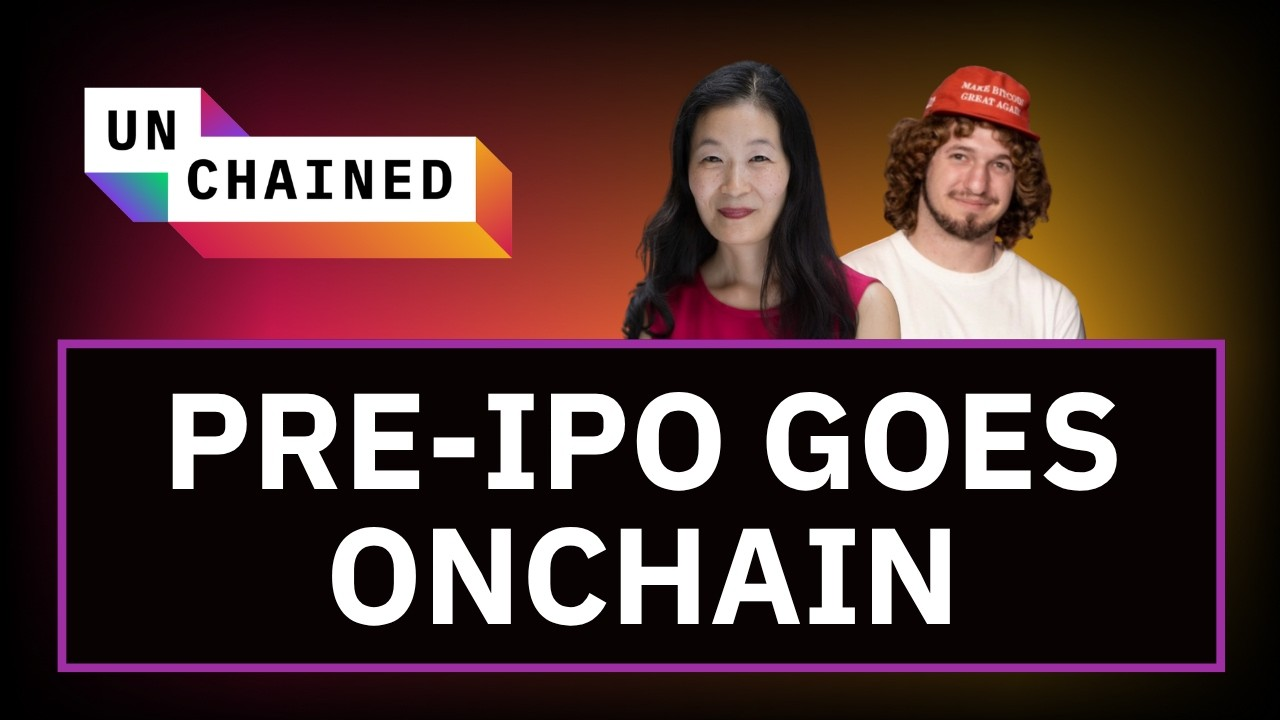
Collapse & Compiled: DeepwaterTechFlow
Guest:Dio Casares, founder of Patagon
Moderator:Laura Shin
Podcast source:Unchaind
Original title:Why SpaceX, OpenAI and Anthropic Now Trade Online
Date broadcast:22 May 2026
Summary of highlights
In the latest edition, Dio Casares and Laura Shin explored in depth how pre-IPO price discovery could move gradually to a block chain. From the SpaceX IPO Pre-Suspended Contract just launched on Hyperliquid, to the secondary market dealings of Anthropic and OpenAI shares, they analysed this trend in depth. In addition, they discussed the new partnership between Nasdaq Private Market and Polymarket and its potential implications for the future of private equity。
Summary of outstanding views
On the chain, pre-IPO
- “A good way to understand pre-IPO perpetuity for encrypted audiences is to see it as a pre-market in encrypted. Many people should remember that Hyperliquid was very radical on a lot of pre-markets, so these markets began to get a lot of trade and became the place where most pre-market deals took place."
- “These pre-IPO sessions will be on line shortly before planning IPO or critical events. ...because they are very close to the event itself, they can attract more transactions and more people are willing to participate. You can interpret it as a future that is about to be settled, rather than a product that is longer in duration and that is not clear when the goods will eventually be settled.”
Why would OpenAI and Anthropic deny second-class transactions
- “FIRST, THEY WANT TO CREATE A REAL FEAR THAT DISCOURAGES PEOPLE FROM INVESTING IN SECONDARY MARKETS. BECAUSE THE NATURE OF THE SECONDARY MARKET TRANSACTION IS THAT SOMEONE IS BUYING SHARES, BUT THE COMPANY OR THE EMPLOYEE IS NOT GETTING MONEY FROM THEM. AND THESE AI COMPANIES, TO PUT IT STRAIGHT, ARE HIGH CAPITAL CONSUMPTION. THEY ABSORB LARGE AMOUNTS OF CASH AND THROW THEM OUT AND BURN BILLIONS OF DOLLARS.”
- “Any action that prevents these high-capital-consumption companies (so-called “cash incinerators”) from raising funds, especially before they are about to enter an exceptionally competitive phase of IPO, is considered a major problem. ...they are absorbing as much capital as possible. For them, therefore, limiting secondary markets before the forthcoming IPO is an important step, as it allows more supply and demand to flow to their own primary rounds of finance (primary round)
- “The second reason is the question of responsibility. Often, a company is also responsible for executing a transaction when it considers it credible or approves it. ...when these SPVs start clearing and closing before and after IPO, there will be a lot of waterfall problems. For these companies, whether out of legal responsibility or simply because they do not want to deal with problems, they do not want to come close to them. Nobody wants to deal with 1,000 different cases."
What's the problem with chaining
- “The market for derivatives in encryption is more rational than the spot market, the central reason being United States regulation. In the United States, these private equity shares should normally have a holding period of about six months. ... if you do not have a system to enforce this six-month holding period, it may undermine the regulatory immunity on which these stocks depend and cause fines and a range of other problems.”
- “The large volume of spot market transactions is not necessarily in the interest of these companies, as it competes with their primary round finance. They do not want prices to be found in this way, as this may give them a reverse choice in financing. The company might say, "We know you're going to monetize this, so we won't work with you."
- “In a monetized product, if the SPV is mistaken, or if there are any legal problems, or if there are problems with how the fund was set up, the consequences can be catastrophic. Derivatives also have risks, such as the possibility of an ADL or a price plug, but it's more like a kind of market risk than someone broke the contract, and no one can get the money back. And that's why I look better on this side of the pep."
Have private giants traded like listed companies
- “IN A WAY I AGREE: THESE COMPANIES DO HAVE RECORD PARTICIPATION. IF THE CAPITAL OF IPOS IS THROWN INTO THESE COMPANIES, THE PARTICIPANTS MAY BE THOUSANDS AND THOUSANDS. THIS IS NOT TYPICAL FOR PRIVATE COMPANIES.”
- “BUT, AS FAR AS I KNOW, THEY DO NOT REALLY PROMOTE SECONDARY MARKETS, THAT IS, THEY DO NOT ENCOURAGE PEOPLE TO CONTINUE TRADING AFTER INVESTING. INSTEAD, THEY TRY TO TELL INVESTORS VERY CLEARLY: "IF YOU INVEST, YOU SHOULD HAVE AN IPO OR SOMETHING LIKE THAT. * I DON'T KNOW
HOW TO GET IN FRONT OF IPO AND THE RISK
- “These are late companies, and once you enter the second and third layers of the structure, you become a dangerous legal “hot potatoes” playing around these shares, which most people should want to avoid.”
- “There is a real risk here: many banks and issuers may say, `We do not know whether this deal is valid and therefore you cannot be allowed to sell these shares. `...if one of the SPV's main bank accounts is located in JP Morgan, and JP Morgan says `We can't sell these shares', they suddenly enter and run in time: it's not easy to create a new account; then they have to transfer the shares from the original account to another voucher account.”
- “There is also a situation where one might say, `I did agree to sell these to you and to give them to you, but now the transactions have been declared null and void, so I only return the money to you. ' This in most cases presumably leads to litigation. People like that may end up losing, but you still have to sue each other. So, depending on the tools and structures, there are many different risks.”
Robinhood, FTX, legal boundaries with different structures
- “As to whether they violate securities laws and whether companies like OpenAI can really prevent companies like Robinhod from supplying these products, this remains a grey area of law. In any case, these products have generally not received particular attention. The main reason for this is that these products are not truly liquid assets.”
- “The quantity of Anthropic shares held by FTX, as well as many other shares and assets held by FTX, were usually sold without any encumbrance. In other words, the right of priority of first priority, ROFR, for these shares has been completely waived, and transfer restrictions have been waived, and other restrictions have been lifted."
- “If you hold the Anthropic shares associated with the FTX claim, that is, the quantity of Anthropic shares purchased by FTX, you may be the safest category of persons besides the direct investors approved by the company, because it has a different legal status.”
Player chart in private secondary market
- “In perpetuity, there are Trade.xyz, which is HIP-3; and Ventuals, which is an earlier agreement, which is also HIP-3; and new projects, such as one of my friends doing Entropy, which is also HIP-3. They'll provide some pre-mark a little earlier than Trade.xyz. You'll see these markets gather around Hyperliquid."
- “I think Solana is more isolated and, for some reason, more willing to experiment there. There's also a considerable overlap between encryption and AI and there's a lot of people willing to take high risks, and there's a lot of capital, and they're used to working on Solana. They tend to invest in such projects without having to open bank accounts, complete cumbersome procedures or obtain direct distribution of shares through private relationships, as is the case with traditional finance.”
Patagon's positioning and chained boundary
- “We've seen the sustainability of the private market before, and we've wanted to see if we should go and say to some clients that if you think about hedges before pre-IPO, even though there's a little bit of grey in itself, maybe you could think about sustainability instead of the IBKR setup. ...we don't want to provoke those companies we have on the shareholders' roll. The introduction of a monetized version of their shares, or the introduction of pre-IPO markets, especially the very early pre-IPO markets, is an easy way to get them very upset."
Why is pre-IPO likely to continue expanding forever
- “Many events that change the world and markets now take place at weekends, and this is a huge benefit for many 24/7 RWA contracts that can be traded forever. Pre-IPO also lasts forever. Once they are converted, they become ordinary RWA forever."
- "I'm not sure how the pre-IPO market will develop, but this year we have a historical number of IPOs. SpaceX, Anthropic and OpenAI are all trying to shock over trillions of dollars in valuation, which has never happened before. ...it is indeed a good time for pre-IPO to start getting more attention forever."
On the chain, pre-IPO
Moderator Laura Shin: This week, or more precisely over the past few weeks, there have been many movements in the pre-IPO market, especially on the chain. This week, Hyperliquid has a very big new item online, the pre-IPO of SpaceX. At about the same time, Polymark announced the introduction of a new type of event contract that allows users to place their bets around unicorn valuations, IPO dates, secondary market pricing, etc., in collaboration with Nasdaq Private Market. Last week, Anthropic and OpenAI announced the cancellation of a second-tier market share, which was highly controversial。
According to Allium Research, this type of pre-IPO activity on the side of Hyperliquid was only about $3 million in February, compared to $44 million a few days ago. What do you think? Why are these activities coming out now
Dio Casares:
I think a big reason is that timing is very tactical。For an encrypted audience, a good way to understand pre-IPO perpetuity is to see it as a pre-market in encryption. Many remember that Hyperliquid was very radical on a lot of pre-mucket, so these markets began to gain a lot of trade and became the place where most pre-mucket deals took place。
When these tokens are officially on the line, the opening price and the price in pre-mark are usually quite similar. And when they turned into normal permanent contracts with normal oracles, Hyperliquid also saved most of the deal。
so we're in the nbsp;Cerebras and now SpaceX As can be seen, these pre-IPO permanent sessions are on line shortly before planning IPO or critical events. I think the SpaceX-related node is about 17 days next month, that's three or four weeks. Because of themAccess is very close to the event itself, so it attracts more transactions and more people are willing to participate。You can interpret it as a future that is about to be settled, rather than a product like Ventuals that has a longer term and that does not know when these goods will eventually be settled。
Why would OpenAI and Anthropic deny second-class transactions
Moderator Laura Shin: In my initial questions, several different types of activities were mentioned: SpaceX pre-IPO perpetuity, Polymarket news, and the events of Anthropic and OpenAI, some of them under the chain, some of them on the chain. They can be described as different regions of the market, or different links in the pre-IPO phase. How would you describe what the news represents
Dio Casares:
OpenAI and Anthropic came out and said, "We won't admit these deals," and the reasons behind it were about two levels。
First, they want to create a real fear that discourages people from investing in secondary markets。Because..The nature of the secondary market transaction is that someone is buying shares, but the company or the employee does not receive funds from them。AND THESE AI COMPANIES, TO PUT IT STRAIGHT, ARE HIGH CAPITAL CONSUMPTION. THEY ABSORB LARGE AMOUNTS OF CASH AND THROW THEM OUT, BURNING BILLIONS OF DOLLARS。
ANY ACTION THAT PREVENTS THESE HIGH-CAPITAL-CONSUMPTION COMPANIES (SO-CALLED “CASH INCINERATORS”) FROM RAISING FUNDS, ESPECIALLY BEFORE THEY ENTER AN EXCEPTIONALLY COMPETITIVE PHASE OF IPO, IS CONSIDERED A MAJOR PROBLEM。Currently, SpaceX is expected to be listed first, followed by Anthropic, then OpenAI. These companies are attracting as much capital as possible. SoFor them, limiting secondary markets before the forthcoming IPO is an important step, as it allows more supply and demand to flow to their own primary-cycle finance (primary round)。
The second reason is the question of responsibility。UsuallyWHEN A COMPANY CONSIDERS A TRANSACTION CREDIBLE OR APPROVES A TRANSACTION, IT IS ALSO RESPONSIBLE FOR EXECUTING THE TRANSACTION. IN OTHER WORDS, IN THE COMPANY'S EQUITY BOOKS, IT IS NECESSARY TO ENSURE THAT THE PERSON WHO BOUGHT THE STOCK ACTUALLY GETS THE SHARES AT OR BEFORE IPO。
As you can imagine, there might be hundreds or even thousands of SPVs;(Special purpose carrier, Special Purpose Vehicle)Other companies, they may be litigated and structurally complex. When these SPVs start clearing and closing before and after IPO, there will be a lot of waterfall problems. For these companies, whether out of legal responsibility or simply because they do not want to deal with problems, they do not want to come close to them. Nobody wants to deal with 1,000 different cases。
SO THEY'RE VERY HIGH-PROFILE NOW, "IT'S NOT OUR PROBLEM. IF YOU'RE NOT IN THE APPROVED BLOCK, WE CAN'T HELP YOU." THEY CHOOSE TO SPEAK OUT BEFORE THE IPO GOES WRONG. IN CONCLUSION, THIS IS BOTH MAXIMIZING THE CASH AVAILABLE TO THEM AND MINIMIZING THEIR LEGAL LIABILITY。
What's the problem with chaining
Moderator Laura Shin: We have just spoken a little bit about the problems that exist in this market and why there are those who believe that the chain can solve them. Could you specify, for buyers and sellers, what problems they are trying to solve through chains
Dio Casares:
The chain can be seen in two markets:One is the derivative market and the other is the spot market。Derivatives markets have many advantages. Like most derivatives, it's..First is a hedge tool. Many of the people I know who use this market are using it as a way to hedge against the spot positions they already hold, or have invested directly。
I thinkThe market for derivatives in encryption is more rational than the spot market, the central reason being United States regulation。In AmericaThese private shares should normally be held for about six monthsI don't know. There may be some way out, but it's about six months。If you don't have a system to enforce this six-month holding period, it could undermine the regulatory immunity on which these stocks depend and cause fines and a range of other problems。
So once you monetize something, as long as it represents a certain ownership interest in these companies, it is easy for United States regulators to say that this is a violation of the relevant rules. I think it's a huge resistance to many of the monetized products。
Another issue goes back to the previous topic: large spot market volumes are not necessarily in the interest of these companies, as they compete with their primary round financing。They do not want prices to be found in this way, as this may give them a reverse choice in financing. The company might say, "We know you're going to monetize this, so we won't work with you."
By contrast, derivatives are easier to handle on this side. For example, a family office, or an individual investor, can flush their own openings; if they so wish, they can increase the openings. You don't have the same critical human risk here。
But in the case of monetized products, if SPV is mistaken, or if there are any legal problems, or if there are problems with how the fund was set up, the consequences could be disastrous. Derivatives also have risks, such as the possibility of an ADL or a price plug, but it's more like a kind of market risk than someone broke the contract, and no one can get the money back. That's why I'm looking better on this side。
Moderator Laura Shin: Yeah, it's more like market risk. People are willing to accept that risk. But another situation is more like one where someone screws up and everyone pays for it, which is unacceptable to many。
Have private giants traded like listed companies
Moderator Laura Shin: I see a criticism that the problems that arise in the area of pre-IPO are also related to the long-term private status of the unicorns. This phenomenon has been discussed for a long time, but in a sense it is almost like pretending that they are still private companies, because they allow many grey market activities around them. The result is that more people hold their ownership rights in some form than truly strict private companies. So they're almost practically listed companies in a sense. Do you agree
Dio Casares:
TO A CERTAIN EXTENT, I AGREE: THESE COMPANIES DO HAVE RECORD PARTICIPATION. IF THE CAPITAL OF IPOS IS THROWN INTO THESE COMPANIES, THE PARTICIPANTS MAY BE THOUSANDS AND THOUSANDS. THIS IS NOT TYPICAL FOR PRIVATE COMPANIES。
BUT, AS FAR AS I KNOW, THEY DO NOT REALLY PROMOTE SECONDARY MARKETS, THAT IS, THEY DO NOT ENCOURAGE PEOPLE TO CONTINUE TRADING AFTER INVESTMENT. INSTEAD, THEY TRY TO TELL INVESTORS VERY CLEARLY: "IF YOU INVEST, YOU SHOULD HAVE AN IPO OR SOMETHING LIKE THAT."
So, I don't think they're completely fair. Buying these stocks is still much more difficult. There are also many advantages to company listing, and it is important to reduce fraud. It is true, however, that they attracted record numbers of investors and capital at an early stage。
HOW TO GET IN FRONT OF IPO AND THE RISK
Moderator Laura Shin: You just mentioned that you think that sustainability is better in some ways. But there must be a reason why people are willing to try to invest before IPO. What are the different options? What are the risks of different investment instruments or openings
Dio Casares:
The most obvious reason is that:The sooner we enter, the better the price。Suppose we talked about Anthropic two years ago, it could be worth about $8 billion. In its current rotation, it's a 10-fold gap, of course, which is not diluted。
SO, OF COURSE, INVESTORS HAVE REASON TO WANT TO ENTER EARLIER AND GET A BETTER MULTIPLE. FOR THESE LATER COMPANIES, THE BEST WAY TO INVEST IS TO FIND A PERSON WHO HAS ACCESS TO THE PRIMARY ROUND OF FINANCE AND THEN INVEST IT THROUGH SPV OR JOINT INVESTMENTS。
JOINT INVESTMENTS AND SPVS ARE DIFFERENT. SOME VERY LARGE FOUNDATIONS, FOR EXAMPLE, MAKE JOINT INVESTMENTS: THEY MAY INVEST $1 BILLION THROUGH THEIR OWN FUNDS, THEN ALLOW THEIR OWN LP TO INVEST $100 MILLION DIRECTLY WITH COMPANIES. IF YOU CAN DO THAT, IT'S PROBABLY THE CLEANEST WAY TO INVEST IN THESE COMPANIES。
IF THAT IS NOT POSSIBLE, IT IS BETTER TO FIND SOMEONE WITH SPV OR SOMEONE WHO CAN BE DIRECTLY INVOLVED. THESE ARE LATE COMPANIES, AND ONCE YOU ENTER THE SECOND AND THIRD TIERS OF STRUCTURE, YOU BECOME PLAYING A DANGEROUS LEGAL “LAW HOT POTATOES” AROUND THESE SHARES (WHICH IS A METAPHOR FOR MATTERS INVOLVING COMPLEX LEGAL ISSUES, RESPONSIBILITIES OR POTENTIAL RISKS). THIS METAPHOR IS DERIVED FROM THE GAME OF “TRANSMITTING HOT POTATOES”, WHICH PARTICIPANTS NEED TO QUICKLY PASS TO THE NEXT PERSON TO AVOID BURNING. IN THE LEGAL CONTEXT, “LEGAL HOT POTATOES” USUALLY REFER TO CERTAIN LEGAL SITUATIONS OR ASSETS WITH HIGH RISK OR UNCERTAINTY, WHICH ARE CONSTANTLY TRANSFERRED AND THE HOLDER TRIES TO TRANSFER THEM TO ANOTHER PERSON AS SOON AS POSSIBLE IN ORDER TO AVOID POSSIBLE LIABILITY OR LOSS.) MOST PEOPLE SHOULD WISH TO AVOID SUCH THINGS。
Moderator Laura Shin: What's wrong with this
Dio Casares:
There are many very detailed questions. Anthropic and OpenAI, for example, are now very high-profile that they do not consider these transactions legal or valid。
assuming you face a & nbsp;waterfall distribution structure(I.E. A HIERARCHICAL MECHANISM FOR THE DISTRIBUTION OF PROCEEDS): A PERSON CURRENTLY HOLDS SHARES IN A COMPANY, BUT UNDERTAKES TO TRANSFER THEM TO A SPV; OR A SPV OWNS SHARES AND THEN OWES A SECOND AND A THIRD. IF THIS PERSON OR SPV WERE TO SEND SHARES TO BANK OR VOUCHER ACCOUNTS, ESPECIALLY AT THE START OF THE IPO, THE COMPLIANCE DEPARTMENT OF THE BANK OR VOUCHER USUALLY ASKED, "WHAT KIND OF TRANSACTION IS THIS? IS IT A SALE? A GIFT OR A TRANSFER? IF IT'S A SALE, SHOW ME THE FILE."
There's a real risk here: a lot of banks and issuers might say, "We don't know if this deal works, so you can't be allowed to sell these shares."
In most cases, the DTCC (Depository Trust & Clearing Corporation) classifies stocks into restricted and non-restricted shares. Many large coupons and banks still ask questions about these shares, but some medium-sized institutions may say, “These are not restricted shares, and I have little risk, so I can allow you to operate.”
But if one of the SPV's main bank accounts is in JP Morgan, and JP Morgan says, "We can't sell these shares for you," they suddenly enter and run in time: it's not easy to set up a new account; then to transfer the shares from the original account to another voucher account. From the AML perspective, it's bad, because they're like, "Why did you put it there first and now it's going to us? Apparently there was a problem there."
This is a procedural risk. In another case, someone might say, "I did agree to sell these to you and give them to you, but now the transactions are considered null and void, so I'll just return the money to you." In most cases, this would presumably lead to litigation. People like that may end up losing, but you still have to sue each other. There are therefore many different risks depending on the tools and structures。
Moderator Laura Shin: Yes, structure is very important. Even the last example you've given, the other side is willing to refund, assuming they're really rich。
Dio Casares:
There is, of course, the risk of a tail, that of complete fraud. For example, someone showed you documents that were completely fake and disappeared with the money, and there wasn't much you could do at that point。
Robinhood, FTX, legal boundaries with different structures
Moderator Laura Shin: Please also explain Robinwood's monetization of shares. It involves OpenAI and SpaceX, and we see OpenAI soon denied it. But I guess its setup still works. Can you explain where it is in this layout
Dio Casares:
my understanding of these products is that they are more of a & nbsp;trust-style offeringi don't know. as to whether they violate securities law, and like & nbsp;OpenAI& nbsp; can such a company really stop & nbsp;Robinwood& nbsp; companies of this type provide these products, which remain the grey area of the law。
In any case, these products have generally not received particular attention. The main reason is that these products are not truly liquid assets. The trust company may place a pool of shares in a trust, and then the user can trade them through the purchase and sale of these coins, but the user cannot redeem the shares corresponding to those coins until a major liquidity event has occurred。
This type of investment may be better for small investors because it lowers the investment threshold. But this approach is more risky for large investors because you have to rely entirely on market confidence in the value of these tokens. As we have seen, after many statements have been issued, markets may suddenly think that these tokens are less valuable than they were a few hours ago. Thus, there are significant risks inherent in this type of investment。
Moderator Laura Shin: FTX apparently holds some Anthropic shares, so where does that come from? I think this may be a rather rare anomaly, but I would also like to hear about its place in the world。
Dio Casares:
The bankruptcy court is, in a sense, the most "dominant" domain. In many cases, it is not just what the insolvency law itself says, but what the court and others involved in the process consider fair。
The quantity of Anthropic shares held by FTX, as well as many other shares and assets held by FTX, were usually sold without any encumbrance (power burden). That is to say, the right of priority of first priority, ROFR has been completely waived, transfer restrictions have been waived, and other restrictions have been lifted。
Of course, there is an argument that such immunity does not necessarily extend to further transactions after the initial transaction. This argument may be raised, but it may be difficult to fight. Because if you say that an insolvent asset cannot be considered to have full value when it is sold in the future, that would set a bad precedent and affect all future insolvency cases。
So if you hold the Anthropic shares associated with the FTX claim, that is, the quantity of Anthropic shares purchased by FTX, you may be the safest category of people besides the direct investors approved by the company because it has a different legal status。
Player chart in private secondary market
Moderator Laura Shin: I know that some players in private secondary markets are not necessarily connected to encrypted money, while others are based on block chains. Can you help us comb the main players in this field? I'm guessing some of the participants in this are more likely than others to operate in the grey zone。
Dio Casares:
There are many different types of players in private secondary markets. Setter, for example, is one of the relatively low-key but large secondary market brokers. Their operations are very broad and include a wide range of services, from the transfer of fund shares to direct distribution of corporate shares. For example, if you invest in one of Paradigm's funds, but you want to sell your share before the fund returns capital, you can trade through Setter. According to their network of officials, they have completed up to $40 billion in transactions, which is amazing, indicating that they are undoubtedly one of the largest players in the field。
Other more famous players include Forge and Hiive. Many have heard of them because of their relatively simple opening processes, the availability of abundant market data and the volume of transactions. But they're actually not that big compared to Setter。
In addition, there are many small and medium-sized companies operating in the market, which are active mainly in spot markets and focus on helping investors buy and sell real shares。
On the last side, there are Trade.xyz, which is HIP-3; and Ventuals, which is an earlier agreement, which is also HIP-3; and new projects, such as one of my friends doing Entropy, which is also HIP-3. They'll provide some pre-mark a little earlier than Trade.xyz. You'll see these markets gather around Hyperliquid。
On the side of tokenization, there are also several different players, many of them in the Solana ecology, not in the Tokyo ecology. These companies usually charge a one-time fee of 20 per cent, which is a very high rate within the industry, as well as a 20 per cent performance fee for currency transactions。
This is not the caseDerivatives markets make money mainly through transaction fees。So here are some interesting business models:While spot players are more likely to flip shares to the bulk, derivative companies are more likely to charge fees by facilitating these transactions。
Moderator Laura Shin: It may sound like they're looking at different people. Why do you think these activities happen more in Solana than in Etheleum
Dio Casares:
I think Solana is more isolated, and somehow, you'd rather experiment there. There's also a considerable overlap between encryption and AI, and in a way I'm an example myself。
So many people are willing to take high risks and have a lot of capital, and they're used to working on Solana. They tend to invest in such projects without having to open bank accounts, complete cumbersome formalities or obtain direct distribution of shares through private relationships, as is the case with traditional finance. At the end of the day, the projecter is going where the capital is。
Patagon's positioning and chained boundary
Moderator Laura Shin: Tell me about your business. You're obviously very involved in this field. What exactly is Patagon doing in the secondary market
Dio Casares:
We're kind of like a new private bank. We help people get into private business. We've done Anthropic, XAI, Cohere, before IPO, Circe, Kraken, Fluidstack, and many different companies。
Generally speaking, we are exempt advisers. We'll put these deals into a fund and help with stuff like filing. But we don't need to be registered investment advisers because our AUM hasn't reached $150 million directly. That means working with us is less trouble than working with some RIA。
We are now expanding this business to allow people to invest in commodity-based transactions. You should be able to invest in a real, compliant, embedded project, for example, with directional judgment of the Argentine copper mine. That is also an important point for our platform. We will do our best to review almost all transactions, because if they go wrong, it is we who bear the reputational risk。
We've also been involved in a number of complex transactions, such as Circle's pre-IPO investments. The deal was very difficult because we were involved just before IPO。
So we also want to extend this capability to more tangible assets. At the same time, we are also trying to provide such services as bank accounts and encrypted hosting. Our business is essentially to help people enter these transactions, then to structure them into funds and charge different fund fees depending on the size of the transaction and the difficulty of entering them。
Moderator Laura Shin: So your business is not part of the chain
Dio Casares:
Nothing. We've seen the sustainability of the private market before, and we've wanted to see if we should go and tell some clients if you think about hedges before pre-IPO, even though there's a little bit of gray in itself, and maybe you could think about sustainability instead of IBKR。
And frankly, we did get a client question: "Shall I use a permanent pair, or should I use the IBKR way of doing it?" That's the extent of our exposure to this field. We might help the Entropy team make some markets, and they'll try to provide some pre-marker earlier than Trade.xyz, which I understand. But this is certainly not the core of our business。
The reason is that we do not want to provoke the companies that we have on the shareholders' roll. The introduction of a monetized version of their shares, or the introduction of pre-IPO markets, especially the very early pre-IPO markets, is an easy way to get them very upset. People may forget that Anthropic has a list of basically "don't touch these people". For us, that would make it easy for us to appear on similar lists, so we would not do that。
Why is pre-IPO likely to continue expanding
Moderator Laura Shin: How do you see the future development of the private market, in particular its segment on the block chain
Dio Casares:
We are at a very good time point. Overall, Hyperliquid is rising rapidly and the pre-IPO market is growing。
Now a lot of big events that change the world and the market take place on weekends, and it's really good for a lot of 24/7 trading RWA contracts. Pre-IPO also lasts forever. Once they are converted, they become ordinary RWA forever。
Hyperliquid used to think of pre-market forever losaderIn other words, they are willing to open the way for future profits by attracting users and creating market shares at an initial loss. I think this strategy will be used on more platforms in the future。
I'm not sure how the pre-IPO market will develop, but this year we have historical numbers of IPOs. SpaceX, Anthropic and OpenAI are all trying to shock over trillions of dollars in valuation, which has never happened before. Not to mention a lot of other companies。
So it's really a good time for pre-IPO to start getting more attention forever. Cerebras is a good example, andAnthropic and OpenAI will probably only increase the volume of contract transactions if SpaceX continues to settle successfully。
You will see many trading platform providers start to compete and try to cover these pre-IPO markets, because they can dominate subsequent transactions once these markets are converted to ordinary markets. It would be very interesting。
