
Street USDT for seafood in Vietnam: a Web3 "Mass Action" folding experiment
Five minor things about the encrypted ecology of Vietnam. 。
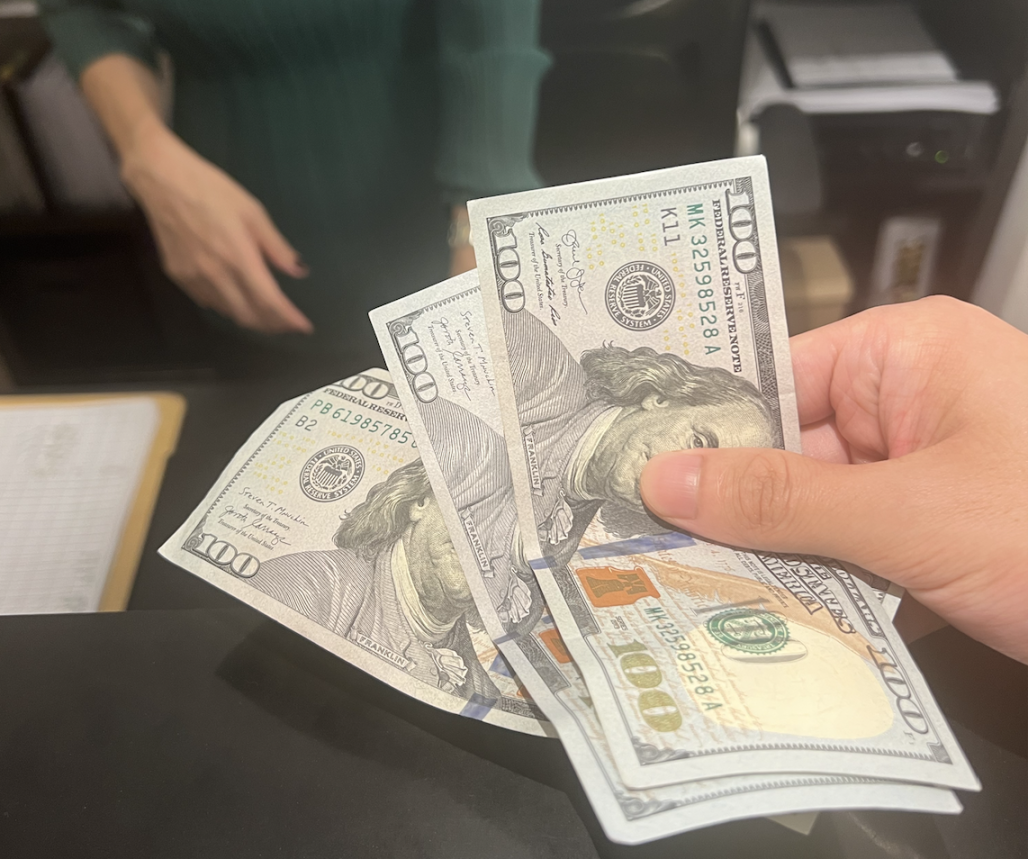
Photo by Joe Zhou, Foresight News
Vietnam, a wonderful country that has been repeatedly mentioned by countless Web3s。
It has one of the youngest demographics in the world, a very high rate of mobile Internet penetration and an almost brutal financial vitality. Viet Nam has been at the top of the list for many years in the Global Index of Encrypted Currency Use published by Chainalysis。
As a long-standing observer of the encryption industry, I've always wanted to figure out the chemical reaction that happens when "encrypted payment" "mass stability" is written in the PPT and research, and actually thrown into the streets of Vietnam
At the end of 2025, I set foot on this land. In two weeks in Vietnam, I did not visit the high-rise exchange, nor did I go to the trade fair, but rather, as an ordinary tourist, to get a cab, a massage, a road stand。
I recorded five small things on the journey. They may not represent the whole picture, but they are the most real slice of the current situation in Vietnam。
ONE: "NO INTERNATIONAL CREDIT CARDS, CASH AND USDT."
At a spa shop in Nambung, we spent $320 on 12 people. At the time of the closing of the accounts, the merchant stated that the cash payments were set at a discount of nine and the original prices were taken from Visa or Mastercard。
At first, I was a little upset, after all, it was not convenient to carry a large amount of Vietnamese guilder cash, and even questioned whether the boss was “killed”. But the boss's patient explanation dispels my misunderstanding。
In Vietnam, international credit cards are expensive, usually at 3% or even higher. More importantly, it means that funds enter the banking system and are subject to additional taxes, while cash avoids them. The boss told her the hard way from a very practical little businessman。
Eventually, we paid $300 in cash. We saved dozens of dollars, which is a win-win. Of course, these "brokers" in credit card organizations and banks were injured。
Figure above: The author is paying in cash in United States dollars
I WAS STRUCK BY THE FACT THAT THE GLOBAL CREDIT CARD PAYMENT SYSTEM HAS LONG BEEN MONOPOLIZED BY SEVERAL GIANTS, NOT ONLY TAKING 3 PER CENT OF THE "PASSAGE FEE" PER TRANSACTION, BUT ALSO BY THE ATM CASH RATE OF OVER 4 PER CENT. FOR BUSINESSES, THIS IS NOT ONLY A FINANCIAL COST, BUT ALSO A COMPLIANCE COST。
SINCE TRADERS HAVE A NATURAL PREFERENCE FOR THE “DOLLAR”, THEIR ACCEPTANCE OF THE “DIGITAL DOLLAR” IS ALSO, IN THEORY, TO BE EXPECTED – AS LONG AS THE MEANS OF PAYMENT HELP THEM SOLVE THE “LAST MILE” PROBLEM, THAT IS TO SAY, TO TRANSFORM THE USDT INTO THE VIETNAMESE SHIELD THEY NEED。
With this logic of validation, I started a subsequent journey of encryption pay experience in Vietnam。
II: Viet Nam stabilization currency payments, the dawn of Mass Action
When Vietnamese traders accepted the dollar currency, were they ready to accept the dollar stabilization currency
On my next journey, I started deliberately trying to live with Bitget Wallet. Grab a cab, roadside powder, spa massage, seafood. I was surprised to find that as long as the merchants had VietQR (the Viet Nam General Payment 2D code), I could basically use my wallet to sweep it directly and transfer it in real time. And VietQR can be seen almost everywhere in Vietnam。
The reason I use the word "basic" is to find that there's a big bug in encrypted payments, and this bug is mentioned in chapter three。
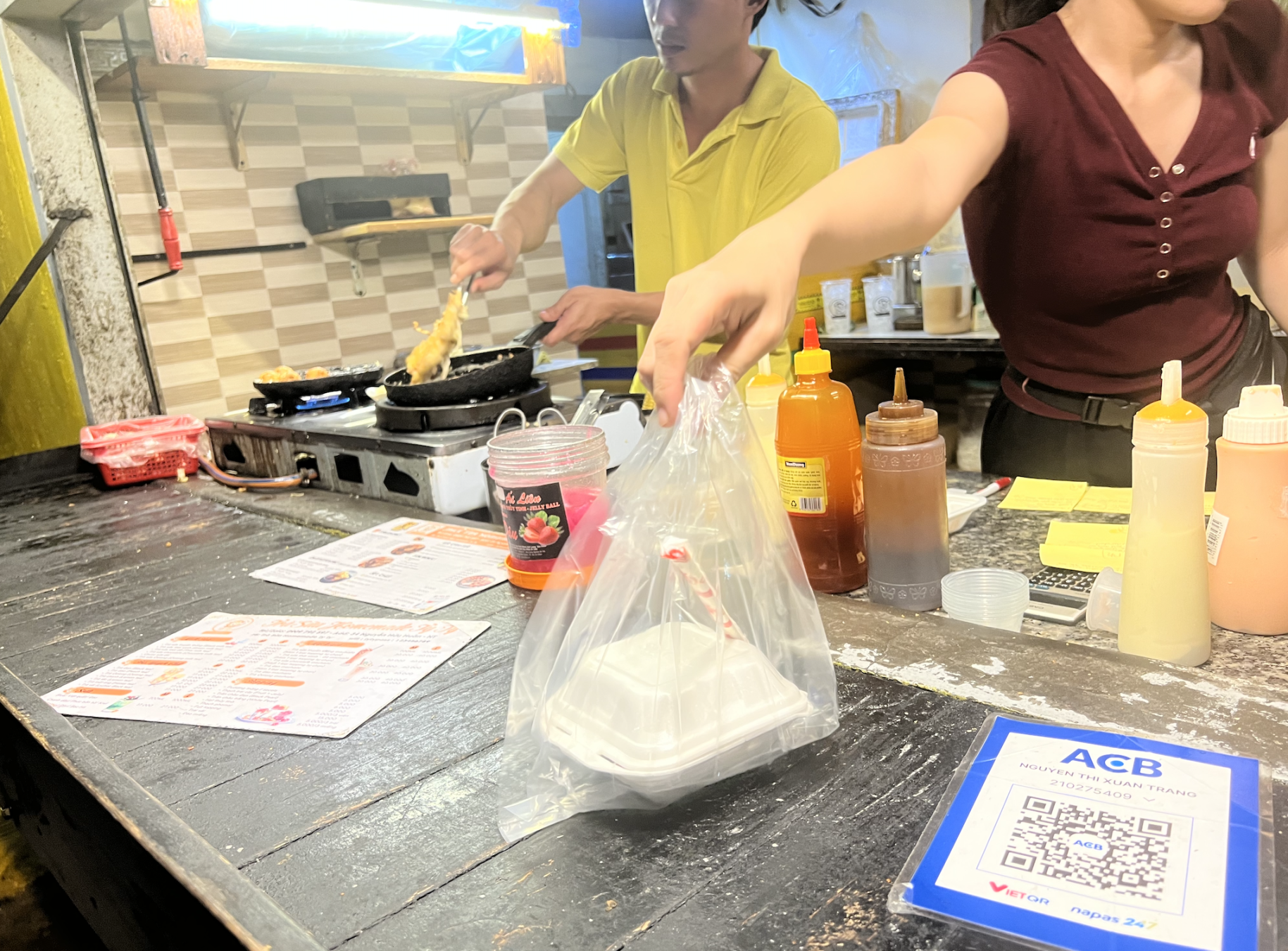
Top graph: VietQR (right bottom corner) across Viet Nam Street, paid directly by Bitget Wallet scan
It is no exaggeration to say that, in Viet Nam, the experience of encrypted payments has been endlessly close to paying treasures。
I've heard about it before, but the shock of experience is still strong. Bitget Wallet and other encrypted wallets have access to aggregate payment networks such as Aeon Pay, which transforms the encrypted currency from "funner" to "purchasing power", reaching tens of millions of businesses in Viet Nam and neighbouring countries。
Of course, the smooth experience of all this is based on the existence of a highly unified and universal two-dimensional payment system (VietQR). It's infrastructure, and encrypted payments are running on its new blood。
However, the frequent use has finally made me realize that Bitget Wallet's sweeps are not all-powerful. One time I actually found a bug。
Three: A failed encrypted payment that led me to the "Bug of the Real World."
On December 20th, 2025, I was eating again at a famous restaurant in Budham. The first two times I used cash and credit cards, the third time I decided to challenge it with Bitget Wallet。
However, this challenge failed。
This is due to the fact that the store presented not a standard VietQR polymer code, but a print 2-dimensional code for an old or internal bank system. My wallet code shows that the deductions were successful, but after the transfer of the money from the chain, there were delays in the delivery of voice reports or arrival notices from the shop。
And the other showed me that she was paid on her cell phone and was immediately notified of the payment。
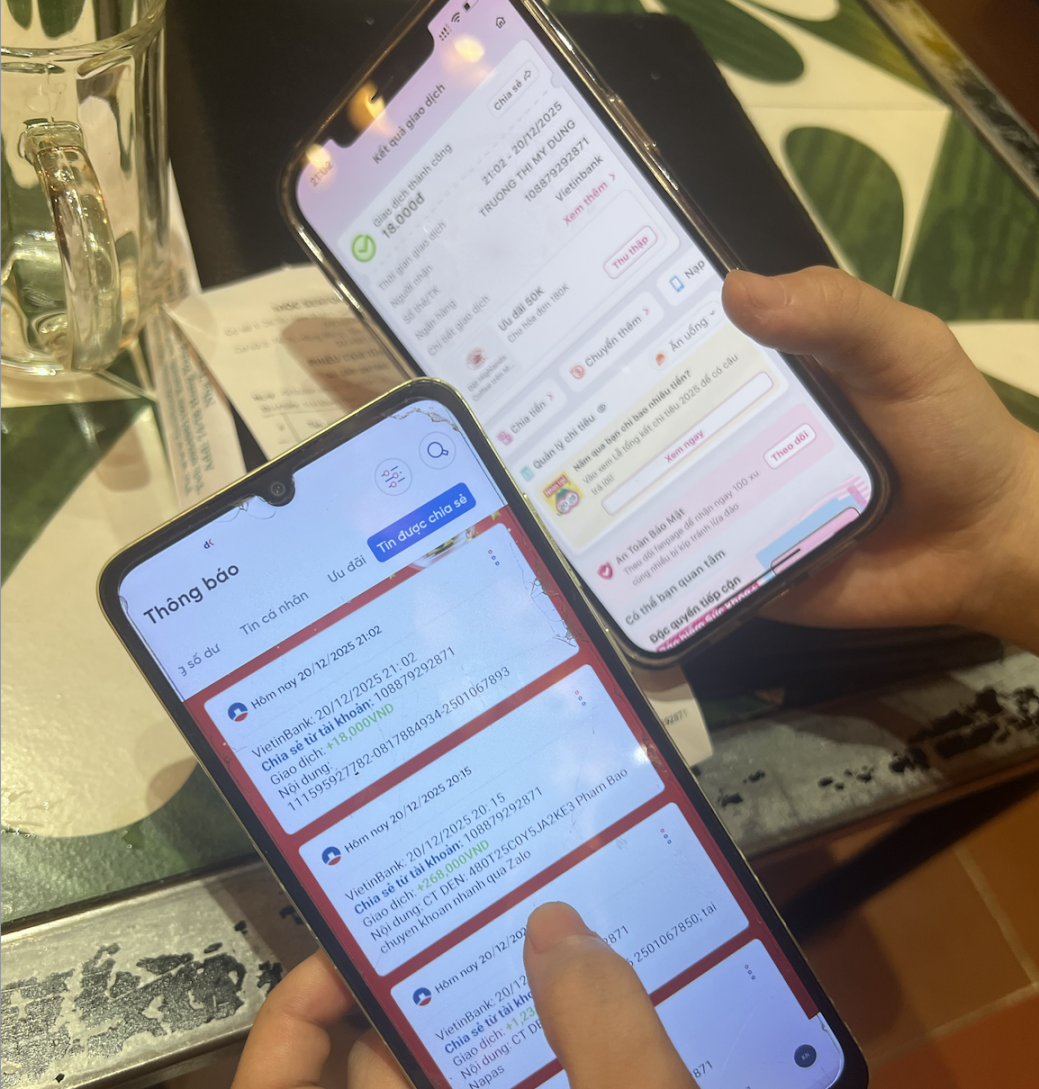
Map above: The writer tried to encrypt the payment, but the shopkeeper used the local bank code to clean it
The shopkeeper showed me their way of proving it: using local finance app to sweep, to arrive in a moment。
The loss of these dollars is a "school fee" I paid for this experience. This episode reminds me that the "last kilometre" of encrypted payments in the real world is still fragile. The absence of compatibility protocols, delays in the recognition of businesses and the perceived time difference between the user's “deduction or success” and the business's “pay-to-count” are all pits that must be filled on the Mass Action road。
Four: In the minds of ordinary people, encrypted money remains "grey."
Commercialization of technology depends not only on the maturity of the code, but also on cultural acceptance。
Although Viet Nam is very young, the image of Crypto is not very good in the eyes of the general public, especially in the northern cities of Viet Nam. The author communicates with a number of locals in Hanoi — including currency exchangers, Mo drivers and university students — and their first reaction to encrypted money is strikingly consistent: money-laundering instruments, ash production, gambling。
In their view, this is not "the future of the Internet" or "the financial future" but rather a means of circumventing regulation。
On the streets of Hanoi and Bao Ji-hsiang, it is almost impossible to trace bitcoin ATM or the OTC below the line. This is a strong visual contrast with Hong Kong, Japan, or Georgia, where Crypto Exchange’s Neon sign already occupies the C place on the commercial street。
One side is the global top of the chain of data, and the other side is the hard spot of the physical world. This line is completely cut off from the line and vividly develops a "Vietnam-style encryption fold"。
Five: I found a hat in the driver's car
An accidental discovery torn the corner of the encrypted world of Viet Nam。
During a cab ride by Grab, my colleague was keenly aware that the young driver had a hat with Binance Logo on his dashboard. And as we can see, the driver smiles and comes out with his mobile phone, and shows us his running currency app。
This scene brought me to realize that the encrypted currency is not merely an underground current in the country, but is penetrating ordinary people in a very living way. Many public data show that more than 20 million people in Viet Nam have held or used digital assets, while the high proportion of young Vietnamese population (e.g. 10-24-year-olds as a percentage of the total) has contributed significantly to the development of digital asset acceptance and Web3 usage habits。
This penetration shows interesting "North-South differences" geographically。
A university student in Hanoi told me that northern Vietnam has a very different view of money than southern Vietnam: The northerners, represented by the capital, Hanoi, are conservative and tend to save and be proactive, while the southerners, headed by Ho Chi Minh City, which is the centre of the economy, are deeply influenced by Western business culture, are accustomed to early consumption and are extremely receptive to new things。
This explains why most of the Chinese Web3 practitioners — whether media, VC, or chain developers — have chosen to settle in Ho Chi Minh City in Vietnam。
Here, low-cost manpower costs collide with a high-reward encrypted economy, making Vietnam a geographical arbitrage of chain mining. Many young people are regular workers during the day, and at night they become the gold workers in the chain。
If the fourth point of the simulator shows me the "prejudice" of the population in northern Vietnamese cities about encrypted currency, my friends in the streets of Ho Chi Minh City described to me the country's "zealous" of encrypted currency。
Viet Nam has a strong coffee culture, and in crowded Highlands Coffee or The Coffee House, my friends have witnessed an extremely hard-core scene: Not all the games or social software are on the screen of young people who are banging on laptops in rows, with Binance's K-line and even Solidity's black window。
Data doesn't lie。According to the Chainalysis Global Index of Encrypted Currency Use, Viet Nam has been at the top or top of the list for many years. It has a perfect “gold population structure”, tens of millions of young people who are eager to leapfrog their classes, are well-versed in digital technology and are not superstitious to the traditional banking system as old generations。
This gives Vietnam a wonderful sense of folding:
In the streets, Mo drivers may tell you that Crypto is a "money laundering tool" but in an alley-side café, young developers may be building the next Axie Infinity。
This bottom-up life force may be the real bottom of Vietnam Web3. There are no big financial centres here, but every crowded café may be a Web3 node; every Grab that travels through a storm, the driver's seat may be a young man waiting for Bitcoin Cow。
Conclusion: Looking for Alpha for the next decade
These five little things are just me observing the tip of the iceberg in Vietnam。
The journey is far from over. Next, I will go deep into Ho Chi Minh City, the heart of the South Economy, and climb up the Vietnamese highlands, across the seafront hub, to the rich islands of the South。
After dozens of countries, after repeated exchanges with a number of long-deep local friends and local Vietnamese peopleI am increasingly convinced that Viet Nam will be one of the world ' s most potentially developing economies, if not one, for the next 10 years。The young demographic structure, the constant desire for manoeuvring and the social posture of relative openness to outsiders together constitute a rare soil that is the best breeding ground for new technologies。
I will continue to walk on this hot land and the surrounding countries, not just as a tourist, but as an observer, to explore the real growth of Web3 in Southeast Asia。
Keep your eyes open, our exploration continues。
