
Beijing's hot rice automobile factory became the new Jerusalem of the American elite
What makes a car production line a hot spot
Sleepy.md
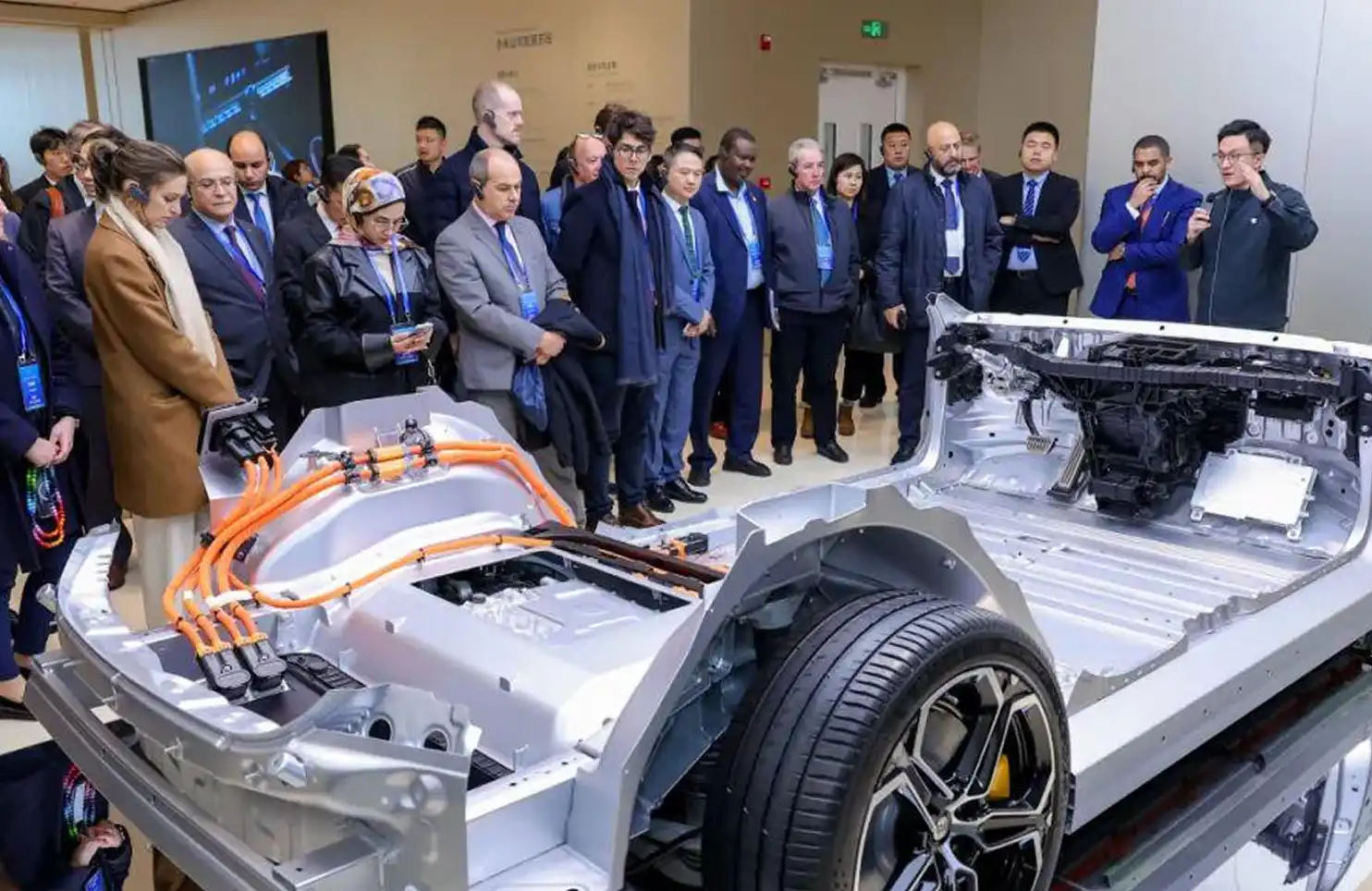
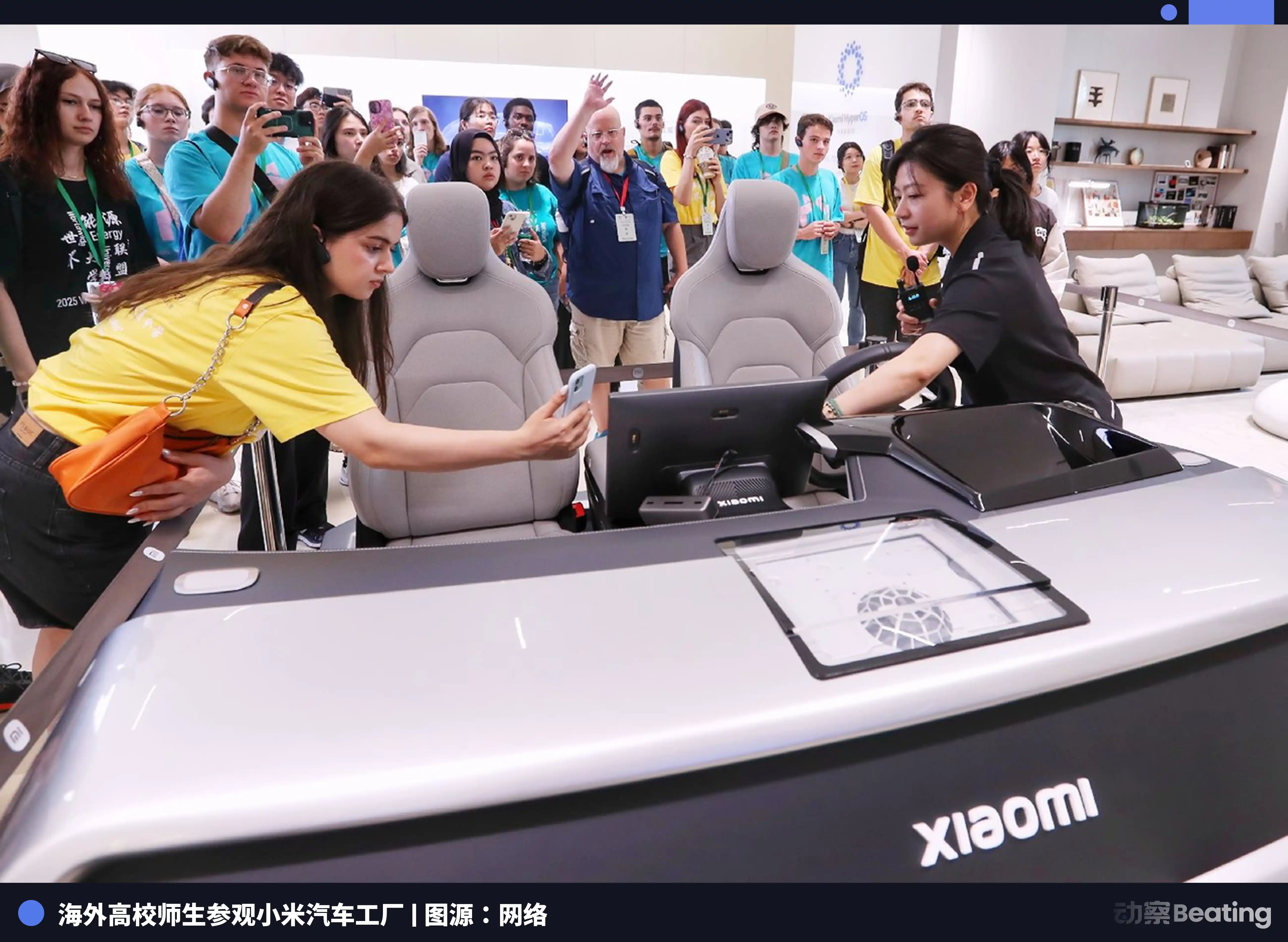
Starting in 2025, a visit to Beijing’s rice automobile factory has become one of the first activities for American elite families to bring their children to China. Every Saturday afternoon, at the factory entrance, English-speaking American parents were seen with their children, waiting in line to enter the production line of the Chinese car。
It's hard to get a seat here. The number of participants registered for one event was very high at 4,600, but only 20 groups of visitors were able to enter, with a pass rate of 0.4 per cent and admission to Campus Kambeto。
According to data published by the Beijing municipal authorities, only six months before 2025, factories received a cumulative 93,000 visits; by the end of 2025, the figure had soared to 133,000. Visitors came from more than 70 countries and regions, covering dignitaries, diplomats, executives of multinational enterprises, Silicon Valley investors, European investors, and elite American families in groups。
What makes a car production line a hot spot
Cognitive turnover
Over the past few decades, the West's perception of China has been built on a traditional cognitive infrastructure。
The package contains media coverage frameworks (CNN or the filter of The New York Times), think tank studies (an evolution of overcapacity), the theory of division of labour in economics textbooks (assemblies at the bottom of the smile curve), and cheap consumer goods labeled "Made in China" on supermarket shelves。
They have a core commonality: they are all indirect。
Whether it's the stereotyped image of the world's plants, or the grand narrative of the pasta trap, it's all the conclusions that are filtered and packed into a specific frame before being fed to the public. For a long time, the system had locked up Western stereotypes of China。
However, in the booming factory, it failed。
Stepping into the workshop, coming up in front of us is a very unrealistic quiet. At 100 per cent of the automated body workshops in critical processes, combined automation was as high as 91 per cent, with more than 400 robots working with more than 400 high-precision cameras to achieve real black light production. And in the casting workshop, a steel giant with a locking power of 9,100 tons, which takes 120 seconds to form 72 parts together, with an error of less than one hair wire。
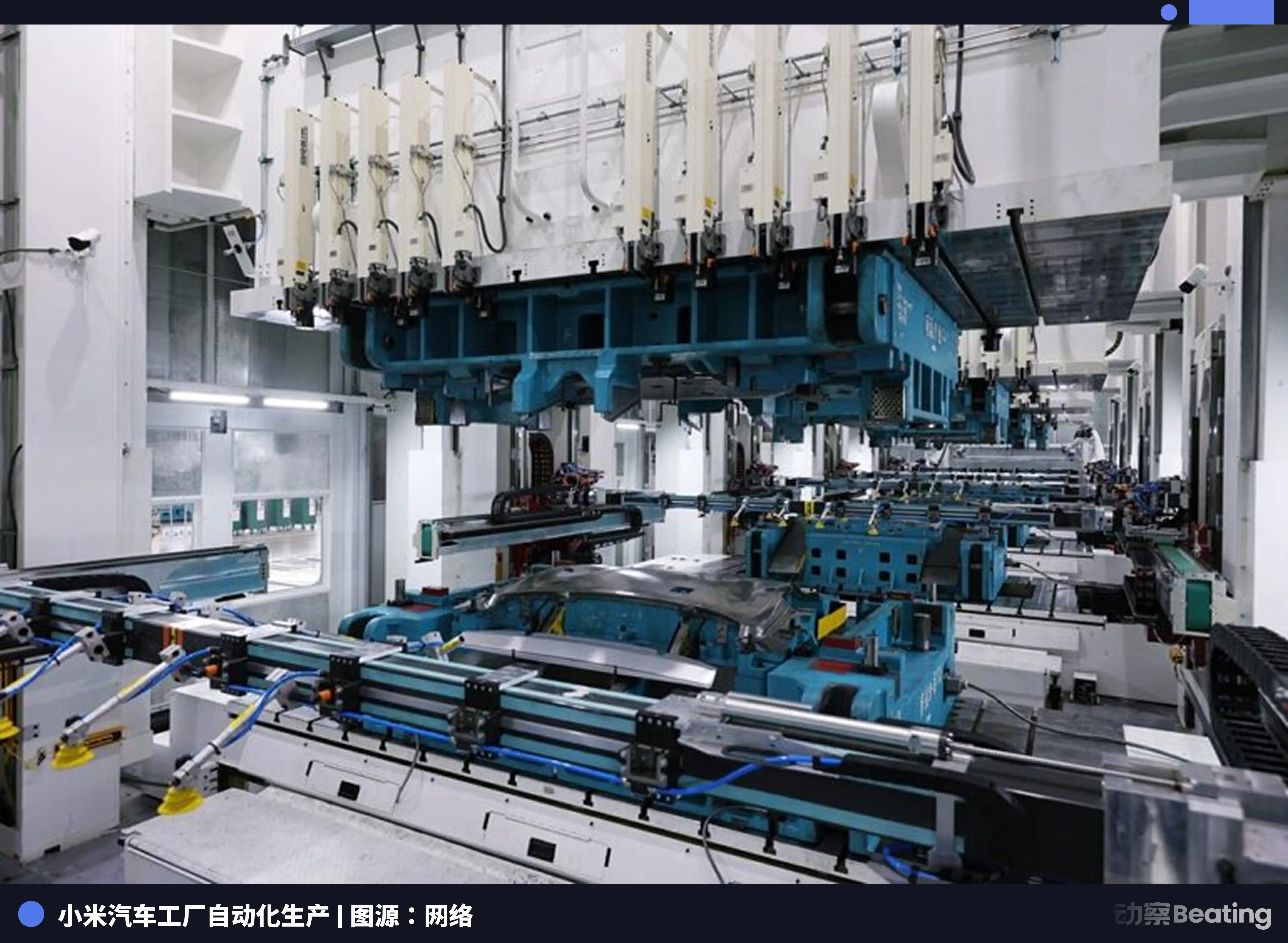
Here, on average, 76 seconds, there's a new car off the line。
When a risk investor in Silicon Valley, or a Washington-based policymakers, stood on the glass corridor bridge and witnessed all of this, there was no need for any think tank report to prove to them that “China’s manufacturing industry was escalating.” The report contains dry and dry figures, all of which have been transformed into machine arms that are waved in front of the eyes。
A huge difference in the judgement of China's manufacturing industry can be created by tweaking news on Twitter and by standing on a corridor bridge watching every 76 seconds down the line. This gap is today the largest cognitive arbitrage between China and the United States. Smart people with top-level resources are taking advantage of this asymmetrical information to secretly adjust their asset allocation。
Daytime tax increases, evening pilgrimages
In the spring of 1950, Youngji Toyota, a young Japanese engineer, boarded a flight to the United States for the purpose of pointing directly to the Ford Log factory in Detroit. At the time, the Ford factory had up to 800 units a day, while Toyota produced only a poor 40 units a year。
It was that trip to Detroit that directly conceived Toyota's future production. Next, larger operations followed. In 1955, the United States and Japan jointly launched the Productivity Project, and nearly 400 Japanese engineers were sent to visit the factory in the United States. It was an organized pilgrimage. The Japanese have travelled far to the sea because they know their own backwardness and need to learn。
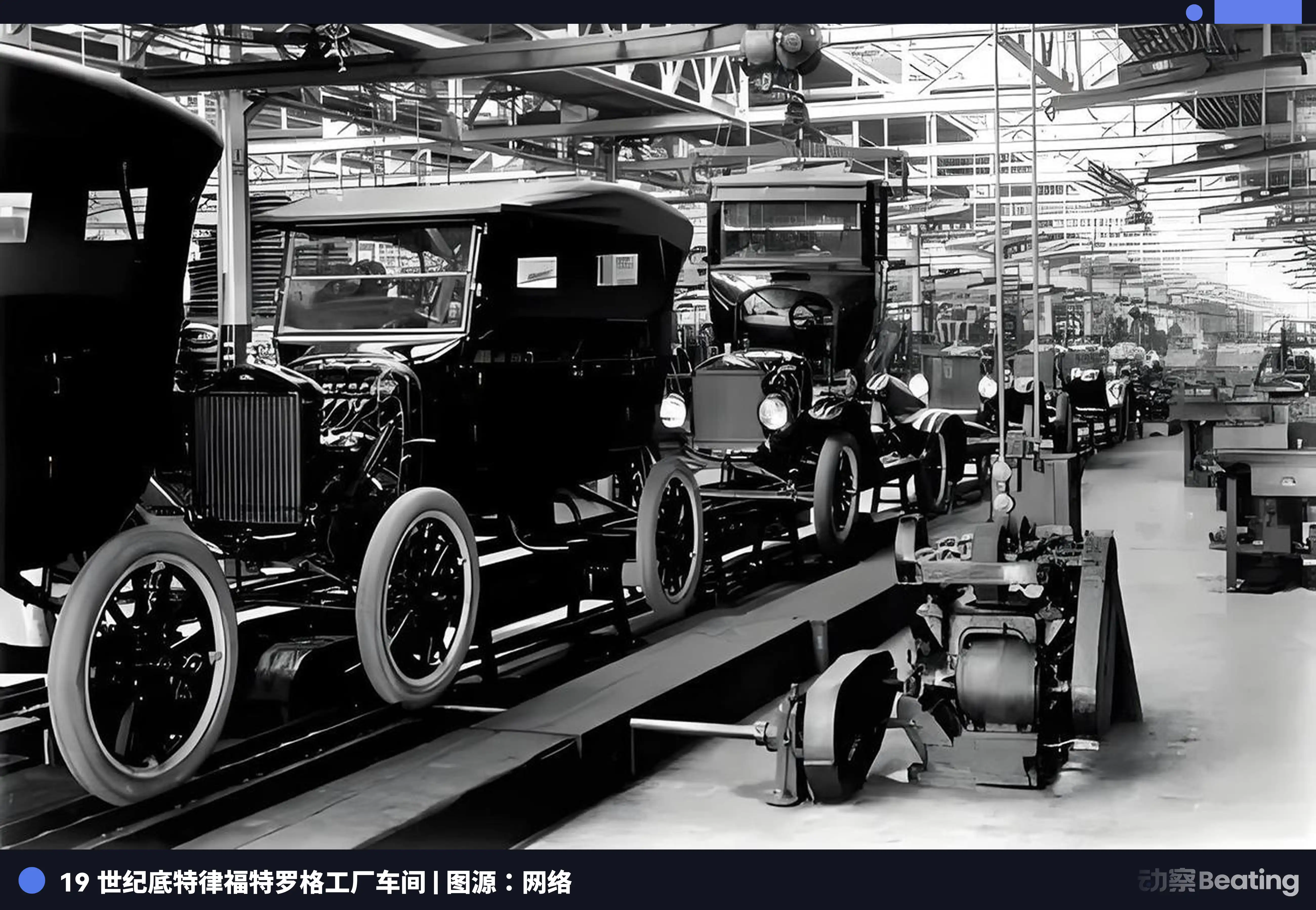
But now the direction is the reverse。
The Western elites with a complex agenda flew to Beijing. There is no government organization, no endorsement by the State, and the trip was even politically incorrect in the context of the customs war. But they came here spontaneously, privately and secretly。
As early as 2010, China ' s manufacturing value added surpassed that of the United States for the first time in the world. By 2024, China ' s manufacturing value added had reached 30 per cent globally, equivalent to the sum of US, Japan and Germany. In China, however, there is a crushing pattern on the New Energy Drive, which reached 68.4 per cent of the global market in 2025。
Turning the past to the Holy Land of Detroit, it has become a broken industrial site. The United States manufacturing industry is by no means an accident, but rather a bitter result of a four-decade-long overexploitation of finance。
Since the 1970s, when Milton Friedman threw out the doctrine of maximizing shareholders' benefits, United States firms began to divert resources from long-term manufacturing investments to pursuing short-term book returns。
BOEING IS A BLOODY LESSON. BOEING’S BUSINESS CULTURE HAS BEEN COMPLETELY REDUCED FROM ENGINEER TO WALL STREET SINCE ITS MERGER WITH MADAO IN 1997. THE EXECUTIVES WERE OBSESSED WITH CUTTING COSTS THROUGH OUTSOURCING AND PUSHING STOCK PRICES UP THROUGH STOCK BUY-BACKS, WHICH EVENTUALLY RESULTED NOT ONLY IN THE TRAGEDY OF 737 MAX, BUT ALSO IN THE COMPLETE EMPTINESS OF THE ENTIRE MANUFACTURING SYSTEM。
In Washington, D.C., during the day, China was supported in the imposition of customs duties, while at the end of the day the factory was lined up in Beijing. The US strategy against China is based on the premise that China is a threat that must be contained, while the private actions of American elites follow another logic: China is a reality that must be understood。
Policies may be delinked from reality in the short term, but the evolution of the smell and perception of capital will eventually come true。
At the beginning of 2025, Spencer Gore, founder of the American Sodium Ion Battery Enterprise Bedrock Materials, flew to China to visit the Ningde era factory. He saw that the Chinese battery giant was producing sodium ion batteries using the same production line for lithium batteries and the same equipment。
Upon his return, he dissolved the company and returned $9 million in financing to investors。
Toyota Yingji went to Detroit to learn; today's American elite came to Beijing to confirm one thing. A thing that they have hidden but that they need to see for themselves to really give up。
I didn't mean to do it
The role of the Army appears to be somewhat subtle during this tour。
At the end of 2024, when he decided to open his factory to the outside world, his intention was in fact extremely pure and business, simply to sell cars. A brand that crosses borders from mobile phones in a highly barrierd and heavy asset industry such as automobiles is the most difficult to overcome is the trust gap between consumers. The RPA opened the factory doors only to dispel doubts and build confidence。
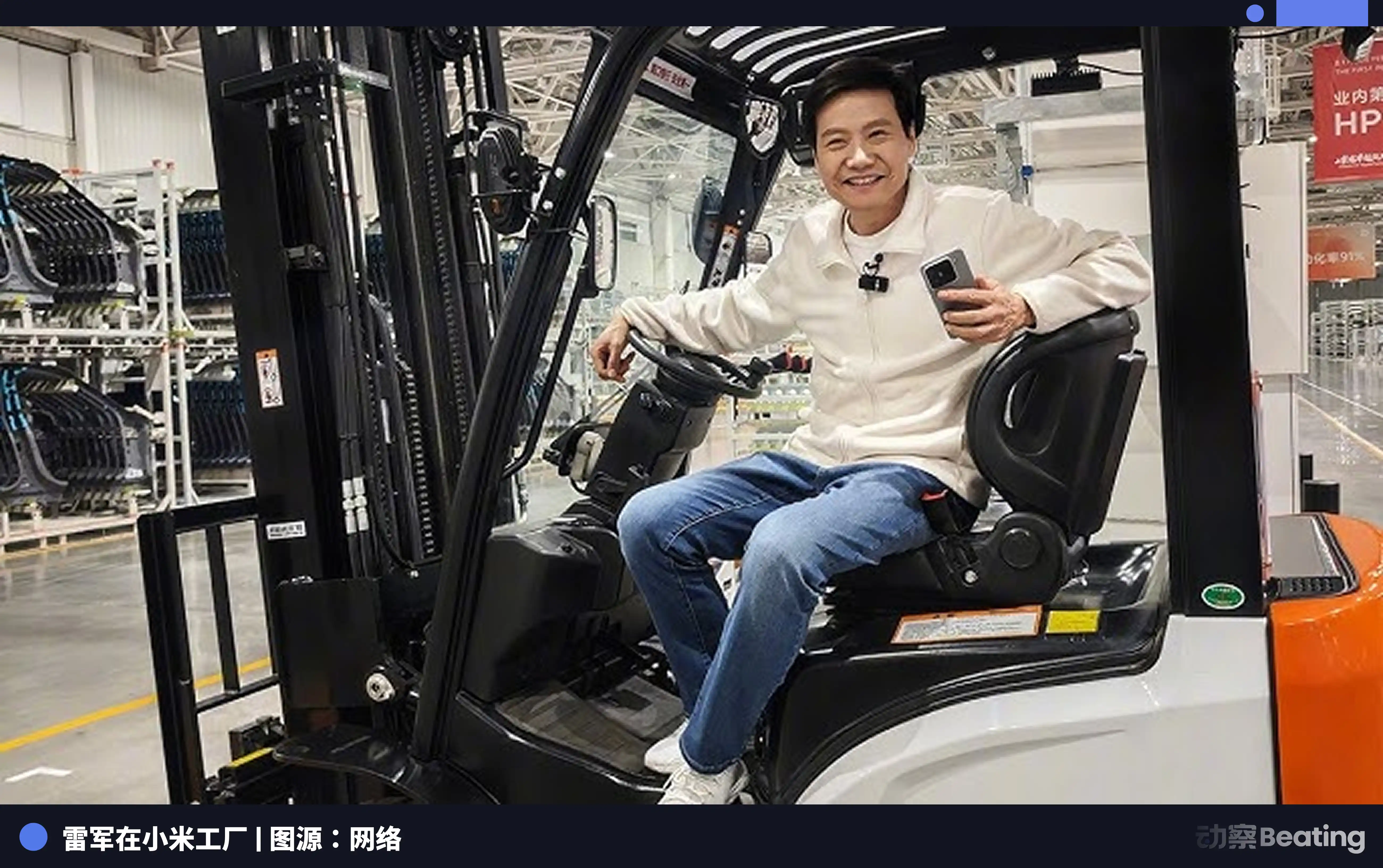
However, he simply intended to open the door but accidentally pushed another invisible wall。
Over the past decade or so, China has invested heavily in the construction of Confucius Colleges abroad and in the advertising of national images in an attempt to boost soft power through cultural output. However, such top-down, highly official moves tend to trigger defensive psychological rebounds in the West and are even directly characterized as “advocacy tools”。
His first reaction is always to be prepared and challenged when someone sees you trying to convince him。
By contrast, the mill didn't say anything. It did not try to instil any values, nor did it sell any grand narratives, but it was there, quietly and efficiently, building a car every 76 seconds。
In social psychology, there is a “group contact theory” to the effect that the best way to eliminate prejudice against a group is not to teach them the big ideas, but to create conditions for them to have direct and equal contact。
In the age of information warfare, the dominant narrative of the past decade has been that whoever grabs the media framework wins the cognitive war. China has been in a recession during this narrative war. But the mill where the mill of the mini-car is booming tells us that when the gravitational force of reality is strong enough, the narrative will collapse automatically. You don't have to do anything to win a narrative war. You just have to open the door and let each other face it。
The most advanced soft power is often born at the moment when you don't want to affect anyone。
The longest-term geopolitical variable
As the night rose, the factory ' s workshops remained lit。
Those American children whose parents brought them to visit may have fallen asleep in the trunk of the hotel. They don't know what a customs war is, they don't know what a "old-deed trap" is, and they don't understand why parents spend so much of their money and energy to show them an industrial stream。
But their eyes don't lie, they remember it all。
Geopolitical analysts tend to stare at the number of carriers, the chip bill and trade deficits, while little attention is paid to the intergenerational transmission of knowledge。
THESE ARE NOW 8 TO 15-YEAR-OLD AMERICAN CHILDREN, WHO WILL GROW INTO WALL STREET INVESTORS, SILICON VALLEY ENTREPRENEURS, DECISION MAKERS IN WASHINGTON, OR THE MOST COMMON VOTERS IN 20 YEARS. THEIR FIRST IMPRESSION OF CHINA IS NO LONGER THE BIASED FILTER IN CNN NEWS, NOR THE IMAGINARY ENEMY IN POLITICIANS' MOUTHS, BUT RATHER A PERSONAL EXPERIENCE OF THE ENGRAVED SENSORY MEMORY。
This perception, based on personal experience, is often the most difficult to subvert. Because it does not have to rely on endorsement from any third-party source, it relies only on its own eyes。
Twenty years later, when they were discussing the Chinese issue at the table, what was the first picture in their minds? It's not a cheap little commodity, it's not a world-generation factory. They may think of the quiet workshop, of the machine arm, which waved untidyly under the light, and of the car, which was in shape in front of themselves。
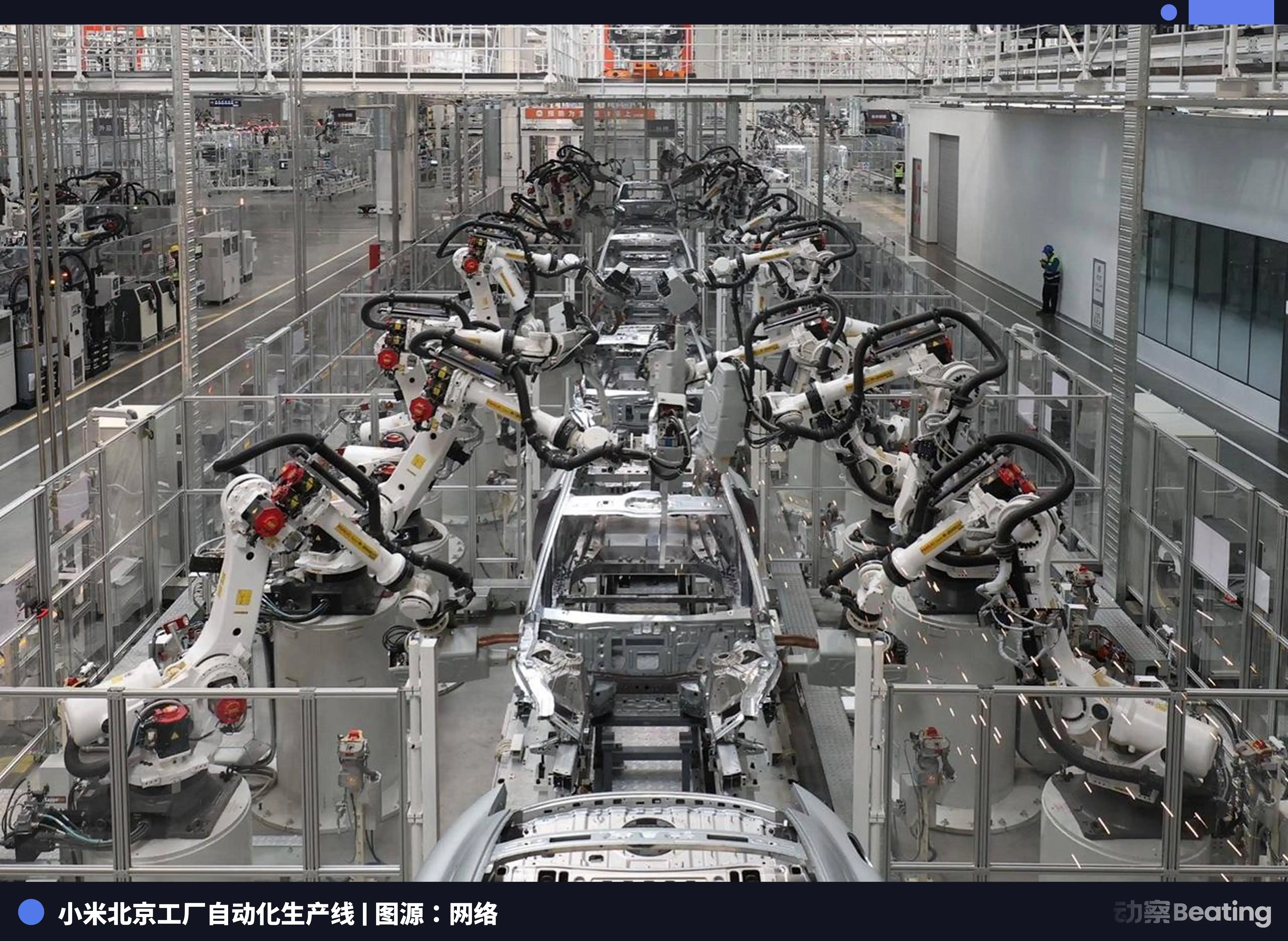
This cognitive seed, once planted, can no longer be uprooted。
This is a cognitive reshuffle spanning two decades, which is far more indestructible than any paper-based trade agreement and more difficult to reverse than any diplomatic statement. The eyes of these children are the most unpredictable yet irreversible variable of the US policy against China 20 years later。
The direction of the pilgrimage has really changed。
