
Stripe, valued at $160 billion, why not be listed
Private fundraising rises, and companies like Stripe recast finance logic. 。

Original title: What does Stripe at $160B mean for technical IPOs?
Original by Michel Milanovic, Fintech Blueprint
Original: Bitpush News
Over the past two weeks, the payment giant Stripe announced a contract purchaser, valued at $159 billion。
At the same time, the provider of the financial science and technology infrastructure, Plaid, completed an offer valued at $8 billion。
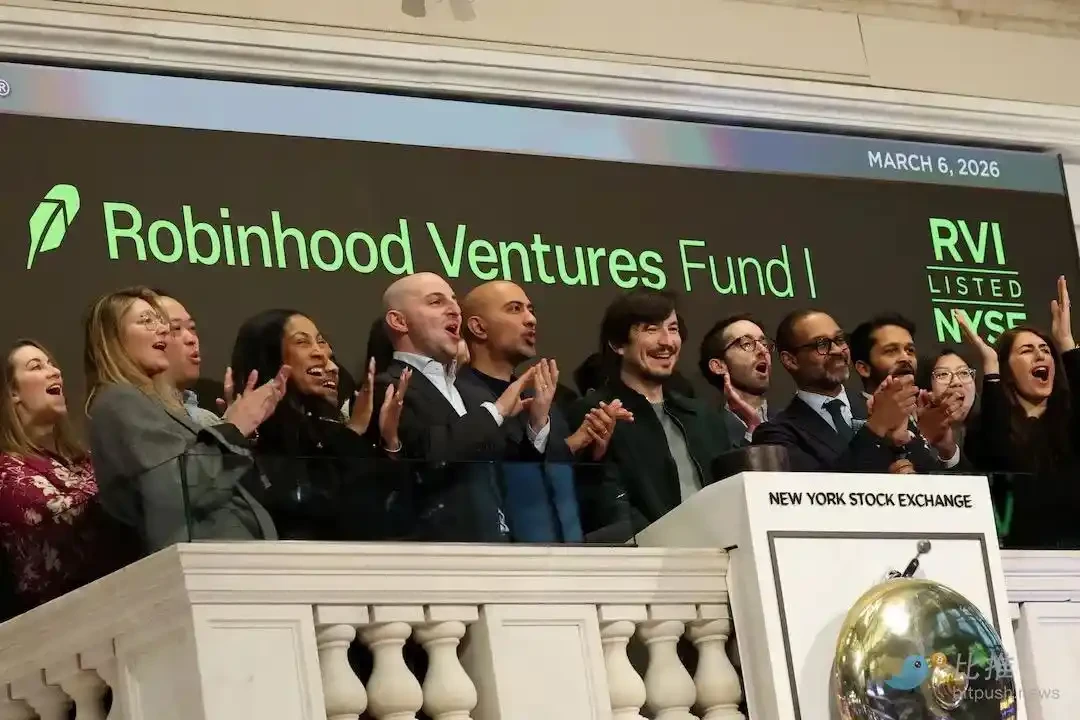
A few days later, Robinhood’s first-stage venture fund I was listed on NYSE, giving retail investors direct access to a basket of private equity companies。
These events are interlocking and reflect structural changes in the way companies access funds, provide liquidity and ultimately consider listing。
Why do you say that
Let's start with Plaid。
Established in 2013 as an infrastructure layer, the company connects consumer bank accounts to financial applications such as Venmo, Robinhood and Chime. The application pays Plaid for seamless bank connections, proofs and shared account information. This is particularly valuable in the United States, where regulations do not oblige banks to share information with third parties (as opposed to open banks in the United Kingdom and the EU PSD2)。
In fact, half of Americans have reportedly used the services of Plaid indirectly through various financial applications. The company had reached the peak of $13.4 billion in its 2021 valuation and was scheduled to be acquired by Visa at one time at $5.3 billion, but the regulator eventually blocked the transaction. Following a re-pricing of $6.1 billion in April 2025, its latest round of $8 billion offers reflected a return to momentum。ITS REVENUES ARE EXPECTED TO REACH $430 MILLION IN 2025, AND 20 PER CENT OF ITS NEW CLIENTS ARE NOW AI。

At the same time, Stripe was created by John Colison and Patrick Colison's brothers in 2010。
WITH THE EXPONENTIAL GROWTH OF E-COMMERCE OVER A DECADE, THE COMPANY RECENTLY REPORTED IMPRESSIVE PERFORMANCE IN 2025. PAYMENTS TOTALLED $1.9 TRILLION, AN INCREASE OF 34 PER CENT OVER THE PREVIOUS YEAR, EQUIVALENT TO ABOUT 1.6 PER CENT OF GLOBAL GDP. THIS IS NOT THE CASEBut the source estimates that the revenue in 2024 is at least $5 billionI don't know. Today, the annual operating income (ARR) from the Stripe income package (including Stripe Billing, Invoicing, Tax, etc.) is expected to reach $1 billion。
In addition to payment operations, Stripe is also active in layout around encrypted currency and substitute commerce as catalysts for online consumption. It purchased the stabilization currency platform Bridge, the wallet infrastructure provider Privy with $1.1 billion, and is building Tempo, a L1 block chain focused on payment, which is currently being tested by Visa, Nubank and Klarna。Its latest offer price of $159 billion was 74 per cent higher than last year。
 ARK Invest Big
Tender Offer is a secondary transaction that allows new or existing investors to purchase shares directly from employees and early shareholders. It provides liquidity without diluting corporate equity or being influenced by IPO regulation and structural burdens。
Stripe and Plaid are part of this general trend:Companies have successfully bypassed open markets and opted for private fundraising。
It was reported that Anthropic was exploring an offer valued at over $350 billion, while Revolut had recently completed the sale of employee shares at a value of $75 billion。
IN 2025, PRIVATE-MARKET SUBMARKET TRANSACTIONS SURGED TO $240 BILLION, UP FROM $162 BILLION IN 2024. IN CONTRAST, GLOBAL FUNDING THROUGH TRADITIONAL IPOS IS ABOUT $140 BILLION。

As the private capital market boomed, the pace of companies entering open markets slowed。The company currently waits on average 16 years to be listed, 33 per cent longer than a decade ago. Over the past 12 years, total private market assets have more than doubled to $22 trillion。Some of the world ' s most valuable companies, including SpaceX and OpenAI, remain privatized and are valued to be comparable or more than large listed companies。

This has led to two key market developments:
First, the emergence of new capital market infrastructure。We have recently analysed the rise of platforms such as Forge and EquityZen, which promote secondary trading in private equity. Charles Schwab bought Forge in November with $660 million, while Morgan Stanley bought EquityZen in October (the amount is not public)。
Second, the private market is open to retail investors。Robinhood's new Ventures Fund I was listed at the New York House last Friday, raising $658 million in shares in large private corporations such as Ramp, Stripe and Revolut. This was not the first time that Destiny Tech 100 came on the market in March 2024, providing a portfolio of 100 companies with wind support, including SpaceX and OpenAI. But Robinhod can be distributed directly to its 28 million users, and, as it has done in the field of open equity, has a successful record of universalizing asset classes that have historically been restricted to institutional investors。
in addition, the trump administration signed an executive order last summer, paving the way for $8.7 trillion in 401 (k) retirement account investments in alternative assets such as encrypted currency and private markets。
We see these as major catalysts for further growthBut they also exposed some hidden risks。
One of these is the structural complexity behind the purchase of private equity。BROKERS USUALLY PACK THESE STOCKS INTO THEIR SPECIAL PURPOSE CARRIERS (SPVS) AND CHARGE FEES, WHICH SOMETIMES HOLD POSITIONS IN OTHER INSTRUMENTS. THESE OVERLAPPING COUNTERPARTY RISKS AND COSTS MAY MASK THE ASSETS ACTUALLY OWNED BY INVESTORS. THE NEXT MACROECONOMIC DOWNTURN WILL BE ACCOMPANIED BY THE COLLAPSE OF THE SPV POSITION AND THE ENSUING LITIGATION。
There was also the issue of transparency in valuation。THE VALUATION OF PRIVATE CORPORATIONS USUALLY ANCHORS THE MOST RECENT ROUND OF FINANCING, WHICH MAY OCCUR ONCE OR TWICE A YEAR. THIS LIMITS PRICE DISCOVERY AND CREATES A GAP BETWEEN THE REPORTED NET ASSET VALUE (NAV) AND THE PRICE THAT THE OPEN MARKET IS WILLING TO PAY。
The Financial Times recently reported that Robinwood's Ventures Fund I fell 11 per cent on the first day of the deal. At the same time, Destiny Tech 100 traded at one point nearly 20 times its NAV。This unpredictability is not good for retirement savings accounts。

At the same time, regulators have begun to push for reforms to make open markets more attractive. SEC Commissioner Hester Peirce, in his February speech, expressed concern about the private marketThe pressure on companies to market has decreased, but private markets lack equal price discovery mechanisms, accessibility and liquidity。
SEC Chairman Paul Atkins recently proposed a three-pillar plan to "make IPO great again" (as he said) through easing disclosure requirements and reforming securities litigation. It remains to be seen whether these reforms will land。
IPO did make a remarkable recovery in 2025, leaving aside the private exchange. Eleven financial technology companies, including Circle and Klarna, have been listed and more are on their way. Kraken and Bitgo have filed applications in secret, while companies such as Ramp and Gusto have prepared their applications by cleaning up cap ceilings, hiring new CFOs or contacting investment banks. F-Prime estimates that the total market value of financial science and technology may increase from $947 billion to $1.2 trillion。


Whether these companies can obtain the desired price is another matter. By the end of the year, only 2 out of 11 companies had a transaction price higher than their IPO price. Chime had privately valued $25 billion and listed $13.5 billion. Klarna was listed with $17.3 billion, but fell to $10.9 billion at the end of the year。
Geopolitical tensions have increased and macro-prospects are uncertain, and companies that are still watching may find that the least resistance is to offer the set。At least for the time being, the private market remains sufficiently liquid to absorb the supplies of the unicorn。
