
From Libya to Iran: power outages, non-stop bitcoin machines
Bitcoin mining is essentially an energy arbitrage game. In any part of the globe, mines can be profitable as long as the price of electricity is low enough。

Original title: " From Libya to Iran: Power outages, Bitcoin mines "
Original author: Apocalypse on the Chain
Introduction: "Export industries" in power outage countries: how electricity becomes bitcoin
On the summer night of Tehran, the heat waves are like an unventilated net, making it hard to breathe。
In recent years, the electricity crisis has been repeatedThe summer of 2025 was one of the hardest moments in the Iranian capitalIn that year, the city experienced one of the most extreme temperatures in nearly half a century, with repeated temperature breakthroughs of 40 degrees Celsius, electricity restrictions in 27 provinces and closures of government offices and schools. In many local hospitals, doctors have to rely on diesel generators to provide electricity -If the power outage lasts too long, the breathing machine in the intensive care unit could be out of serviceI don't know。
BUT THE OTHER SOUND IS EVEN SHARPER AFTER THE CITY'S EDGES AND WALLS: INDUSTRIAL FANS SOUND DEAFENING, AND BITCOIN MACHINES ARE RUNNING AT FULL CAPACITY; BIG AND SMALL LED SIGNALS FLASH AS STARS IN THE DARKAnd the power here is almost never brokenI don't know。
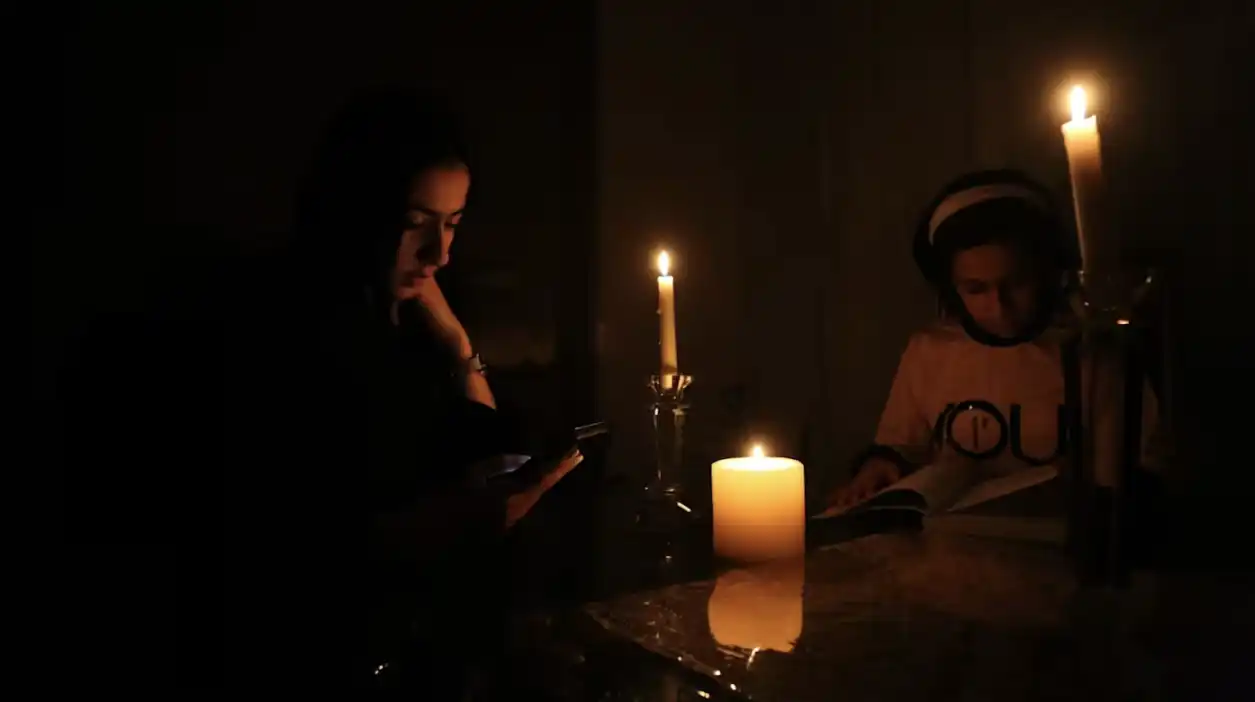
North African countries across the MediterraneanLibyaThe same scene goes on every day. Residents of the eastern region have been accustomed to daily power outages of between six and eight hours; the food in the refrigerator is often bad and children need to write their homework under candlelight. However, in abandoned steel factories outside the city, the old machines smuggled into the country keep running around the clock, converting almost free electricity from the country into bitcoin and converting it into United States dollars through encrypted currency trading platforms。
This is one of the most ridiculous energy stories of the 21st century: In two countries devastated by sanctions and civil war, electricity is no longer simply a public service, but is treated as a hard currency that can be “exported”。
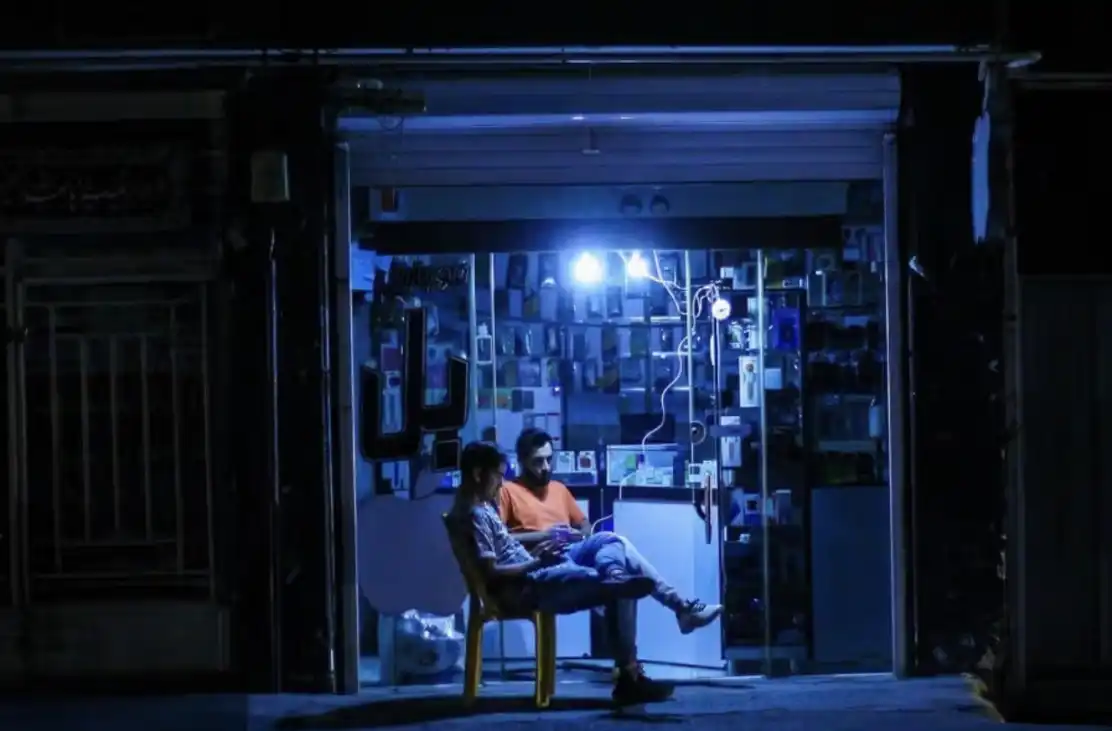
Photo description: Two Iranian men sitting outside their own mobile phone store, where only emergency lights were lit, as the power outage caused the streets to be dark
Chapter I: Electricity crowding: when energy becomes a financial instrument
Bitcoin mining is essentially an energy arbitrage gameI don't know。Everywhere in the world, if the electricity is low enough, the mine will be profitableI don't know. In Texas or Iceland, in the United States, mine owners finely calculate the cost of electricity per hour, and only the newest generation of efficient miners can survive the competition. But in Iran and Libya, the rules of the game are completely different。
Iran's industrial electricity prices are as low as 0.01 US dollars per degree, and Libya is even more exaggerated — its residential electricity prices are about 0.004 US dollars per kilowatt-hour, one of the lowest in the world. Such a low electricity price could be achieved because of government subsidies for fuel and artificially low electricity prices. In the normal market, such prices do not cover even the cost of generating electricity。
But for the miners, this is heaven. Even old mining machines out of China or KazakhstanEquipment that has long been reduced to e-waste in developed countries remains easy to profit from here. According to official data, in 2021 Libya once accounted for about 0.6 per cent of the global total of bitcoin, surpassing all other Arab and African countries and even some European economies。
This figure does not appear to be significant, but it is extremely absurd in the context of Libya. This is a country with a population of only 7 million people, a power grid loss rate of up to 40 per cent, and a power outage every day. At the peak, bitcoin mining consumed about 2 per cent of the country ' s total electricity generation, equivalent to 0.855 watt-hours per year。
In Iran, the situation is even more extreme. This country has the fourth largest oil and second largest gas reserves in the world, and should not theoretically lack electricity. However, Iran ' s electricity supply has been under severe stress for a long time as the United States sanctions have cut off its access to advanced power generation equipment and technology, coupled with the ageing and mismanagement of the electricity grid. And the explosive growth of bitcoin mining is pulling the string completely。
This is not an ordinary industrial expansion. It's a run for public resourcesWhen electricity is used as a "hard currency" to bypass the financial system, it no longer prioritizes hospitals, schools, and residents, but goes to mining machines that can convert it into dollars。
Chapter II: The history of mining in two countries
Iran: from "export energy" to "export power."
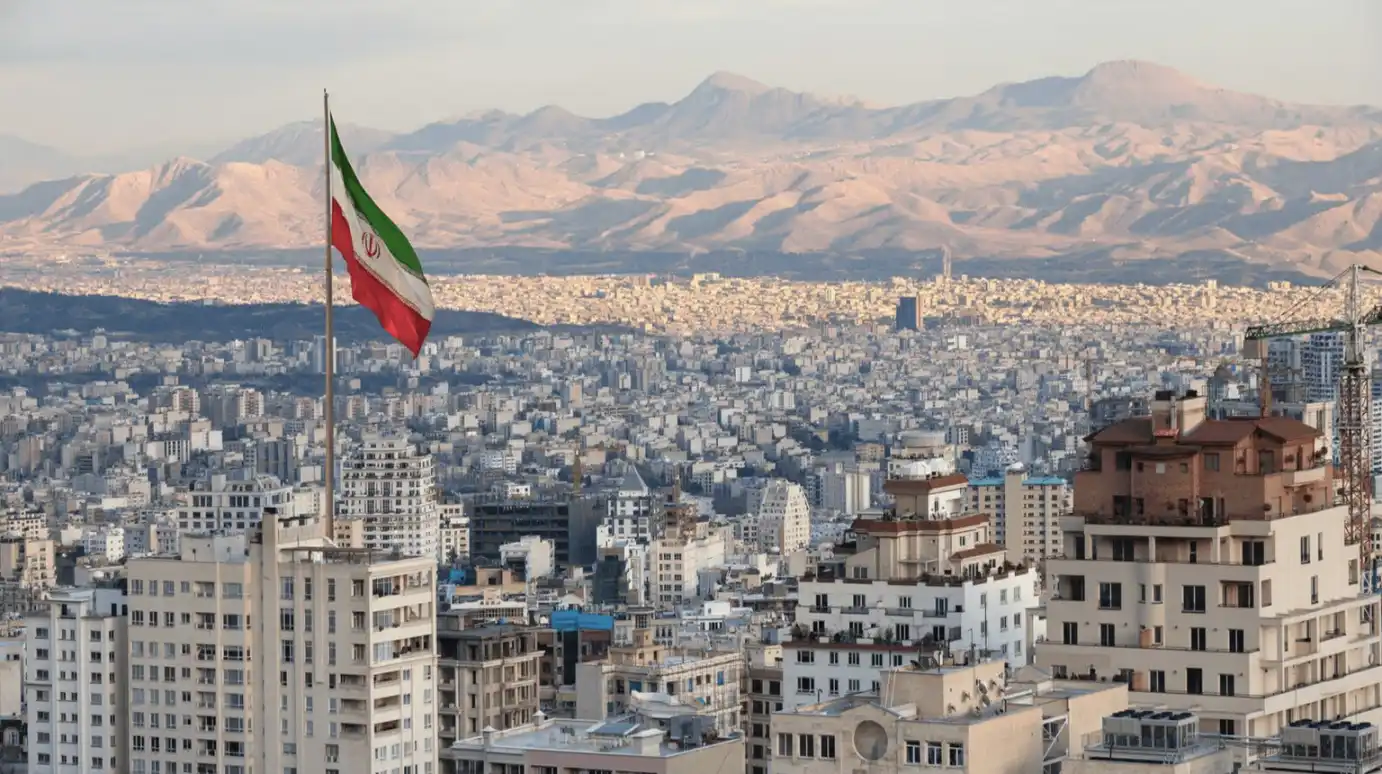
Under the pressure of extreme sanctions, Iran has chosen to legalize the mining of Bitcoin and convert domestic cheap electricity into digital assets in global circulation。
IN 2018, THE TRUMP GOVERNMENT WITHDREW FROM THE IRAN NUCLEAR DEAL AND RE-IMPOSED “EXTREME PRESSURE” ON IRAN. IRAN WAS KICKED OUT OF THE SWIFT INTERNATIONAL SETTLEMENT SYSTEM AND WAS UNABLE TO USE THE UNITED STATES DOLLAR FOR INTERNATIONAL TRADE, WITH A SHARP DECLINE IN OIL EXPORTS AND DEPLETION OF FOREIGN EXCHANGE RESERVES. IN THIS CASEBitcoin mining just happens to provide a side door to the Energy Flow: THERE IS NO NEED FOR SWIFT, THERE IS NO NEED FOR A MATCH, THERE IS ONLY ELECTRICITY, A MINE AND A LINK THAT SELLS MONEY。
In 2019, the Iranian Government officially recognized the mining of encrypted currency as a legitimate industry and established a licensing system. Policy design seems "modern": miners can apply for license plates to run mines at reduced electricity pricesHowever, the extracted bitcoin must be sold to the Central Bank of Iran。
Theoretically, this is a three-win solution — the State exchanges cheap electricity for bitcoin, and then bitcoin for foreign exchange or imported goods; miners earn a steady profit; and grid loads can be included in plans and regulations。
However, the reality is fast off track:License exists. Grey is widerI don't know。
By 2021, then-President Rouhani had publicly admitted that about 85 per cent of Iran ' s mining activities were unauthorized; underground mines emerged as springs of rain, from abandoned factories to mosque basements, from government offices to ordinary homes, and from mines everywhere。The deeper the subsidy, the stronger the arbitrage motive; the looser the regulation, the more like a "default benefit" to steal electricity。
In the face of the increased power crisis and the fact that illegal mining consumed more than 2 kiva, the Iranian Government announced a temporary ban on all encrypted currency mining for a period of four months from May to September of that year. This was also the most severe nationwide ban since the legalization of 2019。
During this period, the Government organized large-scale raids: the Ministry of Energy, the police and local authorities raided thousands of illegal mines and confiscated tens of thousands of mines in the second half of 2021 alone。
But after the banMining activity rebounded rapidly. Many of the confiscated mines were put back into service and underground mines did not increase in sizeI don't know. This "rehabilitation" was seen by the people as a short-term performance: on the face of the crime, it did not actually touch the deep-seated issues, but instead allowed some mining sites with background to expand。
More crucially, multiple surveys and reports indicate that a number of entities closely associated with the Authority are involved in the industry on a large scaleA “privileged mine” with independent electricity supply and enforcement immunity was created。
When the mines stand behind their backs with "untouchable hands", so-called rehabilitation becomes a political performance, while the folk narrative is even sharper: "We endure darkness, just to make bitcoins work." I don't know
Source: Financial Times
Libya: cheap electricity, shadow mining
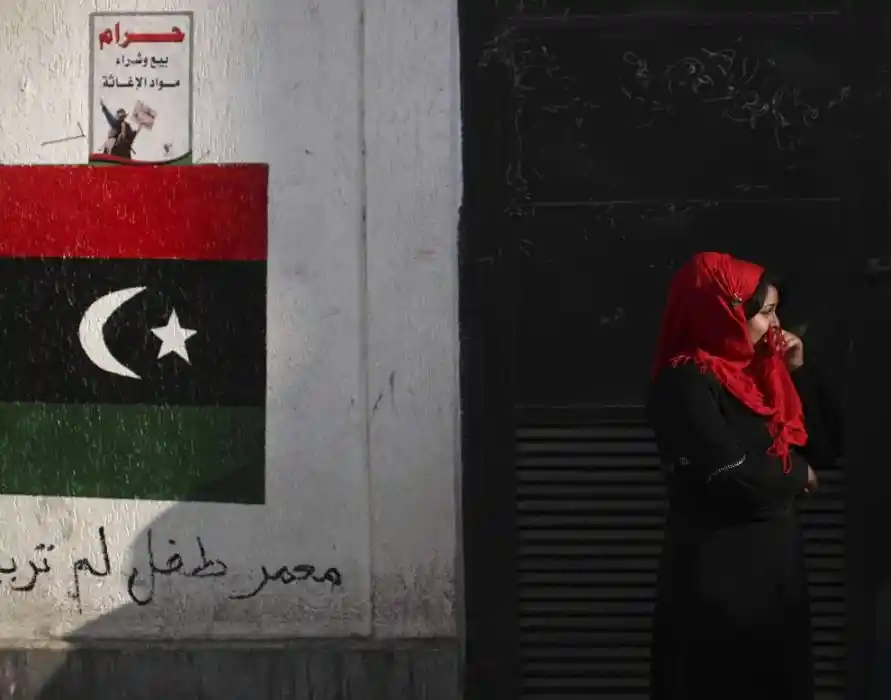
The slogans on Libya's street walls condemn "the illegal trade in relief supplies" and reflect the civic moral outrage caused by the inequitable distribution of resources — similar sentiments that have fermented in the context of the diversion of electricity subsidies from mining。
Libya's mining script is more like "The Brutal Growth of the Regime."I don't know。
In Libya, this North African country (with a population of approximately 7.3 to 7.5 million and an area of nearly 1.76 million square kilometres, the fourth largest country in Africa) is located on the southern coast of the Mediterranean, bordering Egypt, Tunisia and Algeria. Since the fall of the Qadhafi regime in 2011, the country has been mired in long-term instability: repeated civil wars, the emergence of armed factions, and the serious fragmentation of State institutions, which have resulted in a "managerial fragmentation" (i.e., relatively manageable levels of violence but lack of unified governance)。
And what really drives Libya to become a mineral-heated land is its ridiculous electricity-price structure. As one of Africa's largest oil producers, his Government had long subsidized electricity prices at a level of $0.0040 per kilowatt-hour — a price that was even lower than the fuel cost of electricity generation. In a normal country, such subsidies are intended to safeguard the livelihood of the population. But in Libya, it has become a huge arbitrage opportunity。
So a classic arbitrage model emerged:
• Old machines that have been eliminated in Europe and the United States are still profitable in Libya
• Industrial zones, abandoned plants, warehouses, which are naturally suitable for hiding high-volume loads
• The import of equipment is restricted, but grey channels and smuggling keep machines in the loop
ALTHOUGH THE CENTRAL BANK (CBL) HAD OUTLAWED VIRTUAL CURRENCY TRANSACTIONS IN 2018 AND THE MINISTRY OF ECONOMY HAD BANNED THE IMPORT OF MINING EQUIPMENT IN 2022, MINING ITSELF WAS STILL NOT EXPLICITLY PROHIBITED BY NATIONAL LAW, LAW ENFORCEMENT RELIED HEAVILY ON SURROUNDING CRIMES SUCH AS "ILLEGAL USE OF ELECTRICITY" "SMUGGLING" AND WAS POORLY IMPLEMENTED IN THE REALITY OF FRAGMENTATION OF POWER, LEADING TO CONTINUED EXPANSION OF GREY AREAS。
This "prohibited" state is a typical manifestation of power fragmentationThe ban imposed by the Central Bank and the Ministry of Economy is often difficult to enforce in the eastern Benghazi or southern regions, where local armed or militia forces sometimes acquiesce in or protect mines, leading to the brutal development of mines in grey areasI don't know。
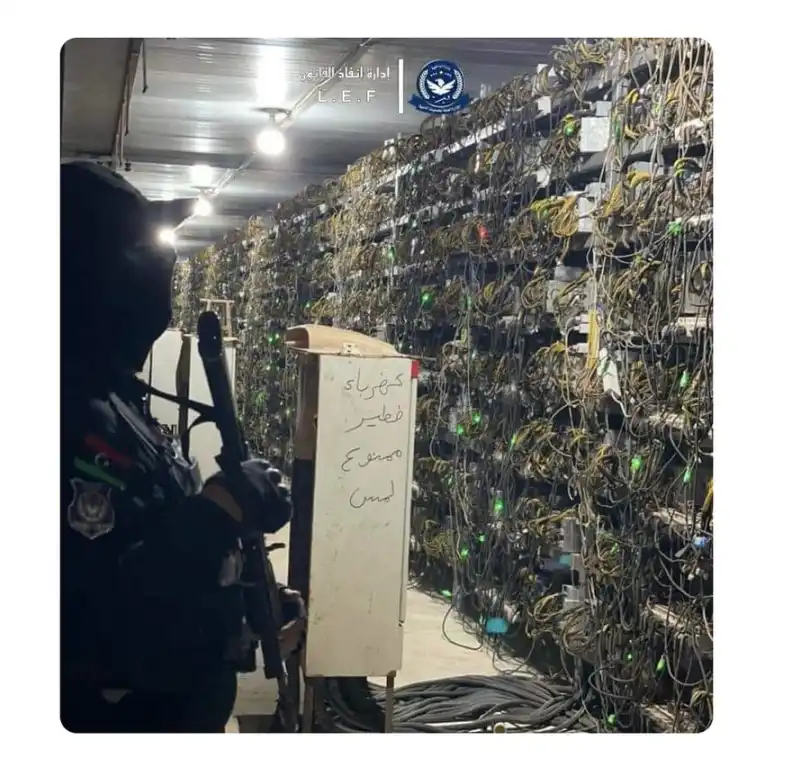
Source: @emad_badi on X
Even more ridiculously, a significant proportion of these mines are operated by foreigners. In November 2025, nine Libyan prosecutors sentenced nine individuals to three years ' imprisonment, confiscation of equipment and recovery of illegal proceeds for operating mines in the Zlitan steel factory. In previous raids, law enforcement had captured dozens of Asian citizens who operated industrial-scale mines using old mining machines that had been decommissioned from China or Kazakhstan。
These old equipment are no longer profitable in developed countriesI don't knowBut in Libya, they're still money-printersI don't know. Because electricity is too low, even the least energy-efficient mines are profitable. That's why Libya has become the world's place of revival of the mining machine cemetery. Those e-wastes that were eliminated in Texas or Iceland have gained a second life here。
Chapter III: Broken power grid and energy privatization

Iran and Libya have come two different ways: one to try to integrate bitcoin mining into the national machine, and the other to allow it to swim in the shadow of the system for a long time. But the end is the same — the power grid deficit is widening and the political consequences of resource allocation are beginning to emerge。
This is not simply a technical failure, but a result of political economics。Subsidized electricity prices create the illusion that power is worthless; mining offers the temptation to "electricity can be realized"; and power structures determine who can make it happenI don't know。
When miners share the same grid with hospitals, factories and residents, the conflict is no longer abstract. Power outages were caused not only by refrigerators and air conditioners, but also by surgical lamps, blood banks and industrial lines. Every darkness is a silent examination of the way public resources are allocated。
The problem is that the revenues from mining are highly "carryable". Electricity is local and the costs are borne by society; bitcoin is global and values can be transferred quickly. The result is a highly asymmetrical structure: societies bear the cost of electricity consumption and outages, and a few capture the benefits of cross-border movement。
Bitcoin mining is often discussed as an industrial activity in countries with well-established systems and energy-rich countries; but in countries like Iran and Libya, the problem itself has changed。
New industries or resource plundering
Globally, bitcoin mining is seen as an emerging industry, even a symbol of the “digital economy”. But in the cases of Iran and Libya, it was more like an experiment to privatize public resources。
If called an industry, it should at least create jobs, pay taxes, be regulated and generate net gains for society. In both countries, however, mining is highly automated, with little job creation; a large number of mines are illegal or semi-legal and tax contributions are limited, and there is a lack of transparency in the flow of revenues even from licensed mines。
Cheap electricity was meant to protect people. In Iran, energy subsidies are part of the “social contract” that has existed since the Islamic Revolution — the government subsidizes electricity prices with oil revenues, and the people are subject to authoritarian rule. In Libya, electricity subsidies are also at the core of the welfare system inherited from the Qadhafi era。
But when these subsidies are used to mine bitcoin, their nature changes fundamentally. Electricity is no longer a public service, but a productive resource used by a few to create private wealth. Rather than benefiting from it, the general population has to pay for it — more frequent power outages, higher costs for diesel generators and more vulnerable medical and educational services。
More importantly, mining does not generate real foreign exchange earnings for these countries. In theory, the Iranian Government required miners to sell bitcoin to the Central Bank, but the practical effects of implementation were questionable. There is no such mechanism in Libya. Much of the bitcoin is converted into United States dollars or other currencies through a platform for foreign transactions, and is exported through underground money houses or encrypted money channels. These funds are neither channelled into State finances nor returned to the real economy, but rather become the private wealth of a few。
In this sense, it's more like a new "resource curse" than a bitcoin mine。It does not create wealth through production and innovation, but through price distortions and institutional loopholes. It is often the most vulnerable groups that pay the price。
Conclusion: Real cost of a bitcoin

In an increasingly resource-intensive world, electricity is no longer merely a tool to light darkness, but a commodity that can be transformed, traded and even plundered. When the State exports electricity as a "hard currency", it is actually consuming the future that would otherwise be applied to people's lives and development。
The question is not about bitcoin itself, but about who has the power to allocate public resources. When such power is not limited, so-called “industry” is left with another form of looting。
And those who sit in the dark are still waiting for the lights to come back on。
"Not everything that is faced can be changed, but nothing can be changed until it is faced."
