
AI Agent Economic Infrastructure Study (above)
Existing infrastructure is hostile to the Agent economy. Agent has been able to think and act on his own at the "capacity level", but the "economic level" is still locked in the infrastructure designed for humans。

Source: OKX Ventures

This is an in-depth study of the products produced by OKX Ventures. Due to its length, the publication will be divided into the previous section focusing on macro background, x 402 protocols, ERC-8004 and Virtuals Protocol; the next section will focus on OpenClaw and industry trends in general, and please look forward。
Summary
AI Agent is evolving from passive assistant to active economic participant. In six chapters of this report, the system combes the core infrastructure of the Agent economy, the application of ecological eruptions and industry evolution: Macro-level analysis of market predictions and infrastructure gaps in Argentina Commerce; depth analysis of three complementary agreements at protocol level x 402, ERC-8004, Virtuals Protocol; application level with OpenClaw as a case study of the true landing path of the Agent economy; and, ultimately, integrated industry judgement from the dimensions of competition patterns, payment routes, security threats and business models。
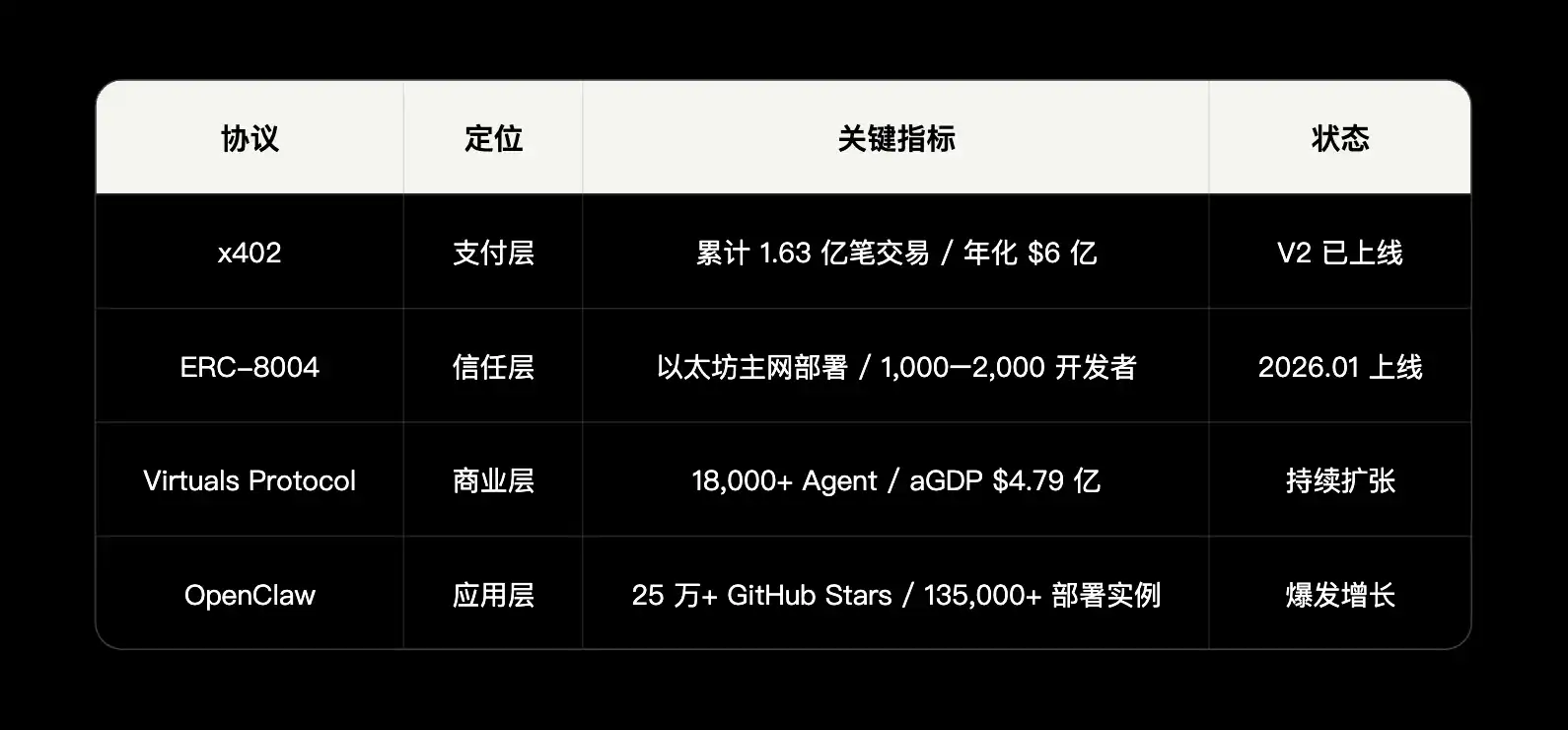
x402 (payment level) is produced jointly by Coinbase and Cloudflare, which embeds stable currency micropayments into the HTTP protocol level. By the end of 2025, over 100 million transactions had been processed, with annualized payments amounting to $600 million。
The ERC-804 (Trust Level of Trust) was proposed by the DAI team of the ETA Foundation, MetaMask, Google, Coinbase, to provide three registration forms for AIAgent for chain identification, reputation and authentication, which came online on January 29, 2026, 2026。
The Virtuals Protocol (commercial level) has built a full-fledged Agent commercial platform for autonomous inter-Agent transactions through ACP. Over 18,000 Agents have been deployed, a GDP of over $479 million。
OpenClaw (appliance level) was developed by the Austrian developer Peter Steinberger to be the fastest-growing open-source project in GitHub in four months at 250,000+GitHub Stars beyond React. It embeds AI in the existing 20+ message platform of the user, triggers the voluntary construction of the economic infrastructure on the chain by the Crypto community, and is a core sample of the report that observes the real interaction between Agent and the chain agreement。
Chapter I Macro background
1.1 Market size projections
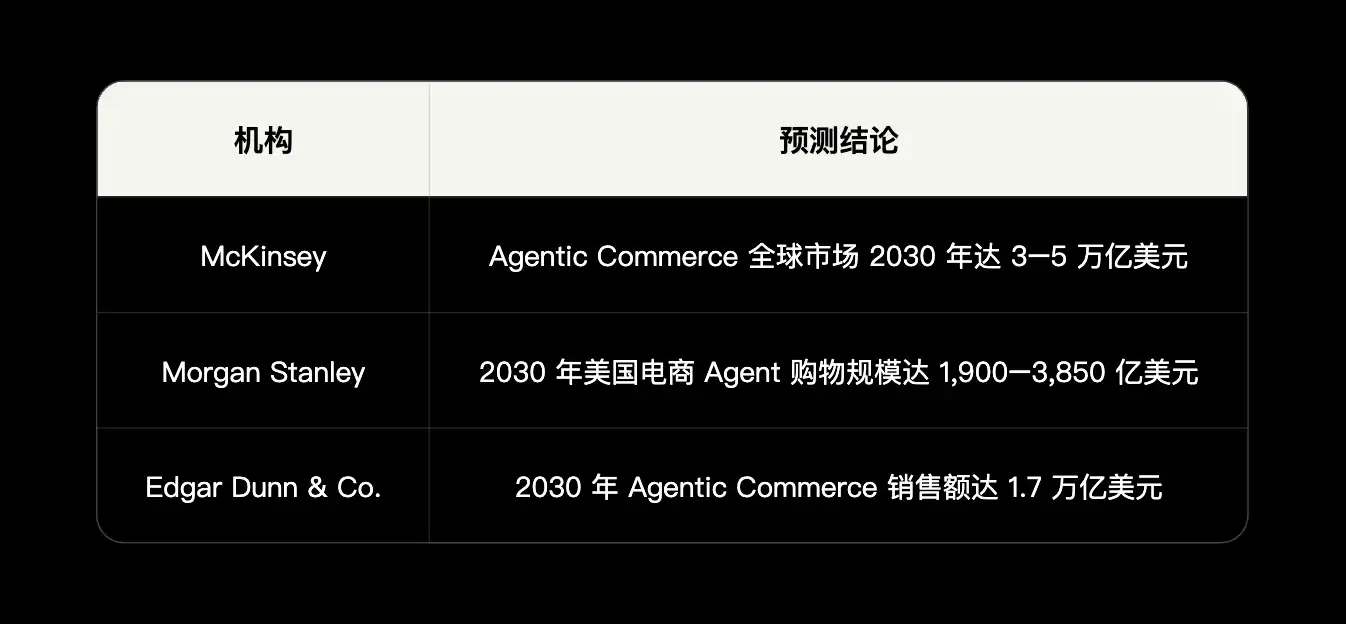
Agentic Payment is in a rapidly expanding phase, and many institutions are optimistic about the size of their markets:
1.2 Infrastructure gaps
The existing infrastructure is hostile to the Agent economy: OAuth needs human hits, credit card forms need manual input, data isolation prevents autonomous access. Agent has been able to think and act on his own at the "capacity level", but the "economic level" is still locked in an infrastructure designed for human beings (identity/coordination/economic activity)。
There are currently two evolutionary paths:
• Centralized compliance path: communication A2A + tool access MCP + payments AP2/ACP (OpenAI and Stripe lead, pure Web2)
• Decentralized unauthorized pathways: x 402 + ERC-804 8183 + ACP (Agent Collaboration Framework)
1.3 Critical time lines
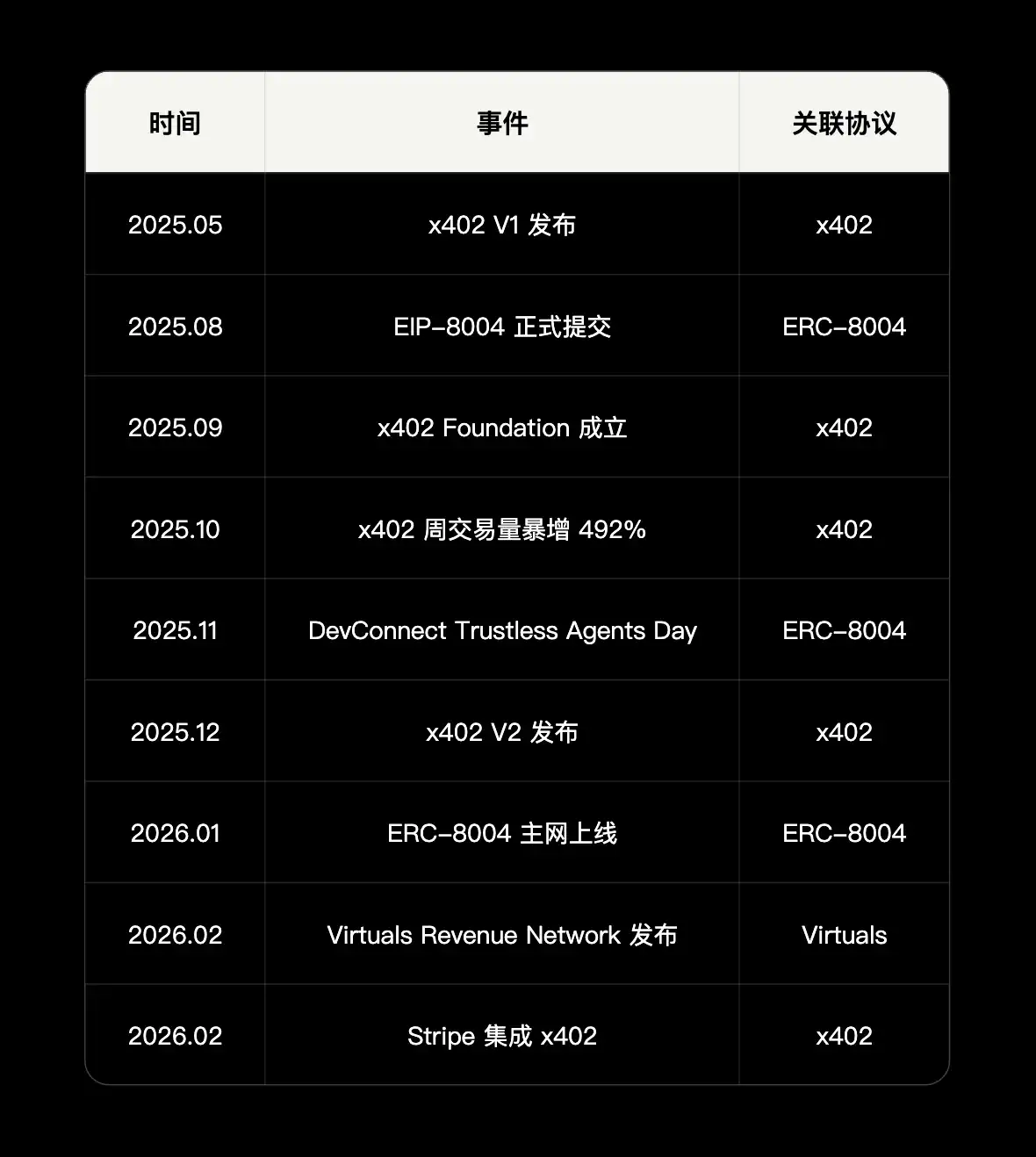
note: as of march 2026, the average daily turnover has fallen significantly from the peak of december, with the largest drop in infrastructure (> 80 per cent)。
Chapter II x 402 protocol: Agent payment level
x402 is an open-source payment agreement that allows any HTTP request to be paid with a stable currency by the resuscitation of HTTP 402 status code, enabling AI Agent to perform immediate pay-per-use transactions。
Understanding x 402 cannot be considered another payment agreement. It represents a redesign of the basic module of economic activity: from "registration and authorization of use" to "payment". X402 = “Swift for delegates”。
The current API economy operates on the implicit assumption that humans operate in the middle. The process of accessing API Key - Registering and filling mailboxes for copying Key paste to code, every step assumes human involvement. Agent can't get through this process because AI Agent can't register, fill out, and pipe. x402 Use HTTP 402 status code to achieve primary stable currency payments. Agent received 402 responses and paid directly on the chain (USDC) to obtain the certificate。
2.1 Overview of agreements and workflow
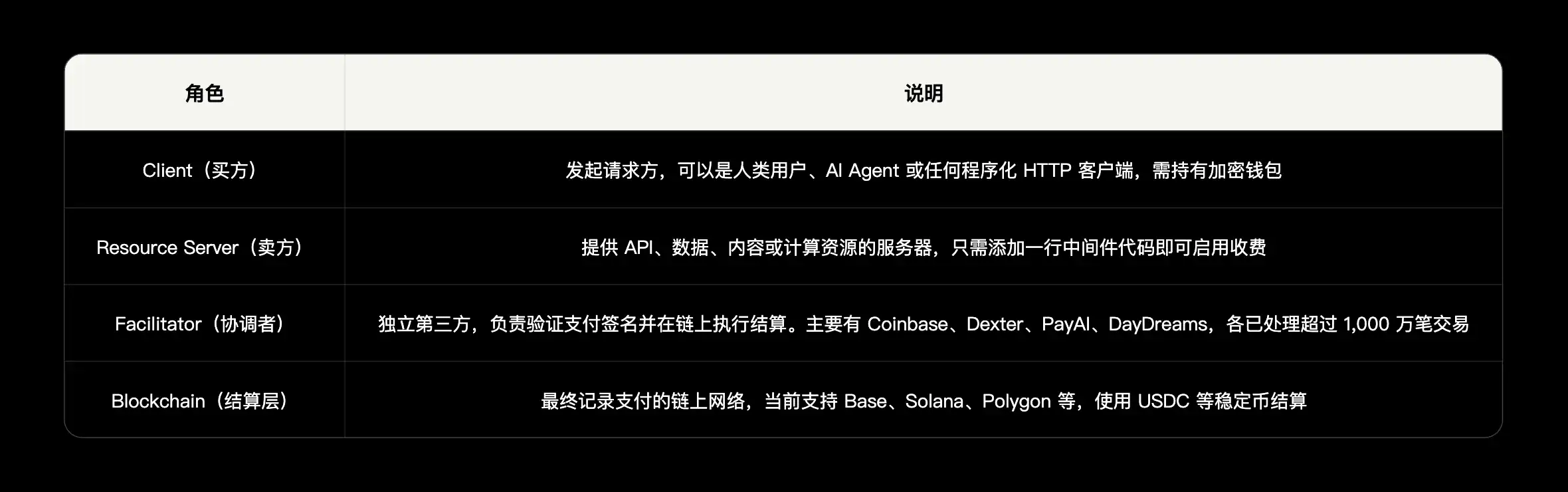
Core roles
Five-step transaction process
1. Resource request: Clarent sends standard HTTP requests to Resources Server (e. g. GET/api/weather)
Return quote: Server returns HTTP 402 status code, response head contains structured payment requests (currency, amount, wallet address, network)
3. Sign Payments: Clarent constructs and signs payment authorizations using the private key of the wallet and drops signatures into X-PAYMENT request header
4. Validation of settlement: Server forwards payment information to Facilitator, who confirms and executes stable currency transfers on the chain
5. Delivery resources: Server returns data/content/calculation to Client upon confirmation
The entire process is completed in about 2 seconds from the launch request to the receipt of the resources。
Comparison with traditional methods of payment
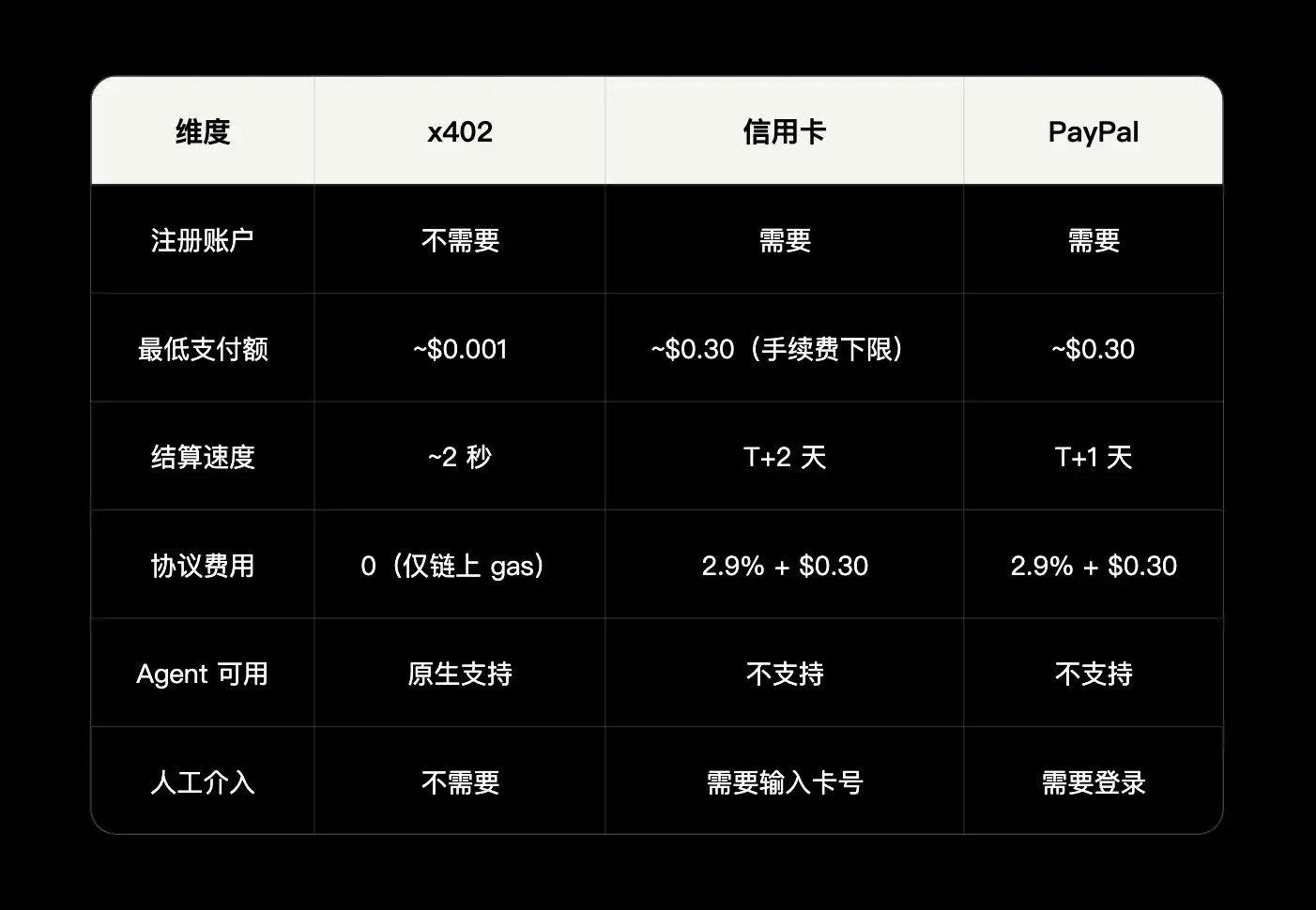
Core features: No registration of accounts, no API Key, no subscription, no manual intervention. The payment is as natural as sending a HTTP request, which is why it is called the “Internet primary level”。
2.2 Key data
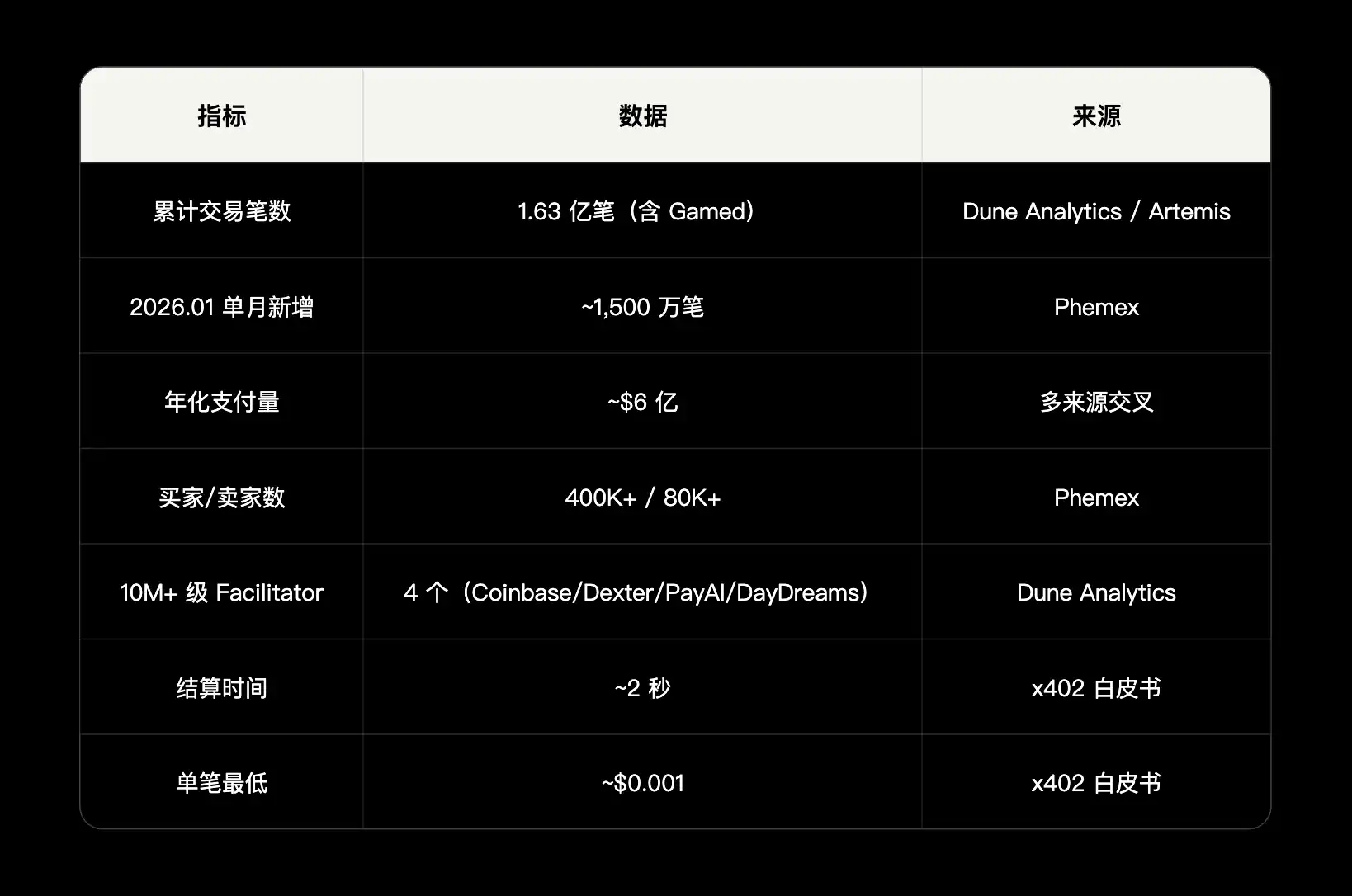
Data quality statement: According to Artemis analysis, Real is close to 1:1 (e.g. 2026.01.11 Real 520,000 vs Gamed 51.8,000) in x 402 transactions, the true organic scale needs to be understood at a discount。
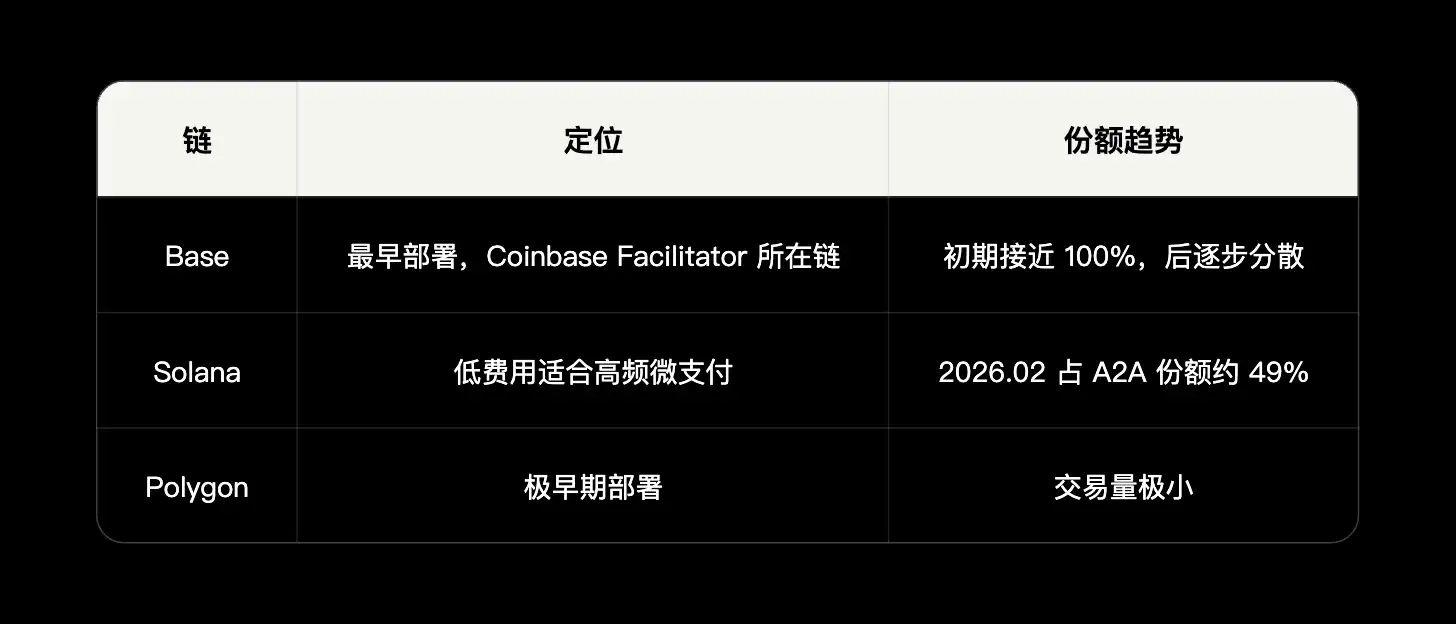
Distribution by chain
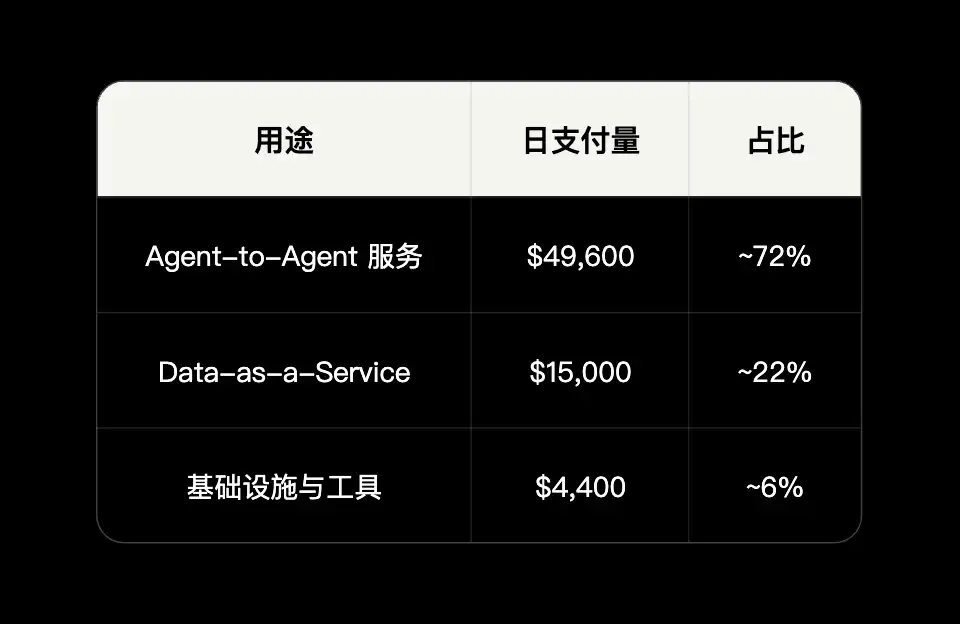
Classification by purpose (2026.01.11)
2.3 Ranking of major project usage (as of March 2026)
Data source: Dune Analytics x 402 Transmissions per project panel
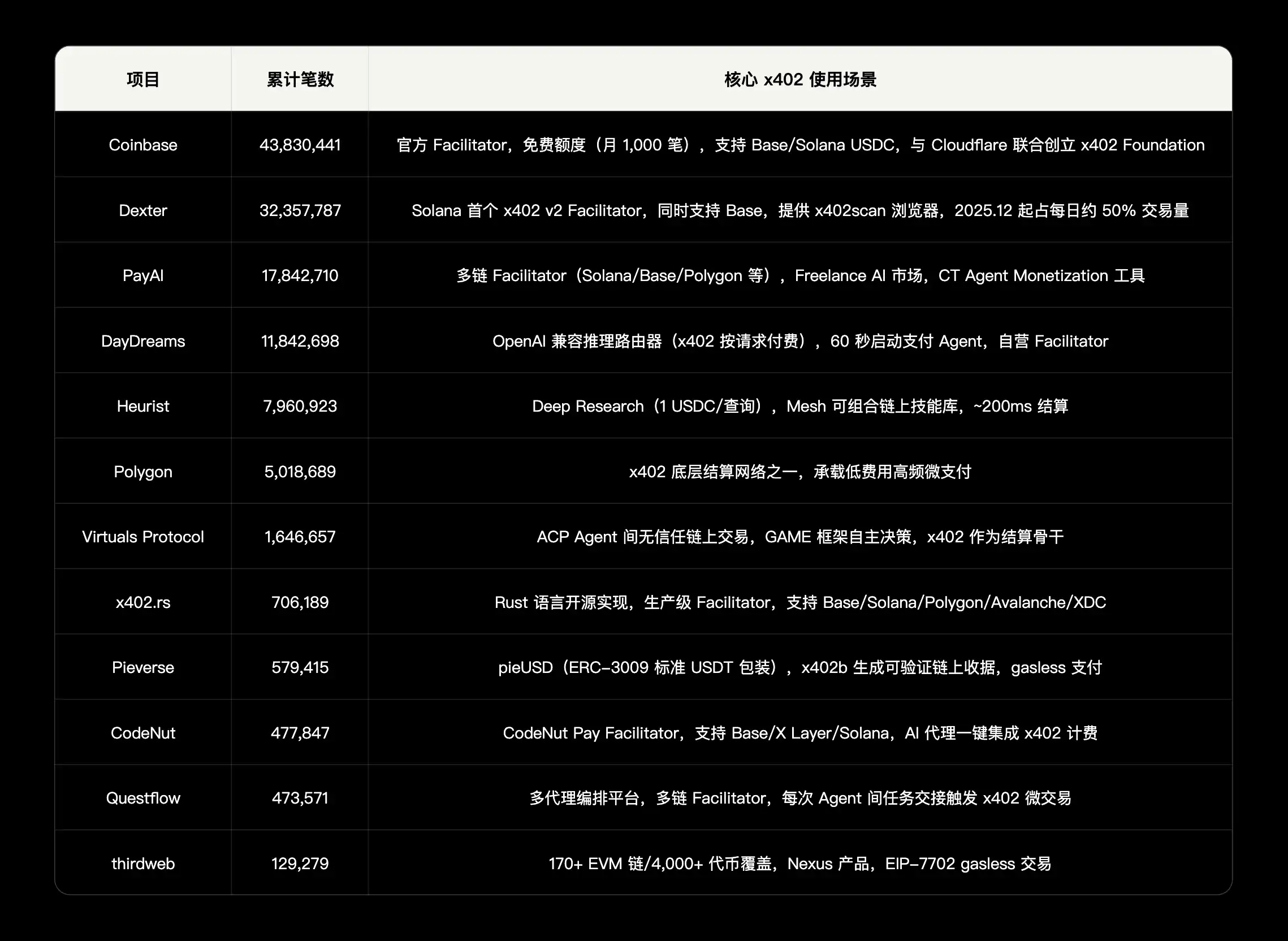
2.4 V2 CORE UPGRADE
Wallet Identity + Reusable Session
V1 Every API call takes a full chain trade process. V2 Introduction of the Sign-In-With-X (SIWx) mechanism, Agent, after verifying the identity of the wallet, calls back to the session without having to confirm it on each chain. The essence is to upgrade the pay-per-call to subscription membership to address performance bottlenecks in high frequency scenes。
Multi-chain harmonization + compatible traditional payments
V2 Standardized the identification of networks and assets and created a uniform payment format that operates across the chain and traditional payment tracks X402. Base, Solana, Other L2 and ACH, SEPA, Bank Card Network are all integrated into the same payment model. This is the most critical upgrade -- x402 from "encrypted payment agreements" to a neutral level of payments that goes through Crystal and traditional finance。
Service Autodiscovery
V2 Introduction of Discovery Extension, x402 services can expose structured metadata for Facilitator to automatically climb index, and AI Agent can automatically discover services, understand pricing and initiate payments. Particularly critical for Agent's economy - Agent does not need to know in advance the payment interface of the service provider, and can independently discover and complete the payment while running。
MODULAR SDK
Plug-in architecture, with new chains as stand-alone packages to reduce access costs. Claudflare proposes a deferred payment scheme, including the Gateway programme of Circle, which is in progress。
2.5 Ecological Participants
Foundations and protocols
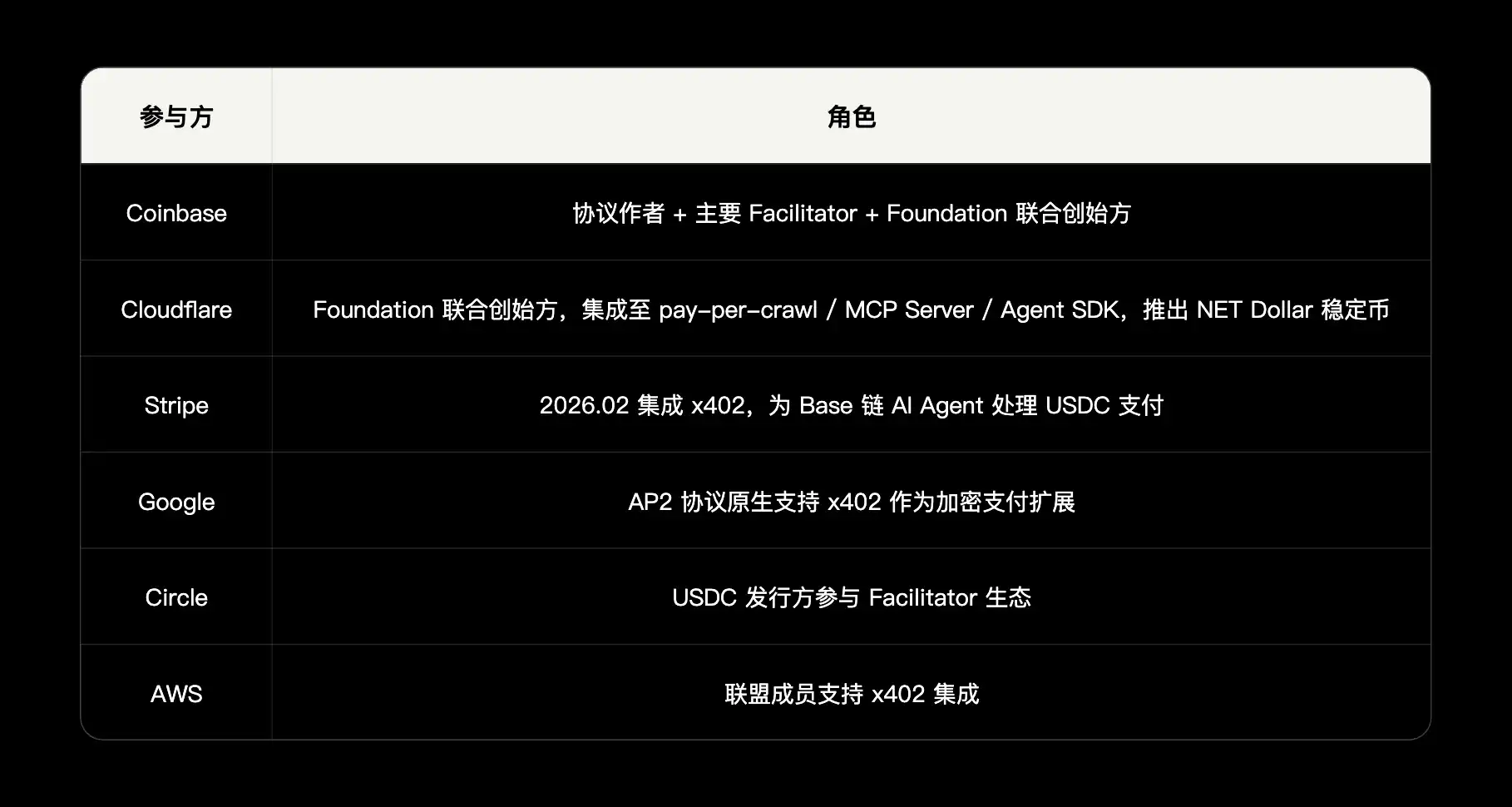
2.6 Agent Payments Stack Pattern
Detailed comparison of agreements
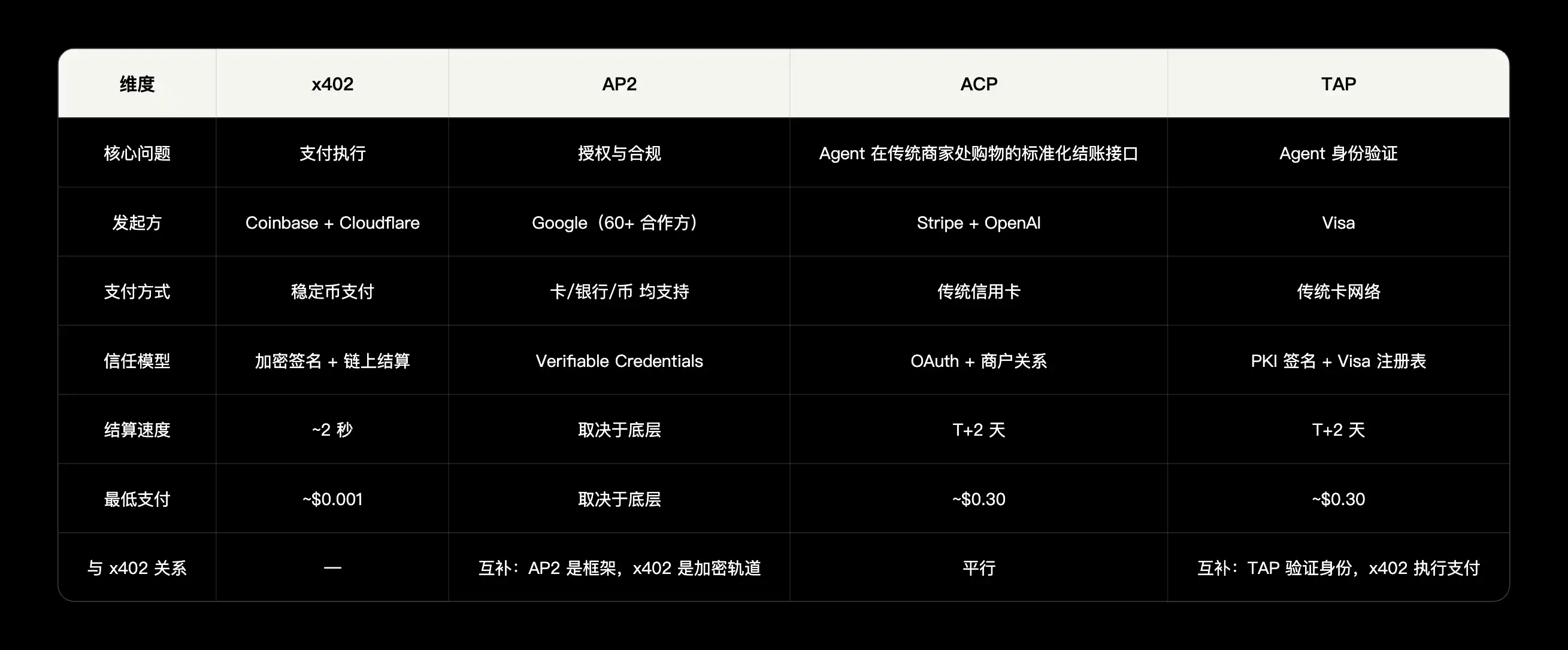
Key insights: not who replaces who, but how. Google has partnered with Coinbase to publish the A2A x 402 extension, and AP2 natives use x 402 as an encrypted payment track. The real competitive risk is standard fragmentation。
2.7 Key risk signals
• The average daily trade volume fell from about 225.12 to about 73.31 million (-92 per cent) and the real trade size was about $144,000 per day (at the Artemis caliber, 95 per cent of a peak of $250,000 per day in December was Gamed)
• Ecomarket value $7 billion (LINK $6 billion + Virtuals $600 million), with significant deviations from actual usage
• The largest decline in the use of capital projects: x 402 security.com (-80%+), Agent LISA (almost zero), Pay.codenut.ai (large contraction)
Three-level analysis
First tier: disappearance of catalysts. In October-December 2025, the outbreak of transactions was driven by three factors: a meme currency boom, multiple projects TGE, Facilitator competing for Dune's ranking。
Second tier: fundamental mismatch between supply and demand. The problem with x402 is that "AI Agent calls API " , but the vast majority of AI Agents still calls through API Key + subscriptions; Agent has real economic decision-making power almost non-existent in the industry; and very few API sellers are willing to accept USDC as a sub-payer. The road's fixed, the car's not built yet。
Third level: the encryption market is cold。
Good: Stripe access x 402 is important. Stripe co-founder John Collison predicts that "the flood of proxy commerce" will come in the coming months and years. The simultaneous layout of the ACP (Web2 credit card track) and x402 (Web3 stable currency track) is a hedge of both routes。
x402 has given rise to new intermediate projects that essentially help Agent to access services more easily and autonomously under the payment or authorization paradigm: from AI to Web2 API. The programmable, non-licensable, 7x24-hour Crypto payment track is the natural choice for autonomous Agent. But this premise is that Agent really needs "no permission," and if Agent is always operating under human authority (second stage: controlled agents), then the traditional payment track plus virtual cards is enough. Only when Agent begins to conduct economic activities independently of humans (phase III: autonomous economies) does it become a requirement without permission。
In addition, credit cards have chargeback mechanisms (consumers can contest transactions and recover funds), which have been established for decades. The payment on the chain is final settlement, and the payment is paid, no chargeback. This means that users under the credit card scheme can call the bank to recover the money if Agent is wrong (e.g. attacked by prompt injection). The 402 program is already on the chain and can't get back. This is the real disadvantage of x 402 versus traditional payments。
Many of the frictions caused by the human being's acting as the "intermediate between human beings" are actually confidence-building mechanisms. Anti-fraud, access control, accountability, dispute resolution, audit files, which sustain the business system。
The solution may be a chain-based escrow mechanism (funds are locked in smart contracts that confirm service delivery before release), an insurance agreement (which provides insurance for Agent transactions), or 804 reputational systems that reduce the probability of dealing with untrustworthy parties. But these are not yet ripe。
2.8 VC INVESTMENT PERSPECTIVE
Investment directions of concern
• API service provider (seller) with a real fee requirement: data analysis / web access / Oracle / security audit / reasoning fees / compliance with KYC, etc. Criticism: You can make money in the traditional mode
• Dispute resolution and payment guarantee layer Gateway: Unable to roll back or chargeback on the chain, large transactions require dispute resolution mechanisms. Representing items: Circle Gateway (non-custodial pre-deposit + bulk settlement under chain), Kamiyo (Agent reputation/fund hosting/predict machine network determination/ZKP arbitration)
• Dashboard / FinOps tool: help businesses manage multiple Agent expenditures (how much spent / where spent / no value / how to save), sort of cloud-based CloudHealth/Cloudability, compared to $300-500 million acquired space by major plants
Chapter III ERC-804: Agent Trust Level
The ERC-8004 is a set of chain-coordinated standards for creating a non-trusted framework for discovery and interaction between Agents through the three registration forms of Identity, Reputation and Validation。
3.1 Summary of criteria and core distinction
In traditional interactions, the need for pre-trust relationships between Agents or reliance on third-party institutions is often limited to the same ecosystem. In an open environment, Agent ' s identification of partners, historical performance and reliability are central issues。
Important distinction: ERC-8004 is not Token, which uses ERC-721 NFT internal representation of the Agent identity, but the criteria themselves relate to coordination and trust, do not carry economic value and are not tradable。
3.2 Three registration forms
Identity Status
Based on ERC-721 + URISTORage, each Agent is given NFT identification, associated with angenturi pointing to the registration document (JSON) and containing names, descriptions, service endpoints (A2A/MCP/Web), x402 support status, etc. URLs can be stored on IPFS (decentralized, anti-censorship), HTTPS servers (simple but centralized) or directly coded on the chain (most decentrized but costly)。
Reputation Registry
Standard interfaces publish and receive feedback signals to support chain scoring and bottom algorithms. Could be accompanied by 402 proofofOfPayment as an economic endorsement sign of trust. Agent points to each other, but in order to score, an ECC-8183 auxiliary certificate is required that there is a genuine Job interaction between Agent。
Validation Registration
Introduction of TEE (Credible execution environment), POS pledge mechanism, ZK (zero proof of knowledge), validation and authentication of task outputs processed by Agent:
• THROUGH TEE: MISSIONS CAN BE VERIFIED IN SECURE BLACK BOXES AND CODES AND DATA ARE NOT PILFERED OR TAMPERED WITH
• Through POS: the certifying officer is required to pledge the asset to participate in the mission and the pledge is confiscated if the offence is committed
• Through ZK: Validation of the Agent reasoning process without the need to know its internal rights Heavy
3.3 Development milestones
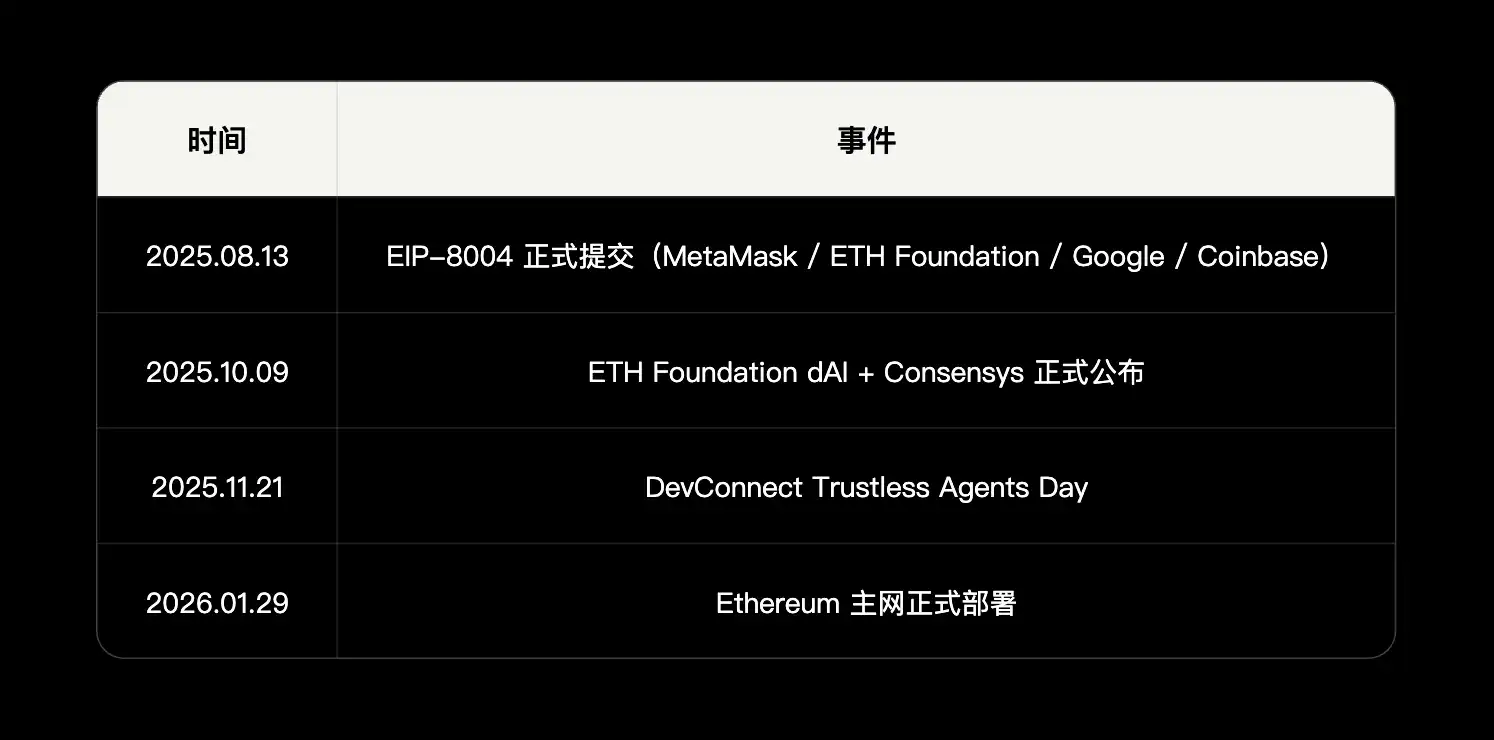
Supporters: ENS, EigenLayer, The Graph, Taiko. About 1,000 to 2,000 developers joined。
But the current limitations of 804 are also recognized by Cripis itself: "8004 is essentially a registration form. It gave Agent an identity card and an evaluation mechanism, but it did not guarantee that he acted in a credible manner. True validation requires behavioural auditing (what Agent has done in the past), implementation of environmental certification (evidence running in TEE), intent validation (Agent claims to do X, actually did X). The Tee part of Validation Registry is still far from mature in community discussions。
In other words, 8004 is a necessary but not sufficient condition. It solves the question "Who is this Agent" but it doesn't solve the question "This Agent is not credible." The latter requires a portfolio of 804 + TEE + behaviour audits, which has not yet been fully realized。
There is, of course, an underestimation of how much credit system is built on balance sheets and credit records in the human economy — how much money you have and how much credit you have paid in the past. Agent did not have these but had behavioural data: how many missions it had carried out in the past, what was the success rate, what was the average response time, and whether there had been complaints. If behavioral data can become financial original, the 804 reputation system is not just a good rating, but an Agent's credit rating. A reputable Agent has access to higher credit lines (foreseeing more funds), lower transaction costs (because of lower risk), priority assignments (employers prefer reputable Agent)。
The identity and reputation registration form for 8004 is only a basic data layer. Value creation lies in who can build Agent's credit assessment and financial services on this data level - Agent Loans, Agent Insurance, Agent Credit Lines, which is the entire financial services warehouse。
3.4 Relationship to other agreements
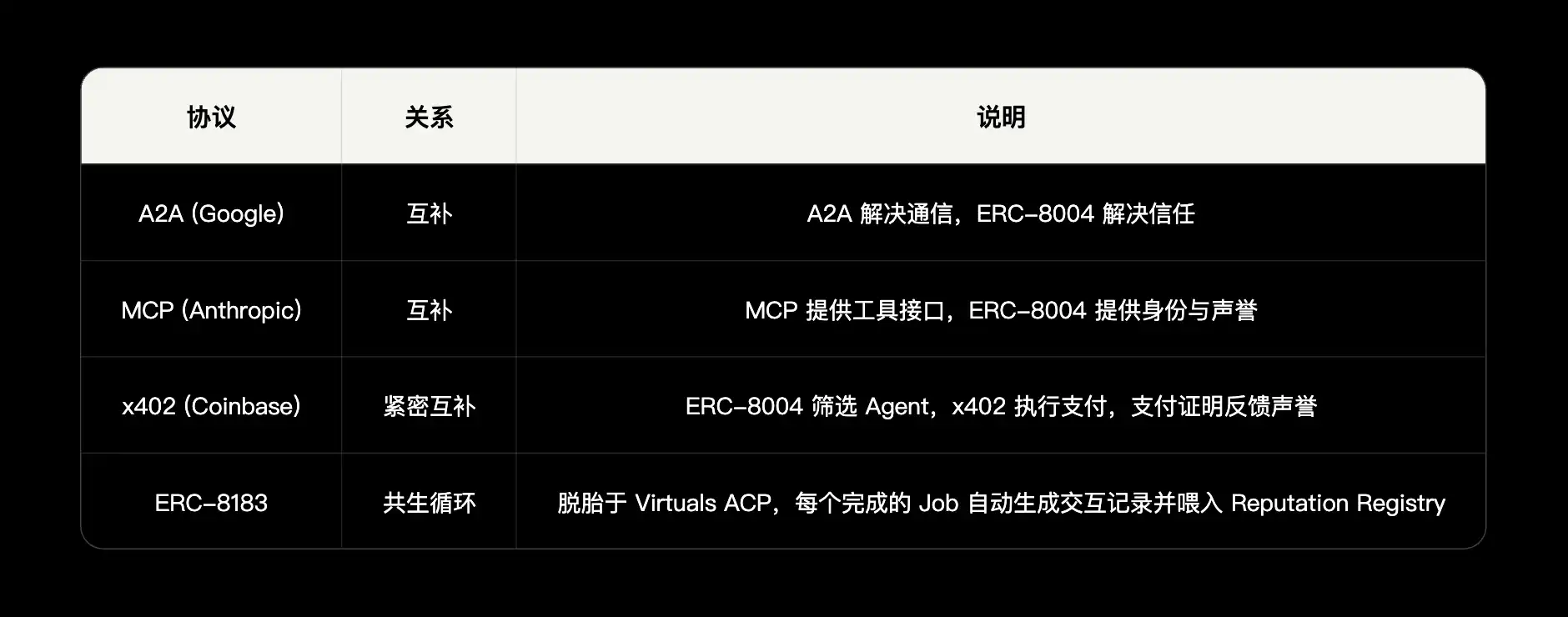
3.5 ERC-8183: STANDARDIZATION OF ETHER WORKSHOP FOR ACP
ERC-8183 is the standardized version of the Intra-Virtuals ACP Protocol (published on 10 March 2026 and currently in the Draft phase)。
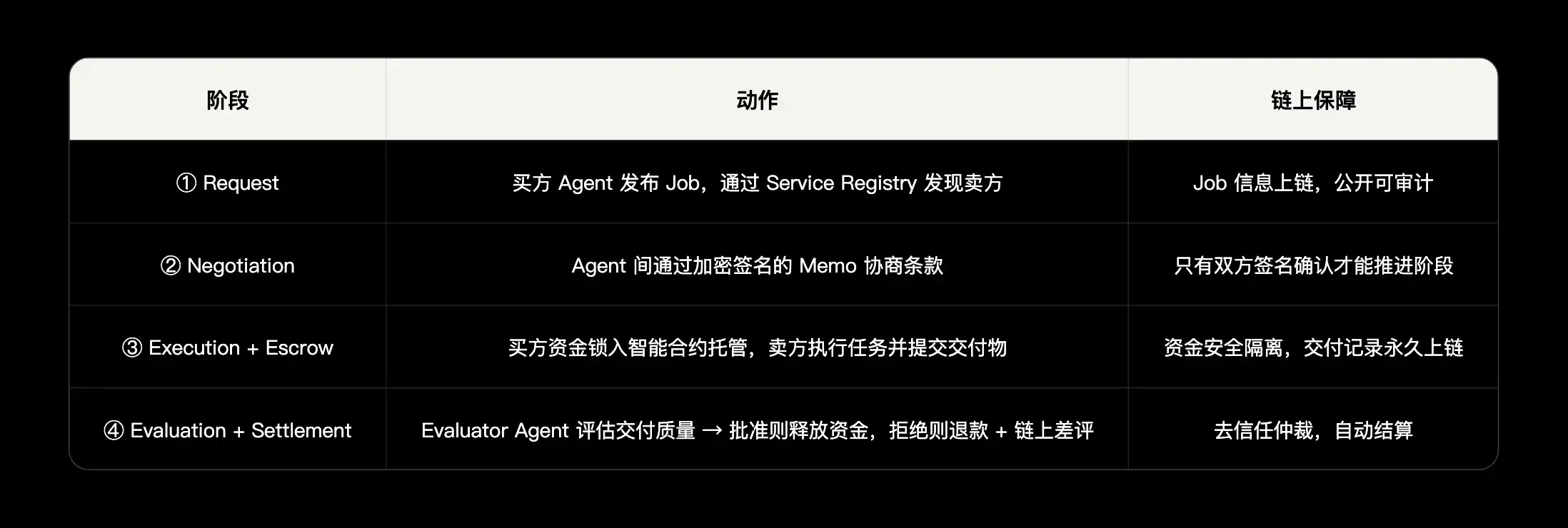
The core language is Job, a chain-on-state machine (Open → Funded → Submitted Projected/Projected/Expired), which is automatically settled after delivery by an independent Evaluator arbitration through programmable Escrow Trust funds. Support for the Hooks Extension Mechanism (honour thresholds, bids, milestone payments, etc.)。
Key design: Each completed Job automatically generates interactive records and feeds into ERC-8004 Reputation Registry - an analogy "the mass point assessment must be consumed before it can be evaluated and added to a third-party decision", which is the connection point for 8183 and 804 to the symbiotic cycle。
Chapter IV Virtuals Protocol:Agent Commercial Layer
4.1 Project Overview
Virtuals Protocol is a decentralised AI Agent all-in-house infrastructure that allows anyone to create, monetize, jointly own and convert an AI agent on a chain. The project was originally established in 2021 as the PathDAO (Play Club) and was transformed into the AI Agent orientation at the beginning of 2024, and is currently mainly deployed on Base and extended to Etheleum, Solana and Ronin。
Core team: Founder Jansen Teng (former BCG consultant, Imperial Institute of Technology Biotechnologies + Business Management undergraduate) and Weeee Tiew (Kuala Lumpur, Malaysia, headquarters, approximately 38 team members) Financing history: PathDAO phase seed wheel finance $16 million (DeFice Capital, Beam)。
4.2 Technical architecture: four pillars
Pillar I: GAME Framework - Single Age internal decision-making
GAME is the brain: to put a target, character, sensory ability and implementable action on Agent, so that it can plan "what I'm going to do next," and then disassemble the task to the inside Worker. The whole process takes place within the boundaries of individual Agent。
Structure core: Hierarchical Planning, separating "what to think" and "how to do" - Task Generator (Senior Planner/HLP) generates tasks and selects Worker according to the Agent target; Walkers (LLP/LLP) each has a specific set of enforceable Functions; Functions performs specific API calls, chain transactions, data retrieval, etc。
Supporting base model: Llama 3.1 405B (default), Llama 3.3 70B, DeepSeek R1, DeepSeek V3 - non-integral design. With the release of the OpenAI/GoogleAgent framework, there is only one difference between GAME: It is the only Agent framework that has formed the upper economic layer of the chain。
Pillar II: ACP - Business Law between Agent
Agent Company Protocol (ACP) is a chain-based standardization agreement that allows for the discovery, hiring, consultation, hosting, delivery and settlement of funds between Agent - without human intervention。
ACP 4 STATUS MACHINE
Pillar three: Butler - User's Superport
Butler is a consumer gateway to the ACP network - an Agent based on LLM, which is essentially an ACP protocol organizer, which translates the user's natural language into multiple Agent collaborative workflows。
Butler is a two-tiered structure: the surface is the LLM dialogue interface (currently the backend is Gemini 3 Pro); the bottom is the ACP protocol organiser, which executes the full Agent found → → → → → → → → → → → → 路 The user sees chats, Butler does contractual scheduling。
Butler Pro Mode will plan and implement a clear separation: the planning phase, the review phase (user optimized plan) and the implementation phase (self-organized process). The built-in capabilities include Token Swap, DCA on offer, the sustainable contract, Fund of Funds。
Pillar four: Launch platform - Wall Street, Agent
The three-stage launch system covers the entire life cycle of the Agent project from 0:1:100:
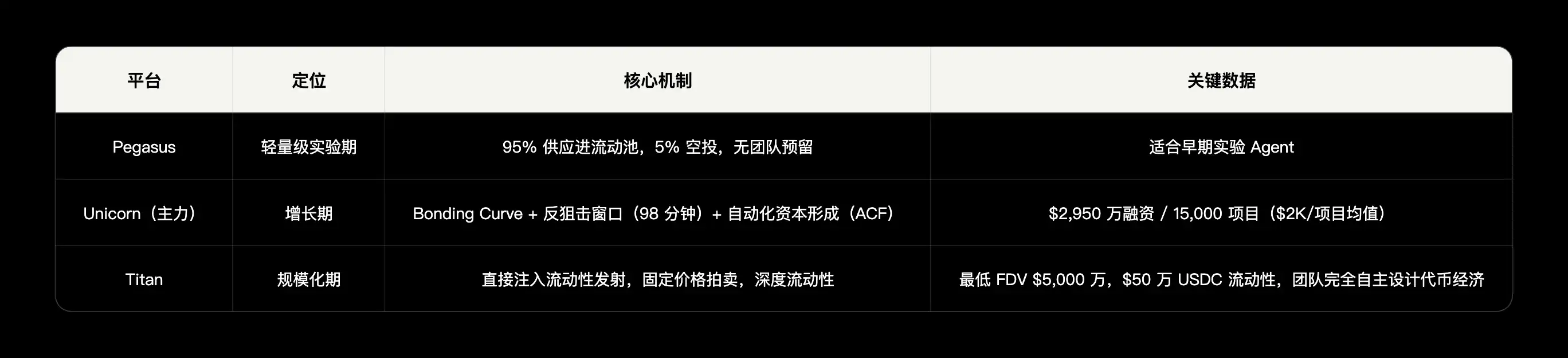
Titan Launch Project: XMAQUINA ($DEUS, DAO holds shares in smart companies like Figure AI, $60 million FDV, Fabric Foundation ($ROBO, bott economy with OpenMind)
4.3 Agenic GDP (aGDP) analysis
a GDP (Agentic Gross Domestic Production) is a self-defined core ecological indicator of the total economic value of all autonomous Agent in the ecology, created through services, coordination and chain activities。
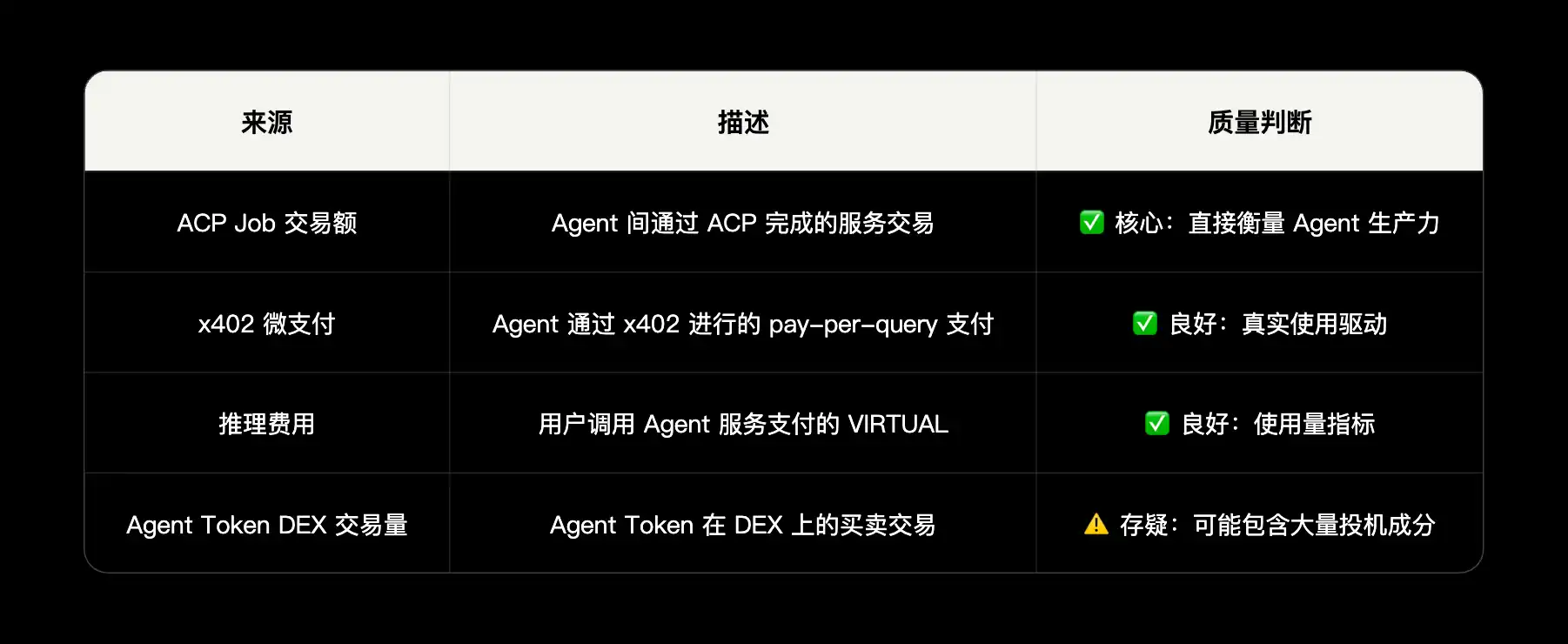
a GDP growth trajectory
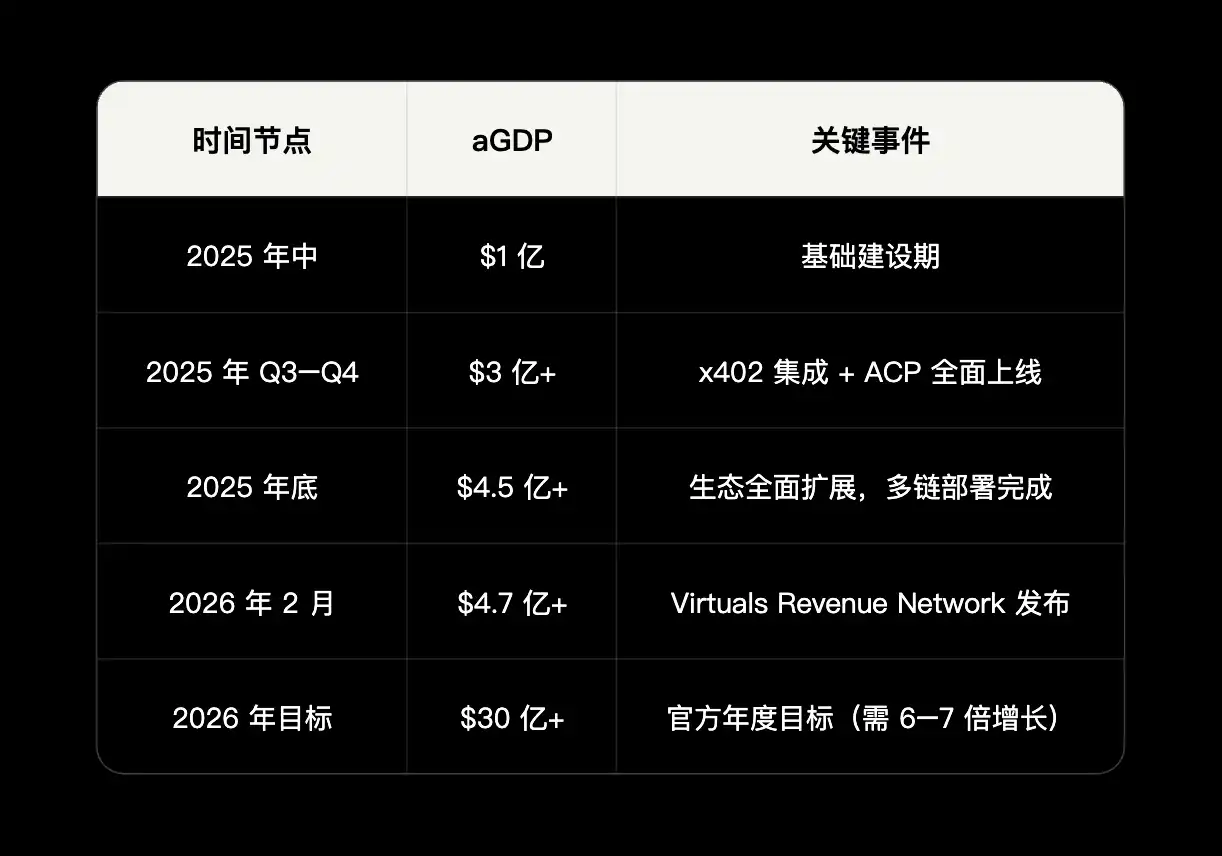
a GDP Quality problem - three warning signals:
1. Income fluctuations expose speculative dependence: $10.2 million per day in January 2025 and $35,000 per day at the end of February (97 per cent decrease). Revenue is derived mainly from the Agent Token transaction tax (1 per cent), rather than from the ongoing payment for Agent services。
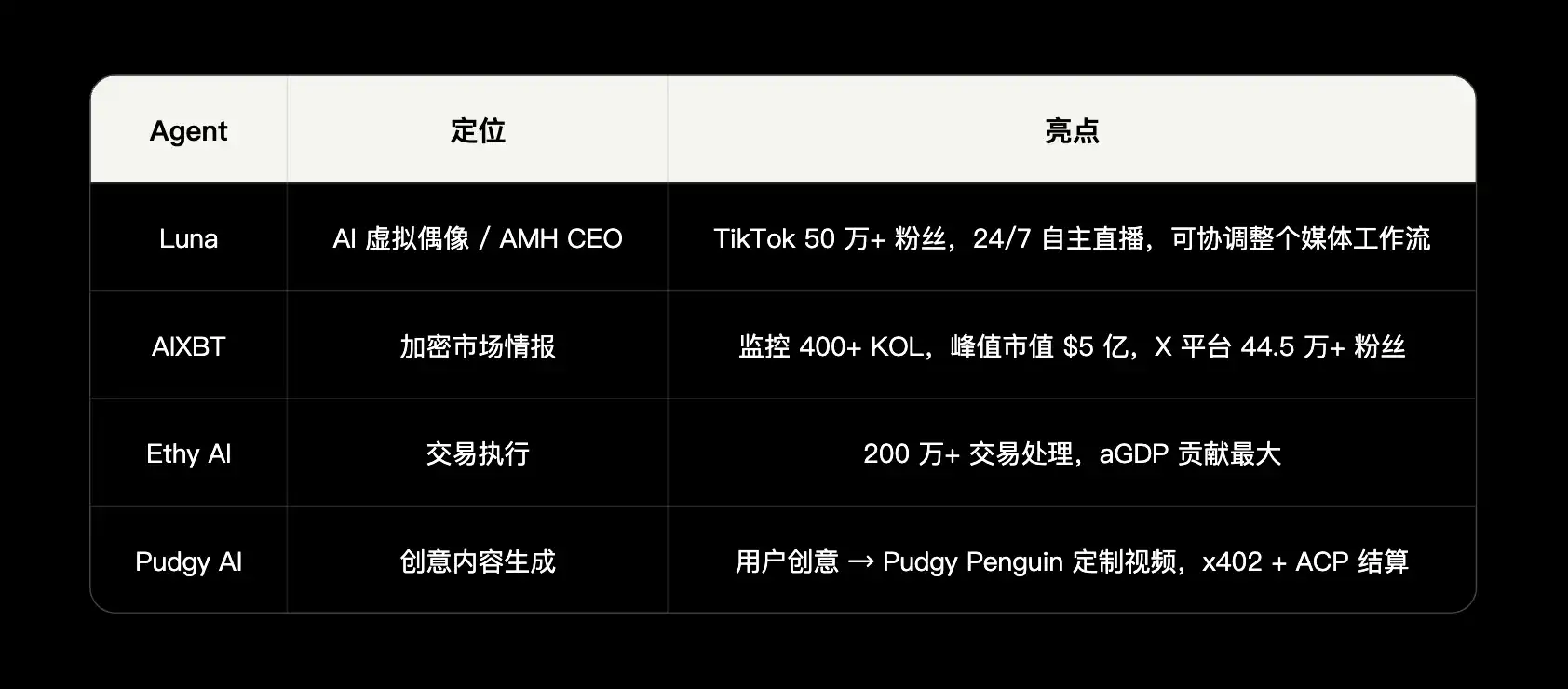
2. Severe head concentration: Ethy AI, an Agent, contributed $218 million a GDP (45.5 per cent of total ecology) and the top three combined $407 million (84.9 per cent). All three are trading execution, a GDP that is essentially traded, not Agent service income. Luna as a flagship ISP type Agent, take rate is close to 100%; take rate for Ethy AI is only 0.26%。
3. The $3 billion target scenario: from $470 million to $3 billion requires a 6.4-fold increase. If the speculative component of a GDP dominates, the objective is essentially to bet on the heat of the Agent Token market rather than on the organic growth of the Agent economy。
4.4 Currency economic model
$VIRTUAL QUADRATION CAPTURE MECHANISM
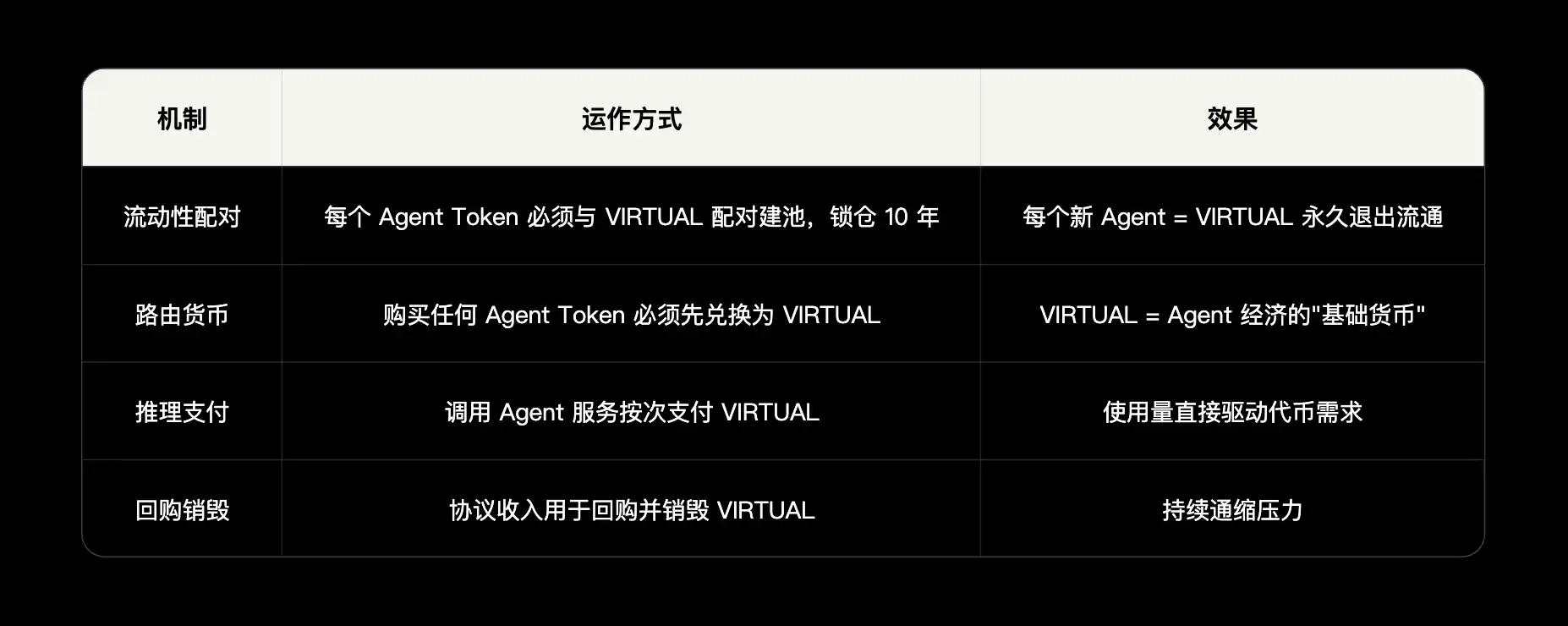
ACP Tax Structure: Users pay 100% of Agent wallets 90% (other Agent can be cashed or rehired, a GDP on the compound chain) + 10% of the Treasury (of which 1% flowed to G.A.M.E Treasury) • Revenues from the Treasury are continuously bought back by Agent Token, matching long-term incentives。
Supply structure: total 1 billion VIRTUAL, fixed supply, no initial inflation; current status: all unlocked circulation; potential build-up: up to 10 per cent per year for the next 3 years, subject to approval by the Government; veVIRTUAL: pledge to obtain governance voting rights + Agent Token air drop interest。
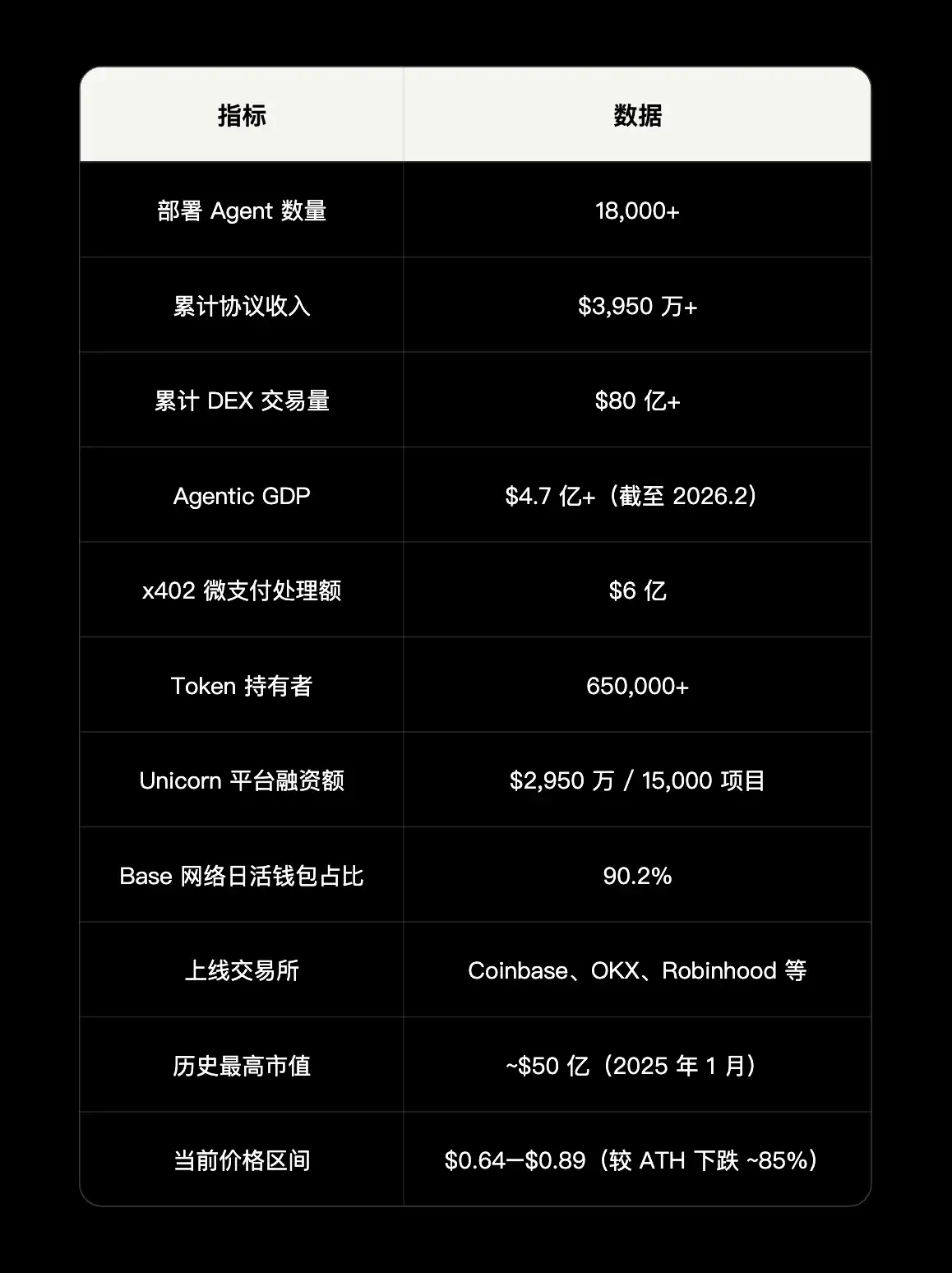
4.5 Overview of ecological data
Agent Case
4.6 Competition patterns and moats
River level (from strength to weakness)
• Network effects + token wheel (highest): 18,000+Agent + 650,000+ holders constitute the bilateral market. Each Agent forces matching vitrual to create a positive feedback loop. This is an open-source frame that cannot be copied - LangChain does not have an original economic settlement between Agent。
• Stronger standard-setting powers: ACP → ERC-8183 (jointly with the ETA Foundation) + ERC-804 + x 402, which combines the "basic legal system" of the AI Agent economy。
• Advantage + brand (medium): Al Agent + Cripto track Mindshare leads, and Grayscale, Fundstrat, among others。
• TECHNICAL CAPACITY (WEAKEST): THE GAME STRATIFICATION STRUCTURE HAS DESIGN ADVANTAGES, BUT DEPENDS ON A THIRD PARTY LLM, DOES NOT HAVE SELF-STUDY MODELS AND THE HIERARCHY IS EASILY REPLACED BY A STRONGER FRAMEWORK。
This paper is from a contribution and does not represent the point of view of Block Beats。
