
THE FULL TEXT OF POWELL'S LAST FOMC MEETING
How to keep the Fed independent under renewed inflation and political pressure
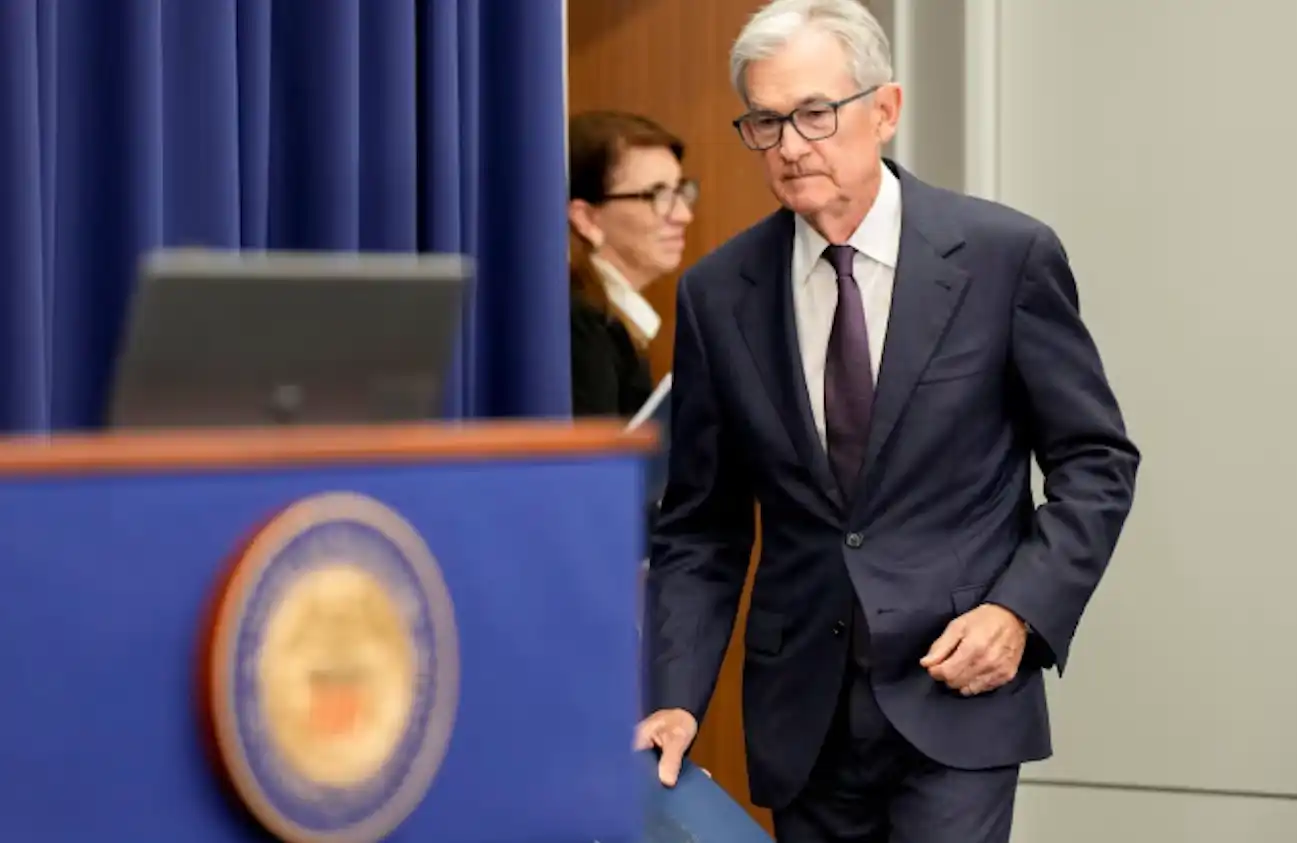
THE AUTHOR MAINTAINED INTEREST RATES AT THE LAST FOMC MEETING IN POWELL ON 29 APRIL AT 2.30 P.M. US EASTERN TIME (BEIJING TIME ON 30 APRIL), AND MAINTAINED INTEREST RATES AT BETWEEN 3.50 AND 3.75 PER CENT BETWEEN THE TARGET AREAS OF THE FEDERAL FUNDS. BUT THE FOCUS OF THE PRESS CONFERENCE WAS NOT JUST ON INTEREST RATES PER SE: ON THE ONE HAND, THE MIDDLE EAST CONFLICT HAS PUSHED UP ENERGY PRICES, INFLATION HAS RE-EMERGED, AND THERE IS A CLEAR DISAGREEMENT WITHIN THE COMMISSION ABOUT WHETHER TO CONTINUE TO MAINTAIN A “LAXIST” TENDENCY. THIS MEETING HAS ALSO BEEN THE LARGEST SINGLE FOMC VOTE SINCE 1992; ON THE OTHER HAND, POWELL HAS CONFIRMED THAT HE WILL CONTINUE TO BE A MEMBER OF THE FED BEYOND THE END OF HIS PRESIDENCY, POINTING TO A SERIES OF LEGAL AND POLITICAL PRESSURES ON THE FED BY THE TRUMP GOVERNMENT。
Thus, this "last press conference" is more like a pre-transit system. Powell has repeatedly stressed that he will not become the "shadow president" of the new president, but will not leave easily when the Fed’s independence is still under attack. The central message he tried to convey was that monetary policy could be divided, interest rates could be disputed, but the Fed could not be drawn into a political cycle。
The following is the original text (for ease of reading and understanding, the original text has been consolidated):
I. Opening statements
Good afternoon. My colleagues and I remain firmly focused on achieving our dual mission of achieving maximum employment and price stability for the benefit of the American people. The United States economy has been expanding at a steady pace. Although new jobs have remained low, the unemployment rate has not changed much in recent months. Inflation has risen and is high, partly reflecting the effects of recent increases in global energy prices。
TODAY, FOMC DECIDED TO KEEP THE POLICY RATE UNCHANGED. WE BELIEVE THAT THE CURRENT MONETARY POLICY STANCE IS APPROPRIATE TO DRIVE US TOWARDS OUR MAXIMUM EMPLOYMENT AND 2 PER CENT INFLATION TARGET. THE DEVELOPMENT OF THE SITUATION IN THE MIDDLE EAST IS INCREASING UNCERTAINTY ABOUT ECONOMIC PROSPECTS, AND WE WILL CONTINUE TO FOCUS ON THE RISKS OF BOTH MISSIONS. I WILL GO FURTHER ON MONETARY POLICY LATER, STARTING WITH A BRIEF REVIEW OF THE ECONOMIC SITUATION。
Recent indicators indicate that economic activity has been expanding at a steady pace. Consumer spending remained resilient and firm fixed investment continued to grow more rapidly. In contrast, activity in the housing sector remains weak. With regard to the labour market, unemployment stood at 4.3 per cent in March, with little change in recent months. The level of new employment remains low. The slowdown in employment growth over the past year was due in large part to a decline in labour force growth, which in turn was associated with a decline in migration and in labour participation. Of course, labour demand is also clearly weak. However, other indicators, including job openings, layoffs, recruitment and nominal wage increases, have generally changed little in recent months。
INFLATION HAS RISEN IN RECENT TIMES, AND THE LONG-TERM TARGET OF 2% IS STILL HIGH. ACCORDING TO THE CONSUMER PRICE INDEX AND OTHER DATA ESTIMATES, THE OVERALL PCE PRICE ROSE BY 3.5 PER CENT IN THE 12 MONTHS UP TO MARCH. THIS WAS DRIVEN MAINLY BY THE SHARP RISE IN GLOBAL OIL PRICES AS A RESULT OF THE MIDDLE EAST CONFLICT. AFTER REMOVING THE MORE VOLATILE FOOD AND ENERGY CATEGORIES, CORE PCE PRICES INCREASED BY 3.2 PER CENT WITHIN 12 MONTHS AS OF MARCH. THIS RELATIVELY HIGH LEVEL LARGELY REFLECTS THE IMPACT OF TARIFFS ON COMMODITY SECTOR PRICES. SHORT-TERM INFLATION EXPECTATIONS HAVE RISEN SINCE THE BEGINNING OF THE YEAR, PROBABLY AS A RESULT OF LARGE INCREASES IN OIL PRICES. MOST LONG-TERM INFLATION EXPECTATIONS REMAIN CONSISTENT WITH OUR 2 PER CENT INFLATION TARGET。
Our monetary policy action is guided by the dual mission of promoting maximum employment and price stability for the American people. At today ' s meeting, the Commission decided to maintain interest rates at the Federal Fund ' s target range at 3.5 to 3.75 per cent. Economic prospects remain highly uncertain, which is further exacerbated by the Middle East conflict. In the short term, higher energy prices will push overall inflation. Beyond that, the extent and duration of the potential impact of these factors on the economy remains unclear, as is how the conflict itself will develop in the future。
We will continue to monitor risks on both fronts. We are in a good position to decide whether and when to further adjust policy interest rates, based on subsequent data, changing prospects and a balance of risk. Monetary policy does not follow the prescribed path, and we will take decisions one by one。
This is my last press conference as President, and I would like to conclude with a few thoughts. First of all, I would like to congratulate Kevin Warsh on his adoption by the Senate Banking Commission this morning. This is an important step forward, and I wish him every success in the follow-up process。
The U.S. has one fundamental purpose: to create a prosperous economic environment for American households and businesses, including stable prices, a strong job market, and a financial system that deserves to be relied upon. Every decision we make, whether it concerns interest rates, regulation and supervision, or other issues, serves that purpose。
Our decision reflects the collective judgement of our colleagues in the Council and the Federal Open Market Commission. They have demonstrated a critical analytical capacity, principled judgement and a genuine commitment to the public interest. Our long-standing collaborative and deliberative process also reflects a common commitment to seek consensus for the fulfilment of our mission。
This institution is resilient, capable and composed of a group of highly talented and dedicated professionals. It is an honour for me to be able to work with so many good public service providers in the Council and throughout the Fed system. The effectiveness of the Fed ' s work depended on public understanding of it. And your media are indispensable for informing the public about what we do and why we do it. The people we serve also benefit from your careful reporting。
Last Friday, the Federal Prosecutor of the District of Columbia announced the closure of the criminal investigation, which I welcome. She noted, however, that she would not hesitate to reopen the investigation if necessary. On weekends, the Department of Justice gave assurances that they would not reopen the investigation unless the Federal Reserve Inspector General proposed a criminal referral. In the absence of such transfers, even if they had appealed against recent court decisions, they would not have requested the reopening of investigations or the issuance of new summonses on appeal。
As I said before, I will not leave the Council until this investigation is truly thorough, transparent and ultimately concluded. I insist. I am encouraged by recent developments, and I am carefully following the remaining steps of this process. My decisions on these issues will continue to be based solely on the way I believe this body best serves the interests of the people we serve. My term of office as President will end on 15 May, after which I will continue to serve as a member for a certain period of time, for which time to decide. I plan to keep a low profile as a board member。
The Federal Reserve Council will always have only one president. When Kevin Warsh is confirmed and sworn in, he will become President. Following his swearing-in as President of the Council, his new colleagues will also elect him as Chairman of FOMC. As I have often stated from this rostrum, achieving our goals is vital for all Americans. I am confident that the Fed will continue to work with objectivity, integrity and a deep commitment to serve the American people。
Thank you, and I look forward to answering your questions。
II. RESPONSES TO THE REPORTER
Why remain on the Federal Reserve Board
Question: Could you comment on the reasons why you decided to remain on the Council? What criteria are you weighing? How long may you stay
Powell: Of course. My main concern is that the Fed is facing a series of legal attacks that threaten our ability to formulate monetary policy without taking political considerations into account。
I would like to state here that this has nothing to do with the verbal criticism of elected officials. I have never said that such verbal criticism is a problem, nor has anyone said it here. However, these legal actions taken by the current administration are unprecedented in the history of the Federal Reserve in its year 113, and there is a continuing threat of further similar actions。
I fear that these attacks are impacting the institution and jeopardizing what really matters to the public: whether the Fed can formulate monetary policy without taking political considerations into account。
For our economy and for the people we serve, they must be able to rely for a long time on a central bank free from political influence. This is one of the foundations of the United States economic system and one of the important reasons why the United States economy envies the world。
This institutional arrangement is an important distinction between successful and unsuccessful States. It is extremely important. What matters is not the people who work for the Fed at some point, but the people we serve. The Fed must be able to formulate monetary policy without being drawn into politics or helping or hurting a particular politician or political party. This is essential for the public。
As for when I leave, I leave when I think it's right。
Question: There is criticism that your continued presence on the Council is in itself a political act, as it may prevent the President from obtaining a majority on the Board of the Federal Reserve. What do you think
Powell: I don't think so at all. I stayed precisely because of what happened in the past few months. I was planning to retire. But what has happened over the past three months or so has made me think that I need to stay at least until these issues are really clear。
I do not think that would interfere with the new President. It is the tradition of the Fed that the Councils work with the President. As a outgoing President, I am well aware of how difficult it is to build consensus among 19 independent judges。
My attitude will be clear: try to get my views heard, but at the same time work with the President; support the President when he can, and engage constructively when he cannot。
Inflation prospects, tariff transmission and energy shocks
Question: In March, you indicated that it was common practice to ignore energy shocks, provided that inflation expectations remained anchored. Since that meeting, there has been little progress in reopening the critical energy trade corridor. Can you help us understand how the outlook for inflation has changed during this period? The first is whether tariff-to-price transmission will recede according to the timetable you said in March, and then talk about the energy shocks that are now superimposed。
Powell: For a long time, we have been working on the assumption that tariffs will lead to one-off price increases, and then the impact will recede over time. In other words, price levels will not continue to rise again and again; measured inflation will not continue to rise as price levels have risen。
The time has come for this to happen. We do expect to see this in the next two quarters. We will therefore look very closely at whether what we have always thought would really happen. This is a key part of the projection。
As for energy, it's really hard to say. Under textbook treatment, you usually see an oil price shock because such shocks are often short-term and usually fall back, while monetary policy works with a long and uncertain lag. So you don't have to react right away。
And I think this is all the more true given that we've been above the inflation target of 2% for years and are already trying to see through tariff shocks. So we'll be very careful。
But the question of whether to look at energy shocks is not really before us. It hasn't even met the top. I believe that before we consider a reduction in interest rates, we would like to see the energy shock enter the fall phase and progress in tariffs。
Question: The statement today retains a paragraph. That wording had taken some meaning when the Commission had actively reduced interest rates. Given that inflation prospects are now quite different from those of one or two meetings, why is this easing still appropriate? What happens to remove this tendency from the statement
Powell: You will remember that we discussed this at the last meeting and at the press conference after the March meeting. Today is the same. We have had a very thorough discussion of this issue today: whether this guidance is still appropriate, whether it should be adjusted, etc。
I would say that the number of people in the Committee who could support a more neutral wording has increased over this period. That is to say, it seems equally possible to increase and reduce interest rates. The reasons are also easy to understand。
That's a good question. As you can see, inflation has increased during this period, and core inflation is now 3.2 per cent, which, although modest, is not favourable. We also know that overall inflationary pressure from the Gulf region will arise, and we do not know how far it will go and need to be seen。
It is therefore perfectly reasonable to have a full discussion of these situations when they are seen. As you can see, three members raised objections to the wording. I think these people agree with the interest rate decision itself。
However, most members of the Committee do not wish to change the wording now, and I do not think it is necessary to do so at this meeting. The question is: Why now? We have much to understand, and there is great uncertainty about the path ahead. There is no need to rush to take this decision now, because the next 30 days, 60 days, and even before the next meeting, the situation may change dramatically, thus affecting the judgement of that wording。
So, this thing is much closer to the committee than it was in March. I think that makes perfect sense。
Oil prices, easing tendencies and communication tools
Question: Is it still a question of easing? Now benchmark oil prices like Brent crude oil are close to $120 per barrel. If oil prices remain at that level after six weeks, is it best to say that there will still be a easing in the statement
Powell: I don't want to guess. First, we are likely to have a new leadership by then, which will play a very important role on this issue. So I will not be standing at this rostrum to answer your question。
I don't know. What I can say is that we did have a good discussion of this today. This issue is of greater value than before. We had discussions, and most members still did not see the need to move to that level. That's where I stand。
But I understand that. At some point, you may indeed adjust, and this time is theoretically the earliest possible next meeting。
Question: The new leadership does not seem to be particularly enthusiastic about the press conference or the schematics. What would you advise him
Powell: I will not advise him through you today. But I think communication is generally very important. It is a very healthy thing for every incoming President to look at ways of communicating. Communication is complicated. You can always look at new ways. If that happens, I think it is entirely appropriate。
Interaction with the President-designate
Question: Have you contacted the incoming President? To what extent would this be a normal handover process? What would be so special about this process, given that there are many unusual events outside? What can we expect when he comes to this podium in a few weeks
Powell: I haven't seen him since I saw him at a dinner in January. I congratulated him and had a pleasant conversation with him. I haven't seen it since。
I don't know what's normal. The last contact was Janet Yellen, who worked with me for six years, and we were in the same corridor, so it was completely different。
I think this will be a very normal and standard handover process. I expect so, and there is good reason to believe so。
Question: Does the Supreme Court's decision on a member affect when you leave the Council
Powell: I didn't take it as a factor. No, actually not. I am more concerned about what has been mentioned。
Low unemployment, employment mission and post-disease inflation
Question: I would like to ask you a question about your tenure. During your presidency, you have often talked about how vulnerable Americans benefit from long periods of low unemployment. The new framework adopted by the Fed in 2020 has been perceived by economists as increasing the weight of the job mission. Are you worried that the subsequent surge in epidemic inflation will make future Fed presidents less willing to pursue a "hot" job market? Should they have such concerns
Powell: I don't know the answer. We were experiencing a very low level of unemployment for a long time in the mid-2010, but inflation did not react. We have all taken note of this. We have also seen the largest wage increases going to the bottom of the income distribution。
We have also received numerous reports indicating that that seems to be a relatively stable equilibrium and that many benefits are flowing to lower-income groups. Some enterprises, including others, begin training some people when they are still restricted and hire them when they come out. It's a very healthy set of social dynamics。
So, of course, anyone would want to return to that state。
I do not think that any of the factors contributing to inflation in the global epidemic are linked to an overemphasis on the job market. It was a global shock that took place in very similar ways around the world, linked to factors such as blockades, restarts and stimulus policies. You can place the charts of the ten major economies on the same page, and it is almost impossible to distinguish between the United States and Germany or France。
So I don't think that judgement led in any way to the high inflation we later experienced。
Of course, that has always been a balance. At the same time, we must resolutely carry out our dual mission. For example, we do not now consider the labour market to be a source of inflation and do not need to worry about that. In fact, we haven't had to worry about it for a long time. It was true that the labour market was overheated and very tense during the resurgence of the epidemic, when we had to focus on it, but not now。
Question: Do you need more assurances from the Ministry of Justice before you leave? Is this what you're waiting for
Powell: I am waiting for the investigation to really end, in a final and transparent manner. I'm waiting for this. I'll leave when I think it's right。
Is it possible to increase interest rates and the Fed's credibility
Question: Could you further explain or describe the Committee ' s discussion on the two-way risk of interest rates? Because some members of the Open Market Committee had said that even without war, interest rates might need to be increased, as inflation had not fallen fast enough. Does the Committee consider that interest rates may have to be increased? Or is this just to remind the market that you're worried about the war
Powell: Three dissenters, as well as others who may support the wording adjustment, and others who have or do not have the right to vote but prefer such an adjustment, support the interest rate decision itself。
So, people are not saying that we need more now. More questions are whether we should turn to a neutral formulation. What's the market doing? It was argued that this was consistent with current market pricing. That is a very reasonable question。
However, this rewording is a forward-looking guide. You need to ensure that, once it is made, it can continue and continue to make sense, rather than be withdrawn soon enough。
So some people, including me, think that we need not rush to do so. The market does not misinterpret our reaction function. We do not have a communication problem that must be resolved immediately. Of course, the other side is good. As I said, this is an entirely worthy issue. The end result is now。
Question: Three members are now opposed to a two-way warning of risk; you will remain on the Council; there are criticisms from elected officials; and there are many criticisms that the Fed is too slow to deal with inflation in 2021. Are you concerned that the Fed's credibility is affected by these factors? Is that one of the reasons you wanted to stay
Powell: This is not the driver I'm thinking about。
MONETARY POLICY WILL BE FORMULATED JOINTLY BY 19 INDIVIDUALS, WHICH WILL BE HIGHLY STABLE. EACH NEW FED PRESIDENT WILL FACE THE SAME SITUATION: FOMC HAS 18 COLLEAGUES, 11 OF WHOM HAVE THE RIGHT TO VOTE EVERY YEAR. THE CHAIR ' S WORK IS TO BUILD CONSENSUS, TO COMMUNICATE WITH THEM, TO UNDERSTAND THEIR IDEAS, TO ENTER INTO THEIR THINKING AND TO BRING THEM TOGETHER TO BUILD CONSENSUS AND THEN TO ACT。
Each Fed president must do so. I believe that the new President is well equipped and skilled to do this well. So I'm not worried about the process. I think it will work itself。
How to keep a low profile after leaving office, and how to channel oil prices to core inflation
Question: You mentioned that continuing to serve as a member would keep a low profile. Could you be more specific about what this is like? In particular, how can you express your views in policy discussions without becoming a "shadow president" and without disproportionately affecting the process
Powell: That's what I would never do, the so-called Shadow President。
I don't know what the exact form would be, but I'll be back in the board. I respect the presidency. I have served as Chairman and as a member for six years, and I know what that is. I had a close look at President Yellen, and I was close to her; I worked with President Bernanke for two years, but I just joined。
So I know exactly what this post is, and I know very well how difficult it is to have this team agree. I have always felt that the difficulties of the presidency should not be unnecessarily increased. This means that when it is possible to support the President in the direction he wishes to move forward, it is possible to do so; if it is not, it cannot be reluctant。
I think that's how the Fed works. The Chairman had only one vote and, in addition, the capacity to build consensus. How can there be consensus if there is a total reluctance to be flexible? The true authority of the President lies in establishing relationships with people, working with them, and then proposing solutions that can lead to consensus。
I intend to be a constructive participant in this process, also out of respect for the presidency。
Question: How do you view the risk of oil prices transmitting core inflation in the coming weeks, as a member of the incoming Council? Some reserve bank governors seem to be particularly concerned about this, namely about the transmission of oil prices to core inflation. There are now three more dissenters. What do you think about core inflation
Powell: The risk is real. They do exist, and the reality is that we have to wait and watch。
The good news is that we believe that the current policy position is well placed to wait for observation. We are largely at the high end of the neutral zone, or slightly restrictive. The labour market is showing increasing signs of stability, while inflation performance is subdued. Thus, a slightly restrictive or neutral high end may be the right position。
We can wait here to see how things go and then act. We'll see how much of the pressure leads to core inflation. You have seen this effect in the price of airline tickets, and it may be seen elsewhere. But we don't know yet. It's very difficult to judge, because how long will the strait be closed? You can build any number of scenarios, but we won't know until we really see them。
Fortunately, we are now in a good place to wait for the situation to develop。
Press conferences were held after each meeting, as well as a point map reform
Question: You started holding press conferences after each meeting of the plenary, rather than only after a meeting with a summary of economic projections. Can you talk about why you think this is a net positive change
Powell: In the past, when we held quarterly press conferences, we always said that we could act at any meeting. But in fact, we will act only at quarterly meetings with summaries of economic projections and press conferences。
During the epidemic, we operated extensively at every meeting, sometimes even between meetings. In the absence of a press conference, I think that would be very challenging. This has now become both an industry norm and a standard。
I don't know if it has to be that way. This arrangement is already used to. I do think it would be helpful, because I tried to send a message on behalf of the Committee, rather than letting 18 other individuals go out and pass on their respective messages. Since we do have very diverse views, without a unified statement, information may be very dispersed。
Question: With regard to last year's communication assessment, could you describe the controversy at that time? What changes have you considered? What do you want to do? And what prevented the change
I'm not going into the very details. However, we soon found that it would be difficult to obtain broad support within the Commission to make significant changes to the dot map or the summary of economic projections. So we didn't keep pushing too much。
I was never the biggest supporter of the dot map. But if there is no alternative, you cannot simply abolish it. We've studied a lot。
I believe that each new President will look at our set of communication tools and think about whether they should be adjusted. We're the only major central bank not to publish official forecasts, because we have a 19-person committee. It would be difficult for you to try to do this at the level of the Council; it would be difficult for you to do so at the level of the Commission; and it would be problematic if it was done by staff. So it's been hard。
Communication is now operational. I think our communication is generally good. But it is only natural that research be done differently and better。
Is the Eagles Outcome just an extension of the moratorium
Question: Then ask about the increase. Can we understand that the result of the Fed's hawks is still merely an extension of the moratorium? Is there a growing perception within the Committee that monetary policy is not, in fact, restrictive at present? The economy continued to perform relatively well under major energy shocks, with a slight drop in unemployment and a rise in inflation, which had fluctuated horizontally before the war. What does the Committee think about this debate
Powell: Our current view is that policy interest rates are in the right place. If we need to raise interest rates, we will send a signal and do so. If we need to reduce interest rates, if they are appropriate, we will send the opposite signal。
I think we feel we are in a position where we can move in either direction. There is no demand for an immediate increase. So it really depends on what happens。
As I said, the question of whether to adjust the guidelines in this round is closer than before, but ultimately we have not。
Question: With regard to war, in what circumstances do you think the risk of growth exceeds the risk of inflation? If the conflict continues to prolong, where is this threshold
Powell: You can only judge by actual data。
Considering that we are a large energy exporter and that our economies are far less energy-dependent than they were in the 1970s, especially oil, the impact on the United States would be significantly less than that of Western European or Asian economies. They are much more affected。
The impact that we now feel, as well as what is reflected in market pricing, is a relatively quick end. If conflict persists longer and prices rise higher, we will feel the impact more clearly。
Of course, I'm talking about aggregate inflation figures. We are well aware that people across the country are now experiencing higher petrol prices, which are indeed painful and that these increases may continue. Others, such as the fare I mentioned, and other products and services that depend on oil and its derivatives, are beginning to be felt。
A neutral interest rate and a split Fed
Problem: Markets now expect no interest rate reduction at all this year. Do you think we're at a neutral rate? Why
Powell: The neutral interest rate is not exactly what we know. I think we're very close to neutral interest rates. My judgment has always been that the neutral interest rate is between 3% and 4%. We're now slightly above 3.5 percent, so it's within what I think is a reasonable neutral interest rate range, just closer to the high end。
The labour market is likely to continue to cool slightly. I do not see strong reasons to say that policies are clearly restrictive. Maybe it's a slight restriction, or it's neutral, I'd say。
Question: Ask your future again. We now see four objections for the first time since October 1992. Are you handing over a split Fed
Powell: It is important to remember that we have always had very full debates, and they are very good. We are now in an exceptionally difficult environment。
We have actually experienced four supply shocks. You can say more than four times, but at least the epidemic, the Russian-Ukrainian war, customs duties, and now the situation in Iran and the soaring oil prices. Each supply shock has the potential to push both inflation and unemployment. What about the central bank? It's hard for the central bank to know what to do。
The right approach is to strike a balance between the two goals, which is what our framework requires us to do. But these judgments are very difficult. You have to predict each variable, you have to think about how long it takes to get back to the target, and you have to judge how restrictive policies are. It was therefore natural that there would be different views within the Commission. People look at the problem in different ways and have different levels of risk tolerance. If everyone agrees, it would be surprising。
I think that is partly because we have been dealing with a very challenging set of supply shocks over the past five to six years。
Will the President-designate resist political pressure and gasoline prices
Question: Do you believe that the new President will withstand political pressure from the President
Powell: He made this very clear at the hearing, and I will believe him。
Problem: The price of gasoline is now above $4 per gallon, and inflation is just two years high. Should Americans expect higher petrol prices for the rest of the year? In your opinion, does this mean that the interest rate reduction is no longer considered? In addition, you continue to be a member of the Federal Reserve, and what do you think this sends to the President
Powell: I don't know what to do with the price of gasoline for the rest of the year. It depends on how long the straits are closed and how quickly they can reopen, and so on。
REMEMBER, HOWEVER, THAT WHEN THE PRICE OF GASOLINE INCREASES, IT TAKES A PORTION OF THE DISPOSABLE INCOME FROM PEOPLE'S POCKETS, SO THEY REDUCE EXPENDITURE ELSEWHERE. THIS WILL HAVE AN IMPACT ON GDP. THE QUESTION IS THEREFORE WHETHER THE FALL IN EXPENDITURE WILL OFFSET THE EFFECTS OF INFLATION. IN ADVANCE, THE ANSWER IS NOT OBVIOUS. WE MUST SEE HOW IT EVOLVES。
Question: So, what signal did you leave to the President
Powell: I insist on what I said before。
Where does the Fed's independence come from
Question: In your tenure, the Fed's independence has been under pressure in many different forms. In practice, where do you think the Fed's independence comes from? From the law? Political support from Congress? Or is it from the Fed's own actions? What sustains the Fed's independence
Powell: To a large extent, it comes from the law. We have had to resort to the Court, and have so far been successful in defending that。
The law does create an environment in which the Fed can and is required to formulate monetary policy without political considerations. Thus, part of it comes from the law。
But it also goes beyond the law. There is also a body of practice. There are borders between the Fed and the Administration, and between the Fed and the Treasury. We must respect and continue to respect those borders, making clear what is the responsibility of the Fed, what is the responsibility of the Treasury and what is the responsibility of other administrations。
So some of them are legal. Ultimately, all this has a legal basis. But it is not just monetary policy. We do not want to use our tools to achieve objectives that are clearly beyond our mandate. Each Government looks at our tools and feels that they can be reused for other purposes. But that would drag us into political and fiscal policy. So we've been resisting it。
Question: In other words, do you think that the Fed's independence today is as strong as it was when you first assumed the presidency? If so, why
Powell: I think it's at risk. As I mentioned earlier, these legal attacks are hitting this institution. We have to resort to the Court to preserve our legal status. What we are talking about here is not just the word "independence" but whether we can formulate monetary policy without taking political considerations into account。
So far, we have been successful in court. But things have not yet ended, and none has been completely settled. This is very important. It is not about the people who work for the Fed, nor about the institution itself, but about whether a central bank can make decisions based on analysis and our best judgement, rather than trying to help or harm politicians。
There is a clear line between whether the central bank does so or not. This is why successful developed economies, almost without exception, have created strong protection for central banks。
That is at the heart of the problem. I am confident that, as I said in my statement, the Fed will continue to base its decision-making on objective and rigorous analysis, rather than on political considerations. But we do have to fight for it。
I hope we can get out of this stage and return to respect for law and practice, that is, to get the Fed to do its part. We're not perfect. The Fed is a human body that works very hard to get things done for the public good. Let us not look forward to perfection, but to a decision based on the best analysis we can produce without political considerations。
The way colleagues see him on the board, and the centralization of the reserve bank function
Question: How do you describe the views of colleagues on your decision to stay? Do you have their support? In addition, have you heard colleagues expressing concern about the continued legal attacks by the executive branch? Is this something that others are also discussing with you
Powell: I do not want to be a substitute for colleagues who can speak for themselves. It is true, however, that there is widespread concern that such events may continue. That's all I said. And if they continue to happen, it will be a problem。
Question: I would also like to ask one of the board members about the Reserve Bank. What are your views on some of his ideas for centralizing functions? Are you worried that this could become a slide that would lead to a further concentration of reserve bank functions so that central banks eventually lose some very important regional information
Powell: We try to be good housekeepers for public funds and work for efficiency. The members were particularly enthusiastic about this. Of course, the same is true of the directors of the Reserve Bank. The question is how to achieve this。
We certainly want to have 12 strong, independent reserve banks, own employees, own monetary policy views, etc. He also made that point in his speech。
But there are some things that are now done separately in 12 banks, and that might be more efficient and cost-effective in one place. So there is discussion back and forth, but there is agreement in the broad direction。
He also mentioned the idea of removing the Governor of the Reserve Bank because of a different view of monetary policy. I agree very strongly with him that that would be the beginning of an end to the Fed’s ability to independently formulate monetary policy. If every government can do that, then the Fed is just another cabinet body. I will not support such an approach. That's what he said。
Historical assessment, inflation and economic resilience
Question: I want to ask you about your historical legacy. How do you think people will remember your leadership of the Fed when history has been written for eight years
Powell: I'll leave this to someone else. I'll give you a chance to ask again。
QUESTION: SO I ASK A QUESTION ABOUT "INCOMPETENT INFLATION." YOU TALK ABOUT FOUR MAJOR SUPPLY SHOCKS IN THE LAST FIVE YEARS, WHILE INFLATION IS STILL "BLACK." WHAT DO YOU WANT TO SAY TO FAMILIES IN THE UNITED STATES WHO FEEL THAT INFLATION HAS NOT REALLY BEEN CONTROLLED SINCE COVID'S ECONOMY RESUMED
Powell: We are committed to reducing inflation by 2 per cent and to doing so in a sustainable manner. That is our goal, and we will persevere until it is achieved。
These incidents continue to occur at increasing cost. The best thing we can do is use our tools to drive inflation back to 2%. In my view, an attempt to achieve this goal very quickly could entail high costs in the form of loss of employment. We therefore strive to achieve the goal progressively, with minimal damage. Our commitment to this is sustained and unwavering。
Question: How would you describe the United States economy, in addition to "unbelievable inflation"? It still appears to be resilient after so many shocks。
Powell: I would say that it is quite resilient。
Economic growth in the United States is generally very robust. Part of the reason is that consumer spending continues to perform well and the latest data are good. This is also due in part to the seemingly endless demand for data centres across the United States, the large volume of business investment that is flowing towards the construction of data centres and the well-founded belief that this will continue。
SO WHAT YOU SEE IS AN ECONOMY WITH A GROWTH RATE OF 2% OR HIGHER. THE ULTIMATE PURCHASE OF PRIVATE DOMESTIC GOODS, THE PDFFP, IS IN FACT A BETTER MEASURE OF ECONOMIC DYNAMISM, EVEN ABOVE THAT LEVEL. THAT'S POSITIVE。
The unemployment rate is 4.3 per cent. This is a low level of near-mainstream estimated natural unemployment, and we have been around that level for a long time。
However, this does not necessarily feel like a good labour market for some people without jobs. Since separation rates were low and recruitment low, net new employment was virtually non-existent. Thus, in a sense, the labour market is balanced, but it is an unusual and uncomfortable balance. Without jobs, if no one leaves, it is difficult to gain access to markets。
So the whole is good. We need to deal with inflation. Inflation comes partly from tariffs, and we believe that it should recede this year because it is a one-off increase that should not be repeated and should begin to appear soon. Energy inflation should also be transmitted faster. We also have to see how it develops。
At the same time, we believe that the current policy position is appropriate to remain static and to await developments。
Whether easing has shifted to neutrality and whether retention is a checks and balances
Question: It may be a little repetitive, but I still want to ask. It was clear that the three members were opposed to retaining a liberal orientation in the declaration. You said that most members still felt that there was no need to change the wording. So, does the majority of the members of the Committee still have a tendency to reduce interest rates? Or has the tendency of the Committee shifted from interest rates to holdings, or even higher if necessary
Powell: I think the centre of the Commission is moving towards a more neutral position, which is largely reflected in the market。
Just when you change that direction, it contains a lot of signals. Therefore, most people believe that we do not need to send such a signal now. Maybe after that. The reason is that we are waiting to see how the situation in the Middle East develops and what these events mean for the United States economy。
So there is a group of people who believe that we do not need to rush. We understand that. Of course, if we want to increase the rate, we will turn to the increase; until then, we will also turn to the neutral. The difference is whether this should be done at this meeting. At this meeting, all but one agreed that the interest rate decision was correct, that is, inaction。
Question: You just said you think the Fed's independence is at risk. Can it be said that you wish to remain a board member in order to act as a counterweight on this issue
Powell: I'll stay until I think it's appropriate to leave. Yeah, that's really what drives me to decide. But I don't want to be a high-profile dissident, or a role like that. I am more concerned about others and want to see the situation calm down and return to a traditional pattern: working with existing members to bring them to consensus and respecting that consensus. That's what I want to see。
The most proud and regrettable decision in office and why central bank independence is so important
Question: You have made a lot of difficult decisions in the Fed. As your presidency draws to a close, are there any decisions that would make you particularly proud when you look back at your tenure and possible historical evaluation? Do you have any decisions that you would like to make if you had a vision
Powell: Now I don't want to single out something. I can only say that all of us have been trying to do what we believe to be in the best interests of the American people, in accordance with the tools and objectives that Congress has given us. This is very challenging because we have been in a supply shock environment. The last six years have been a series of supply shocks。
This is very different from the demand management that the Fed and other central banks have been doing for a long time. There was, of course, an inflationary mission, but it lasted 25 years. And now is a very different and more challenging world, and you must balance the two goals。
By the way, even central banks that have only inflation targets must actually do the same because they are balancing economic activity. So it's always been a challenge. We do our best in these difficult times. I am very proud of what I and my colleagues have done over the years。
Question: With regard to the Fed's independence, can you explain to the public why this concept, which sounds a bit technical, is so important? What would be the consequence of a decision of the Supreme Court against the Fed in a particular Council case, or of the Federal Reserve beginning to decide more about the political agenda than economic data in the future
Powell: Every major developed economy in the world has made the same choice as the United States: to take monetary policy from the direct control of elected politicians by setting interest rates to support the economy and achieving maximum employment and price stability。
The reason for this is that elected politicians are always working for the elections and they always want low interest rates, which eventually lead to inflation. After hundreds of years of experience, the world turned to a different model, which worked well. During this period, inflation was controlled for 40 years。
Then we experienced global epidemic inflation. Later, inflation had almost returned to the target and was now affected by energy shocks, while the United States was also affected by tariff shocks。
What I want to say to the general public is that it should not be understood as the independence of an institution. It can be understood that you want someone to set monetary policy, set interest rates to serve the public interest, work towards the economic goals of maximum employment and price stability, and focus on these goals, ignoring political considerations altogether。
This is not a bipartisan issue, but a non-partisan one. We work directly for the American people. We will not say that because the President thinks it is good, or because the elections are coming, I want to speed up or slow down the economy. Imagine that if we did, we would have no credibility. The market will lose its trust in us and its ability to control inflation。
What I'm saying is, however people say, the market believes that we're going to achieve 2% inflation. When looking at long-term inflation expectations, the market does believe this. There is no market perception that the Fed's credibility has been weakened. That's not true. It is understood that this is our commitment, that we will achieve it and that this is reflected in market pricing. If anyone disagrees, they can go to the market and gamble. But the market is now priced by the Fed's credibility。
Whether energy prices drag on consumption and transfer of manufacturing costs abroad
Question: We talked today about a lot of petrol prices, as well as air fares, both of which have risen significantly as a result of the Iranian war. Have you seen this drag on consumer spending in other areas of the economy? If so, how worried are you that it will slow down growth
Powell: This has not been seen in expenditure at this time, indeed not. As one of your colleagues said, the economy has been resilient. Not only this time, but the past few years have been very resilient. The United States economy continues to move against shocks, time and again。
Consumers are still spending. The banks will tell you that, as credit card companies will tell you, the latest retail sales data show this. People still spend money。
Of course, if the price of gasoline continues to rise significantly, it will take away money that could otherwise have been used for other consumption from people's pockets, for how long? Logically, you think consumption will eventually be affected. Because the money at one's disposal is limited, if you spend 25 percent more on gasoline or something like that, it's deducted from other expenses。
At the moment, however, we have not seen a significant slowdown, at least not as a result of the shock。
Question: You mentioned that some Asian economies are particularly dependent on oil, and they produce goods that many American consumers buy. Has it been discussed today whether these costs are a real concern for consumers? Is it possible to push inflation up
Powell: These factors have entered our model for inflation. You can ask any similar questions, which will have their place in the staff analysis. They will assess how price increases will be transmitted。
AT PRESENT, THESE EFFECTS ARE NOT SIGNIFICANT. WE ARE A HUGE ECONOMY, AND THE IMPORT SECTOR ACCOUNTS FOR ONLY 10 PER CENT OF THE ECONOMY. UNLIKE SOME EUROPEAN COUNTRIES, THE EXTERNAL SECTOR ACCOUNTS FOR 50 PER CENT OF GDP. MOREOVER, AS I MENTIONED, WE ARE ALSO OIL EXPORTERS. THEREFORE, WE WILL NOT BE SUBJECT TO THE SAME PRESSURES AS THE WESTERN EUROPEAN ECONOMIES, ESPECIALLY THOSE IN ASIA, AND ARE UNLIKELY TO SUFFER THE SAME DEGREE OF SUFFERING。
In any case, thank you very much. I'll never see you again。
[ Chuckles ]Video Link]
