
Arthur Hayes: Why would artificial intelligence trigger a subprime crisis
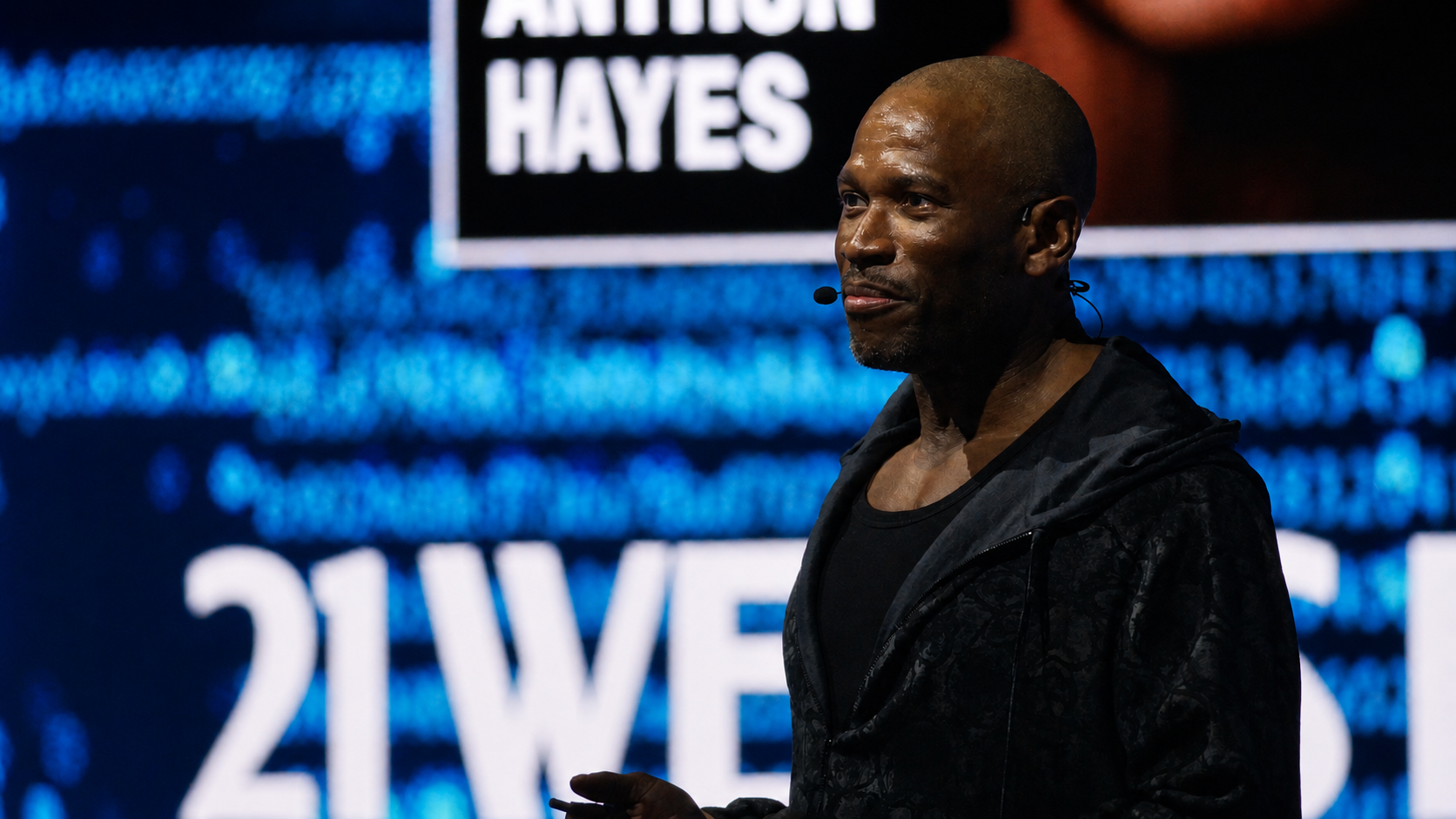
Author Arthur Hayes
♪ Compiled, made, Wu said ♪
Arthur Hayes updated his judgement on market mobility and the movement of Bitcoin in his keynote speech at the Bitcoin 2026 Vegas Congress, 21 Weeks Later, in English。
IN HIS VIEW, THE MAIN MARKET DEAL BEFORE WAS THE LOGIC OF “AI DEFLATION”: AI, WHICH BOOSTS EFFICIENCY, COMPRESSES HIGH-PAYING WHITE-COLLAR JOBS, MAY SHOCK THE QUALITY OF BANK CREDIT AND SLOWS DOWN BITCOIN AND RISKY ASSET PERFORMANCE; BUT AS GEO-CONFLICTS ESCALATED, THE UNITED STATES ENTERED A MORE APPARENT “WAR-TIME FISCAL” STATE, THE MARKET BEGAN TO SHIFT TO PRICING FISCAL EXPANSION, BANK LEVERAGE AND A NEW ROUND OF CREDIT EXPANSION。
He further analysed the external concern over Kevin Warsh's possible chairmanship of the Fed's “hawk abbreviation” and, in essence, the structural transfer of the Fed's assets with those of commercial banks, which, in conjunction with deregulation, took over more United States debt and buy back assets, while expanding loans to military industry, resource extraction, and AI infrastructure. Hayes believes that this credit creation will increase beyond AI ' s destruction of old employment and credit and that the liquidity environment is expected to be restored, and therefore continues to look at Dobitcoin and give expectations for further progress during the year。
THE GUEST DOES NOT SPEAK FOR WU AND DOES NOT CONSTITUTE ANY INVESTMENT PROPOSAL. PLEASE STRICTLY FOLLOW LOCAL LAWS AND REGULATIONS. AUDIO TRANSFER AND TRANSLATION IS DONE BY GPT AND MAY CONTAIN ERRORS. PLEASE LISTEN TO THE FULL PODCAST:
Little universe:
https://www.xiaoyuzhoufm.com/episode/69f4c30458f7cd89e0b9415f
Spotify:
https://open.spatify.com/episode/1klqlqIujGcuuPn6yd4OHmY?si=tOy6st6XSv2Oa2WytJwLWg
The market will see conflict as a short-term event
Arthur: Good morning, everyone. I hope you're in good shape after a week in Vegas. After the ski season, the market entered a relatively calm phase three months before it went to the seaside. So I thought it might be necessary to update my current view of the market。
I'VE RECENTLY SEEN THE LATEST MORTUARY FILM IN THE 28 DAYS OF THE REVOLUTION, WHICH IS THE INSPIRATION FOR THIS TITLE, AND LATER YOU'LL UNDERSTAND WHAT I MEAN. IN SHORT, IT TOOK ME A FEW DAYS TO THINK ABOUT HOW MONETARY CREDIT WILL EVOLVE NEXT, AND TO CONSIDER THE DEVELOPMENTS IN AI, THE SITUATION IN IRAN AND THE EFFECTS OF THE WAR. THE DEMONSTRATION WAS FINALLY FORMED. OBVIOUSLY, I'M LOOKING MORE AND MORE, AND I'LL EXPLAIN WHY IN THE NEXT 15 MINUTES。
Of course, we cannot ignore the ongoing war. So I need to make a few assumptions before entering into the final point. First, I hope that we will not die of nuclear holocaust. If that were to happen, then there would be little investment, so it would be put aside for the time being. Second, the market would see the incident as a short-term problem, no matter how long the “short-term” specifically meant. What really needs to be considered next is currency creation, currency issuance and what these contrasts mean。
When I get up every morning, if I want to analyze what's going on, at least look at the impact of the war from the perspective of my portfolio, I'll open a chart that Bloomberg created myself. It shows a six-month futures contract price for WTI crude oil less the recent contract price. I am really concerned about this price gap and its changes, because I am only concerned about the question of whether there are enough bulk commodities and crude oil in the market to flow smoothly。
REVIEW: AI DEFLATION AND EMPLOYMENT SHOCKS HAVE SUPPRESSED RISK ASSET PERFORMANCE
Arthur: No matter how much propaganda I read about Trump or Iran describes the current situation, I only look at the price. As we have seen, the situation has improved, and recent monthly prices are approaching those of distant months. This shows that things are indeed a little bad, but they have not reached a very serious level. So I can temporarily ignore it and continue to think about other issues。
Every time I go on stage, I talk about currency issuance. Compared to the last article I published about four weeks ago, my thinking has changed: in the medium term, mobility will change to positive。
IF IT'S NEGATIVE, FIRST OF ALL, AI DEFLATION. THERE IS ONGOING DISCUSSION OF KNOWLEDGE WORKERS WHO HAVE LOST THEIR JOBS OR ARE ABOUT TO LOSE THEIR JOBS BECAUSE OF EFFICIENT AND LOW-COST MODELS. THESE MODELS CAN COMPLETE THE KNOWLEDGE WORK. I WROTE AN ARTICLE A FEW MONTHS AGO ON MY EXPECTATION OF THE SCALE OF THE LOSS OF SUCH POSTS, AND A FEW CHARTS WILL BE POSTED LATER。
But this is the negative part. I believe that this could cause problems in the banking system at the level of hundreds of billions of dollars。
As for the Fed, I'll start later. The market has many concerns about whether Kevin Walsh may be the Fed's Chairman, and is also discussing whether he is a hawk or a pigeon. I'll put his words in the context. Basically, I think his statement is neither good for liquidity nor for the market. Those who are frightened by the possibility that Walsh could become the president of the Fed of the hawk are not really reading the details。
Finally, I will explain why commercial bank loans will increase。
The market began to turn to the narrative “war inflation and fiscal expansion”
Arthur: Why does the war economy in the United States and abroad push banks to lend more? As banks provide more loans to those involved in the production of all types of armaments, they also provide financing to enterprises that provide relevant inputs for the manufacture of arms. Finally, there are changes in banking regulations that will allow banks to increase balance sheet leverage。
THIS PICTURE I'VE BEEN LOOKING AT SINCE LAST OCTOBER. THE CENTRAL OCEAN RED LINE REPRESENTS NASDAQ, THE GOLDEN LINE REPRESENTS BITCOIN PRICES, AND THE WHITE LINE REPRESENTS THE UNITED STATES SCIENCE AND TECHNOLOGY UNIT ETF. MOST PEOPLE, AT LEAST INSTITUTIONAL INVESTORS, BELIEVE THAT BITCOIN HAS ALWAYS BEEN A NASDAQ ASSET IN HIGH BETA. IN THE PAST FOUR OR FIVE YEARS, ITS PERFORMANCE HAS BEEN LARGELY TRUE。
But since October of last year, when bitcoin was 126,000 dollars in history, it has fallen by about 50 per cent, while NASDAQ is almost even. So, in a broad sense, large technology units perform well. But if you look at the technology units I put together on Bloomberg, you'll find they're basically SaaS. They used to charge the customer $10,000 per seat, or some ridiculously high price; and now AI can complete the product function they provide for $10 per month. These stocks were severely damaged。
I think this points to a credit deflation that has not yet been recognized by the central bank. The central bank did not print enough money, so bitcoin fell. This happened before the war, so I closed the map to February 28。
This is also my wish: I want to fire all honest accountants and lawyers because I spend too much on these services. I can't wait for Claude to take over these jobs anymore. However, this would have a very negative impact on the institutions that extend loans to such groups, who usually have high incomes and are burdened with loans。
THIS IS BASICALLY THE FRAMEWORK OF MY THINKING ABOUT "AI IS A NEW SUBPRIME LOAN" AND ITS POSSIBLE IMPACT ON THE COMMERCIAL BANKING SYSTEM. I THINK THIS NARRATIVE PUSHED BITCOIN DOWN FROM LAST OCTOBER TO THE BEGINNING OF THE AMERICAN-IRANIAN WAR IN LATE FEBRUARY。
But after the war, Bitcoin's performance had already won NASDAQ, represented by the Red Line, and SaaS shares. Basically, I think bitcoin is now focusing on war inflation. Now that the United States and many other countries have clearly acknowledged that they are in a state of war and that defence spending is insufficient, what will happen next? They need to print more money and make more bombs。
Questioning the market's interpretation of Kevin Walsh's "superhawk"
Arthur: Let's put the AI problem aside and talk about the Fed。
When Kevin Warsh was nominated, I remember probably in January this year, everybody started panicking. For, in his experience as a Fed member during the financial crisis, he has always been critical of the large balance sheet of the Fed。
He had publicly stated that he believed that the Federal Reserve balance sheet was too large and that he would try to reduce it. At the same time, he indicated that he was able to lower interest rates。
If you read my article, you know I've always stressed that the amount of money is more important than the price of money. Therefore, I am more concerned about his statement of balance sheet than about short-term interest rate trends。
If the market believes that after Warsh's administration of the Fed, there will be a decrease in the system's current dollar liquidity, then the market will look at bitcoin and other risk assets. This is also the narrative we saw in the media: an hawk is about to come to power。
Judgement: Balance sheet distribution between the Fed and commercial banks or redistribution
Arthur: When Warsh took over, the market now thought it would happen after May, but I don't agree。
In my view, in essence, the Fed transfers reserves, United States Treasury bonds and repurchased assets to the commercial banking system. They would use new regulatory rules to accomplish this, that is, to adjust how banks hold assets on balance sheets and how much capital needs to be allocated to these assets。
In conclusion, I think it is important to understand what Warsh would do, what he would not do in the Fed, and most importantly that he would face a very substantial constraint: He needs to work with Scott Bessent, the Treasury, to ensure that whatever he does with the Fed's balance sheet does not undermine Bessent's ability to sell billions of dollars of bonds。
Here's a very simple Fed balance sheet. Although no specific figures are available, they may be a little complicated for some. The asset end includes United States Treasury bonds, mortgage-backed securities and repurchased assets, which are tools to help market participants finance purchases of United States Treasury bonds. The liability includes bank reserves, the general account of the Ministry of Finance, i.e. the cheque account of the Government, and cash in circulation。
From 2008 to the present, the Federal Reserve purchased assets from the banking system, i.e. United States Treasury bonds, mortgages to support securities and repurchase assets, by increasing the bank reserves of the debtor。
So, when Walsh said the balance sheet was too large, he meant that the Fed held too much debt securities and hoped that the balance sheet would be reduced. In other words, he could sell the bonds directly, but this would have a great impact on the market; and I think that, given the current hint, he would be more likely to swap assets with the United States banking system。
Commercial banks will take on US debt and expand credit
Arthur: Now look at the balance sheet of commercial banks. Commercial banks also have Federal Reserve reserves at their asset end, with approximately $3 trillion on the Federal Reserve account. In addition, there are loans; the source of funds is deposits and shareholder interests. For a certain size of balance sheets, banks need to allocate a percentage of equity capital, which is the requirement for capital adequacy。
What's going on is a swap between the Fed and the banks. Banks need to reduce reserves, reduce demand for them and replace them with United States Treasury bonds and repurchases. This is also the direction the United States commercial banking system is driving towards deregulation。
So, when you hear Bessent or other US government finance officials talk about deregulation, what they really mean is that we want to allow the banking system to absorb all the debt we are creating and to transfer it out of the Fed’s balance sheet。
The end state is that United States commercial banks have taken over from the Fed the batons created by money. They hold United States Treasury bonds and repurchase assets on their balance sheets, while the liability ends with deposits and shareholder equity。
All of this focuses on the fact that the net effect on dollar liquidity is neutral. Nothing is really sold and nothing is really bought. It's just a swap. In essence, it is a fictional arrangement on the regulatory level of “who is allowed to hold what assets”. But eventually, Warsh can come out and tell you that he has designed a smaller Fed balance sheet; in reality, as an investor, what we really care about is the net impact. The answer is no。
Besides, Warsh wouldn't be in conflict with Bessent. In the final analysis, the United States had issued $38 trillion in debt and Governments needed financing. The Fed did what it was asked to do, that is, to ensure that markets functioned in an orderly manner so that people could buy those debts。
Noting that the fiscal deficit and defence spending in the United States are still expanding and that the Government has no apparent intention of contracting
Then look at the expenditure. This is the United States fiscal year, from October to September. As we can see, the United States fiscal deficit has been one of the largest deficits in peacetime history since the new crown. And the size of the deficit for the 2026 fiscal year is slightly above the trajectory of the 2025 fiscal year。
THE FOCUS OF ALL THIS IS THAT THE UNITED STATES TREASURY DEPARTMENT WILL NOT REDUCE EXPENDITURE. TRUMP DID NOT DISCUSS SIGNIFICANT CUTS. LAST YEAR, DOUGE'S STORY WAS FORGOTTEN, AND NOW IT'S ALL ABOUT WAR SPENDING. HIS NEW DEFENCE BUDGET IS ABOUT 50 PER CENT HIGHER THAN BEFORE, REACHING ABOUT $1.5 TRILLION. IT DOESN’T SOUND LIKE THE TREASURY OR POLITICIANS ARE WORKING TOGETHER TO CUT SPENDING IN ORDER TO GET THE FED TO DOWNSIZE。
So all the statements about the Fed's abbreviation do not make sense. As politicians and the finance ministries that finance them continue to increase the size of debt on the market。
The share of foreign debt has declined, and commercial banks in the United States will be important buyers of new United States debt
Read another figure: who is buying these debts? Foreign investors do not buy as much United States debt as in the past. I have excluded countries that are usually used by hedge funds for base trade balance sheets. As you can see, foreign investors held a steady share of about 25 per cent, which is largely flat, while total debt increased significantly. This means that the market needs a new, less price-sensitive buyer to absorb these debts, the United States commercial banking system。
The banking system has been able to increase debt holding because of the new regulatory rules that came into effect on 1 April this year, namely, the enhanced replenishment leverage rule. Simply put, it allows banks to hold fewer reserves and other types of assets for loans and other assets on the balance sheet. This means that large banks like Morgan Chase and Citi will be able to take over more United States Treasury bonds and buy back assets on the market and take over this role from the Fed。
For smaller banks, the engine of lending in the United States economy, they can increase construction and business loans. The global scale estimates that the release of balance sheets from enhanced leverage will generate new loans of approximately US$ 1.3 trillion。
So, why do banks need loans? Other macro-level friends of mine have criticized the analysis as saying that the banking system has not created enough loans because of insufficient demand. But now we have a very strong source of demand, the United States Department of War。
It not only invests equity in certain transactions but also guarantees production and procurement. The banks will naturally be willing to lend to the companies when they see that they have a certain customer endorsed by the Government and that the Government can print money. The banks will also lend to resource mining companies, which are mining the critical resources needed to make bombs。
THE NEW CREDIT WILL COVER THE AI DEFLATION SHOCK AND BITCOIN IS EXPECTED TO CONTINUE. OKAY
FINALLY, ALL AI CAPITAL SPENDING HAS NOW BECOME A NATIONAL SECURITY ISSUE. THUS, WHEN A SUPER-MASSIVE CLOUD SERVICE PROVIDER ENCOUNTERS SITUATIONS IN WHICH IT IS UNABLE TO FINANCE ITS DEBT WITH FREE CASH FLOWS AND TURNS TO MARKET FINANCING, IT FINDS THAT LARGE BANKS ARE WILLING TO SUPPORT THESE DEBTS WITH LARGE BALANCE SHEETS。
Data on construction and business loans are available from the Fed on a weekly basis. The core of this chart from Bloomberg is that credit must flow。
THE ADVANTAGE OF BANK LENDING IS THAT ITS MULTIPLIER EFFECT IS HIGHER THAN THAT OF CENTRAL BANK LENDING. ACCORDING TO EMPIRICAL OBSERVATIONS, THE MULTIPLIER IS ABOUT THREE TIMES THAT. SO, 1.3 TRILLION DOLLARS IN NEW LOANS CAN GENERATE ABOUT $4 TRILLION IN CREDIT. THAT MEANS THAT IT'S GOING TO BE BIGGER THAN AI'S TAKING PEOPLE'S JOBS COULD DESTROY CREDIT. AND THAT'S WHY I'M LOOKING AT MORE BITCOIN。
I have a few seconds left. And look at my liquidity chart, it touched the bottom of last November or so, almost the bottom of bitcoin. I believe that we have experienced a shock and a war in the past, and it is time to make a breakthrough。
That's why I think bitcoin will continue to rise. My target for the end of the year is about $125,000 or something. It doesn't really matter how much. Thank you。
