
AFTER TACO'S CEASEFIRE, THE WAR IN IRAN WAS JUST PUSHED OVER THE PAUSE
The ceasefire eased market sentiment without touching the core contradiction
Original title: Trump"s Ceasefire Still Leaves the US and Iran Miled in Quandarary
Original by Catherine Lucey, Courtney Subramanian, Eric Martin, and Jennifer A Dlouhy, Bloomberg
Photo by Peggy Block Beats
The editor pressed: from the threat of the Stone Age to the swift landing of the two-week ceasefire, the conflict around Iran experienced a dramatic turn in a short period of time. On the surface, the situation has cooled and the market rebounded, but the deeper structural problems have not been solved。
On the one hand, Donald Trump, under political and economic pressure, chose “down the stairs” to temporarily ease market and ally anxiety through a ceasefire; on the other hand, Iran strengthened its control over the Strait of Hormuz during the conflict and tried to convert this geo-advanced advantage into long-term leverage. The so-called "ceasefire" is more a time-for-space arrangement than the real end of the problem。
At the same time, differences within the United States are growing. There is a clear rift within the Republican party around whether or not to cross the borders of war and accept an agreement that is far from achieving its core objectives. From the volatility of markets to policy rhetoric, the crisis has not only exposed a high degree of individualization of decision-making mechanisms, but has also allowed the world to begin reassessing the credibility and enforcement of the United States。
Conflict is entering a more complex phase, in the absence of a break-up: military deterrence, energy games and political negotiations. The real question is no longer a "ceasefire" but how the game will be re-priced while the bottom lines remain strong。
The following is the original text:
The President of the United States, Donald Trump, has two weeks to decide whether he has unblocked this knot that he himself made about Iran, or whether he has pulled it even harder。
On Tuesday, he announced his acceptance of a two-week Iranian ceasefire proposal, a message that has relieved the world’s major capitals, as well as the financial markets. At least for the time being, people have put aside their fear that he will continue to carry out attacks on civilian infrastructure and drag the region into deeper conflict through a bombing operation that he has described as “the stoneback age” of Iran。
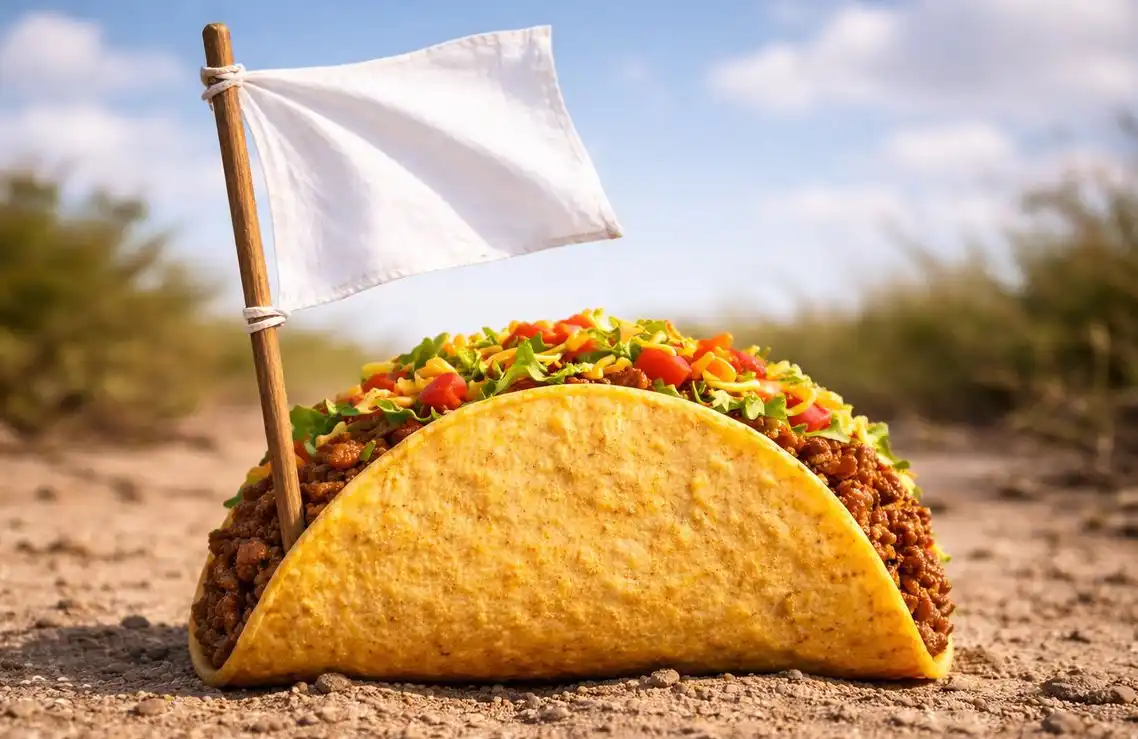
BUT IN THE CONTEXT OF THIS YET ANOTHER TACO CELEBRATION ON TUESDAY, THE PRESIDENT, KNOWN FOR HIS CLOSING HAND, AGAIN RETREATED TO THE EDGE OF THE CLIFF. A MORE REALISTIC PERCEPTION ALSO EMERGES: NONE OF THE CORE PROBLEMS ARE SOLVED。
Note: "Tako Tuesday" (TACO Tuesday) is a cultural barrier. In the United States, many restaurants do tacos on Tuesdays, and for a long time, Taco Tuesday becomes an easy, celebrated and even entertaining word
One of the key outstanding questions is whether Strait of Hormuz has actually restored access to the tanker. Despite some vague signals from Iran suggesting that more ships would be allowed to pass through the waterway, the reality remains unclear。
The Iranian side has shown little willingness to accept the full demands of the United States, whether to weaken the existing regime or to support a pro-American leadership, as Venezuela has done. At the same time, Tehran has not publicly committed itself to meeting the two core requirements of Trump: the permanent abandonment of the nuclear programme and the complete decommissioning of its ballistic missile system. Moreover, prior to that, the President of the United States had threatened to “smoke Iran's civilization” and if it were to be implemented, it might itself have touched the borders of war crimes。
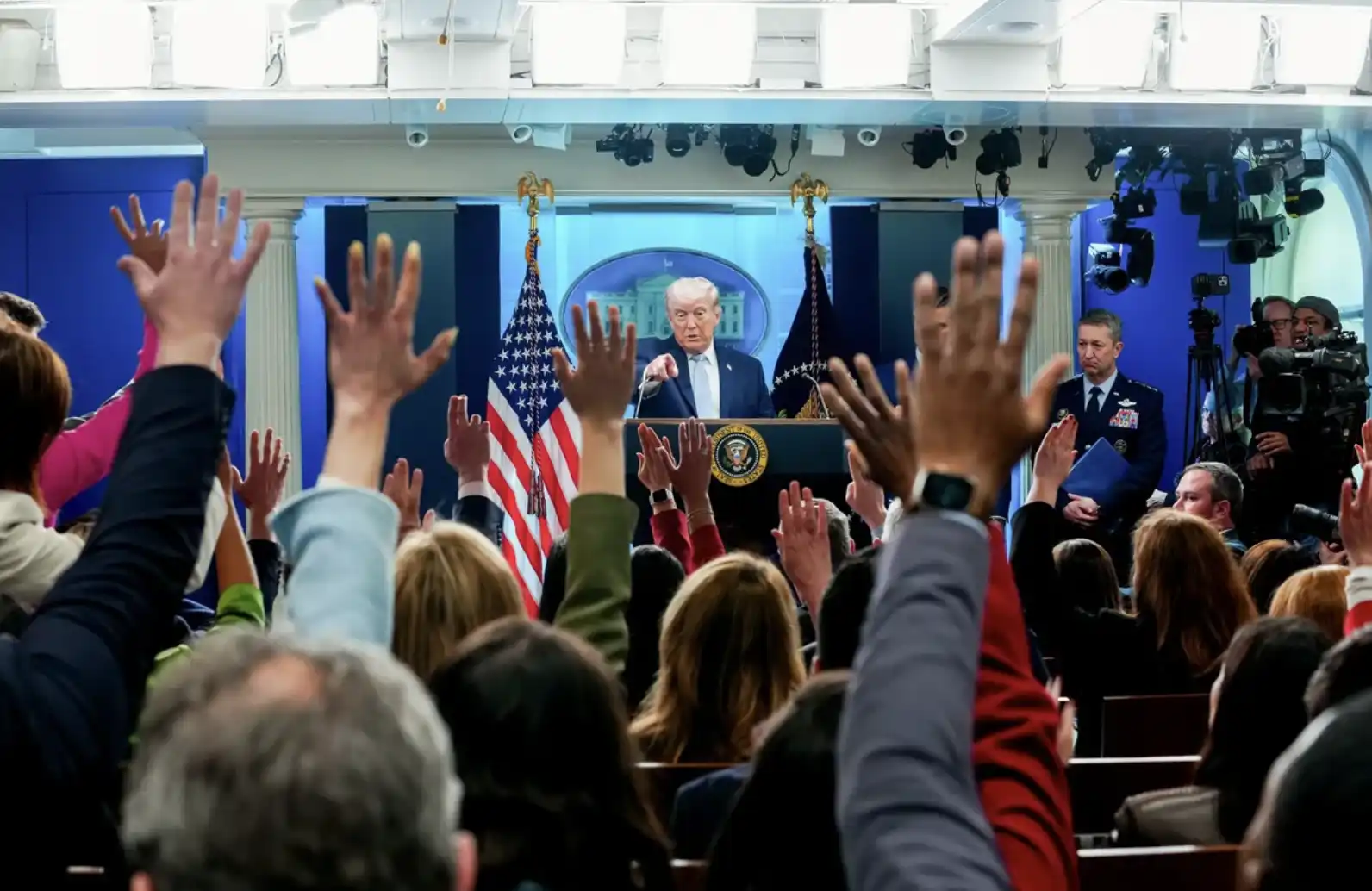
On April 6, the President of the United States, Donald Trump, held a press conference at the White House. (Photo by Aaron Schwartz/CNP / Bloomberg)
At the same time, Trump confirmed that a 10-point formula proposed by the Iranian side would serve as a basis for future negotiations. Tehran had previously called for the lifting of sanctions and compensation for the damage caused by the war. This may also mean that new fees are imposed on ships passing through the Strait of Hormuz, thereby keeping shipping costs and energy prices high over time。
From a realistic point of view, a US president under obvious political and economic pressure and in desperate need of a “downside exit” is likely to have to accept, if not fully achieved, the goals。
"It is not surprising that Trump is clearly eager to delay the issue again," Ian Bremmer, founder of the Eurasian Group, says。
According to an unnamed senior government official, the White House deliberately created a “pending” atmosphere as the deadline of 8 p.m. on Tuesday night approached. Part of the reason is that the President himself asked the team of advisers not to send any signals and allow the outside world to speculate about its next move. At the same time, the United States has stepped up its response to Iran ' s military objectives, including its main oil export hub, Kharg Island, as a means of raising American chips and demonstrating its military capabilities in the negotiations。
According to a White House official, while meeting Viktor Orbán in Hungary, the United States Vice President JD Vance played a central role in the decision-making process on Tuesday. At one point, there was a scene when Vance, at a rally in Orban, put Donald Trump on the phone, while at the same time the official indicated that the Vice-President had had personal direct communication with a Pakistani official acting as mediator。
The official added that Trump had held ongoing consultations with senior United States national security officials and Israeli Prime Minister Benjamin Netanyahu on the same day and had eventually spoken to a Pakistani Field Marshal to confirm the ceasefire programme。
At the same time, the Western Wing of the White House has been discussing the release of a report. The report shows that, prior to the outbreak of the war, there was widespread deep scepticism within the top of the Trump administration about Israel ' s judgement that military strikes could trigger popular uprisings in Iran and lead to a new secular Government. The report also sheds light on the initial opposition of Vance to the launching of the strike, as well as the concerns expressed privately by many other senior staff。
Against this background, for most of Tuesday, allies from within the Trump political alliance warned him not to meet the extreme threat of “ending Persian civilization” that had preceded it. Conservative podcast hosts even openly discussed whether the Cabinet should consider dismissing Donald Trump; even the Republicans, who had always supported him, indicated that their threats against power plants and desalination facilities had crossed the border。
Although Trump’s Republican party won a special election in Georgia the same day, in this constituency, which has always been regarded as a “security seat”, the margin of victory is clearly narrow, which is seen as a potential signal of voter dissatisfaction。
AT THE SAME TIME, PRESSURE HAS ACCUMULATED AT THE ECONOMIC LEVEL. SINCE THE OUTBREAK OF THE CONFLICT AT THE END OF FEBRUARY, THE PRICE OF WESTERN TEXAS ' S MEDIUM CRUDE OIL (WTI) HAS RISEN BY NEARLY 70 PER CENT AND THE PRICE OF FUEL STATIONS HAS EXCEEDED $4 PER GALLON FOR THE FIRST TIME IN MANY YEARS。
Within an hour of Trump’s announcement of the decision, oil prices fell by 11 per cent, highlighting the pre-existing anxiety of the market over the direction of its policies. S&P 500 Index has fallen by about 5.2% since the height of history and has just recorded the worst quarterly performance since 2022。
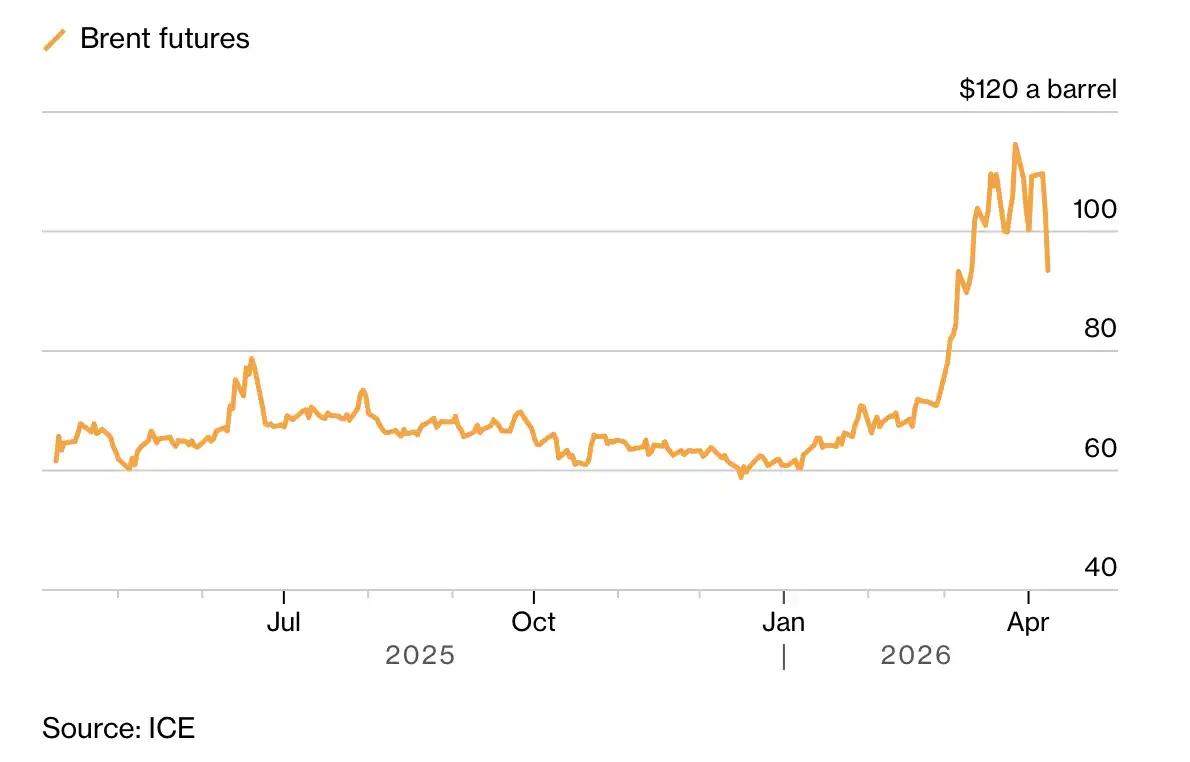
Oil prices fell sharply after the United States and Iran agreed to a two-week ceasefire. Brent dropped by 16 percent on Wednesday。
Trump's decision was taken at the last minute. According to a United States official, it was only about two hours later on Tuesday afternoon, when he had written on the Truth announcement of a ceasefire, that the President was fully briefed on the Palestinian offer. Acceptance of this proposal and its compliance with the conditions set by itself ultimately depend entirely on Donald Trump himself。
Unknown Details
Despite the President's statement that he has taken this long-standing issue to a near-resolution stage, public information suggests that there is little indication that this military and economic dilemma, which has had a serious impact on his political status, is moving towards a real easing。
Jennifer Kavanagh, head of military analysis in the Liberal Think tank Defense Priorities, wrote on social media: "It is a relief to see Trump chooses the next step tonight. But if he had intended to give up, it would have been the worst way to say that he had raised the stakes before, to the greatest extent possible to undermine his credibility and the perception of American power. This is a clear strategic failure
Within hours of the declaration of a ceasefire in Trump, the White House Press Secretary, Karoline Leavitt, called on the outside world to look carefully at reports of face-to-face talks, stating that any substantive progress must be officially announced by the President。
At the same time, as reported by Al Jazeera, Iran ' s options include requesting the withdrawal of United States forces from their bases and deployment sites in the area, unfreezing of Iranian frozen assets, etc. Neither the United States nor Israel seems likely to accept these conditions。
Despite Washington’s “sniffing” approach to Iran’s public statements throughout the conflict, which suggests that Tehran is more flexible in private negotiations, this huge gap between public and private also highlights the deep divisions and mistrust that Tripp must now address。
Jonathan Panikoff notes that a long-term solution requires addressing a number of core issues: The future of Iran ' s nuclear and missile programmes, the movement of highly enriched uranium reserves and permanent guarantees of freedom of navigation. He said, "In the context of Iran's willingness to open the Strait of Hormuz, the President accepted a two-week ceasefire, indeed found for himself a `step down' and thus could claim a phased victory."
Shortly after the ceasefire was declared, Trump, in an interview with Agence France-Presse, stated that Iran's uranium reserves would “be properly disposed of”, without specifying the modalities, while still calling the agreement the “total victory” of the United States。
Energy Off-Ramp
Throughout his public life, Trump has been unsatisfied with the need to bring the set objectives fully into line with reality; he has paved the way for his own “evacuation” many times while the key issues remain unresolved。
He has also retreated from the most radical policies and threats on several occasions in the past. A year ago, for example, after a major setback in financial markets, he quickly made concessions only days after the implementation of global tariffs。
This time, the government may have hoped that the short memory of the electorate, the gradual recovery of the economy after the shock of the conflict, and Iran’s counter-attacks, which Trump himself admitted was unexpected, could be absorbed by time。
But the White House is bound to face serious challenges if an agreement that is close to what the President originally envisaged cannot be reached. According to Jon Hoffman, a researcher for defence and foreign policy at the Cato Institute, “Trump's initial objectives were generally extremely radical, including the destruction of Iran's nuclear programme and even the promotion of regime change, but neither was achieved”
Senator Chris Murphy of the Democratic Party of Connecticut warned that if an agreement were finally to entrench Iran's control over the Straits of Hormuz, it would have “a disastrous effect” on the globe. In an interview with CNN, he said, "It doesn't even sound like a real agreement now, because Trump's story is completely inconsistent with that of Iran. If Iran were thus in permanent control of the Strait, it would be a grave miscalculation and the whole operation would appear to be a failure
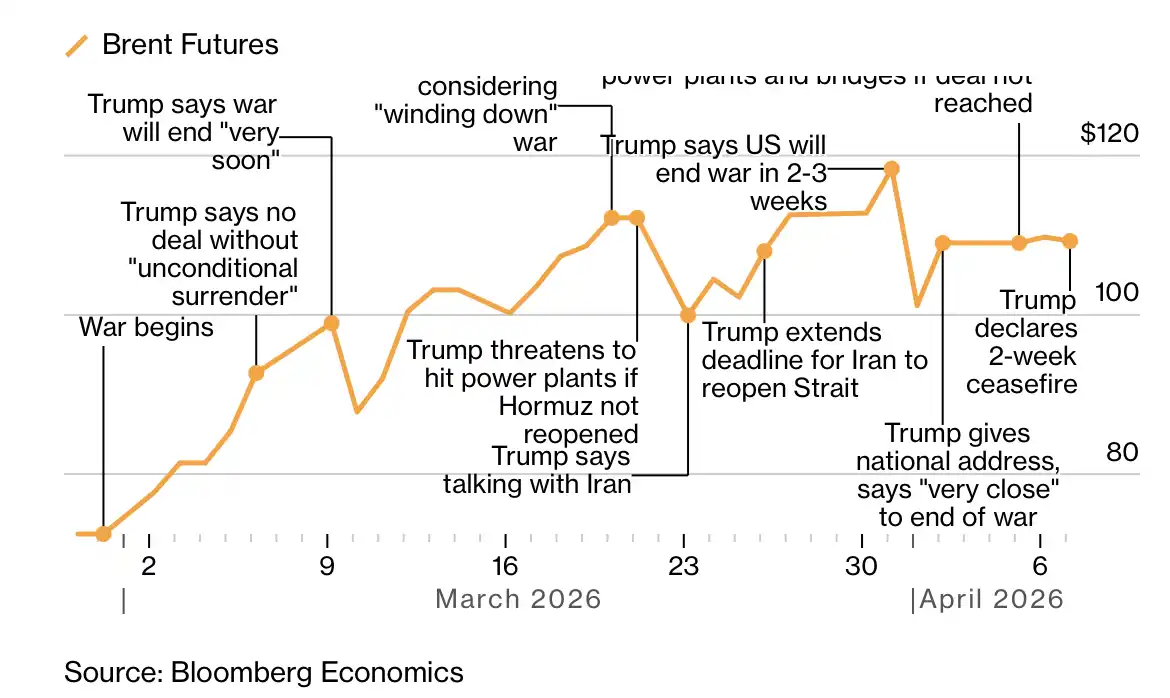
Trump's words are repeated. Trump ' s public statements on the Iranian war have, on several occasions, directly triggered sharp oil price fluctuations。
For the United States, a rather ironic reality is that the five-week war could, on the contrary, give Tehran greater leverage in the global economy. During the conflict, Iran, which has in fact strengthened its control over the Strait of Hormuz, has closed its passage to countries that it has identified as “enemy” and is now promoting a plan to impose a “passage fee” on tankers passing through the waterway。
“It is almost impossible for Iran to give up its newly acquired or, at least, enhanced claim of control over the Strait” said Clayton Seagle, a senior researcher at the Center for Strategic and International Studies in Washington
Keyvin Book, the Managing Director of ClearView Energy Partners, based in Washington, points out that much of the commitment to reopen the Strait of Hormuz is part of the market’s perception of the ceasefire as an important signal。
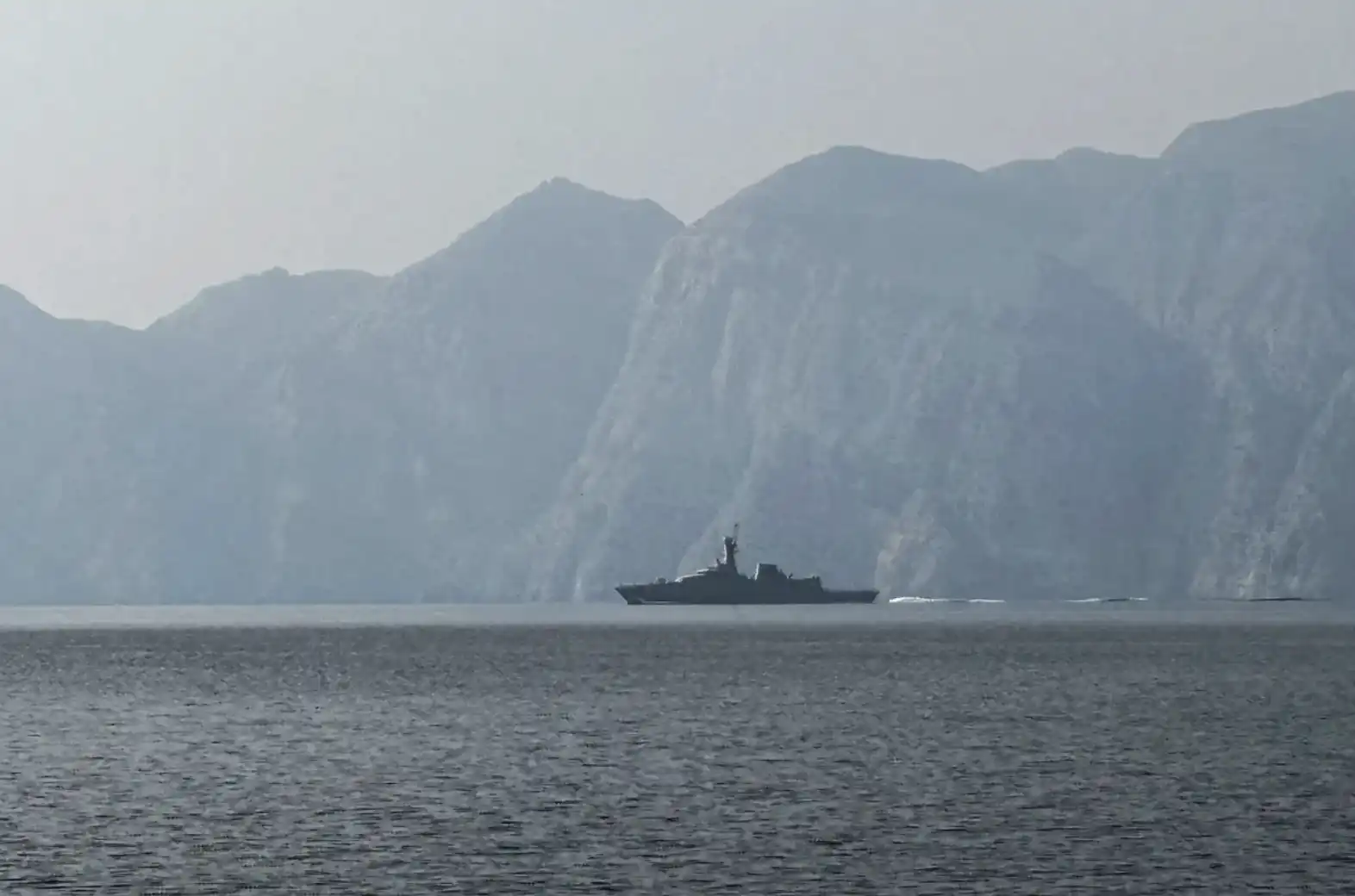
On 1 March 2026, a naval vessel sailed in the Strait of Hormuz. (Radio: Sahar Al Attar / AFP / Getty Images)
At the same time, the likelihood of a significant fall in oil prices in the short term remains low。
Kevin Book, Managing Director of ClearView Energy Partners, said: "The lower limit between oil price zones remains around $100 per barrel. He added that if Donald Trump had actually carried out the strike of the threat and provoked retaliation from Iran, the world might have faced a "no ceiling" surge in oil prices。
Republican Rift (GOP Offsides)
There is also a need for Trump to repair the differences revealed within its party on this issue. On Tuesday, there was a clear rift within the Republican party around whether to take tougher action against Iran。
Before the ceasefire, Trump warned that “a whole civilization will be destroyed tonight”. In response, Congressman Nathaniel Moran of Texas, who had been endorsed by Trump, expressed concern in the social media that the United States was moving away from the "national defense principles that have long guided the United States"。
Senator Ron Johnson of the Republican Party of Wisconsin said that it would be "a huge mistake" to strike at civilian infrastructure。
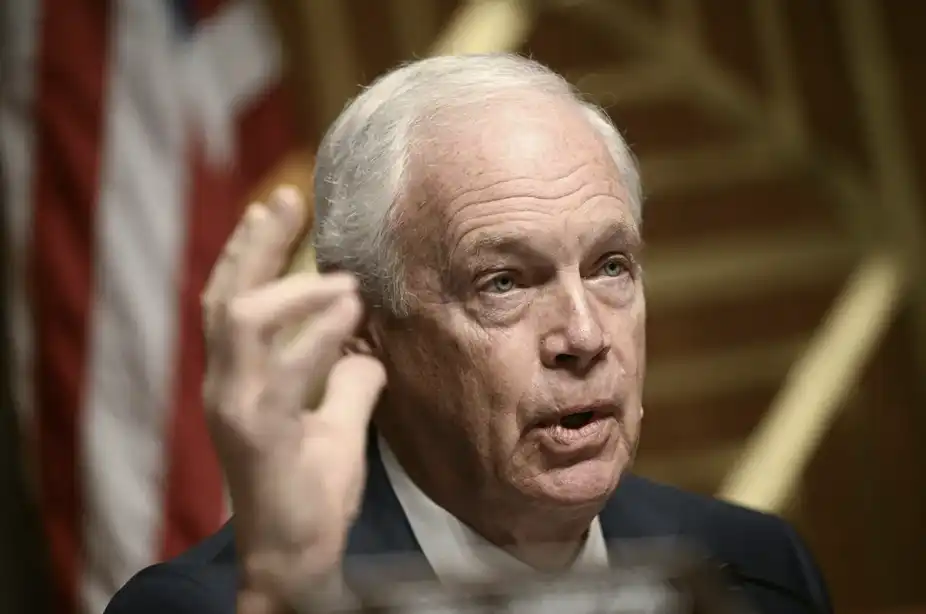
Senator Ron Johnson of Wisconsin. (Photo by Brendan Smialowski / AFP / Getty Images)
"If he attacks civilian targets, I can no longer support him. Whatever we do, we must comply with the laws of war,” Johnson said in an interview with The Wall Street Journal。
He also said to the podcast host, John Solomon, on Monday, "I hope and pray that Trump is just bluffing." We are not fighting against the Iranian people; our goal is to free them. Some former Trump allies, including Tucker Carlson, former Congressman Marjorie Taylor Greene and former White House official Anthony Scaramucci, also joined in calling for his removal precisely because of his previous threats。
After Trump moved to de-escalation, conservative opinion leaders Laura Loomer and Senator Lindsey Graham, who were their main supporters of Iran’s hard-line actions, began to express their concern about the ceasefire agreement。
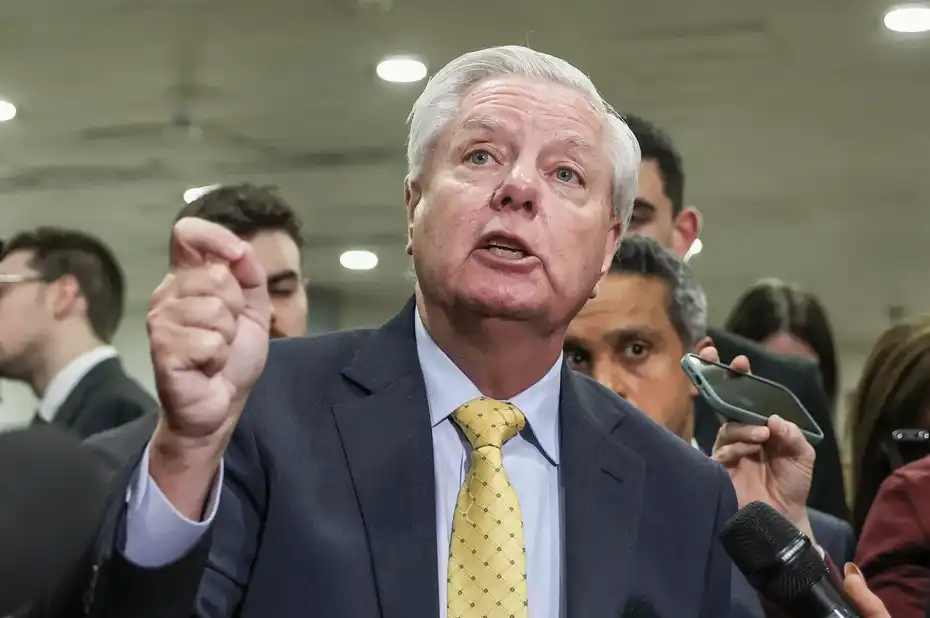
Senator Lindsey Graham of South Carolina. Photo by Anna Moneymaker / Getty Images
"I don't understand why this was considered a victory," says the conservative opinion leader Laura Loomer, in social media, "the Muslim community, the so-called Wake Reich, and the anti-Trump camp are using this "negotiation" to attack President Trump, while praising Tucker Carlson's allies and calling for the 25th Amendment against Trump."
The Republican senator from South Carolina stated that the Americans “must remember that after the war, Iran attacked the Strait of Hormuz, undermining freedom of navigation”。
"It is crucial that Iran not be rewarded for this hostile act against the world," Graham wrote on social media. He added that the United States must ensure control of the “each cent” of highly enriched uranium in Iran。
"Time will answer," said the senator。
[ Chuckles ]Original Link]
