
The man behind Pokémon Go, who started with CIA investments, is now doing global mapping for Military AI
The security of the data depends on who it flows to。

Sleepy.txt
There have been several large-scale geodata collections in human history, each of which has changed the pattern of power。
In the age of great navigation, Portugal and Spain sent fleets to map the seas, and those who had the right course were in control of trade and colonization。
During the Second World War, the United States Army Survey produced a global military map, which, after Eisenhower, was one of the keys to winning the coalition。
During the cold war, the United States and the Soviet Union used spy satellites to photograph each other ' s territory, and image analysts' daily work was to stare at vague satellite photographs and count the number of each other ' s missile silos。
These three operations have one thing in common: they are State acts, they are secret, they require huge military budgets that are unknown to ordinary people。
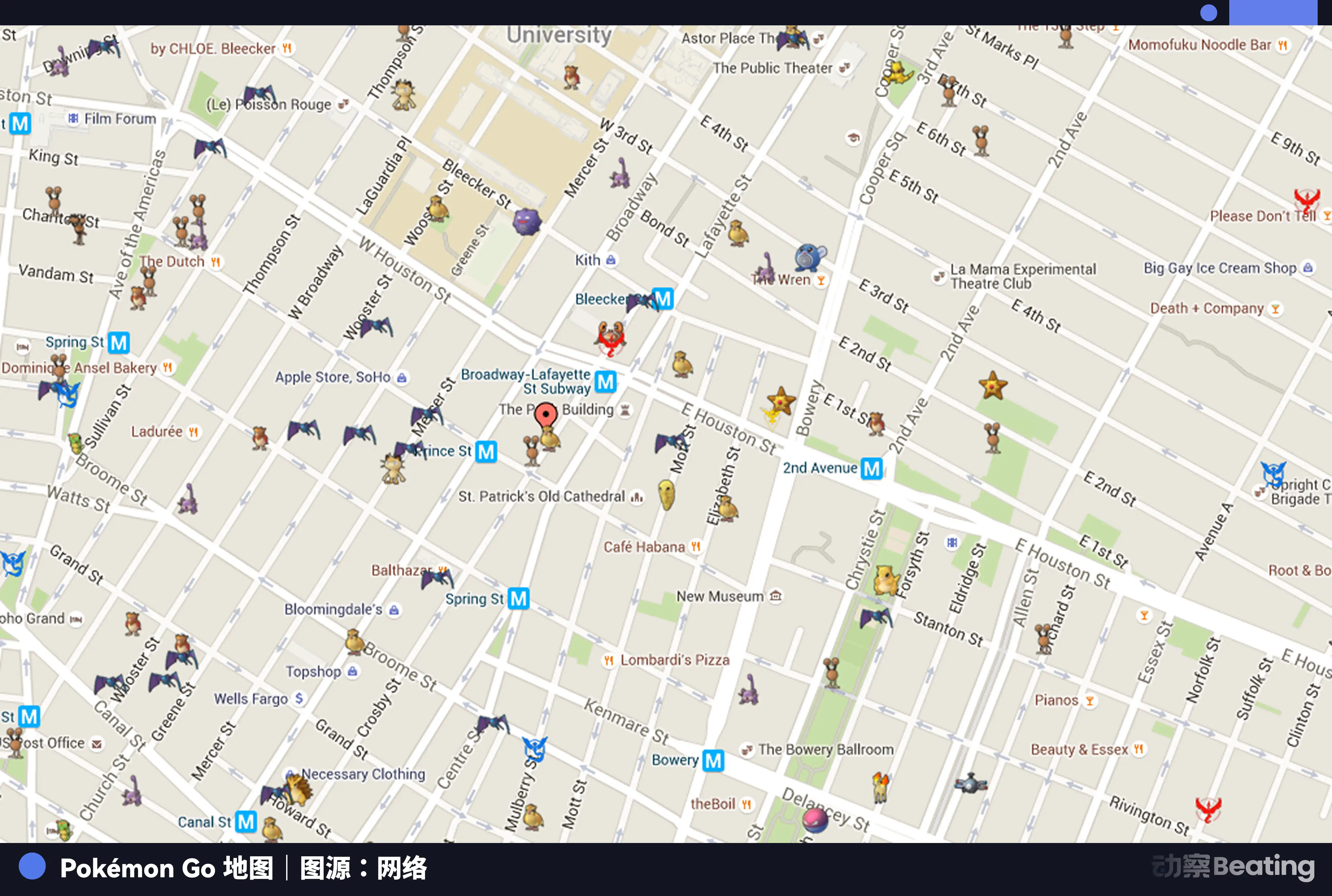
In the summer of 2016, 500 million people volunteered to pick up their cell phones, walk into the park, walk into the street, walk into the mall, scan everything around with a camera, and play a game called Pokémon Go. What they do not know is that they are participating in the largest, least costly and most efficient geodata collection operation in human history. Each time a person goes out, images of the global ground view of buildings are uploaded to the server at no cost。
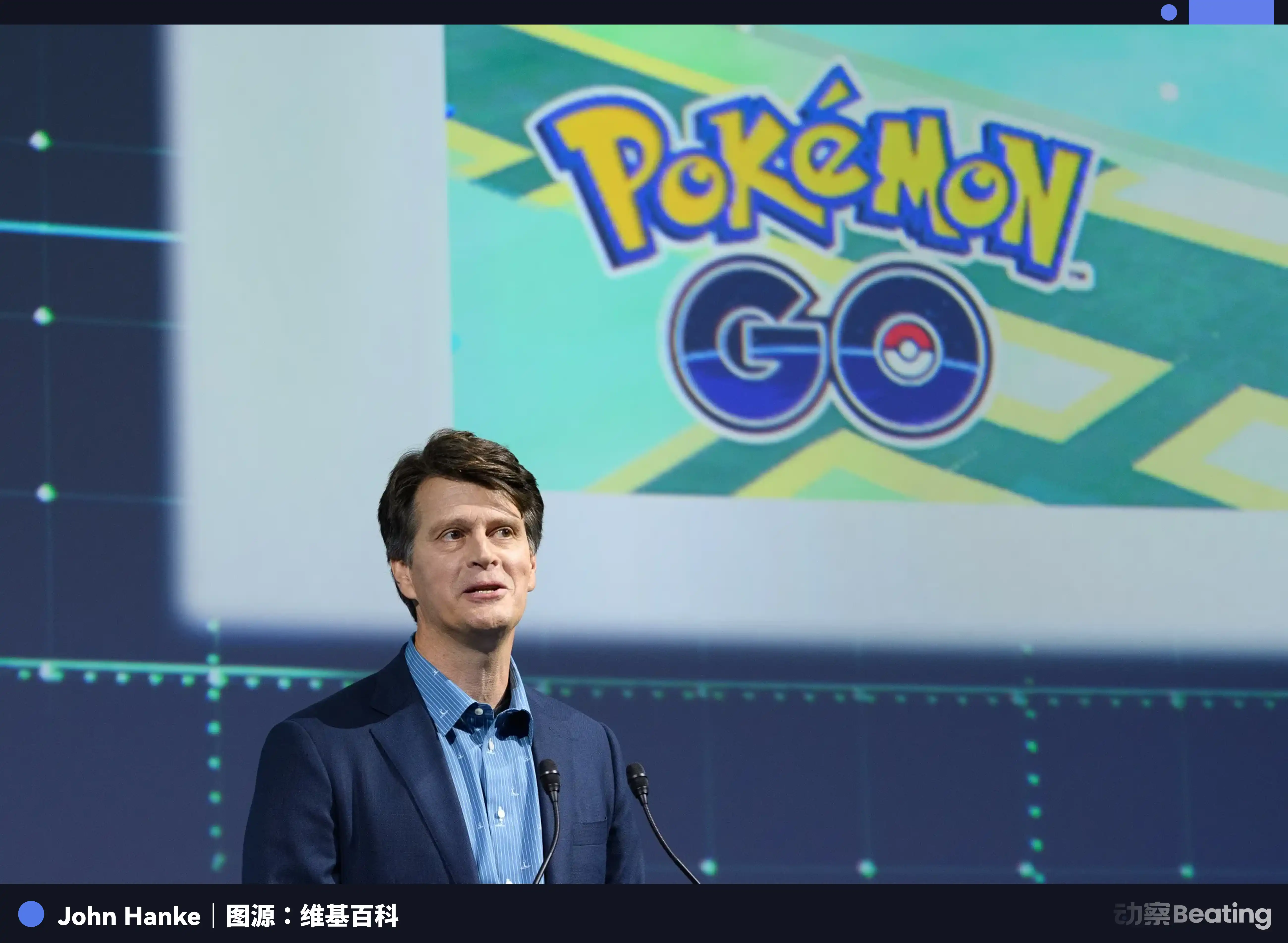
John Hanke, the founder of this game, did just want to do a fun AR game when he started doing Pokémon Go. Ten years later, however, he made another choice, allowing the data to flow to AI and military applications。
There's a gruesome clue behind this choice: Hanke got the first money from the CIA when he started his business in 2001。
FIRST MONEY FOR THE CIA AND A MAP OF THE YOUNG. DREAM
In 1996, John Hanke got his MBA degree from the University of California, Berkeley, Haas Business School, and then did something that seemed rather reckless in those days, the Internet started。
His first company, Archerype Interactive, did a role-playing tour called "Meridian 59," which was one of the first 3D Internet trips in history, nearly 10 years before World of Monsters. The company was subsequently acquired by 3DO, and Hanke got the first bucket of gold in his life。
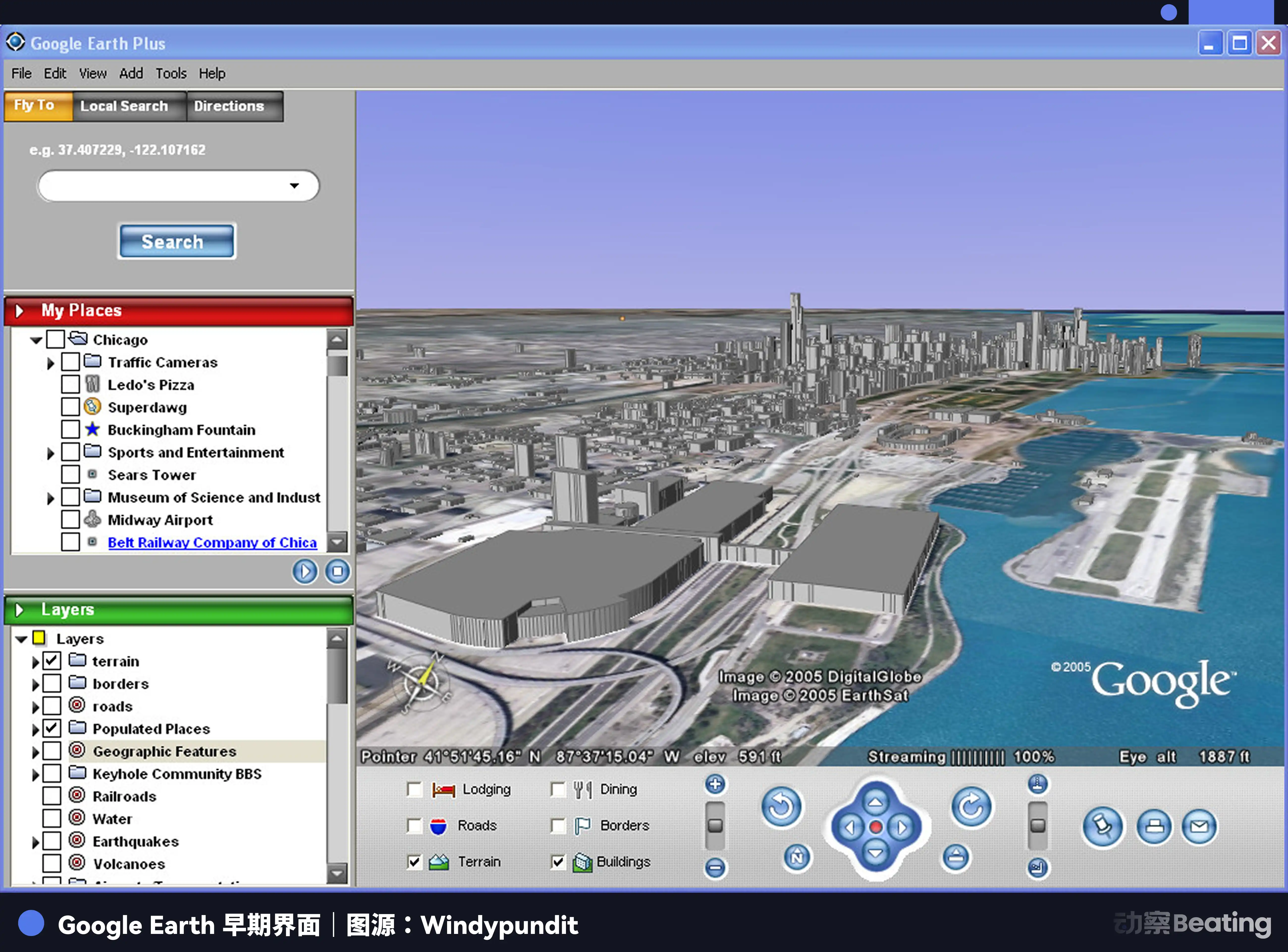
In 2001, he created Keyhole。
He had a vision for this company, and he wanted to collage satellite imagery into an interactive instrument that would allow anyone to see anywhere on a computer screen. At that time, the average Internet speed of households in the United States was 56 Kbps, with the loading of a high-resolution picture for the first half of a minute, and Keyhole products required real-time streaming of satellite imagery, which was technically difficult to understand。
But one agency immediately saw its value, namely, the venture capital agency under the CIA, In-Q-Tel。
In-Q-Tel was established in 1999 at the initiative of the CIA Director-General George Tent. The logic of its operation is never to make money, but to allow intelligence agencies to use commercial investments to introduce the most advanced civilian technologies into the intelligence system。
At that time, satellite images could only see the top, while intelligence analysis required ground-based perspectives, such as the sides of the building, the layout of the street, the location of the entrance and exit, and the surrounding environment. Keyhole is doing exactly what's needed。
In 2003, a few weeks before the outbreak of the war in Iraq, In-Q-Tel completed its investment in Keyhole. Soon, Keyhole technology was actually used for battlefield situation analysis, which military analysts used to study the street layout in Baghdad and the structure of Saddam Palace。
In October 2004, Google bought Keyhole for tens of millions of dollars. Keyhole's core technology became Google Earth, which later changed the world, and Hanke himself entered Google as Vice President of Geographic Products, and began to lead a larger project。
Almost the same period, Peter Thiel, with the tens of millions of dollars he earned from selling PayPal, created a company called Palantir. The company's name is a crystal ball from Tolkin's Ring King. Palantir's idea is to use big data analysis to help intelligence agencies find terrorists in mass information。
In-Q-Tel became Palantir's first endorser and investor, and the CIA itself became Palantir's first customer, as the Silicon Valley's mainstream wind snuffed it。
The "fault" of the streetview car and a culture of collecting and apologizing
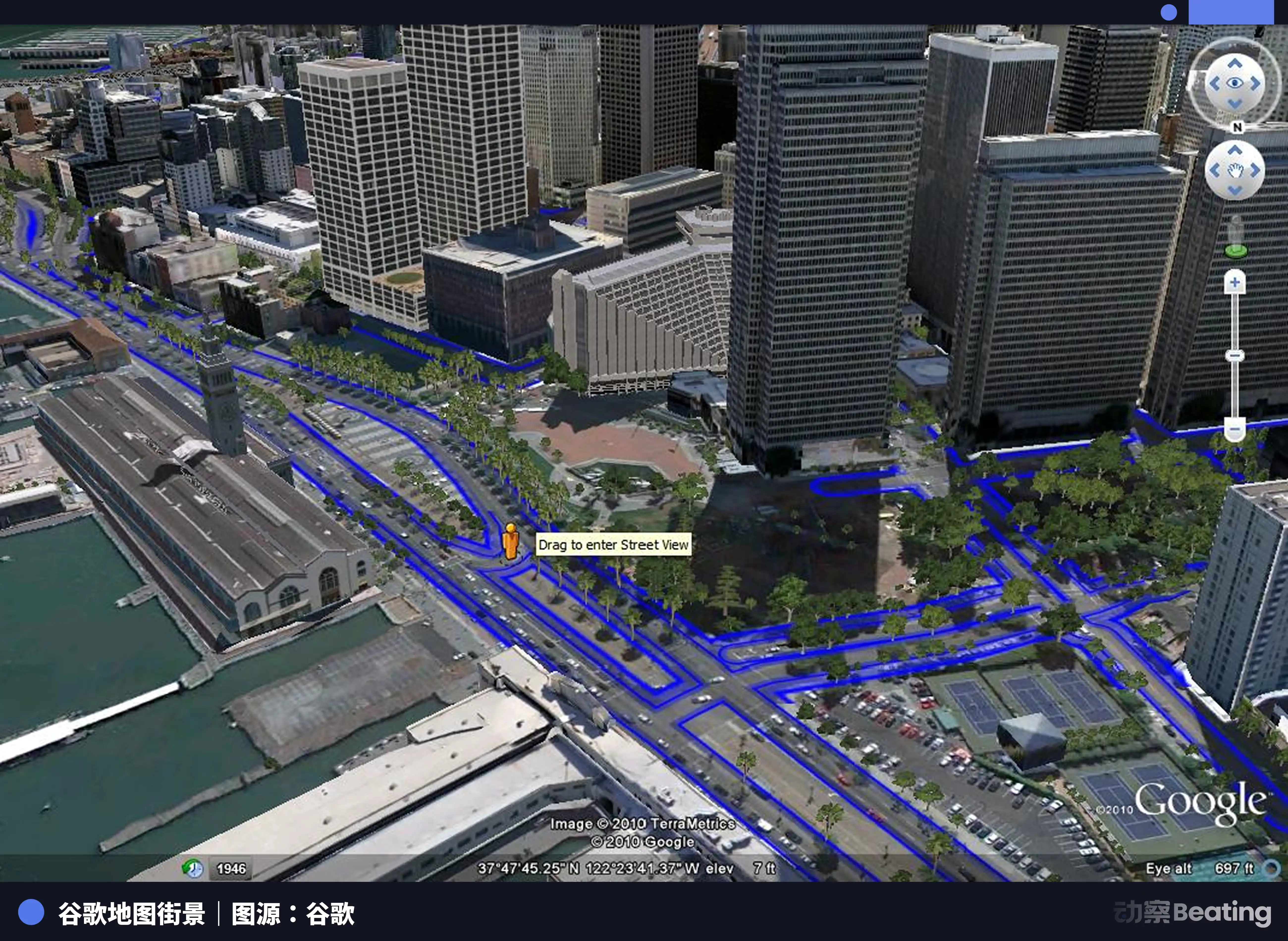
After going into Google, Hanke led the streetview project that later provoked global controversy。
This is the first attempt in human history to use cameras to record streets around the world. Google designed a special car for 360-degree camera arrays, which began to travel around the world in 2007, covering more than 60 countries and taking billions of pictures. The photographs were aggregated into continuous street views, and anyone could walk into any street on Google maps。
It's a product that changes the way human space senses. In 2010, however, a scandal completely changed the perception of the project。
During the inspection, the German regulatory agency Hamburg Data Protection found that while filming the streets, the street viewers were secretly intercepting the Wi-Fi data packets of families and businesses along the road, which contained complete data flows, including passwords, e-mail content, medical records, bank information and even web content that users were viewing。
This act violates the privacy of communications law in several countries, including Germany, France, Australia, the United Kingdom, Canada and Spain. Google faced huge global fines and the United States Federal Trade Commission launched an investigation, with the involvement of the United States Department of Justice. Eventually, Google paid $7 million in settlement payments in the United States, was fined 100,000 euros in France and also in Germany, Australia, etc。
The official explanation given by Google in the face of hard evidence is "technical error". An engineer named Marius Milner introduced data interception "unintentionally" into the code without management knowing it。
The code operated on hundreds of vehicles around the world for three full years, collecting data from more than 30 countries, and no one reported it internally and no management personnel stopped. The United States FCC investigation report later disclosed that Miller had clearly described the functionality of the code in an internal document that had been distributed to several Google engineers。
If you pull this veil, you'll see the true Silicon Valley consensus: the bottom line of the data is never a physical barrier, but a rubber mud that they can sneak around with. The price of being found was to apologize and pay a fine of 10 cents for Google, and then continue。
More notably, Google's handling of the incident. It refused to submit complete data to national regulatory bodies, preventing direct investigations into Milner on the grounds of "engineer personal privacy " , and retained the data for several years after the conclusion of multi-country surveys。
With this scoundrel logic of first crossing the border and then paying for forgiveness, Hanke moved away from Google around 2010 and was ready to set up another stove。
Pikachu is the bait. Data is the prey
In 2015, Hanke officially created Niantic. Initially hatched within Google in 2010, the company became independent and received $30 million in financing from Google, Nintendo and Boco Dream。
On July 6, 2016, Pokémon Go went online. One week on the line, there were more than 21 million live users, more than Twitter. On the line, 60 days, and the downloads were over 500 million times. In the United States, the daily users of this game once exceeded Google Maps。
People ran around the park like heads down, hanging around the crossroads like stakes, turning their mobile cameras around, just to grab that pikacho on the screen. This madness has even turned into a scrumptious farce, when people dreamt of going into someone's backyard in order to catch Poco, when someone was driving and staring at the screen and hitting a tree, and even when they ran to the New Zealand police station, one of them seriously asked if he could go in and catch a elf。
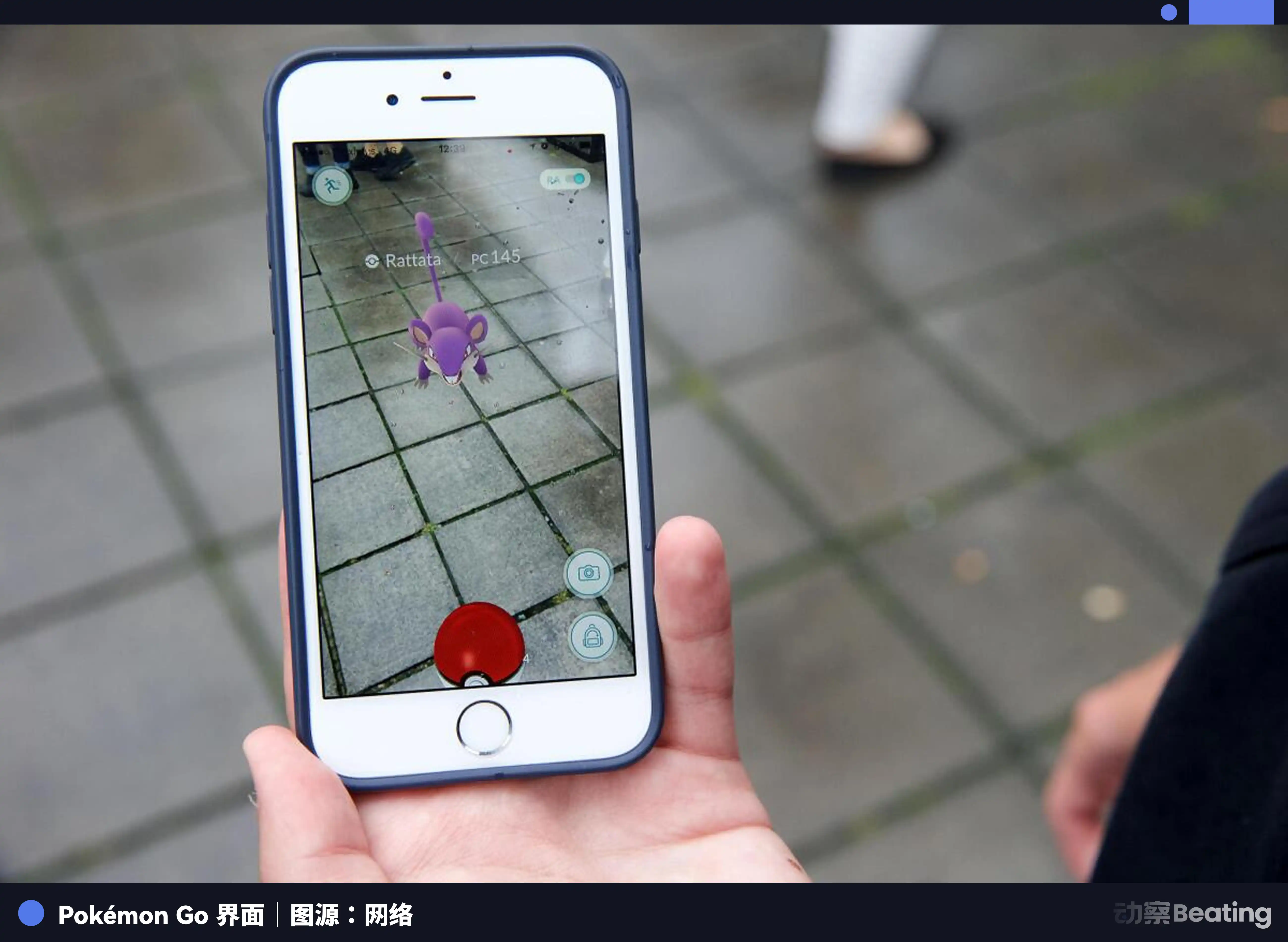
But if you look at each of the core mechanisms of the game, you find each of the mechanisms designed to maximize the sensor data of users。
THE TASKS IN THE GAME WILL BE DIRECTED TO DRIVE THE PLAYER TO A SPECIFIC LOCATION AND SCAN THE BUILDING WITH A CAMERA; THE ELF NEST WILL ALLOW THE PLAYER TO TRAVEL REPEATEDLY TO THE SAME LOCATION TO HELP THE SYSTEM CONSTRUCT A MULTI-ANGLE 3D MODEL OF THE SITE; THE DOJO MECHANISM WILL ALLOW THE PLAY PARENTS TO STAY AND COLLECT DETAILED DATA ON THE INDOOR AND SURROUNDING ENVIRONMENT; AND THE AR MODEL WILL DIRECTLY CALL THE CAMERA, ADDING VIRTUAL IP STACKS TO THE REAL ENVIRONMENT AND COMPLETING THE COLLECTION OF IMAGES OF THE ACTUAL SCENE。
In each capture, the mobile phone uploads not just a photograph, but a complete sensor data package containing GPS coordinates, mobile phone orientation, angles, speed of movement. These data were uploaded in real time to Niantic ' s server and, after processing, were gradually consolidated into a fine global geo-database。
Niantic called the system the Real World Platform. Undeniably, it brings in hundreds of millions of players an unprecedented experience of entertainment. But in the bottom logic of commerce and technology, this global game objectively acts as the most efficient geographical data collection network in human history. Players pursue childhood dreams, and the system harvests quietly and is an indispensable space coordinate for building a digital twin world。
In the early days of the game, the iOS version even quietly applied for full access to Google accounts and theoretically read all user emails, Google cloud hard disk files and search history. This mandate has drawn the attention of the United States Congress following its public disclosure by Security Fellow Adam Reeve. Senator Al Franken sent an official letter of enquiry to Niantic to explain why such a broad mandate was needed. Niantic subsequently withdrew this authority, explaining that it was still a familiar "technical error"。
At that time, Governments responded with extraordinary speed, and many countries directly banned the game. The judgement of these countries was ridiculed by some media at the time as a conspiracy theory. But today they realize only earlier than others that a game that allows 500 million people to volunteer to take up cameras to scan global buildings is essentially the largest geodata collector in human history。
Moreover, the operating costs of the machine are borne entirely by the users themselves, including traffic charges, electricity charges, depreciation of mobile phones, and the time and strength to walk。
Strip off the game's shell, leave a data mine and sell it to the battlefield
Time came in 2025, Hanke sold Pokémon Go。
The buyer was a video game company, and the real financier behind the game was Saudi Sovereign Fund PIF. PIF is a sovereign wealth fund led by Saudi Crown Prince Mohammed bin Salman, which manages assets in excess of $70 billion and is one of the largest sovereign wealth funds in the world. Its portfolio includes Uber, Lucid Motors, Nintendo and shares in a range of Western technology companies。
This transaction means that the chain of ownership, accumulated by hundreds of millions of players worldwide over nine years, now points to Riyadh。
Why would the Saudi Sovereign Fund spend $3.85 billion on a hand trip where a daily user has fallen significantly from peaks
The answer may not be the game itself, but the location data network behind the game that covers the world. Pokémon Go's player data include hundreds of millions of people who have moved in fine trajectories over the past nine years, where they live, where they work, where they travel every day, and how long they stay in what buildings. This is a data set that any advertising company, intelligence agency or urban planning department would like。
But the best part of the deal is Niantic didn't sell anything。
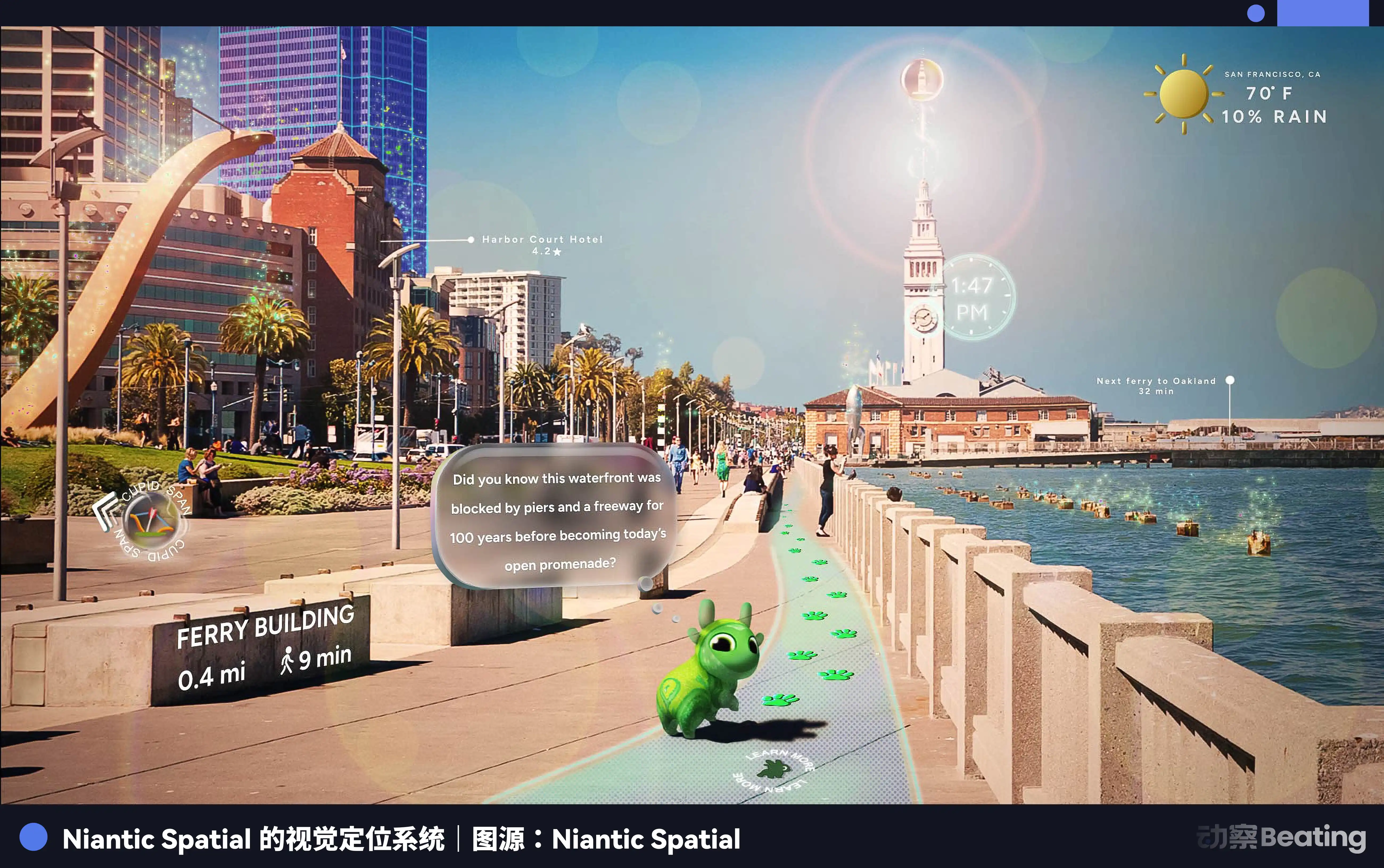
Hanke kept the 30 billion images, the geo-database, which had been continuously optimized for nine years, and the large geospatial model that had been trained on the basis of that data. With these assets, he formed a new company, Niantic Spatial, and publicly announced in March 2026 that he would work with the delivery robot company Coco Robotis, which used Niantic Spatial LGM to visualize the accuracy of centimetres, even in urban canyons where GPS signals were unstable。
But commercial robots are just civil display windows for this technology。
In December 2025, Niantic Spatial signed a cooperation agreement with the defence company Vantor for the use of LGM for military drone navigation in a GPS-observed environment。
The so-called "GPS Refusal Environment" is an increasingly common state of affairs in modern battlefields, where weapons systems relying on satellite navigation are rendered ineffective by the interference or deception of GPS signals by electronic means of warfare. On the battlefield in Ukraine, Russian GPS jamming equipment has lost a large number of drones. Vantor's solution is to "see" the ground with a drone camera, matching it with the ground visual features stored in LGM to confirm its location。
And those terrestrial visual features stored in LGM came from the 30 billion Pokémon Go players who took pictures。
A COMPLETE CHAIN FINALLY SURFACED. THE CIA-INVESTED MAP COMPANY BECAME THE WORLD'S LARGEST GROUND-BASED VISUAL DATA ACQUISITION GAME, WHICH WAS USED TO TRAIN AI'S GEOSPATIAL MODEL AND EVENTUALLY BECAME THE NAVIGATION SYSTEM FOR MILITARY DRONES。
Just over the same period, Palantir, who was also hatched by the CIA, whose CEO Alex Karp is openly claiming that AI is reshaping modern war patterns. Palantir ' s AI platform AIP has been deployed on the Ukrainian battlefield to help the Ukrainian army in targeting and targeting decisions. In Gaza, Palantir ' s system was used by IDF for intelligence analysis。
Two seeds that intelligence capital planted in Silicon Valley at the same time, Hanke and Thiel, collected data from the physical world and analysed data from the digital world. Twenty years later, they met at the end of the militarization of AI。
Nobody told you that
In 2025, Hanke published an article on the official blog of Niantic Spatial, entitled " Future $10 trillion AI investment, should go to the physical world " 。
His logic is that the big language model has taught AI to speak, but if AI really wants to go into the real world, like driving cars, manipulating robots, and moving around in cities, there's one thing that we need: a sense of space in the physical world. What Niantic Spatial does is become the Google Maps of the AI age, a physical world coordinates shared by all robots and AI agents。
That vision sounds perfectly legitimate. But it conceals a premise that no one has ever publicly stated clearly: the coordinates are from 500 million ordinary users who never agreed to use their location data for military applications。
In 2016, you clicked on the consented privacy clause when registering Pokémon Go, saying, "We may share data with third-party partners to improve services." No one knows who these partners are, no one knows where the "shared" border is, and no one expects that "service improvement" will eventually include helping drones to navigate on the battlefield。
When the data flowed to military applications, there was no regulatory body involved, no user was notified and no legal framework in any country could trace the data flow chain。
Here's a comparison that deserves our serious thought. The U.S. government, citing the "possible availability of data to the Chinese government", requested the byte to force the removal of TikTok's United States business and held several hours of hearings in Congress. While Pokémon Go was sold to Saudi sovereign funds for military applications, the United States Government remained silent. The logic behind this double standard has never been data security, but geopolitical. The security of the data depends on who it flows to。
The deeper question is, it's not just Pokémon Go. Meta's smart glasses are continuously scanning the environment around users, Apple's Vision Pro is building indoor 3D maps, and Waymo's auto-driving car is rebuilding fine models of urban roads. The collection of these data is not fundamentally different from Pokémon Go. In the AI era, every consumer-grade device with a camera is a potential geographic data collection node. Users are almost unaware of this。
Now is the time for a complete penetration of this hidden commercial net。
In the summer of 2016, an ordinary man accidentally swept the walls of a building in order to grab a Pikachu cell phone。
The photo, which was taken hand in hand, was uploaded into the server silently and, together with another 30 billion similar photographs, trained a large geospatial model。
And then the model was put in a new shell called Niantic Spatial, and remember, the owner was getting the initial funding from the CIA。
NOW, IT'S ACTING AS AN ELECTRONIC EYE FOR A KILLING DRONE THAT LOSES GPS SIGNALS ON THE BATTLEFIELD。
And the game itself was already priced at $3.85 billion and sold back to the Saudi sovereign fund that was keen on transnational wiretapping。
To open up, every link in this chain of interests is so clean that it's in the compliance box. But once it's laced together, it's a Leviathan that has no law to tie。
This is perhaps the most profound paradox of the digital age. A system that operates in the sun and follows the logic of business compliance, initially motivated by the quest for pure happiness, may eventually become part of a cold war machine under the yoke of capital and geopolitics。
Maybe Hanke initially wanted to play a good game, but in the eyes of intelligence capital, the data eventually flowed inevitably to the most lucrative, bloodiest exports. Hanke didn't lie. He just swallowed the bloodiest part back into his stomach. And those hidden lines are now crossing the horizon of a particular battlefield and tearing the air out of the air with guided bombs。
On February 28, 2026, at 10.45 a.m., the screams appeared in the city of Minab, Hormuzgan Province, Iran。
A United States war ax cruise missile struck the local Shajareh Tayyebeh Girls ' Primary School with an instant collapse of two-storey school buildings, 175 dead, mostly girls between the ages of 7 and 12. The school was adjacent to the Iranian Revolutionary Guards ' naval base, formerly the military property of the Iranian Revolutionary Guards, and was converted into a school. However, in the eyes of the Pentagon target identification system, driven by Palantir and the top AI, it remains a military position that must be removed。
No one knows whether in this vast database, which determines the life and death of nearly 200 people, there are any fatal architectural features that were collected free of charge 10 years ago by an ordinary person who was carrying a camera on the streets. But what we know is that in this meat grinder, which is being welded to death by numerous cameras, Silicon Valley data dealers and military engineering complexes, the aphrodisiac of "technology for good" has long failed. It ultimately spits on the real world only cold, blind and precisely guided death。
