
POWELL'S FINAL FOMC PROCEEDINGS: CONTINUING AS A BOARD MEMBER, AND THE FEDERAL RESERVE'S INTERNAL DIVISION IS UNPRECEDENTED
Interest rates, inflation, independence, transitional arrangements, and summary of eight-year terms
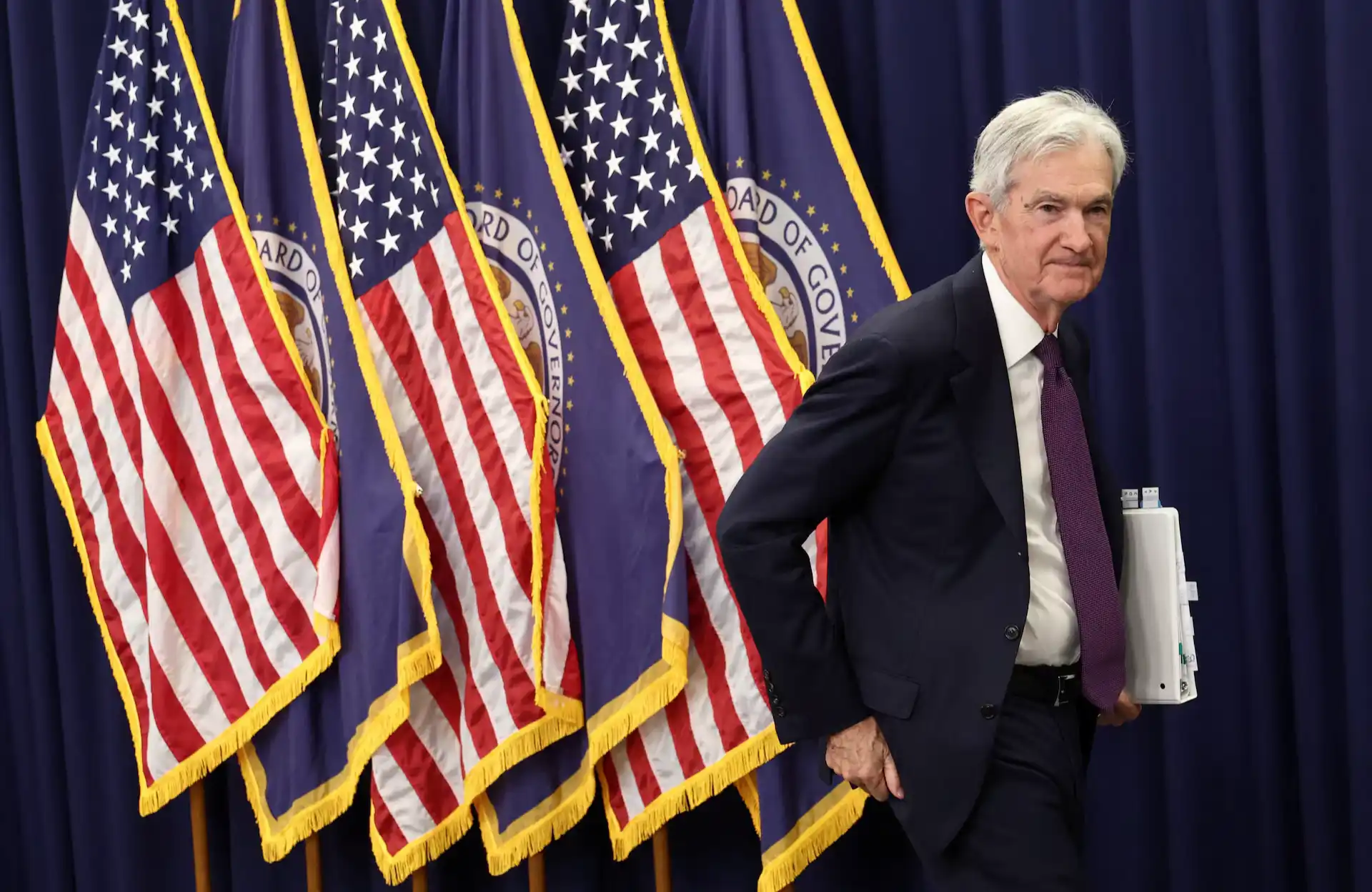
ON 29 APRIL (IN THE EARLY HOURS OF BEIJING TIME ON 30 APRIL), POWELL CHAIRED THE LAST FOMC MEETING AND PRESS CONFERENCE IN HIS CAPACITY AS CHAIRMAN OF THE FEDERAL RESERVE. THE INTEREST RATE IS MAINTAINED AT 3.5% TO 3.75%, LEAVING 4 VOTES TO CHALLENGE. THIS IS THE FIRST SUCH NUMBER OF OBJECTIONS SINCE OCTOBER 1992。
The two-hour meeting covered interest rate resolutions, inflation judgements, declarations of independence, staffing arrangements and eight-year term summaries. This post is a compilation of Powell's core position in his opening remarks and in responding to journalists' questions。
About the interest rate resolution
FOMC DECIDED TO MAINTAIN THE INTEREST RATE RANGE OF THE FEDERAL FUND AT 3.5 TO 3.75 PER CENT, THE THIRD CONSECUTIVE SUSPENSION IN 2026. IN HIS OPENING REMARKS, POWELL STATED THAT THE COMMISSION HAD ACCUMULATED A DECLINE OF 75 BASIS POINTS SINCE THE LAST QUARTER OF LAST YEAR, AND THAT CURRENT POLICY POSITIONS WERE CONSIDERED SUFFICIENT TO SUPPORT BOTH ENDS OF THE DUAL MISSION, THE MAXIMUM EMPLOYMENT AND 2 PER CENT INFLATION TARGET。
But the real point of this meeting is not interest rates per se, but 4 votes against. This is the highest number of objections that have arisen since October 1992 in a single Federal Reserve FOMC. In response to a question from a journalist, Powell confirmed that three of the votes were for the language of the statement rather than the interest rate resolution itself. 3 One member was of the view that the term “easing bias” should no longer be retained and should be replaced by a neutral position, i.e. that the interest rate increase would be the same as the possibility of a reduction. All three dissenters agreed to maintain the current interest rate at the same time, with the difference being only about the terms of the declaration。
POWELL ADMITTED THAT THE NUMBER OF MEMBERS SUPPORTING LANGUAGE CHANGE WAS SIGNIFICANTLY HIGHER THAN AT THE MARCH MEETING, AND THAT THE DISCUSSION WAS "FULLY REASONABLE". HOWEVER, HE REMAINS PERSONALLY OPPOSED TO ADJUSTING THE GUIDELINES AT THIS MEETING ON THE GROUNDS THAT THERE IS NO NEED TO RUSH TO A DECISION NOW AND THAT THERE MAY BE SIGNIFICANT CHANGES IN THE FUTURE BETWEEN 30 AND 60 DAYS AND EVEN THE NEXT MEETING. THE NEXT FOMC IS FROM JUNE 16 TO 17, AND IT WILL BE THE FIRST MEETING THAT WALSH MIGHT BE PRESIDING OVER, AND IT WILL MEAN THAT THE TERM "LAXITY" WILL REMAIN IN PLACE AND WILL ALMOST CERTAINLY BE TAKEN OVER BY THE NEW PRESIDENT。
With regard to the location of neutral interest rates, Powell judges that the current level of interest rates is close to the higher end of the neutral range. Personally, he has always thought that the neutral interest rate is in the range of 3 to 4 per cent, and is now slightly above 3.5 per cent, at a level that he understands reasonably. This means that the policy is no longer clearly restrictive, may be somewhat restrictive or neutral, and may lead to an increase or fall in interest rates. The market's interpretation of the Fed's response function was largely consistent with his formulation。
A judgement on inflation
IN HIS OPENING REMARKS, POWELL STATED THAT THE OVERALL PCE INCREASE OF 3.5 PER CENT IN MARCH, MAINLY AS A RESULT OF THE SHARP RISE IN GLOBAL OIL PRICES DRIVEN BY THE MIDDLE EAST CONFLICT, AND THAT THE CORE PPE, AFTER REMOVING THE MORE VOLATILE FOOD AND ENERGY CATEGORIES, WAS 3.2 PER CENT, WHICH POWELL BELIEVED LARGELY REFLECTED THE IMPACT OF TARIFFS ON COMMODITY PRICES. SHORT-TERM INFLATION EXPECTATIONS HAVE RISEN SINCE THIS YEAR, MAINLY AS A RESULT OF LARGE INCREASES IN OIL PRICES; HOWEVER, MOST LONG-TERM EXPECTATIONS REMAIN CONSISTENT WITH THE 2 PER CENT INFLATION TARGET。
in describing inflation, powell uses a less common term, "misbehaving". he repeatedly referred to the fact that the core inflation rate, although small, was moving in the wrong direction, which he had repeatedly returned to。
Oil prices are the variables repeatedly mentioned at this meeting. In the presence of a journalist, it was mentioned that Brent crude oil is now approaching $120 a barrel. According to Powell, it is common practice for the Fed to see short-lived energy shocks, as oil prices tend to reverse and monetary policy is affected by long-term and volatile time lags without immediate response. But given that inflation has been consistently higher than 2 per cent over the past few years, and that the Fed is already seeing tariff shocks, the tolerance for energy shocks is even smaller. Powell believed that it would be necessary to see progress in oil price recovery and tariffs before interest rates were considered. Whether and how long straits are closed are unpredictable variables。
There is also a historical framework that underpins this caution. Powell said that the United States economy had actually experienced four supply shocks, the outbreak, the Russian-Ukrainian conflict, customs duties and the Iranian crisis. Each supply shock has the capacity to push both inflation and unemployment, and it is difficult for central banks to know what to do. This is a fundamental explanation for Powell ' s current policy dilemma and a central framework for his understanding of the differences within the Commission。
On the overall state of the economy
Powell's overall judgement of the current state of America's economy is one sentence. Given all these blows, it is very resilient. He said, "It's actually pretty resilient."。
SPECIFIC SUPPORT CONSISTS OF TWO PIECES. THE FIRST WAS THAT CONSUMER SPENDING REMAINED FAIRLY GOOD, THAT THE LATEST DATA PERFORMED WELL AND THAT CONSUMPTION ON RETAIL SALES, CREDIT CARD DATA AND BANK DATA REMAINED ROBUST. THE SECOND WAS THE CONTINUATION OF COMMERCIAL INVESTMENTS, ESPECIALLY IN THE CONSTRUCTION OF DATA CENTRES, AND POWELL MADE PARTICULAR REFERENCE TO THE ALMOST NEVER-ENDING DEMAND FOR DATA CENTRES THROUGHOUT THE UNITED STATES, WITH SIGNIFICANT INVESTMENTS IN THIS AREA AND WITH REASON TO BELIEVE THAT THEY WOULD CONTINUE. POWELL BELIEVES THAT A BETTER MEASURE OF ECONOMIC DYNAMISM IS THE FINAL DOMESTIC PRIVATE PURCHASE OF PDFP, WHICH IS EVEN HIGHER THAN THE OVERALL GDP GROWTH RATE, SO THE ECONOMY IS GROWING AT 2% OR FASTER。
But the unemployment rate is 4.3 per cent, and behind that figure is less comfortable. Powell acknowledges that this figure does not necessarily represent a benign labour market from the perspective of job searchers. Resignation and recruitment rates are low and there is no real net employment. The labour market is in a "unusual and uncomfortable" balance. It is difficult for people without jobs to enter the workplace unless they resign. Other indicators, including job openings, layoffs, recruitment and nominal wage increases, have generally changed little in recent months。
With regard to the drag of the Iranian conflict on other areas of the economy, Powell's judgement is that it has not yet been seen. He conceded that if the price of gasoline were to rise sharply again, money that could logically be taken from people's pockets for other expenditures would affect other consumption, but no such transmission had been observed. He emphasized that the United States, unlike Western Europe or Asia, was a net exporter of oil and that the economy was no longer as energy-intensive as it had been in the 1970s, and that the conflict had had a relatively small drag on the United States economy, with the importing sector accounting for only 10 per cent of the United States economy。
On the Fed ' s Independence
This was the most important topic for the whole launch, and it was the subject of his opening remarks and answers to questions from journalists。
The core concern of Powell is the level of legal attacks faced by the Fed. He said that the real concern was a series of legal attacks against the Fed, which threatened its ability to implement monetary policy without political considerations. He believes that the legal action taken by this administration was unprecedented in the history of the Federal Reserve in the year 113. Powell specifically distinguished between "oral criticism" and "legal action" by elected officials. He had never considered verbal criticism to be a problem, but legal action was another matter and there were more continuing threats of such action。
Turning to the very foundation of independence, Powell said, "to a large extent, it is the law", while at the same time acknowledging that the Fed had to resort to the courts to defend this successfully, although progress is far from over. He stressed that there were also a number of customs behind independence, as well as borders between the Fed and the Government, the Fed and the Treasury, which needed to be respected. Each government would stare at the Fed’s tools, hoping that they would be reused for other purposes, but that would drag the Fed into political and fiscal policy. Powell said the Fed was very good at resisting this。
With regard to the Waller Governor's speech on the dismissal of the Governor of the Reserve Bank, Powell's statement was one of the most important aspects of the launch. Waller's latest speech rejected the idea that the Government would dismiss the Governor of the Reserve Bank based on a different view of monetary policy. Powell strongly agrees with Waller's opposition. He said that if every government could intervene and do so, it would be the beginning of an end to the Fed's ability to independently formulate monetary policy, which would then be just another cabinet body. Powell made it clear that he would not support such a thing。
Asked whether independence was as strong as it was when he first took office, Powell acknowledged that it was at risk. He hoped to move out of this era and return to the path of respect for law and custom so that the Fed could do the right thing. Powell said he believed that the Fed would continue to base its decisions on rigorous analysis rather than on political considerations, but that needed to be pursued. He also acknowledged the widespread concern that those things might continue, which would be a problem。
About Powell staying as a board member
In the end of his opening statement, Powell announced the most important personnel message of the meeting: he would continue to serve as a member of the Council after his departure from the presidency on 15 May, for a "to be determined". He will remain low-key during his tenure as a member。
The central reason for remaining is the above threat of independence. Powell said he had planned to retire, but what had happened over the past three months left him no choice but to stay until it was over. Specifically, although the Ministry of Justice dropped the case last Friday, Powell noted that the withdrawal statement contained a sentence that she would not hesitate to reopen the investigation if needed. The Ministry of Justice provided limited assurances on weekends that investigations would not be reopened unless there was a criminal referral by the Fed Inspector General. But Powell said that he would not leave the Council until the investigation was thorough, transparent and ultimately concluded. That's why he can't leave now。
As for whether to become a "shadow president" or not, Powell has repeatedly denied it. He said that he would return to his role as a board member and respect the role of the Chairman. He used his six years of experience to describe future positioning: He understood how difficult it was to reach a consensus among 19 people with strong views, so he tried to be a constructive participant and would not unnecessarily make it more difficult for the President. “Do what you can to support the President, and not when you cannot.”
Asked whether retention was a political counterbalance and whether it was depriving Trump of the majority of seats that he would have obtained if he had resigned, Powell said he did not at all believe that. He emphasized that he had stayed because of the legal action that had taken place, and that he had been a member for almost six years and understood what role a outgoing President should be and did not intend to interfere. Powell admitted to wanting to see things calm down and return the Fed to its traditional model of respect for law and custom. He stressed that his decision would be guided entirely by "I believe it is in the best interests of the institution and the people we serve"。
Communication framework and dot-line map
AT THE TIME OF LAST YEAR ' S REVIEW OF THE COMMUNICATION FRAMEWORK, POWELL PERSONALLY WANTED TO MOVE SOME REFORMS FORWARD. HOWEVER, HE ADMITTED AT THE PRESS CONFERENCE THAT REAL AND SIGNIFICANT CHANGES TO THE DOT MAP OR TO THE SEP COULD NOT GAIN BROAD SUPPORT IN THE COMMITTEE AND THEREFORE GAVE UP. POWELL'S PERSONAL ATTITUDE WAS NEVER THE BIGGEST FAN OF THE DOTTED MAP, BUT IN THE ABSENCE OF A BETTER ALTERNATIVE, HE COULD NOT DEFEAT WHAT WAS AVAILABLE. HE SAID THAT IT WAS NATURAL FOR EVERY NEW PRESIDENT TO LOOK AT COMMUNICATION TOOLS AND THINK ABOUT WHAT CHANGES COULD BE MADE。
With regard to Walsh's possible adaptation of communication, Powell's attitude was to publicly endorse it. He said that it was very healthy for every new President to look at the way he communicated, that communication itself was very complex and that you could always focus on new things. If Walsh adjusts the communication tools, Powell's assessment is "fully fit". This is his response when the journalist asked about any suggestions for the Walsh communication tool: He would not advise Walsh through the press, but every new president looked at the communication tool was healthy and appropriate。
However, with regard to the practice of holding press conferences after each meeting, Powell himself believed that it should be retained. The reason he gave was that it would be very helpful to be able to deliver the message on behalf of the Committee, rather than having the other 18 individuals speak out, which would be extremely confusing. The views of the Federal Reserve Committee are highly divided. He admitted that he did not know whether Walsh had to maintain that approach, but that people were used to it。
As for the Fed, which is the only non-prognosis agency in the developed central banks, Powell explained that it was because of the 19-person committee, where it was difficult to reach a consensus on projections. But he believes that the Fed’s communication itself is okay, and that doing it in a different and better way is the most natural thing in the world。
On the Walsh transition
In his opening statement, Powell congratulated Walsh on his successful adoption of the Senate Banking Commission this morning as an important step forward and wished him well in his subsequent proceedings。
But it wasn't the same as when Aaron got involved. Powell said that he and Ellen had worked together for six years and that the office was in the same corridor, which was a completely different transition. He hasn't seen Walsh since a dinner in January. That was the details he had mentioned. Powell indicated that he did not know what the normal procedure was, but he believed that it would be a very normal and standard transition process, which he expected。
Powell's response to the President's political pressure was measured. He said that Walsh had testified very strongly at the hearing, and he would believe him。
WHEN ASKED WHETHER THERE WAS CONCERN THAT THE FED’S CREDIBILITY WAS UNDER PRESSURE, AND WHETHER THAT WAS ONE OF THE REASONS WHY HE WANTED TO STAY, POWELL SAID THAT CREDIBILITY WAS NOT THE MAIN DRIVER OF HIS THINKING. MONETARY POLICY IS SET BY 19 PEOPLE, AND THERE IS MUCH STABILITY. EACH NEW PRESIDENT FACES THE SAME SITUATION: 18 FOMC COLLEAGUES, 11 VOTING RIGHTS, NEED FOR CONSENSUS BUILDING. HE ASSESSED THAT WALSH WAS VERY CAPABLE OF DOING SO AND HAD THE SKILLS TO DO IT WELL。
For an eight-year term
The answer to Powell's question when asked about the legacy of his term of office was, "This is for others to comment."。
However, he outlined the context in which he had been in power for the past six years. He said that this was quite different from what had been the case for a long time. The Fed and other central banks used to do demand management, and inflation had been low for 25 years. It was a very different and more challenging world, and it was necessary to balance the two ends of a dual mission. All central banks with an inflation mission must do the same。
Asked if the focus of the new 2020 framework on the job market would make future presidents less willing to pursue a hot labour market, Powell did not think that the inflation of the epidemic should be attributed to the Fed’s concern about employment. He said it was a global shock involving economic closures, reopening, stimulus policies, etc. If you look at the graphs of the 10 big economies, you can hardly tell which is the United States, which is Germany and which is France. He believed that that view should not be held responsible for high inflation. Powell acknowledged that during the recovery, the labour market was overheated and tense, but no longer a source of inflation。
For those American households who feel that inflation has not been controlled since the outbreak, Powell says the Fed is committed to reducing inflation to 2 per cent on a sustainable basis. That is commitment, endless and unshakeable. He acknowledged that these high-cost events were taking place and that the best thing the Fed could do was to use tools to channel inflation back to 2 per cent; attempts to achieve this goal too quickly could cost a lot, for example, in terms of unemployment, so the Fed tried to achieve it in the least destructive way over time。
When asked about the decision to be proud of his tenure, Powell said it was difficult to single out individual things at this time. He and his colleagues have been insisting on making the best decisions for the American people, in accordance with the tools and goals given by Congress. This is very challenging, as it has been in supply shocks for more than six years. He is very proud of the work he has done with his colleagues over the years。
