
a16z: more than payments, stable currency reshapes global finance bureau

Submitted by: Noah Levine, Guy Woollet, Robert Hackett
Photo by Luffy, Foresight News
Original link: https://www.techflowpost.com/zh-CN/article/31362
Statement: For the purpose of reproduction, readers can obtain more information by linking to the original language. If the author has any objection to the reproduction, please contact us and we will proceed with the modifications requested by the author. Reproduction for information-sharing purposes only does not constitute any investment proposal and does not represent the views and positions of Wu。
The global financial system is being restructured over the new infrastructure, and the process is moving much faster than most people outside the encryption industry know。
The currency of stability is at the heart of this transformation. It has long evolved from an instrument of small-scale trading into the foundation of the financial system and is becoming the cornerstone of a new generation of global financial products. This post sums up our views on this change. Business patterns within the tracks may change, and the boundaries of the break-down tracks will also evolve, but the more central changes are structural upgrading: How the new architecture of global finance is constructed, where it matures and where gaps remain。
The central view of this paper is that the stabilization currency is giving rise to a new form of banking (BaaS) model. In the last wave of banking and services, financial science and technology enterprises relied mainly on the leasing of bank licences and access to traditional core systems. The changes in the current round are fundamentally different: enterprises build their operations on a chain-based infrastructure, reduce transaction friction and dependence on intermediate institutions through their own wallets; and integrate basic functions such as accounts, payments, foreign exchange, credit, etc. into end-to-end financial products。
Ten years ago, such full-chain financial services required multiple regional licences to connect local banking partners; now, with this new, bottom-up technical architecture, any team could quickly drop out of service。
Stripe acquired Bridge and Privy and MasterCard BVNK, indicating that these old companies are responding to changing market patterns with similar strategies. The major players have embarked on a process of consolidation and acquisition, seeking to secure the key elements at the bottom before the new infrastructure is shaped。
Various signals indicate that the financial transformation along the chain has become irreversible. The choice before us is either to embrace and adapt to it or to be abandoned by the times。
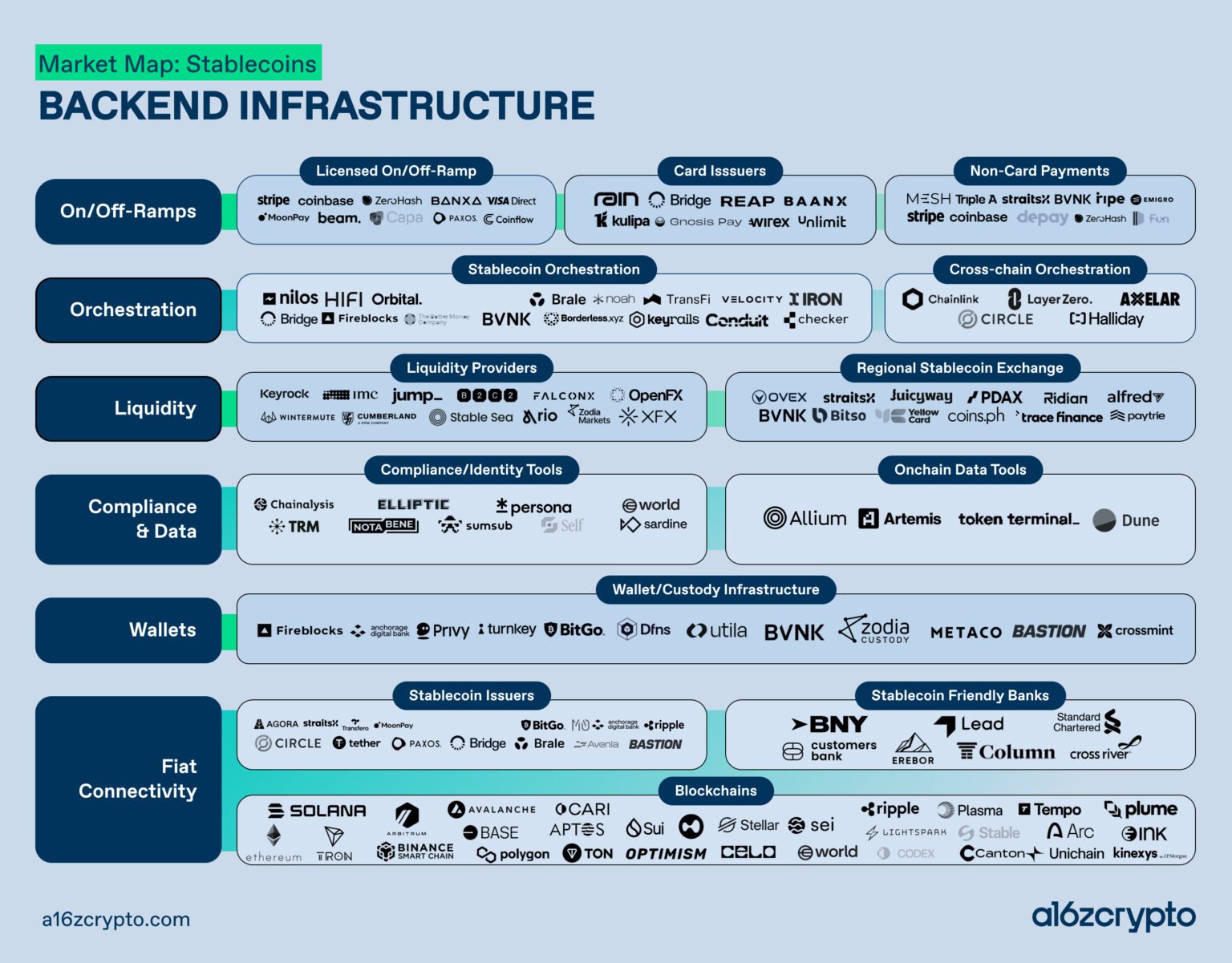
Stable currency market map
Three types of block chain
The inherent perception that all block chains compete for similar applications is being eroded. Currently, the industry has divided into three distinctly located block chain networks, each designed on the basis of differentiated demand, with varying performance preferences. In order to understand the true picture of global financial technology:
The universal public chain (represented by Solana, the Taifung and its mainstream L2 network) continues to be at the heart of the encrypted capital market, covering the core scenes of transactions, borrowing and decentrization. The track market is large and solid, but it does not provide a complete picture of the overall trends in the industry。
The payment block chain represents another emerging category that is specific to the application of financial services. Networks such as Tripe ' s Tempo and Circle ' s Arc are competing in functional areas that have never been optimized in the generic block chain: stable currency origin Gas fees, privacy guarantees, and vitally predictable transaction costs. Cost modelling capacity is critical for a financial technology company that handles millions of payment transactions. Enterprises in this area are committed to paying-oriented blocks that will be the preferred settlement level for the next generation of financial infrastructure。
Institutional networks are the third category of networks, such as Canton, designed specifically for regulated entities that require programmability and privacy protection, while not violating the statutory regulatory framework for compliance. As banks and asset management companies accelerate their entry, the central carrying role of such compliance networks will gradually be highlighted。
Banking bottlenecks are loosening
Over the past decade, banking cooperation channels have been the biggest development bottleneck for home-grown encrypted financial services. The high threshold for bank cooperation and the fragile nature of partnerships are also the core sources of survival risk for encrypted enterprises。
Although the status quo has not completely disappeared, it has improved significantly. A group of compliance banks hugging encrypted tracks are connecting the chain infrastructure with traditional monetary systems。
Revenue and access to gold, which had been a central challenge for all practitioners in the industry, has now become significantly more viable. The access to French currency is the basis for the operation of financial technology enterprises that stabilize the original currency, which is important not only for the payment chain but also for the entire technology warehouse。
Stabilizer: a far-reaching license contest
THE CURRENT LEVEL OF COMPETITION FOR STABLE CURRENCY DISTRIBUTION TRACKS IS UNPRECEDENTED, AND THE CORE OF COMPETITION HAS SHIFTED COMPLETELY TO THE COMPLIANCE REGULATORY LANDSCAPE. SINCE THE LANDING OF THE GENIUS ACT IN THE UNITED STATES, MAJOR ISSUERS HAVE CONTESTED THE APPLICATION OF THE UNITED STATES MONETARY SUPERVISORY AUTHORITY (OCC) TRUST。
In the short term, licences can give corporate compliance credibility, obtain official recognition at the federal level and gain the trust of regulators and institutional partners。
In the long run, the stakes are greater. If regulators open the Fed’s clearing line to institutions with national bank licences in the future, and preempt the stable issuer of a compliance licence, they will be deeply integrated into the global financial core system and become central participants in the financial digital transformation。
This competition is more about the status of the payment system than about branding. And, more importantly, who can lay the foundation for the flourishing of credit and capital markets。
Mobile service providers: the last kilometre issue
The stabilization currency has made a major breakthrough in the middle of cross-border payments, significantly simplifying the intermediate steps of cross-border financial flows: faster settlement, reduced reliance on pre-existing agent accounts and reduced costs of cross-border transfers for friction。
THE REMAINING PROBLEM WAS TO STABILIZE THE LIQUIDITY BETWEEN THE CURRENCY AND THE LOCAL LEGAL CURRENCY, PARTICULARLY IN EMERGING MARKETS. MOST CROSS-BORDER CORRIDORS ARE NOT SUFFICIENTLY LIQUID, WHICH IN TURN LEADS TO PROBLEMS SUCH AS TRANSACTION SLIDES, DELAYS IN SETTLEMENT AND UNSTABLE QUOTATIONS. FAILURE TO DO SO COULD SERIOUSLY HAMPER THE POTENTIAL FOR STABILIZING THE CURRENCY IN THE BUSINESS-TO-BUSINESS (B2B) APPLICATION LANDSCAPE。
This gap is beginning to narrow through three channels:
- Foreign exchange service providers (e.g. OpenFX, XFX)
- (a) Regional exchanges for deep-growing local French currency resources (Bitso in Latin America, Yellowcard in Africa, Coins.ph in South-East Asia)
- In the future, direct support will be given to cooperative banks that stabilize currency exchange settlements。
Three main subjects cannot be identified. Foreign exchange service providers provide technical matching capabilities, regional exchanges build on the depth of liquidity in local markets, and banks provide balance sheets to support the global network of correspondent banks. A single channel cannot complete the closed ring independently。
Bank connectivity: essential key links
The stable currency infrastructure is almost entirely built by financial technology companies, non-bank payment agencies and home-grown encryption enterprises, independent of the traditional banking system. This model offers the advantage of efficient and open development, but it also embroils the structural pitfalls of stabilizing the bottom of the currency, which is naturally incompatible with the traditional core system followed by the vast majority of banks and which must be reached by a dedicated transition layer。
This is the key interface. The establishment of an exclusive infrastructure by the enterprises concerned helps banks to stabilize currency-related operations quickly without completely replacing old systems。
A group of service providers with a forward-looking vision has gradually widened their operational boundaries from encrypted capital markets, payment scenarios, to such areas as chain lending, to pre-set the future stable currency demand of banks。
Application level: new financial functions landed
Two major trends are reshaping the ecological application of terminals。
The first trend is the integration of new financial technology banks and encrypted wallets。
The exchange continues to add virtual accounts, payment cards, incentives, etc.; Internet banks accelerate the integration of encrypted assets with traditional financial items. The border between the two types of products is rapidly blurred and will eventually form a unified integrated financial platform, with a single interface, which will also serve as an encrypted user for both primary and general users。
The ultimate winner of this competition is not necessarily the company that currently owns the best products, but rather those that can combine distribution channels and customer trust with products and services that meet the needs of their clients。
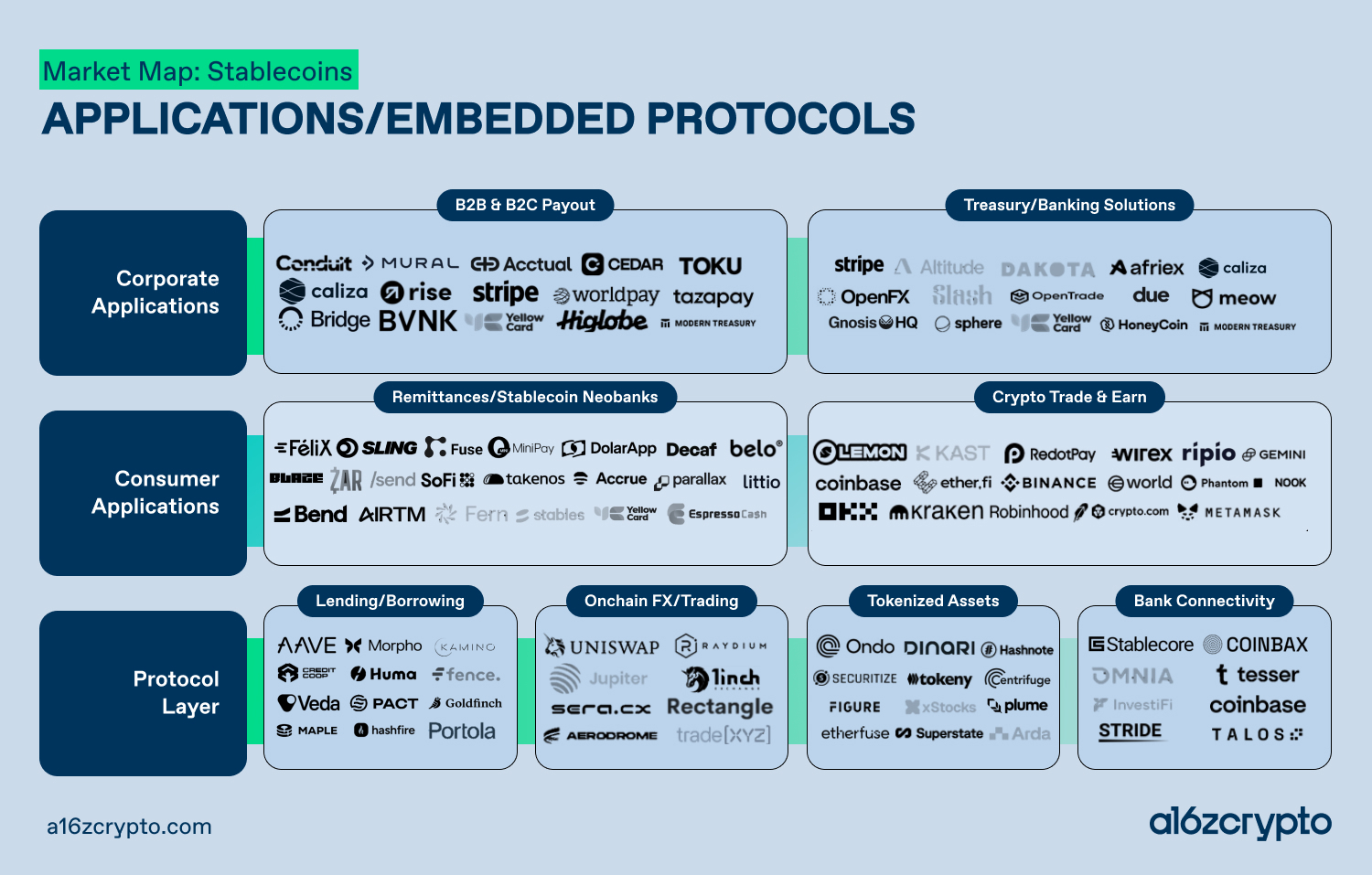
The second trend is to stabilize currency use in corporate banking. In markets with limited, unreliable or high-cost dollar banking infrastructure (e.g., in most parts of Latin America, sub-Saharan Africa and South-East Asia), currency stabilization provides enterprises with unprecedented United States dollar clearing channels, covering the immediate needs of supplier payments, global receipts and pool management。
At the heart of this demand is not the concept of encrypted tracks, but the efficient availability of United States dollar assets. Local local financial systems are weak, currency volatility is high, and firms are willing to embrace stable currencies for real business needs。
More critical long-term changes at the application level stem from value added ecology over basic account services。
The United States dollar asset entry is only the beginning. Whether they are microentrepreneurs in Lagos, freelancers in Buenos Aires, or savings users in Jakarta, they have access to the full range of financial services that were hard to reach in the past: credit, investment, wealth management, insurance, etc。
Internet banks and super-applications, which take the lead in seizing access to user accounts, will cross-sell all-good financial products on a customer-based basis, covering large-scale markets that have long been neglected by the traditional financial system. Payment is only the entry point for opening accounts, credit and investment, and is the central vehicle for commercial values。
Credit markets: far-reaching secondary changes
If payment is the first step, then credit is likely to be the second, and perhaps the more important, step。
The market ' s general interpretation of the growth of stable currencies is often limited to a narrow, scalable banking model: dollar monetization, wallet storage, instant settlement, demand for ransom. This perspective, however, ignores the core change following the massive spread of the stable currency: when trillions of dollars stabilize the market, the investment demand for idle capital will burst. Firms holding stable currency need to be idle, agreements need to be replenished with liquidity and end-users will eventually generate borrowing needs。
A whole new chain of credit markets is bound to emerge. This is not an early decentrization of the financial cycle, a purely encrypted asset mortgage, a highly speculative lending product, but an entity credit system that returns to the banking base: enabling capital formation, borrowing of real assets and receivables, and providing operating financial support to enterprises in areas where local banks are lacking in infrastructure。
The early era of centralizing financial barbarism ended with industry entering a more robust and mature financial era。
This evolutionary logic is highly similar to the development of the private sector during the past decade. Under regulatory pressure, traditional banks gradually contracted part of their lending operations, and private credit funds quickly filled market gaps, growing from small groups of alternative assets to a core track of trillions of dollars in direct countervailing of syndicate lending. The bottom logic of chain credit goes hand in hand: capital accumulation is done away from the traditional banking system to serve the traditional financial neglected borrower groups in a new architecture. The core difference lies in the fact that financial infrastructure along the chain has the natural attributes of openness, programmability and globalization, which are incomparable advantages of private credit。
Traditional credit institutions have begun to pay close attention to changes in the course of the race, with institutions that pre-deploy, complete merger integration and will dominate the future development of capital markets along the chain。
United States dollar hegemony and geopolitics
There's a bigger story behind this market map than financial technology, and it's in two directions。
For individuals and enterprises, the new financial system brings real economic empowerment: effectively shielding against the risk of devaluation of the currency, gaining access to the global universal payment route and operating in the most liquid global dollar. Sub-Saharan African farmers, South-East Asian manufacturers and small Latin American importers can own, trade, save in dollars without having to open United States bank accounts and relying on a system of traditional agents, breaking down the privileged barriers to past dollar services。
For the United States, the stabilization currency further reinforced its existing financial hegemony. Over the past 100 years, the US dollar has been dominated by the International Monetary Fund, the World Bank, the global agency system, and the network of bilateral agreements, giving the US Treasury and the Fed global financial voice. The stabilization currency opens up a new and more direct channel: every wallet that holds a dollar-stabilized currency is a new node of the dollar’s financial network that can achieve a low-cost, second-grade settlement between any two points globally. The greater the spread of stable currencies and the greater the network effect, the greater the penetration of the United States dollar in financially weak areas。
THIS IS THE MOST FAR-REACHING STRATEGIC VALUE OF A STABLE CURRENCY: REGULATION, AS REPRESENTED BY THE GENIUS ACT, DOES NOT SIMPLY REGULATE A NEW TYPE OF FINANCIAL PRODUCT, BUT RATHER THE STRATEGIC CONFIGURATION OF THE UNITED STATES TO STABILIZE THE DOLLAR’S CORE POSITION IN THE LONG TERM, AGAINST THE BACKDROP OF CONTINUING CHALLENGES TO DOLLAR HEGEMONY SINCE THE BRETTON WOODS INSTITUTIONS。
Beyond payments: reshaping the global financial bottom
The global financial architecture at the bottom is still being built, and its strategic value goes far beyond the payment track。
The essence of this change is the overall upgrading of the global financial system. The bottom of the whole new chain has an open, programmable and natural connectivity that covers areas, populations and scenes where traditional systems never fit. Core values include:
- (b) Providing stable dollar services to regions with poor financial infrastructure
- (b) Creating robust value-added channels for idle capital
- (b) Provide inclusive credit facilities for groups that have been neglected by traditional finance
- For the first time, billions of ordinary people have been helped to participate in global capital markets without barriers。
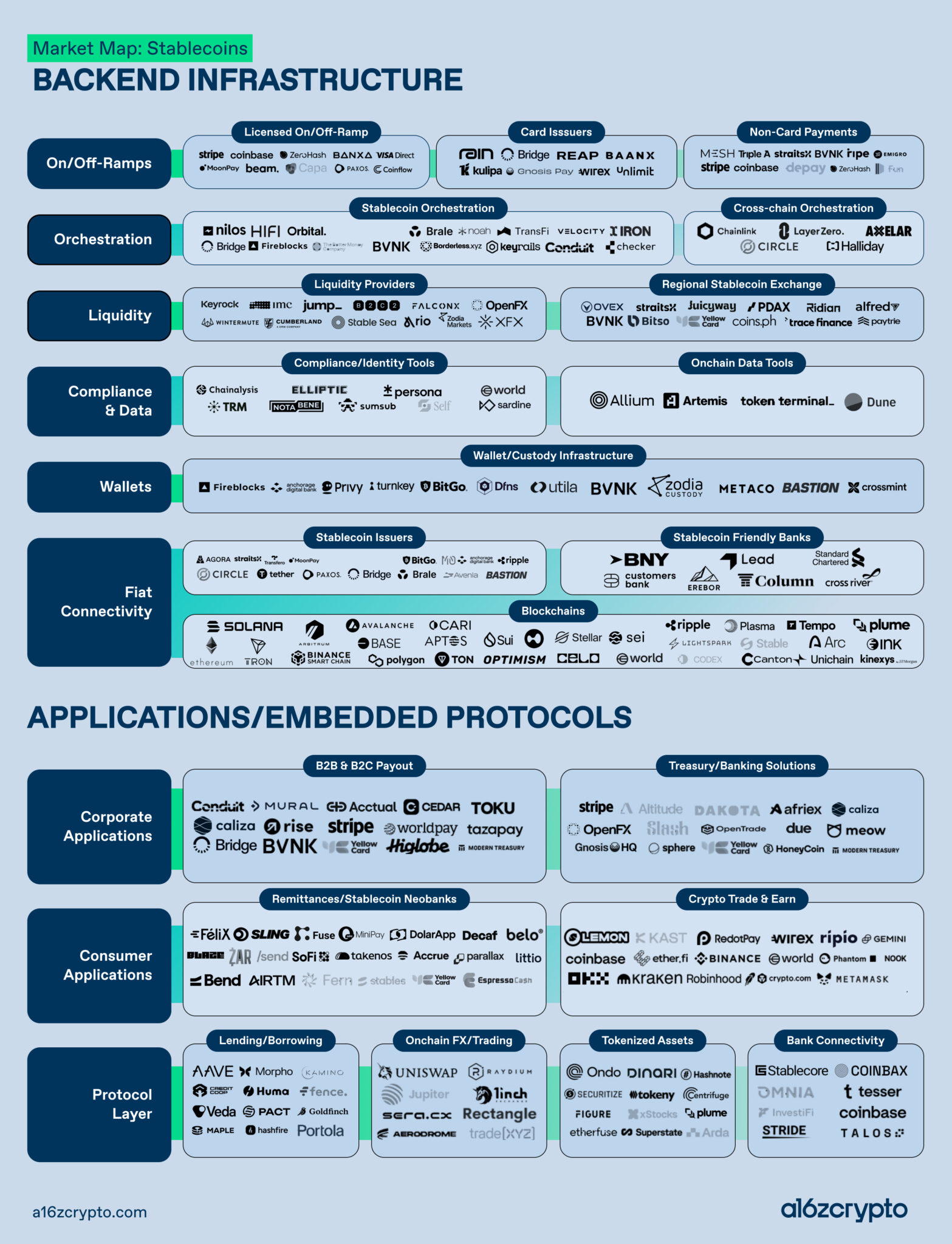
Today, deep-seated enterprises, which are links in the new financial chain, will define the global financial landscape of the next era and dominate the future shape of the global dollar economy。
