Nawal: Apple is dead. SaaS is next
You have 18 months to prepare

Original title: Ample is dead, Saas is next, you have 18 months
Original by Mustafa Khan
Photo by Peggy Block Beats
The editor discussed the re-pricing of the AI-era technology company in the light of Nawal Ravicant's decision in his podcast that "software is not worth voting." The core of the article is not just an apple or SaaS, but rather a deeper change: what is really scarce in the future is not the software itself, but distribution channels, network effects, proprietary data, hardware integration, brand communities and vertical industry barriers. In other words, AI is making writing software cheap and is forcing entrepreneurs to answer a more fundamental question: What exactly is AI that your company can't replicate
This change means a revaluation for both large companies and start-ups. The risk of apples is that if the interactivity layer is taken over by the AI smart body, the software experience premium on which they have long relied may be eroded; the risk of SaaS is that the function itself becomes increasingly difficult to become a moat。
At the same time, however, the civilianization of software production capacity may also lead to a new wave of individual creators and small team companies. This is a dangerous time for homogenizing software; it may also be an unprecedented window of opportunity for founders with distribution, taste, data and industry depths。
The following is the original text:
Apple is dead, but the market hasn't finished。
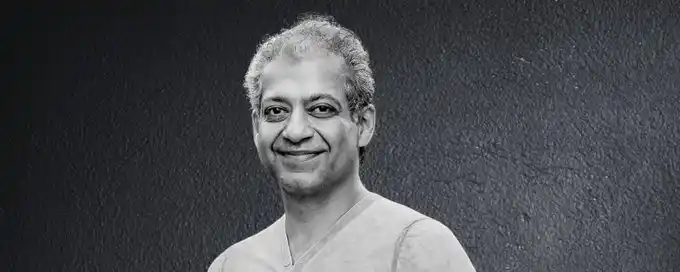
This is not a rhetorical judgement, but a structural overview of the changes in industry over the past six months. Navar Ravicant's statement in the podcast last week almost confirmed this. One of the most patient investors in the technology community, one of the sharpest capital distributors in the past two decades, has given the entire software industry a very clear conclusion: pure software is no longer worth voting for。
The real question for the founders is not whether you agree with this judgment, but whether you have 18 months to complete the transition before the market reacts。
Background: Nawal created AngelList, also an early investor in Twitter, Uber, Notion and about 200 companies that have shaped the technology landscape of the last decade. He rarely makes easy judgements, but when he talks, he is often quoted repeatedly for many years. That is why, when he says that "software is not worth throwing", it is not random comment, but rather a re-pricing of industry cycles by a capitalist。
Here is his judgment and what it means for all entrepreneurs。
No one can stop apples from dying structurally
Apples won't go bankrupt and disappear from your pockets next year. The collapse described by Nawal is not operational but economic。
The bottom feeder of the $3 trillion market value of apples is essentially only one: a high-end hardware premium supported by excellent software experience. Once the advantage of that experience ceases to exist, apples become a better working three-star. And this is happening。
Interactive layers are being commodified. Over the next 24 months, most people will change the way they open their applications: they will no longer enter an App, but will speak directly to the AI smart body, producing the required interface in real time. Apples used to be well-constructed app stores, human interaction, aesthetic design and ecological moats, quickly lose their original value once the interface itself can be generated in real time by AI on any device。
What is Apple's response to this change? Google mandate, introduce Gemini。
THIS MEANS THAT THE COMPANY, WHICH HAS ALWAYS REGARDED THE "MANAGEMENT OF THE EXPERIENCE LAYER" AS ITS CORE IDENTITY, IS OUTSOURCING THE EXPERIENCE LAYER TO ITS STRONGEST COMPETITORS. AFTER THE LOSS OF AI ' S BETS, APPLE IS REPAIRING INTERNAL STRATEGIC GAPS USING EXTERNAL MODELS。
This is almost an acceleration of Microsoft's post-movement script。
The reason why Microsoft lost its mobile age was not that it had no resources, but rather that it was unwilling to build an operating system from scratch. The dominance of the old age led it to assume that the old paradigm would continue. When Microsoft truly accepts reality, apples have won the next decade. Microsoft is still a $3 trillion company today, but Windows has lost consumer wars that could have been won。
APPLE IS NOW MAKING THE SAME MISTAKE IN THE AI WAVE: IT STILL BELIEVES THAT HARDWARE-PRIORED GENES CAN TAKE IT THROUGH THE AGE OF INTELLIGENT BODIES。
But this road is bound to be difficult. Once the operating systems and interfaces are commodified, the profitability of apples is reduced to the level of hardware commodities. The hardware premium, on the other hand, is the core source of profits that underpins the entire commercial empire of Apple. At that time, a structured recovery and valuation would be difficult to avoid。
Of course you can continue to hold the apple stock, but don't treat it like a growing stock. The most valuable hardware company in history is about to be forced to answer a cruel question: How much is its hardware worth without software
If your moat is software, you only have 18 months
The harder part for the founders is here。
Nawal said "software doesn't deserve to be cast," which is correct. But what he didn't go on was what would happen to SaaS, which had been in the last round of the A and B valuations。
The answer is: most of them are dead, but not yet。
The logic is not complicated. Your SaaS company exists because it's hard to make this product in the past. You're getting money because technical implementation requires a full team. Your moat — whether you want to admit it or not — essentially stems from the difficulty of copying what you build。
And this difficulty is collapseing。
A two-person team using Claude Code today has been able to reset most B2B SaaS products 80% of their core functionality within 90 days. It is not a toy version, but a serviceable product with a reasonable structure, basic security and expanded space. The remaining 20 per cent — specific integration, enterprise marketing systems, compliance processes — certainly remains. But that's not a moat, more like friction costs. The cost of these frictions will continue to be compressed once a quarter for the next generation of intelligents。
Similar changes have begun to occur. Adobe bought Figma in 2022 at $20 billion because Figma was considered a structurally difficult product. But now, 70 percent of the design tools with Figma core functionality have been developed by independent developers in a few months。
Salesforce is one of the most valuable SaaS companies in history. But the AI original CRM, which did not exist 18 months ago, has begun to encroach on its share in the middle market. Workday, Servicenow, Atlassian, Asana - each family is becoming a potential target for AI primary alternatives, which are not even as large as their own HR sector。
What survives this transition is not the best company in software. Because the value of the software itself is approaching zero。
WHAT REALLY SURVIVED WERE COMPANIES THAT BUILT AI THAT COULD NOT BE REPRODUCED DIRECTLY: CHANNEL DISTRIBUTION, NETWORK EFFECTS, DATA FLYERS, HARDWARE INTEGRATION, BRANDING, COMMUNITIES, REGULATORY BARRIERS. THESE ARE THE ONLY LASTING DEFENCES OF THE NEW ERA。
If your honest answer to the question "What's our moat?" is "Our product is better," then you have about 18 months to find a true moat. Otherwise, you'll probably watch the valuation evaporate 70 to 90 percent in the next round of financing。
The founders of the transition were those who took such signals seriously today. The person who chooses to treat it as noise will probably write a redundancy letter in 2027, and then wonders, "Why is everything so fast?"
The question is, which one are you
Winning the next decade, not the software itself
If pure software is no longer worth investing in, then what is worth voting for
NAVAR GAVE DIRECTIONS TO PODCASTS: HARDWARE, AI MODELS, AND OPERATIONS WITH NETWORK EFFECTS. TO GO FURTHER, WHAT THE FOUNDERS REALLY NEED TO THINK NOW IS THE FOLLOWING TYPES OF MOATS。
First, channel distribution。
The companies that are truly superior today are not necessarily the best producers, but the ones that are most directly related to their customers. The product is only a carrier for the client, and the audience is the moat. Your mailing lists, community, reputation, distribution networks are assets。
If you still think "marketing" is the stage when the product is ready, you're behind. In the future, marketing itself is a part of the product, which is only downstream of flows and relationships。
Second, the network effect。
Businesses that can resist the commercialization of AI are those whose value comes from the user itself, not the function itself. Discord, Roblox, LinkedIn, Reddit cannot be easily replicated, not because of the complexity of their software work, but because users are locked in by other users。
WILL YOUR PRODUCTS BECOME MORE VALUABLE AS USERS INCREASE? IF THE ANSWER IS YES, YOU HAVE CONTINUITY. AND IF 100 USERS AND 100,000 USERS DON'T HAVE A DIFFERENCE IN VALUE, YOU'RE IN DANGER. AI CAN COPY THE FUNCTION, BUT NOT A FUNCTIONING COMMUNITY。
Third, data flyer。
Companies that are able to accumulate proprietary data on an interactive basis by users and use these data to train better models to form feedback loops have long-term value. Tesla's auto-driving data, Bloomberg terminal data, are inherently adding value。
BUT IF YOUR PRODUCT IS JUST A LAYER OF UI ON PUBLIC API, THEN YOU HAVE NO REAL ASSETS. EVERY TIME A USER INTERACTS, IT IS DIFFICULT TO CREATE A LONG-TERM BARRIER TO YOUR PRODUCT IF DATA NOT AVAILABLE TO COMPETITORS ARE NOT DEPOSITED。
Fourth, hardware integration。
Companies with a physical layer have the longest defence cycle. Tesla, Anduril, SpaceX, Apple Chip Business, Boston Dynamics are examples. Hardware is difficult, supply chains difficult, manufacturing difficult, and the complexity of the physical world is difficult to wipe out directly by AI。
AI DOES NOT AUTOMATICALLY MANUFACTURE CHIPS, BATTERIES, ROCKETS OR ROBOTS. THE PHYSICAL WORLD REMAINS ONE OF THE MOST DIFFICULT MOATS OF THE ENTIRE ECONOMY TO RAPIDLY REPLICATE。
Fifthly, vertically。
The horizontal SaaS giants have the greatest risk exposure, and the vertical platforms of the truly deep-seated industries are safer. The generic project management tool is already very dangerous, but it is not the same story if you are deeply embedded in the construction industry, with approval processes, inspection networks, regulatory data and industry relations。
In the future, rather than working as a shallow tool in 10 industries, it is better to be deep enough in one industry。
If you're rebuilding your strategy now, there's only one core issue: in the next 12 months, what kind of true moat can you build in business? Not the next day, but now。
The founders who took the lead in completing the transition will receive the markets of survivors after others fall。
The other side of the collapse is the biggest business opportunity ever
This is also the easiest part to ignore when many of the founders hear that the software is dead. They saw only what was being destroyed, but not the opportunity that was being opened。
Nawal's most optimistic judgement among podcasts is that software is ushering in a Renaissance of personal creators. This is not the death of software, but the civilianization of software production capacity。
Similar history is not without precedent. Notch developed Minecraft by himself; Markus Frinder alone made an annual profit of $10 million for the Prince of Fish; Instagram was acquired by Facebook at $1 billion, with only 13 employees; and WhatsApp withdrew with $19 billion, with only 55 employees。
Together, these companies prove one thing: a founder vision that is not diluted by the costs of organizational coordination can reach the site of the product directly。
But in the past, they were more alien. Independent founders can make interesting things, but they can hardly cross the hard walls of scale. Once the company expands, the team expands, compromises begin to emerge and the vision begins to dilute. That thing that makes products unique often disappears in the Committee's grinding。
What really changes now is the ceiling。
The future described by Navarre is a man's company that can run at the speed of a 50-person team. User feedback in application Bug, smart body automatically reviews every 24 hours, writes fixes, submits to Pull Request, runs tests; founders only need to check, approve, go online. Client support is handled by a smart body, while it also restores the bottom problem with reverse writing codes. Users vote on functional requests, intelligent bodies are built, and founders are responsible for the quality of clearance。
There are no coordination costs, no internal politics, no diluted vision, no engineers pushing each other on key details, no designers arguing over the location of the icon, and no product manager turning a bold version into a secure version。
The vision of the founders can go straight through the brain, with little tissue loss in the middle。
That's not the theory, it's already happening locally. Pieter Levers has established several seven-digit revenue operations as independent operators. An increasing number of independent developers are operating companies that had to rely on Round A financing three years ago to sustain them. AI Independent Original Operators are creating new results that have not been fully priced by the venture capital industry。
The next unicorn, probably only one employee. The next multi-billion-dollar company may have no more than ten employees。
If you're an creator, operator, marketer or founder and you've been waiting for permission to enter, then the permit has arrived. Technical bottlenecks are disappearing and start-up costs are shrinking. Now, between you and a real company, it is no longer the size of an engineering team, financing resources or organization, but three questions: do you have something to express? Do you have any good taste? Do you have any ongoing discipline
This is the worst era in history for people who build homogenous software。
This is the best time in history for those who build hard-line, distributed, community, data and deep-seated products。
These two things are set up at the same time. Which one applies to you depends on what you do next 18 months。
The window is open, but not always
Starting here, the founders have about three paths。
Number one, take it as noise。
Convince yourself to be big and not to fall, your SaaS is special enough, and AI programming smarts are over-defunct and everything will be back to normal. You'll have a lot of company, because most of the founders would do that. And most of the founders will lose the cycle。
Second, panic。
A sudden reduction of runways, hasty lay-offs, blind transitions. It's too late to react. What is really destroyed by this transition is not necessarily people who see no change at all, but people who are 12 months late and who have to turn around without funds, without time, without leverage。
Third, take this 18 month window seriously。
AN HONEST LOOK AT YOUR MOAT, START BUILDING DISTRIBUTION CHANNELS BEFORE THERE IS A REAL NEED FOR DISTRIBUTION CHANNELS, FIND AI'S UNREPLICABLE DIFFERENCES, SET THE STAGE FOR THE COMING WORLD, NOT CONTINUE TO OPTIMIZE THE OLD WORLD THAT YOU WANT TO KEEP。
Nawal's words were very restrained and very clear: "Software is not worth voting."
This is not a statement made by a person who is at risk of hedge, but a final conclusion made by a person who has spent 20 years judging what is worth investing and who now considers that most of what is being invested is no longer worth investing。
Apples have entered structural death, and most Saas founders may be next. And the companies that eventually survive will be those who, after hearing this judgement, begin to act before everyone realizes it。
The window has been opened, but it will not always be open. The real question is: In the next 18 months, are you building a moat that can stand the test, or are you watching the old moat be weathered
Most people can't make it. A few will. The difference is what you're doing this quarter。
[ Chuckles ]Original Link]
