
Space recalls the second half of DeFi's track, how long-termism can be practiced with the buy-back destruction
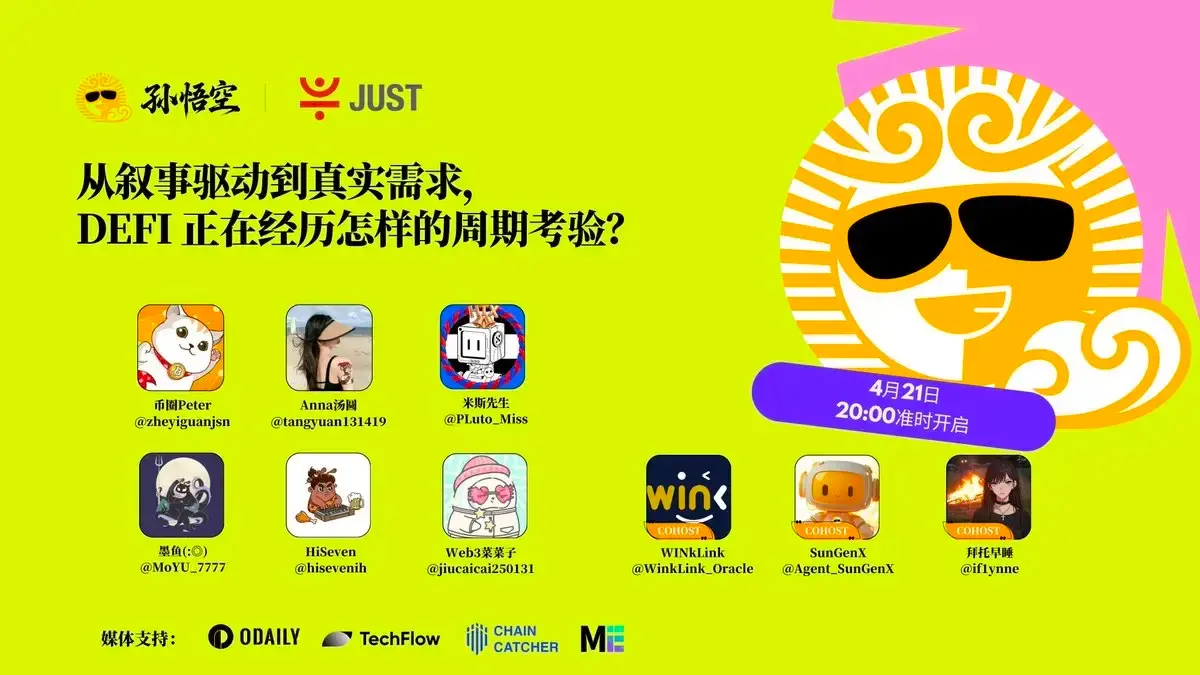
DeFi was a central narrative of the encrypted market, but with the retreat of the high ASY and liquidity dividend, the market is gradually becoming rational. Now, instead of simply paying for stories, users are beginning to think more of a problem: Why continue to use DeFi in the current environment? What kind of mechanism is there to truly cross the industry cycle
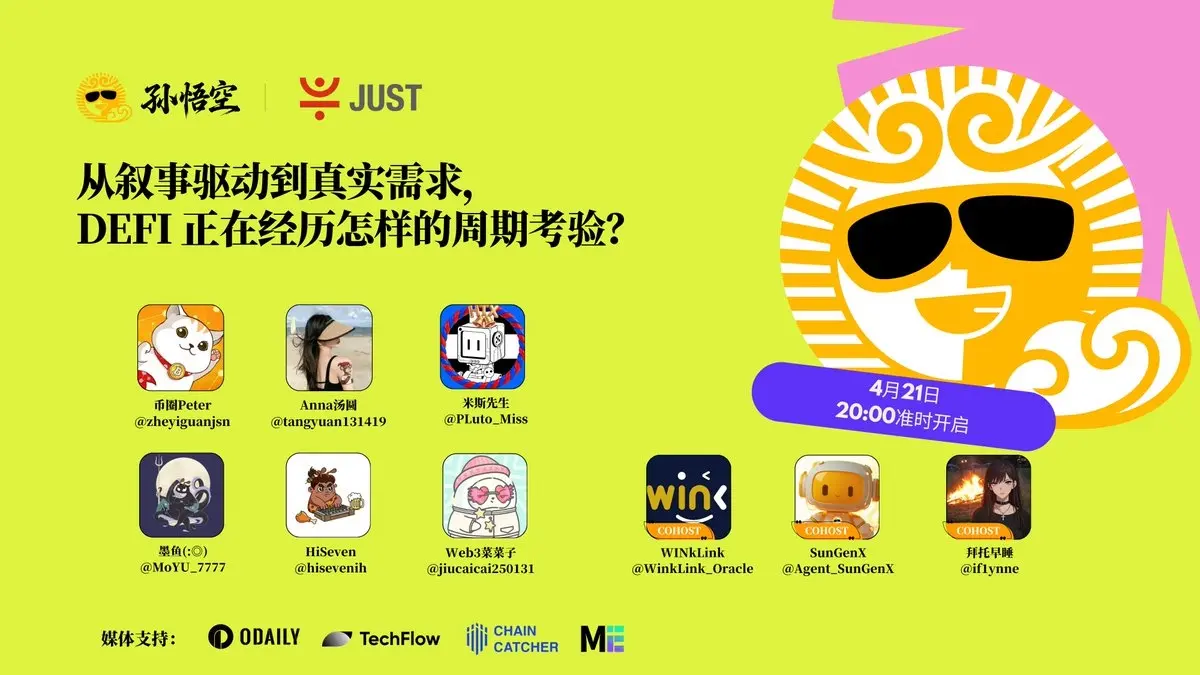
With these questions in mind, Space has been explored in depth during this period. In the context of the shift in DeFi narratives and value anchors, and the JST buy-back destruction mechanism for wavefield tron ecology, the guests analyzed the evolutionary logic of DeFi from the "high ASY drive" to the "real gain drive" and explored what kind of DeFi project would cross a bull bear when market attention was diverted from AI to RWA. A good review of this dialogue follows。
When the tide retreats, the core opportunity for DeFi's new cycle is to plant "real needs."
In the current context of the rapid rotation of encrypted market narratives, is the DeFi track still the main line of the next cycle? Will its status be replaced? In response, several guests agreed that DeFi still held an unmistakable position in the encrypted market, but that its narrative and value anchor had fundamentally changed。
The currency ring Peter started by dismantling the current market structure. In his view, the value segment of the market was becoming increasingly visible. The AI track carries the great imagination of technological innovation, Memecoin carries the emotional atmosphere of the community, and RWA contains the story of policy expectations and incremental financing. These three tracks have a natural advantage in attracting short-term flows and speculative capital, as they are “easy to tell”。
However, Peter argued sharply that the focus of attention was not equivalent to the deposition of value. In particular, once the situation enters the concussion phase, funds quickly shift from speculation to risk avoidance, seeking paths with “verifiable data”. He noted that DeFi was essentially a financial infrastructure, not a trend product that relied on narratives or expected delivery。As long as there is demand for assets and transactions in the chain, the value of DeFi will naturally magnify as the market recovers, which is the bottom logic of its life cycle。Mr. Meece also noted that:Without DeFi as the bottom of the pool and the finance of Lego, the new block would not have been able to sustain a massive inflowI don't know. As a result, even if the future wave of sentiment recedes, the financial flow will eventually return to DeFi, the core。
While recognizing DeFi's “building block” status, the guest noted the transformation of its role. Unlike DeFi Summer, who was an absolute king, after a cycle of rotation, DeFi is sinking into an infrastructure like hydropower. HiSeven believes that the next phase of DeFi ' s ability to truly lead the way will change the criteria for market judgement: In the past, the wealth effects of high APY and short-term liquidity incentives were valued。In the next cycle, real users, real agreement revenues and long-term sustainable operating mechanisms are at the core。
HiSeven addedFuture filter itemsThree specific dimensions: real agreed income and distribution capacity, continuing user retention and buy-back practices, and sustainable mechanisms that remain operational in cold markets。He asserted that the central opportunity for DeFi in the next phase was no longer to tell the strange story of an update, but to do more, deeper and more solid with the real needs that existed but were not sufficiently priced。
DeFi's new story in the second half, JST
The next phase of DeFi’s evolution is clear: The era of heavy growth with high leverage and low ASY is coming to an end, with a new phase of rebuilding trust with data transparency driven by real demand, anchored in agreed revenues。Against this background, the Bosun Tron DeFi ecology was destroyed with a real-gold JST repurchase, explaining the substantive leap from “flow thinking” to “value thinking”。
JST is the governing token of the JUST Agreement in the Wave Tron Ecology, and its buy-back destruction mechanism is an institutional arrangement adopted by community proposals and tied to the depth of the revenues of the Agreement. On 21 October 2025, the Community Proposal was formally adopted, and it was decided that the share of income from the stocks of JustLend DAO, future net revenues, and over $10 million from the revenues of the UNSDD multi-chain ecosystem would be fully used for repurchase and destruction. This leads to a self-enhanced closed loop that “the more income buys back, the more it destroys, the stronger it deflators”。
When the machine is developed, the real test is implementation。IN SIX MONTHS, FROM OCTOBER 2025 TO THE PRESENT, JST HAS EFFICIENTLY COMPLETED THREE ROUNDS OF LARGE-SCALE BUY-BACK DESTRUCTION, WITH A TIGHT TEMPO AND HEAVY INPUT TO SCALE UP:
-
IN THE FIRST ROUND (END OCTOBER 2025), APPROXIMATELY $17.72 MILLION WAS INVESTED IN THE DESTRUCTION OF ABOUT 559 MILLION JSTS, OR 5.66 PER CENT OF THE TOTAL SUPPLY。
-
IN THE SECOND ROUND (15 JANUARY 2026), THERE WAS A MARKED INCREASE IN DESTRUCTION, WITH APPROXIMATELY US$ 21 MILLION INVESTED AND SOME 525 MILLION JSTS DESTROYED, OR 5.30 PER CENT OF THE TOTAL SUPPLY。
-
IN THE THIRD ROUND (15 APRIL 2026), APPROXIMATELY US$ 21.3 MILLION WAS INVESTED IN THE DESTRUCTION OF ABOUT 271 MILLION JSTS, OR 2.74 PER CENT OF THE TOTAL SUPPLY。
THE THREE ROUNDS COMBINED, WITH CUMULATIVE INVESTMENT OF OVER $60 MILLION, PERMANENTLY DESTROYED SOME 1,356 MILLION JSTS, OR 13.7 PER CENT OF THE TOTAL SUPPLY OF COINS。THE TOTAL VALUE OF THE DESTROYED TOKENS HAS EXCEEDED $100 MILLION, BASED ON THE RECENT MARKET PRICE OF JST OF APPROXIMATELY $0.08。
THE MOST VISIBLE EFFECT OF THE CONTINUOUS BUY-BACK DESTRUCTION OF REAL SILVER AND SILVER IS REFLECTED IN THE MOVEMENT OF JST ' S TOKENS. JST PRICES HOVERED AROUND $0.032 BEFORE THE REPURCHASE DESTRUCTION PROGRAM STARTEDBy December 2025, prices had risen rapidly to about $0.045, with a phase increase of about 40 per centI don't know。As of the end of March 2026The cumulative increase of six months is almost 100 per centI don't knowSince then, it has continued to rise, exceeding a maximum of $0.085, representing an increase of over 160 per cent before the start of the mechanismI DON'T KNOW. EVEN IN A MARKET ENVIRONMENT IN WHICH BITCOIN ONCE FELL BY MORE THAN 37 PER CENT DURING THE SAME PERIOD, JST MOVED OUT OF ITS ISOLATION。
The real significance of this mechanism lies in the fact that it deeply binds the value of the tokens to the basic aspects of the agreement. As Web3 claims, JST's three-round destruction of the full-use agreement net real income without a single external subsidy marked the project's formation of a positive flying wheel of “real demand settling income, agreement revenue against money” and established a long-term verifiable value anchor for the entire track。
After all, DeFi is moving away from the brutal growth phase and back to the nature of finance. Both deep cultivation for real needs and deflationary mechanisms such as JST, supported by actual agreed revenues, reflect a substantial shift in the market focus towards “sustainability”. In future cycles, the DeFi projects, which are able to hold on to values, set up mechanisms for the distribution of health benefits and speak with transparent data, will truly have the fundamentals of long-term development。
